'We never did these drills before': Sonali Shingate opens up on game-changing training ahead of 2026 Asian Games

&imwidth=600&imheight=450&format=webp&quality=medium "'We never did these drills before': Sonali Shingate opens up on game-changing training ahead of 2026 Asian Games")
Sonali Shingate Photograph: (IIS)
Indian kabaddi player Sonali Shingate reveals how scientific training, conditioning, and recovery methods transformed India’s kabaddi team ahead of the 2026 Asian Games
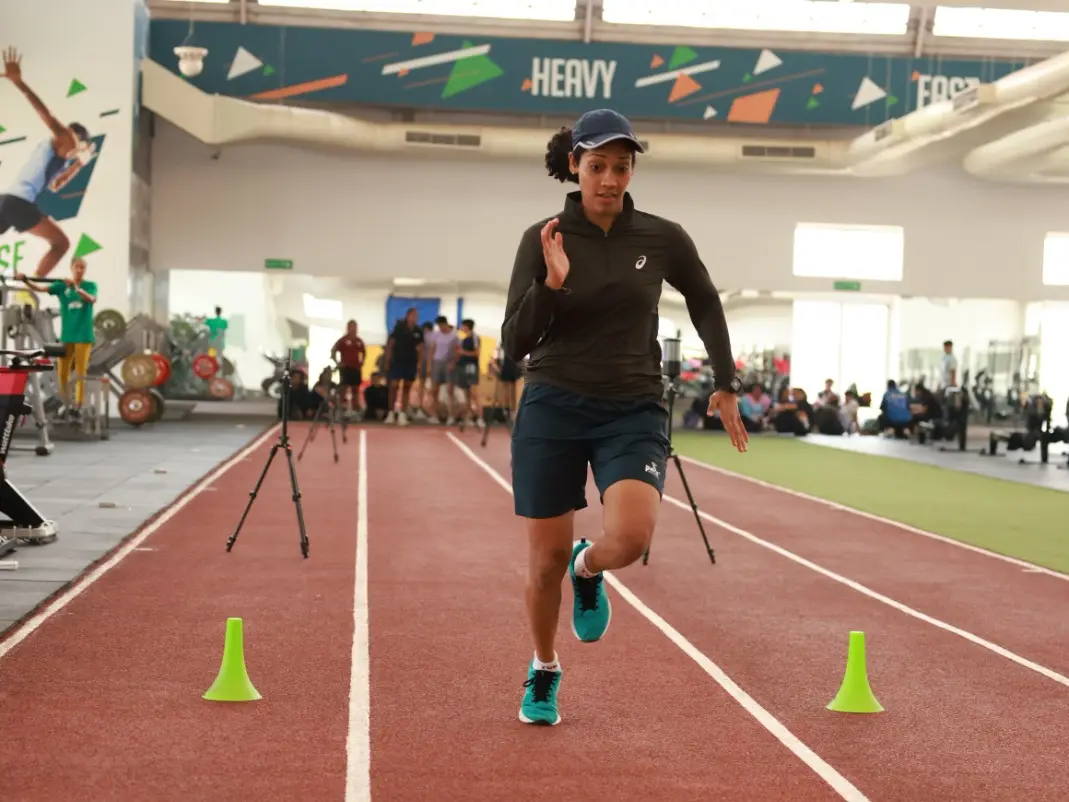
Inside a high-performance training facility, Sonali Shingate drives forward on a synthetic track, weaving through cones with sharp, deliberate strides. Each movement is calculated, explosive, far removed from the dusty grounds where her journey started all those years back. This is not just training. It is a transformation.
Because for Shingate, kabaddi was never a carefully planned pursuit; it was a choice born out of necessity. Growing up in Mumbai, with roots in a small village in Kolhapur, her early life was shaped by financial hardship. “My father was a security guard. My mother was handicapped… we used to live on rent,” she recalled. Cricket interested her, but it came with costs her family couldn’t afford. “Kabaddi was a free sport… just one short and a t-shirt.”
What started as an extra activity after Class 12 quickly turned into a pathway. From college kabaddi to representing Maharashtra, a silver medal at the junior nationals, and eventually a job with Railways, Shingate steadily climbed the ranks to the national team. Her breakthrough came at the 2018 Asian Games, her first international tournament. “I wore the India jersey for the first time,” she said. But the moment was bittersweet. India fell short in the final against Iran, settling for silver.
If 2018 left her wanting more, 2023 denied her a chance altogether. A serious injury just days before the Asian Games ruled her out. “Ten days before the tournament, I had a full grade tear. So I couldn’t go,” she said. The comeback, however, has been defining. After surgery and rehabilitation, Shingate returned to contribute to India’s gold-winning campaign at the World Cup, restoring confidence and sharpening her focus on unfinished business at the Asian Games. “We have more confidence now,” she said.
Now, that journey is entering a new phase, one driven not just by effort, but by awareness at Inspire Institute of Sport in Bellary. “I myself take supplements, but the rest of the ladies athletes don’t,” she said. “So it was good for them to learn which supplements to take, like protein, creatine, glutamine.” That awareness extended beyond nutrition. The camp introduced players to recovery methods they had rarely experienced before. “In the evening, we had a recovery session of sleeping, an ice bath, or swimming. We did all these things for the first time in the camp,” she explained.
Trending Stories
)
)
)
)
)
)
)
)
)
)
)
)
)
)
)
)
)
)
&im=FitAndFill=(700,400))
)
)
)
&im=FitAndFill=(700,400))
)
&im=FitAndFill=(700,400))
&im=FitAndFill=(700,400))
)
More importantly, the emphasis on strength and conditioning is beginning to reshape how players approach the sport.
“The strength and conditioning they taught us… with which we can prevent injuries… these things are useful,” Shingate noted.
Drills and conditioning redefine preparation
For Shingate, the biggest shift has come through structured drills, an area she believes had been largely overlooked. “The biggest thing we found here was drills, which we never do. From which we came to know that if we do drills well, then our speed and quick movement… will come faster,” she said. In a sport defined by explosive bursts and rapid reactions, that understanding could prove decisive. Conditioning, too, has emerged as a critical component.
“If our body contact is a game, then how fit we should be for body contact… that improved because of conditioning,” she explained. For Shingate personally, it meant confronting a gap in her own preparation. “The conditioning thing… I came to know by coming here that I should work on conditioning,” she admitted. The results have been immediate.
“I feel better that my speed and endurance have also increased because of conditioning.”
Asian Games focus and the road ahead
As India builds towards the 2026 Asian Games, the lessons from the camp extend beyond physical preparation to mindset and environment. “The coaches here are free. There is no fear or pressure. We enjoyed the workout,” Shingate said, highlighting a more open and engaging training setup. At the same time, she remains aware of the growing competition. “I think Chinese Taipei is a good team. We will have to think about them in the Asian Games,” she said.
For Sonali Shingate, the journey has always been about overcoming limitations, whether it was access to sport, opportunities at the elite level, or now, adapting to a more scientific approach to training. And as she powers through drills on that track, the message is clear: Indian kabaddi is evolving, and so is she.

