
&imwidth=800&imheight=600&format=webp&quality=medium "Sea ice twice the size of Rajasthan goes missing from Antarctica in winter")
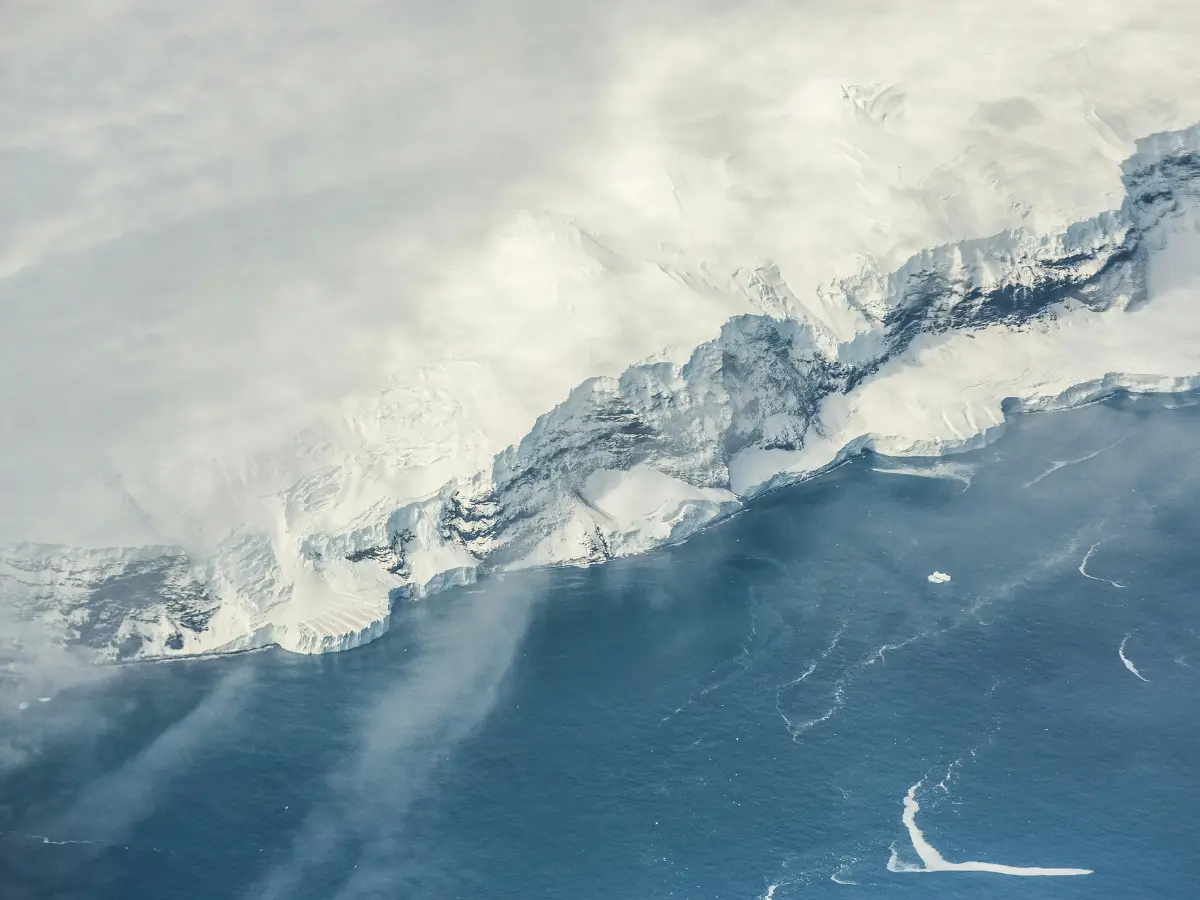
We last reported that Antarctica is seeing temperatures that are 20 degrees Celsius above normal for this time of year. Now, another report citing satellite imagery has found a notable ice gap on the western side of the Antarctic Peninsula. Winter in the southernmost continent runs from March to October, when floating sea ice grows around it. However, satellite images show that nearly 650,000 square kilometres of sea ice is yet to form as compared to the average amount of sea ice between 1991 and 2020. This ice gap is twice the size of the Indian state of Rajasthan.
Will Hobbs, a sea ice-ocean interaction scientist at the University of Tasmania, has raised concern, stating that this is the third time in four years when the ice has been this low. He told The Guardian that it is highly unlikely that the ice will return. "I don't think we will see sea ice there any more. It's done."
Three record lows have been recorded in the past decade, with the first one in 2016, then in 2022 and in 2023. However, Hobbs thinks that it is not clear if the ice loss is linked to global warming, and it is possible that changes in the ocean were a factor. But one fact remains that Antarctica has been losing a huge amount of ice. Experts say that it has become a pattern. "It's not good news. A warming world is going to have less sea ice," Edward Doddridge, a physical oceanographer at the Institute for Marine and Antarctic Studies in Australia, told ABC News.

The absence of sea ice triggers a dangerous domino effect. This vital ice is more than just a habitat for penguins and krill; it is a global climate regulator. It shields the ocean from sunlight, protects glacier-blocking ice shelves, and powers the critical ocean currents that are important to keep our planet's climate stable.
Also Read: Ice shelf the size of Indian capital city Delhi will detach from 'Doomsday Glacier' in 2026
Trending Stories
)
India ‘deeply concerned’ as Houthi strikes hit Saudi civilian & energy sites
)
Three labourers killed as DU student loses control of his car, rams into them on Dwarka Expressway
)
Pentagon revives mandatory testosterone testing for male troops aged 30 and above
)
FACT CHECK: Why did PM Modi ask Xi ‘is it okay’ at BRICS Summit? New video reveals...
)
India seeks to build a full semiconductor supply chain
)
North Korea's last nuclear test in 2017 set off 1,399 earthquakes over 8 years, each stronger than previous
&im=FitAndFill=(700,400))
From Abhishek Sharma to Sahil Chauhan, 5 batters with fastest T20I hundreds
)
Indian activist-lawyer Prashant Bhushan's post brings focus on ‘conflict of interest’ appointments of ex-govt officials at Reliance, Adani groups
)
Former India player Diana Edulji wants Smriti Mandhana to replace Harman as skipper at the earliest
&im=FitAndFill=(700,400))
Meet top 5 batters in the latest ICC T20I Rankings
)
UNGA 2026 theme explained: What does ‘Restoring trust, managing transformation: A United Nations that delivers for all’ mean?
)
Godfather of AI Geoffrey Hinton gives US lawmakers a one-year warning on AI
)
US F-16 fighter jet crashes in Michigan during training mission, pilot ejects safely
)
A first in 100 years: New cat species discovered in Bolivia is incredibly tiny
)
Shivakumar attends 79th Kalyana Karnataka Utsav in Kalaburagi
)
Xi-Trump summit may boost military links
)
Hong Kong extends newborn cash support scheme by three years
)
‘Will go to any extent’: Pakistan vows to defend Saudi Arabia amid Houthi attacks
)
'He will always be ahead': India coach Gambhir says Sooryavanshi won't walk into team ahead of Samson
)
The Verdict | When precision fails: US commits war crime in Minab school strike, UN finds
&im=FitAndFill=(700,400))
New Friday OTT releases (September 18, 2026): Lust Stories 3, You+Me, Best of the Best- 8 new titles coming on Netflix, Prime Video and more
&im=FitAndFill=(700,400))
Which country has the most F-35s outside America?
)
Africa is splitting, and a lot sooner than estimated, giving way to a new ocean
)
'Gangsta' crab shoves knife blade at man and his dog in Florida - Watch
)
Trump bans CNN, MS NOW and Politico from White House over ‘FAKE NEWS’
)
Drone strikes cooling tower at Russia's Kursk Nuclear Plant, IAEA confirms
)
Who is Khalilur Rahman? All you need to know about 81st UN General Assembly President
&im=FitAndFill=(700,400))
Meet top 5 bowlers in latest ICC T20I rankings
)
Ukraine plans record $109 bn defence spending, nearly two thirds of budget amid Russia war
&im=FitAndFill=(700,400))
Suriya and Jyothika say ‘I do’ again after 20 years! See their dreamy wedding pics
)
Cristiano Ronaldo returns to Portugal squad for Nations League under new coach
)
Laura Wolvaardt sets new world record for most WT20I runs in a year
)
Asian Games 2026: Shafali stars as India thump Japan by 8 wickets to book semis berth
&im=FitAndFill=(700,400))
Meet top 5 Indian batters with fastest T20I centuries
Doomsday Glacier to lose its ice shelf in 2026
A previous report in May warned that the Thwaites Glacier, also known as the Doomsday Glacier, will lose its ice shelf this year. Ice shelves float in the ocean while glaciers are attached to the ground. Robert Larter, a marine geophysicist at the British Antarctic Survey, confirmed that this event will most definitely happen, and 2026 is the year it could unfold. A study in March this year also stated that Thwaites will lose 180 billion to 200 billion tons of ice per year by 2067.
Also Read:
Heatwave grips Antarctica
On June 6, Antarctica felt the heat from the environment as temperatures soared as high as 15.4 degrees Celsius. This is about 20 degrees Celsius above normal for this time of the year, according to a climate professor at the University of Groningen, Raúl Cordero. The year 2026 has witnessed the onset of a Super El Niño, which could bring droughts and floods to different parts of the world.

