This 'hell-like' exoplanet has been sending mysterious signals. JWST will now help find out why


55 Cancri e
Super-Earth exoplanet, '55 Cancri e', has long been a source of fascination for astronomers since its discovery in 2004.
Located withinrelative proximity to Earth, this rocky exoplanet has a mass of around eight times our planet's, and it has been emitting mysterious signals, which have intrigued scientists for nearly two decades.
A recent study has now proposed a solution to the mystery of these signals, and it involves the James Webb Space Telescope — the most powerful and most complex telescope ever launched into space.

Finally, an explanation
After almost 20 years, scientists may finally have an extraordinary explanation for this celestial phenomenon, reports Live Science.
They speculate that a cyclical interplay of volcanic activity and atmospheric disappearance may be responsible for the planet's peculiar behaviour.
)
'We do not wish to continue. It's America that must choose': Iran president Pezeshkian calls on US to end war
)
Ram Mandir donation theft case: Trust gets clean chit, Champat Rai made prosecution witness; 70,000-page charge sheet filed
)
US faces fresh cost crunch as mortgage rates hit 7%, oil tops $107 and gas prices surge
)
Yemen called Trump for US military support in fight against Houthis: Official
)
Welcome actor Mushtaq Khan dies at 56 after battling cancer
)
Meet Adrian Abraham: 9-year-old Indian-origin guitar prodigy aiming for a Guinness World Record
)
Scientists detect first radio signals directly from faraway planet
)
Trump's welcome to Xi demonstrates 'attraction' to dictators: Chuck Schumer
)
China to test supersonic jet that moves at Mach 2, double the speed of sound
)
CNN, Politico and MS NOW back in White House after judge blocks Trump’s media ban
)
US judge questions Trump’s decision to ban CNN, MS NOW and Politico from White House
)
WION Iconic Tourism Summit 2026: Union Minister Shekhawat on 'experiential travel', peace diplomacy
)
Trump gifts Xi a bald eagle sculpture at White House dinner: Here’s what it symbolises
)
Australian PM Anthony Albanese calls OpenAI AI incident 'unacceptable' after restricted data access
&im=FitAndFill=(700,400))
Netanyahu at UN: Mass walkout, attack on Mamdani and Iran threats | In Pics
)
‘We’ve never gotten along better’: Trump praises Xi, jokes about White House ballroom at high-stakes state dinner
)
EC appointment law: Why is the 2023 act controversial, and what happens next? WION explains
)
'AI got into my speech': Prince Harry jokes after teleprompter failure at event in New York
)
What’s in a name? Trump’s 'Lake America' move gets a tit-for-tat response from Canada
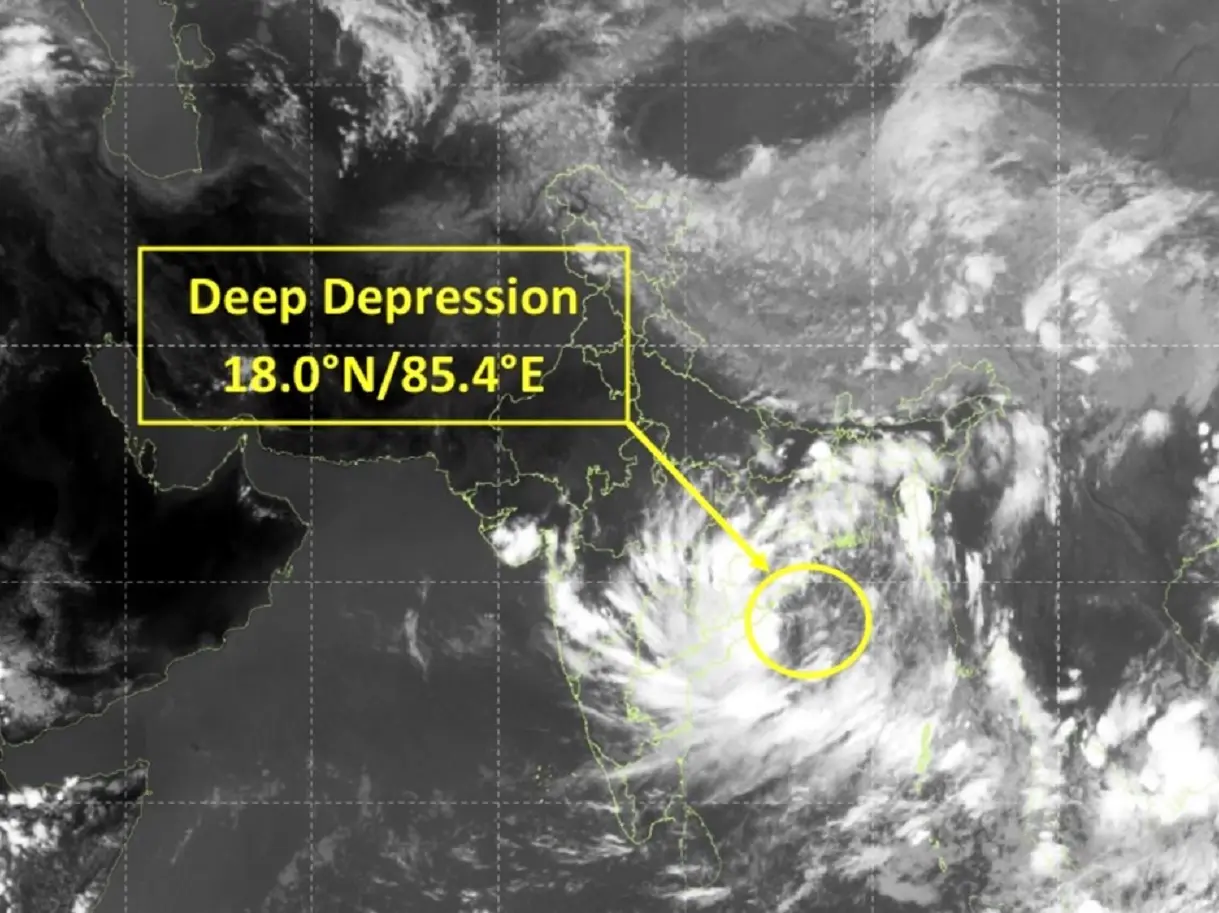)
Cyclone Arnab: Landfall expected before midnight tomorrow as IMD issues orange alerts across six states
)
Trump’s Board of Peace unveils $2.45bn Gaza plan,66 projects: But where’s the money?
)
'Making history': Xi Jinping praises Trump as US-China leaders dine at White House
)
WION Iconic Tourism Summit: Is India's travel boom outrunning its airports, airlines and hotels?
)
'We would all be dead': Netanyahu defends decision to strike Iran's nuclear facilities in his UN speech
)
Who is Lt-Gen Nauman Mahmood, Pakistan's first secretary general of Makkah Defence Alliance?
)
‘Not just a local tragedy’: Nepal PM Shah warns UN of growing climate threat, says Nepal floods were 'a warning to the world'
)
Israeli envoy to US Yechiel Leiter’s son critically injured in West Bank ramming attack
)
2,000-foot tube, laser tests and more: China builds towns to expand nuclear arsenal, satellite images show
)
'What kind of confession is this?': Pakistan PM Shehbaz Sharif’s 'terrorists would be roaming New York' remark goes viral, raises alarm online. Watch
)
WION Iconic Tourism Summit: How local tourism MSMEs must upskill for AI integration
)
Nations League: Germany draw on Klopp debut; Portugal, Norway win
)
'Partners rather than rivals': Xi Jinping's first message after landing in US for Trump summit
)
'Fund people, not bombs': Hundreds take to New York streets as Netanyahu delivers speech at UN; dozens arrested
)
Mumbai Indians appoint Luke Williams as head coach for Women’s Premier League
)
IIT Bombay CCTV footage emerges: Sahil Wakode seen looking at phone in examination hall
)
Russia likely to target Spain, France and Italy in drone attacks, warns CIA: Report
)
WATCH | China President Xi Jinping lands in US as Trump greets him ahead of high-stakes summit
)
Trump-Xi state dinner 2026: Who is invited? Full guest list of tech CEOs, business leaders and officials
)
A seven-day roadmap? Iran proposes plan to end war, reopen Strait of Hormuz and resume nuclear talks
)
What’s on the menu? Inside Trump’s lavish White House state dinner for Xi
)
Xi Jinping's 'special plane' vs Trump's Air Force One: What's the difference?
According to the study, 55 Cancri e, located a mere 40 light-years away from our planet, experiences a tumultuous existence.
55 Cancri e is so close to its parent star that the exoplanet orbits it in a mere 17 hours. As per estimates, the planet is nestled really close to its star — less than two per cent of the distance between Earth and Sun (148.98 million km).
Due to this nearness, it endures scorching temperatures, which on its day side exceed 4,400 degrees Fahrenheit (2,427 degrees Celsius), while its night side remains a fiery 2,060 F (1127 C).
Mysterious signals
While the extreme conditions have defied explanations, what is more puzzling — as pointed out in a paper accepted in September to the Astrophysical Journal Letters — are the transit signals Earth receives from the planet during its celestial dance with its parent star.
Sometimes, when 55 Cancri e hides behind its star, no discernible light emanates from the planet, while at other times, a distinct visible light signal becomes apparent. In the infrared spectrum, the planet consistently exhibits a signal, albeit with varying intensity.
What the new study says
In the new study, researchers postulate that the planet's proximity to its star triggers a cyclical phenomenon that causes periodic outgassing events.
Extreme heat from its star causes volcanic eruptions and thermal vent activities, which spew carbon-rich elements into the atmosphere, speculate researchers. Due to the planet's extreme heat, these eventually dissipate, leaving the celestial body barren until the outgassing cycle commences once again.
They hypothesise that the delicate balance between the planet's efforts to generate an atmosphere and the relentless onslaught of radiation and solar wind from its star causes a precarious oscillation. The planet's phases, with and without an atmosphere, could explain the irregular transit signals observed over the years.As this hypothesis awaits testing, the James Webb Space Telescope (JWST) presents a promising opportunity to delve deeper into the enigma of 55 Cancri e.

