&imwidth=800&imheight=600&format=webp&quality=medium "30,000 km-long space elevator proposed on Ceres can solve two problems")
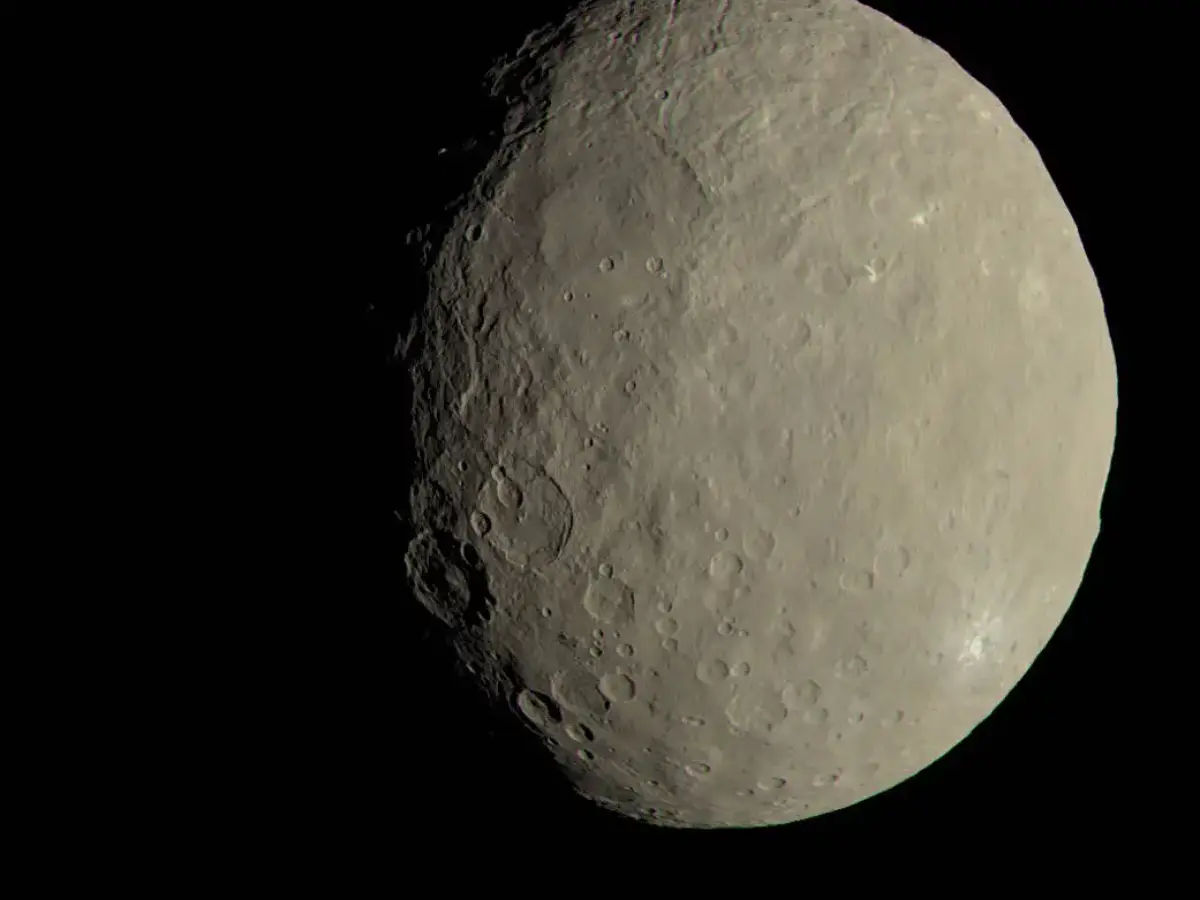
Ceres, the Queen of the Asteroid Belt, is a dwarf planet that could prove crucial in humanity's quest for expansion in space. According to data collected by the Dawn spacecraft, it is made up of around 25 per cent water. A study has proposed that to draw out this water, a space elevator can be built on Ceres, Universe Today reported. Researchers at the University of Colorado, Colorado Springs and Industrial CNT state in their paper how a space elevator would work and its numerous benefits. Ceres has plenty of water that can not only be used to sustain life, but also as a fuel for propulsion systems.
However, getting the water out of Ceres’ gravity well is the tricky part. This is where a space elevator comes in. According to Universe Today, the space elevator can "get the materials off of the surface and use leverage to fling them on a trajectory much faster than launching from the surface itself would be." The paper describes a design that uses both those features.

The authors of the paper describe the space elevator as a 30,000 km-long structure. It will travel into the solar system "more than 30 times farther than the diameter of Ceres itself." Carbon nanotubes, manufactured by Industrial CNT, can be used to carry payloads of approximately 6,534 kg up to the station at the top of the elevator. The station will rotate in alignment with Cere’s rotation of once every nine hours. From here, the payload can be flung into space.
This action would decrease the amount of energy needed to get a payload back to Earth by approximately 60 per cent, and save fuel by 15 per cent, the paper states. The process would not only help save fuel, but it could also use the fuel from Ceres itself. The paper also mentions several water-based propulsion solutions. Microwave Electrothermal Thrusters (METs) have been shown to be of the most value. Water electrolysis propulsion, which separates water’s constituents and then combines them in a combustion chamber, is also an option.
Also Read: Supermassive black holes from early universe seen shooting jets as bright as 10 trillion suns
Trending Stories
)
Why asking questions could be more important than memorising answers
)
BRICS Summit 2026 full schedule: Day-wise agenda, timings and key issues - All you need to know
)
BRICS Summit 2026: Iran's Pezeshkian praises PM Modi at BRICS
)
BRICS rejects EU carbon tax as ‘punitive’, ‘discriminatory’; warns of burden on Global South
)
'Iran won't surrender': Pezeshkian sends blunt message to US while attending BRICS Summit in India
)
Why dehydration is the hidden cause of travel fatigue on long flights
)
Top 5 places to visit in Goa beyond its famous beaches
)
'He is popular...': Malaysian PM Anwar Ibrahim's praise for PM Modi during bilateral meeting | WATCH
)
BRICS Summit 2026: 30+ countries seek BRICS membership
)
Frustrated man demolishes his kitchen after thousands flock to see Mother Mary his wife spotted on the wall
)
BRICS Summit 2026: PM Modi, Xi reach key consensus on ties, China to assume BRICS chairmanship in 2027
)
Trump says Canada eager to reach a deal, it could come ‘fairly soon’ if Ottawa treats US farmers better
)
From drones to KAAN fighters: Turkey outlines 229% surge in defence spending amid regional shifts
)
‘Partners, not rivals’: Xi outlines four point plan for stronger India-China ties
)
Could staying indoors all day affect your health?
)
Bigg Boss 20: Uditi Singh reacts to ex Karan Wahi’s possible wildcard entry
)
Why going digital does not always mean becoming more efficient
)
800 million years old - Scientists discover 'fingerprints' of supercontinent Gondwana in ancient rocks
)
Israel spent nearly $470,000 on PM's hair, makeup since 2019, data shows
)
From severe mobility problems to recovery: Madhuri the elephant’s journey of wildlife care
)
BRICS Summit day 1: New Delhi declaration adopted with full consensus, big diplomatic win for India
)
From India, Putin warns Europe against sending troops to Ukraine, Zelensky expresses willingness to meet him at G20 Summit
)
Did Iran President Pezeshkian touch feet of Hindu spiritual leader at Delhi event as shown in viral video?
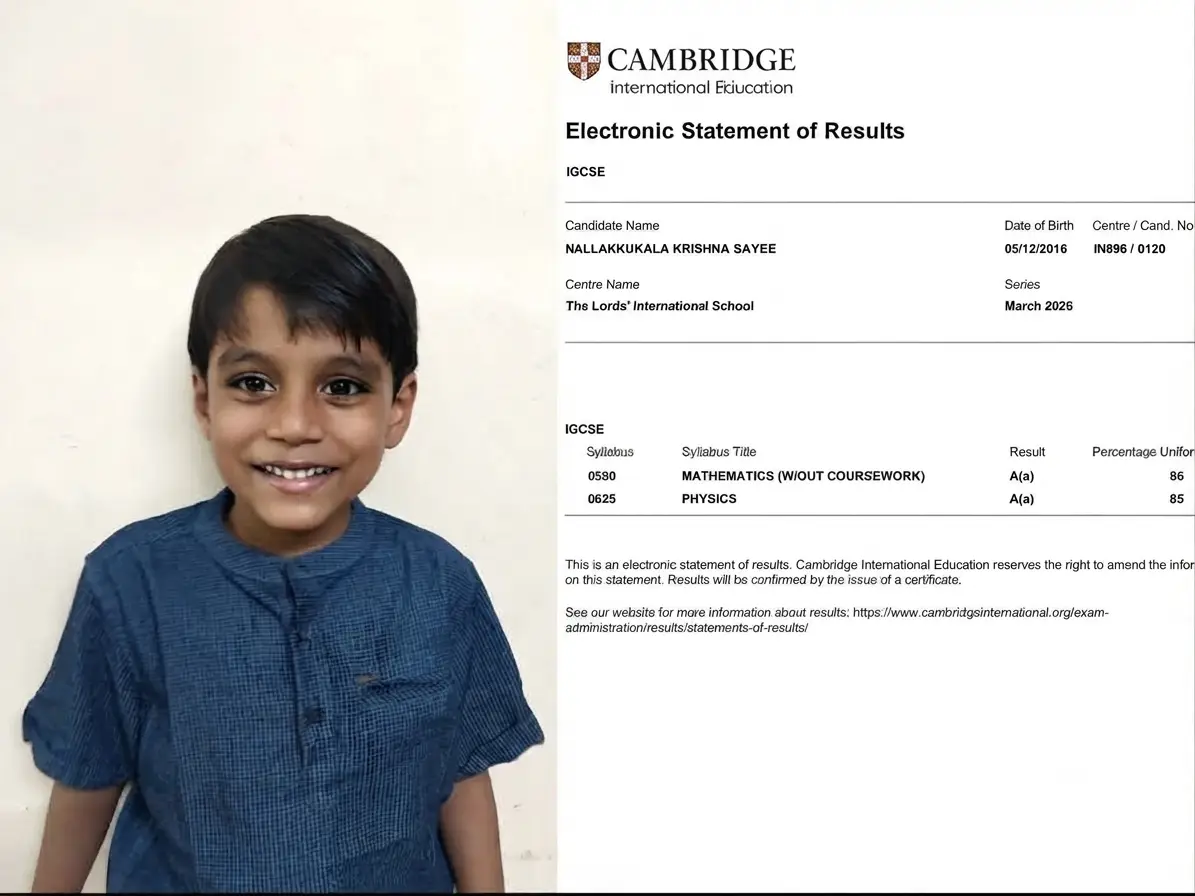)
9-year-old Chennai prodigy clears Cambridge IGCSE grade 10 exams
)
Reacher actor Alan Ritchson, wife Catherine part ways after 20 years of marriage
)
Why does your body need time to adjust after a long journey?
)
Baba Vanga's first prophecy for 2027 is out, and straight out of science fiction
)
Why does your skin need protection from UV rays?
)
How does the loss of forests affect the way wildlife lives and moves?
)
IND vs AFG, 1st T20I: When and where to watch live streaming in India?
)
Anthropic is giving Claude to schools free, and the reason is not philanthropy
)
BRICS Summit: China resumes Guangzhou-New Delhi flight, issues 'good-neighbourliness' remark ahead of Xi-Modi meet
)
Why do wild animals need quiet places to survive?
)
Humans may lose control of AI: Anthropic CEO calls for slowdown, Altman, Musk back him
However, this would require power, and an enormous amount of it would be needed to run this space elevator. Ceres lies in the asteroid belt between the orbits of Mars and Jupiter. It doesn't get enough sunlight in this region, and a lot of it would need to be collected for it.
Another hurdle is the lag in communications. Right now, a delay of 25 minutes would happen in communications in each direction. So, manually controlling the elevator from Earth would be tough. So, scientists would first have to make it more robust and improve the automation before a space elevator can be built on Ceres.