

&imwidth=800&imheight=600&format=webp&quality=medium "Scientists discover an armoured ‘goblin prince’ lizard that crawled beneath dinosaurs!")
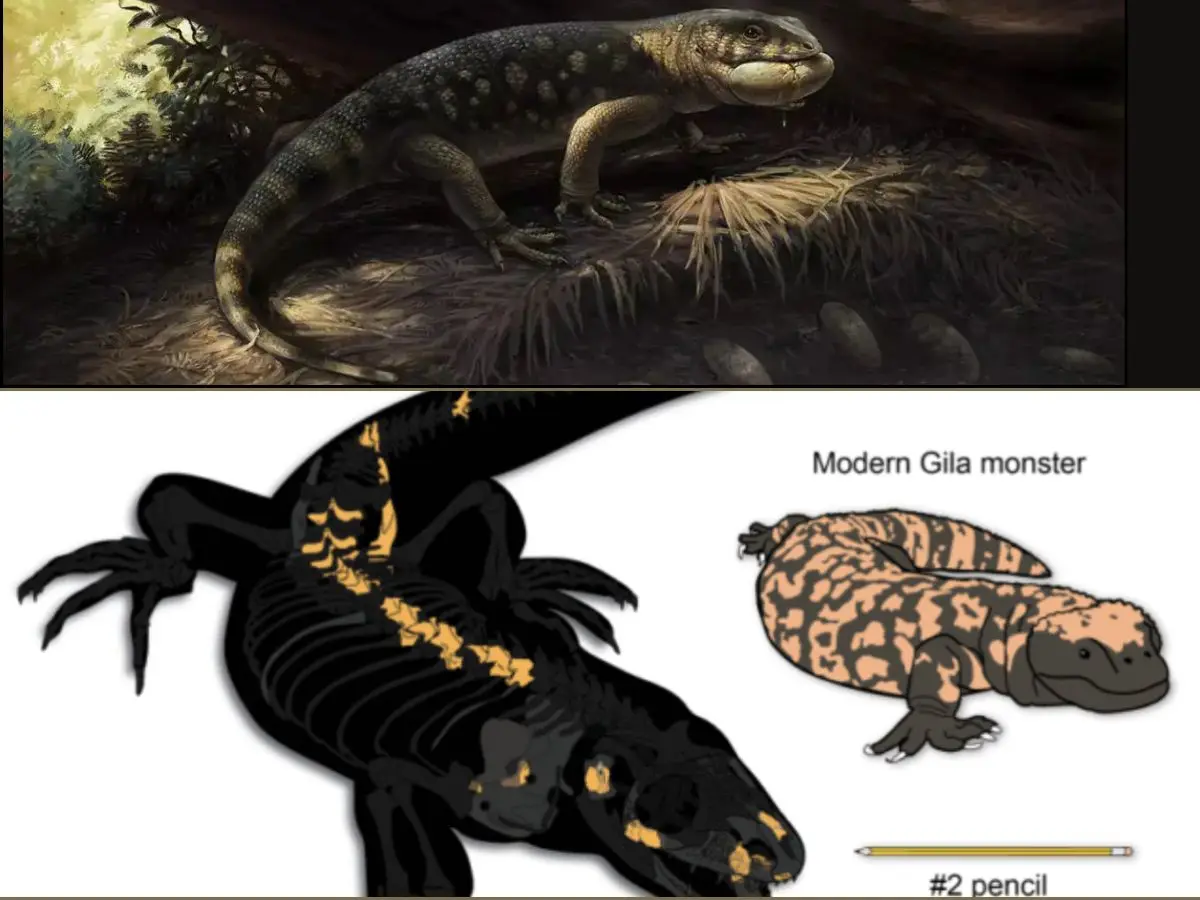
A prehistoric lizard that roamed North America during the age of dinosaurs has been formally identified, more than fifteen years after its fossilised remains were first collected. Named Bolg amondol, this ancient reptile was an armoured, meat-eating member of the Monstersauria clade, the same lineage that today includes the Gila monster and beaded lizards. What makes the discovery remarkable is not only the creature itself, but the story behind how it came to light. The bones, excavated from the Kaiparowits Formation in southern Utah in 2005, sat unrecognised in a museum drawer until palaeontologist Hank Woolley re-examined them. The specimen had been labelled simply as 'lizard', but detailed study revealed distinctive features that set it apart as a new species.
A lizard fit for Middle-earth
The name Bolg amondol draws from J.R.R. Tolkien’s writings, with Bolg referring to the goblin prince in The Hobbit, and amondol meaning 'mound-headed' in Tolkien’s Elvish language. The reference is fitting: fossil evidence shows Bolg had a robust, bony skull with ridged armour plates, lending it a distinctive mound-like appearance.
Living around 76 million years ago during the Late Cretaceous, Bolg amondol was roughly the size of a modern raccoon, measuring three to four feet in length. Its sharp teeth and protective osteoderms suggest it was a faunivorous predator, feeding on small animals, insects and possibly even dinosaur eggs. This places Bolg among the ranks of mid-sized reptilian hunters that shared the landscape with larger dinosaurs such as tyrannosaurs and ceratopsians.
An unexpected transcontinental connection
One of the most intriguing aspects of Bolg amondol is its evolutionary relationship. Though discovered in North America, its closest known relative is a prehistoric monstersaur from the Gobi Desert in Asia. This points to an ancient biogeographic link, suggesting that these armoured lizards once traversed land bridges connecting continents.
Trending Stories
&imwidth=180&imheight=135&format=webp&quality=medium)
Rahul Gandhi's plea against Election Commission delayed as Supreme Court registry flags 14 ‘defects’
&im=FitAndFill=(700,400)&imwidth=180&imheight=135&format=webp&quality=medium)
Navratri 2026: 9 days, 9 forms of Goddess Durga and 9 colours- Check the complete list
&imwidth=180&imheight=135&format=webp&quality=medium)
Korean peninsula tensions escalate as North Korea launches multiple ballistic missiles, PACOM says 'no threat to US personnel'
&imwidth=180&imheight=135&format=webp&quality=medium)
Trump weighs firing Kimberly Guilfoyle as US ambassador to Greece amid misconduct allegations: Report
&imwidth=180&imheight=135&format=webp&quality=medium)
Anti-SIR protest in Mumbai: Protestors wear black masks & ribbons in Mumbai
&imwidth=180&imheight=135&format=webp&quality=medium)
UK PM Andy Birnham renews claims of Russian meddling in Brexit vote
&imwidth=180&imheight=135&format=webp&quality=medium)
BCCI rejects venue shift reports, India vs Sri Lanka 1st ODI to remain in Delhi
&imwidth=180&imheight=135&format=webp&quality=medium)
'Absolutely disgusting': Australia slams US plan to livestream Nidal Hasan's execution; Mike Johnson raises concerns, warns of terrorist propaganda
&imwidth=180&imheight=135&format=webp&quality=medium)
1,500 drones illuminate Mumbai sky as Cordelia Cruises unveils second ship, Cordelia Sky
&imwidth=180&imheight=135&format=webp&quality=medium)
‘Fortress breached, reclaimed’: CJP leaders enter Jantar Mantar a day after loss of protest venue status | WATCH
&imwidth=180&imheight=135&format=webp&quality=medium)
Houthis warns US of 'painful response' if Washington joins Saudi war in Yemen as airlines suspend flights to Saudi Arabia
&imwidth=180&imheight=135&format=webp&quality=medium)
Congress demands action against chief election commissioner
&imwidth=180&imheight=135&format=webp&quality=medium)
'Turn approver, resign, we'll forgive you': Rahul Gandhi claims receiving messages from CEC Gyanesh Kumar
&imwidth=180&imheight=135&format=webp&quality=medium)
'I will not be silenced': Ilhan Omar alleges political intimidation after federal officers search her Washington home
&imwidth=180&imheight=135&format=webp&quality=medium)
Robotic surgery, advanced treatment: What is coming to this small Gujarat town?
&imwidth=180&imheight=135&format=webp&quality=medium)
Pakistan's government blames PTI for rise of terrorism in Khyber Pakhtunkhwa
&imwidth=180&imheight=135&format=webp&quality=medium)
‘This is just the start’: Maaya Rajeshwaran on historic ITF title, confidence boost and future goals
&imwidth=180&imheight=135&format=webp&quality=medium)
I.N.D.I.A. Bloc lists 10 requests to Supreme Court
&im=FitAndFill=(700,400)&imwidth=180&imheight=135&format=webp&quality=medium)
IMF World Economic Outlook: 10 economies to watch for growth in FY27 and FY28 - Where does India stand?
&im=FitAndFill=(700,400)&imwidth=180&imheight=135&format=webp&quality=medium)
How does a robot decide what to do next?
&imwidth=180&imheight=135&format=webp&quality=medium)
Is the AI chip boom already over? Global semiconductor stocks slide as investors question unbridled spending
&imwidth=180&imheight=135&format=webp&quality=medium)
Trump says he 'may' meet North Korean leader Kim Jong Un during upcoming Asia trip
&imwidth=180&imheight=135&format=webp&quality=medium)
'Ouch!!! That must hurt': Kangana Ranaut hails Kamal Haasan's sharp reply to Elon Musk over Starlink row
&imwidth=180&imheight=135&format=webp&quality=medium)
Sidhu Moose Wala’s younger brother wins hearts by recreating late singer’s signature move at Toronto Hologram Show
&imwidth=180&imheight=135&format=webp&quality=medium)
Girl 'dead' for 8 hours wakes up at her own funeral, dad insists she wasn't breathing
&imwidth=180&imheight=135&format=webp&quality=medium)
UK school ditches technology, shifts from screen to pen and paper for learning
&imwidth=180&imheight=135&format=webp&quality=medium)
Opposition’s 10 demands in Supreme Court petition range from stay on SIR to audit of voter rolls
&imwidth=180&imheight=135&format=webp&quality=medium)
'I am thoroughly unamused': Judge slams Trump administration after 400 trees cut at Washington golf course
&im=FitAndFill=(700,400)&imwidth=180&imheight=135&format=webp&quality=medium)
New OTT releases this week (October 12-18, 2026): Sacrifice, Koffee with Karan S9, Roadies Rebirth- 6 titles coming on Netflix, JioHotstar and more
&imwidth=180&imheight=135&format=webp&quality=medium)
Delhi protest: CJI Surya Kant declines to meet India Bloc leaders
&imwidth=180&imheight=135&format=webp&quality=medium)
China’s gold rush puts billion in focus
&imwidth=180&imheight=135&format=webp&quality=medium)
India's Ajit Doval, Iran's Mohsen Rezaei hold talks amid escalating West Asia tensions, discuss 'issues of mutual interest'
&imwidth=180&imheight=135&format=webp&quality=medium)
New Cold War: Why is China buying more gold? Explained
&imwidth=180&imheight=135&format=webp&quality=medium)
'Almost certainly': UK Prime Minister Andy Burnham says Iran's IRGC behind RAF Fairford threat
&imwidth=180&imheight=135&format=webp&quality=medium)
Elon Musk pumps $276 million into Republican campaigns ahead of US midterm elections
The fossils’ discovery in the Kaiparowits Formation, a rich fossil site within Grand Staircase-Escalante National Monument, helps fill gaps in our knowledge of Late Cretaceous ecosystems. While dinosaurs often dominate public imagination, finds like Bolg highlight the diversity of other reptiles that coexisted in these ancient environments.
Bolg amondol lived approximately 76 million years ago, during the Late Cretaceous period. It shared its world with some of the most famous dinosaurs, quietly thriving in the shadow of giants.
Hiding in plain sight
Despite being collected nearly two decades ago, Bolg amondol’s identity remained hidden until museum collections were revisited. This underscores how much untapped scientific value can lie in existing fossil collections, waiting to be recognised through careful study.
The research, published in Royal Society Open Science, adds an important piece to the puzzle of Monstersauria evolution and expands our understanding of ancient reptilian life beyond the iconic dinosaurs. Bolg amondol stands as a reminder that even small fossils can tell stories as compelling as any mythical creature.

