Why astronauts trust the ocean? The science behind Shubhanshu Shukla’s splashdown

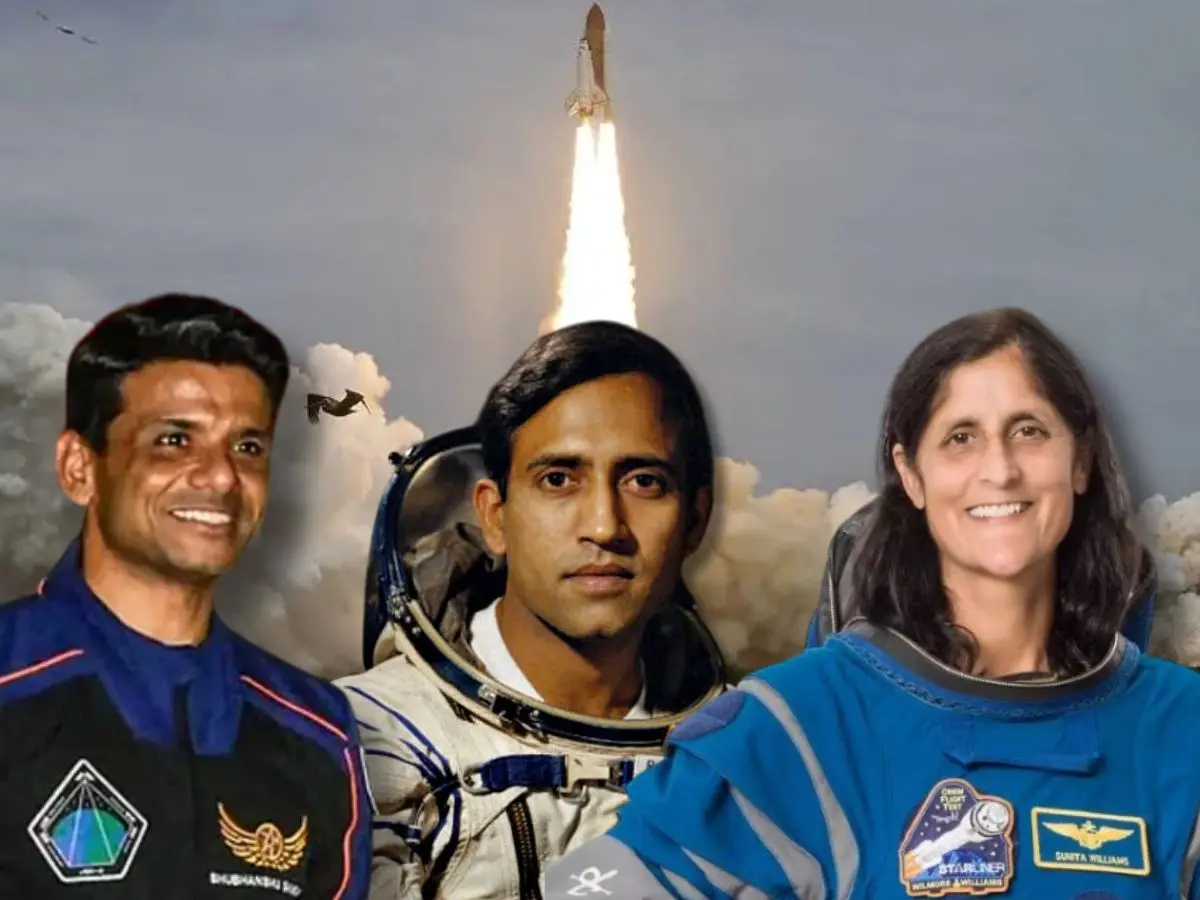
This method mirrors the recent return of Sunita Williams aboard Boeing’s Starliner just weeks ago, although 41 years earlier, India’s first astronaut, Wing Commander Rakesh Sharma, had touched down on solid ground rather than at sea.
Splashdown returns in the spotlight
Earlier this week, Indian astronaut Shubhanshu Shukla and three colleagues aboard Axiom-4 splashed down safely in the Pacific Ocean after a 20-hour journey from the International Space Station. This method mirrors the recent return of Sunita Williams aboard Boeing’s Starliner just weeks ago, although 41 years earlier, India’s first astronaut, Wing Commander Rakesh Sharma, had touched down on solid ground rather than at sea. Today, as ISRO readies its Gaganyaan crew module for sea recovery, splashdowns remain the preferred, practical method to bring astronauts home safely.
What exactly is a splashdown?
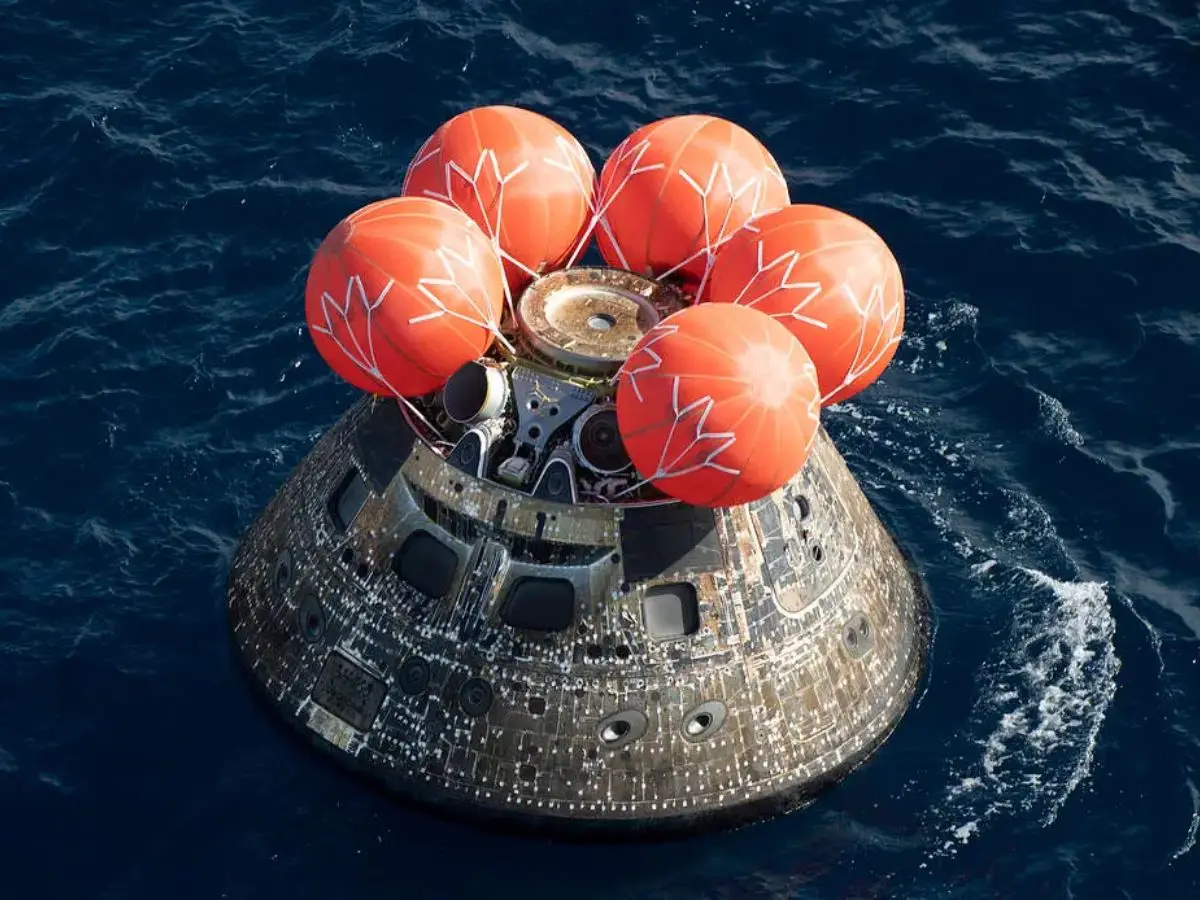
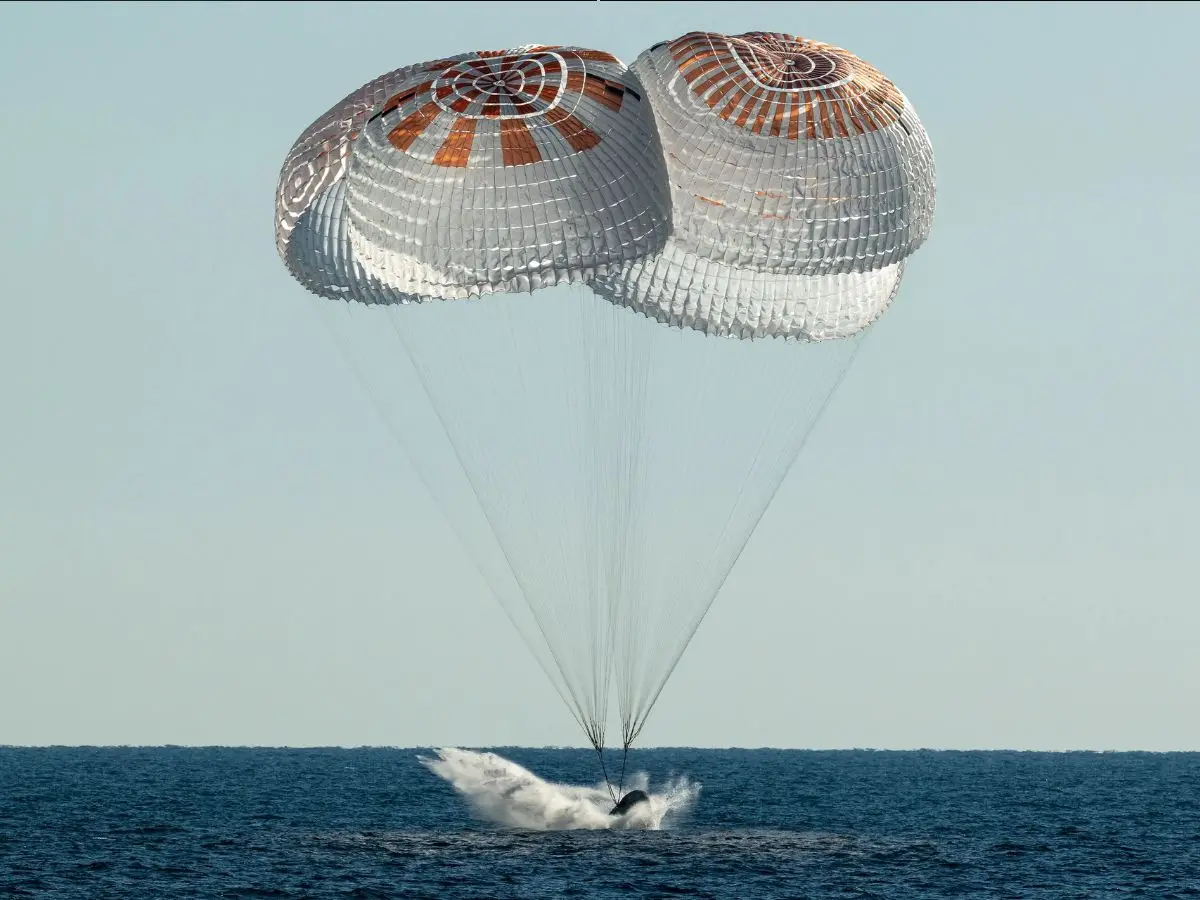
Splashdown is a spacecraft landing technique where the capsule touches down in the ocean, slowed by parachutes and supported by flotation devices. Pioneered by NASA’s Apollo missions, it is still used by modern capsules like SpaceX’s Crew Dragon and soon, India’s Gaganyaan module. After re-entry, the capsule floats upright until recovery teams arrive by ship or helicopter.
Why water makes sense
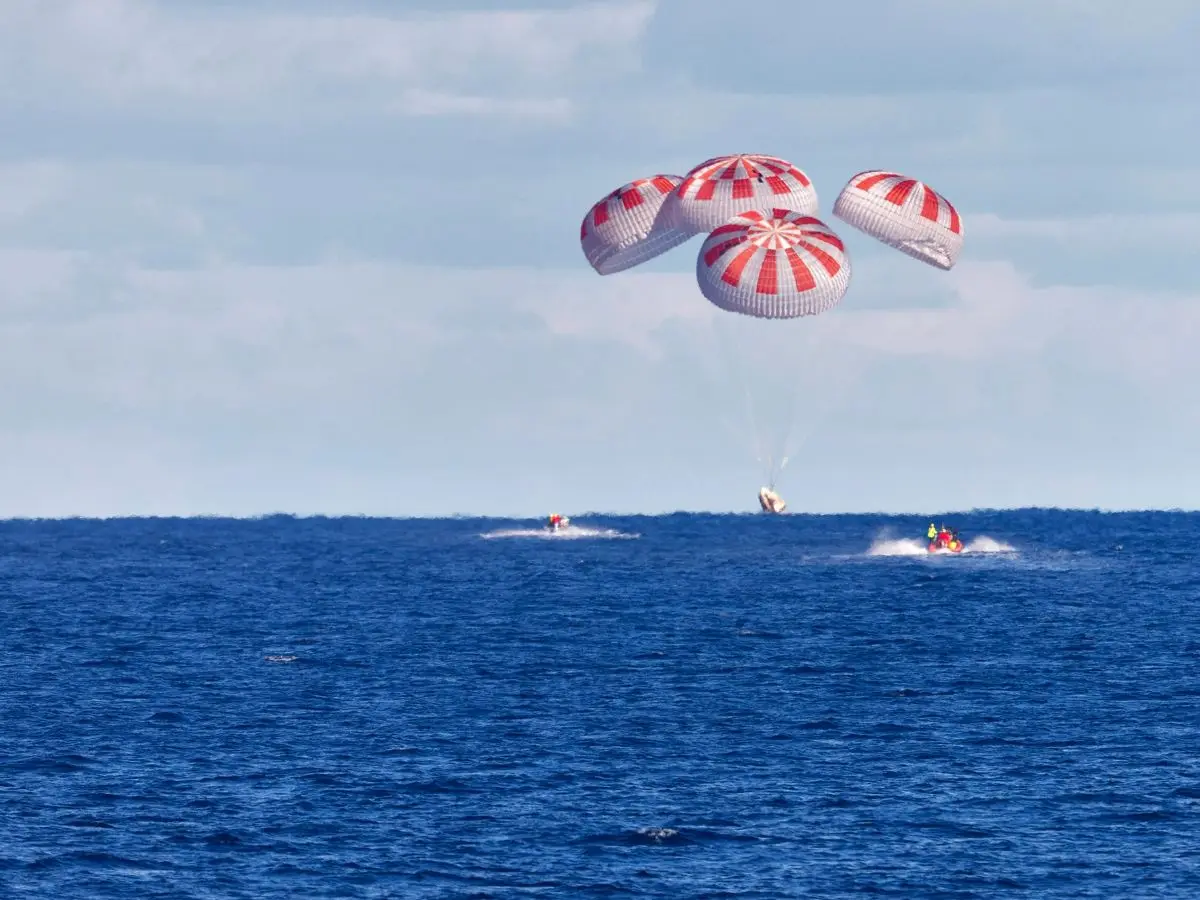
On re-entering the atmosphere at speeds over 27,000 km per hour, a spacecraft decelerates rapidly due to friction, then deploys parachutes to slow further. Even at final descent speeds of 25–30 km per hour, landing on hard ground could damage the capsule and injure the crew. The high density and low viscosity of water act as a natural cushion, absorbing impact energy and reducing shock.
Fewer demands on precision
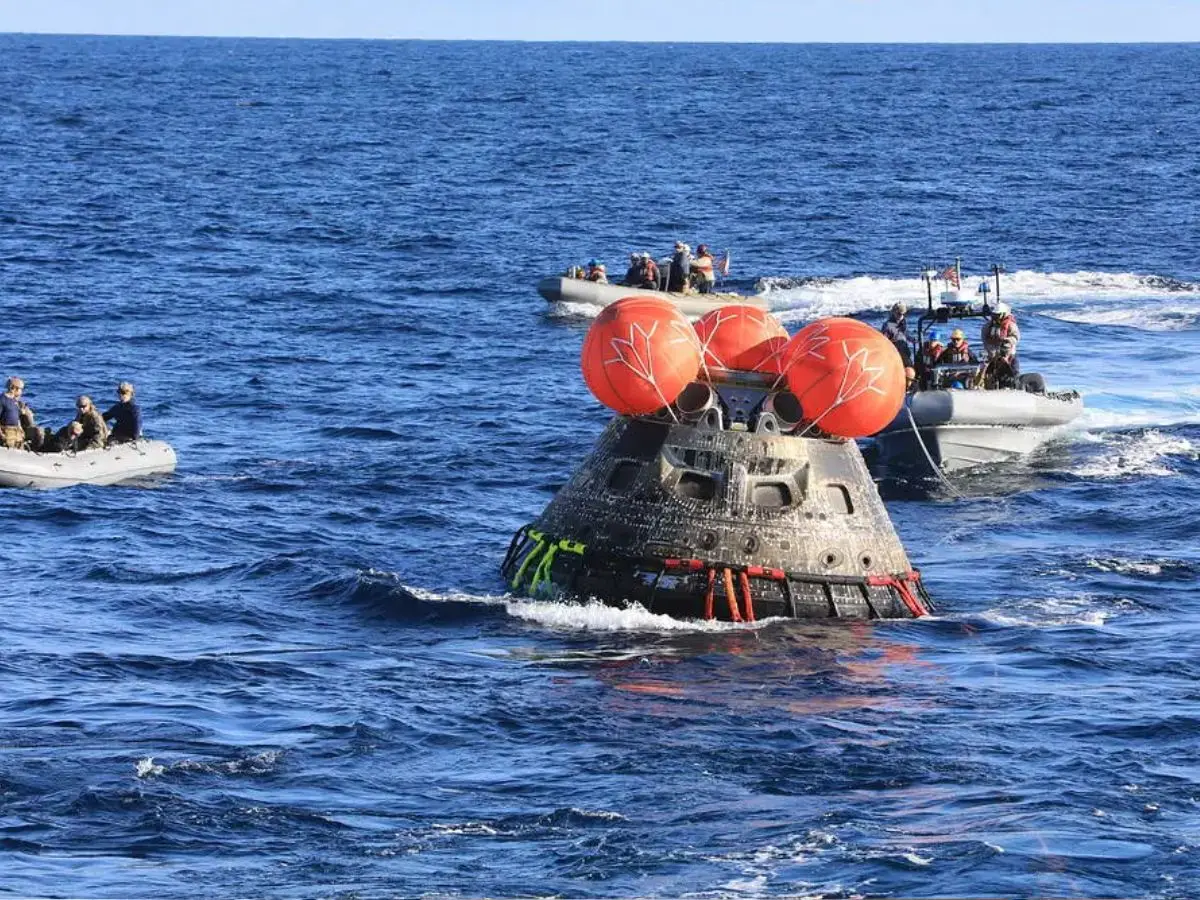
Land landings require carefully chosen, obstacle-free zones and sophisticated systems like landing legs or retro-propulsion to touch down safely. By contrast, vast ocean areas mean small deviations from the planned path cause no danger. Capsules are built to float, with conical shapes and rounded hulls that stabilise them like a ship’s hull.
How splashdown actually works
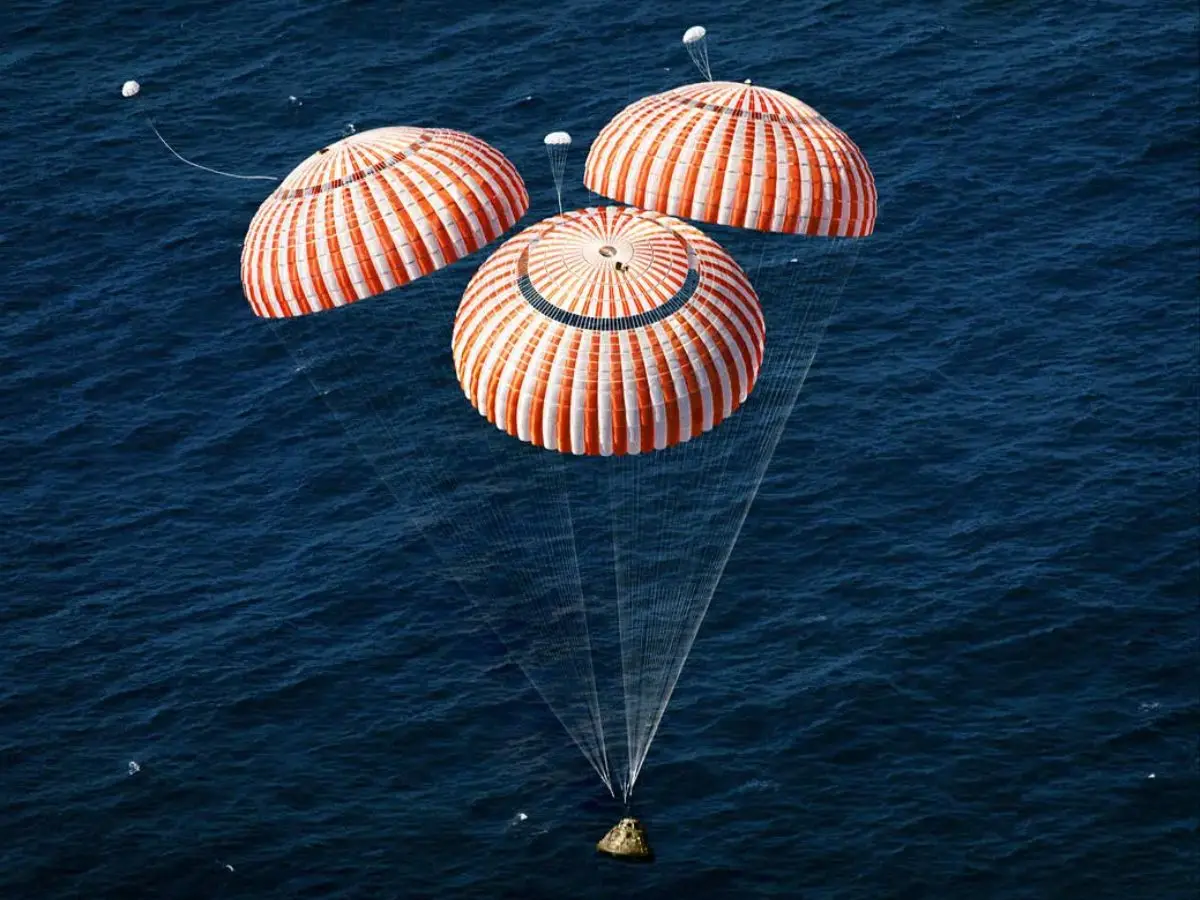
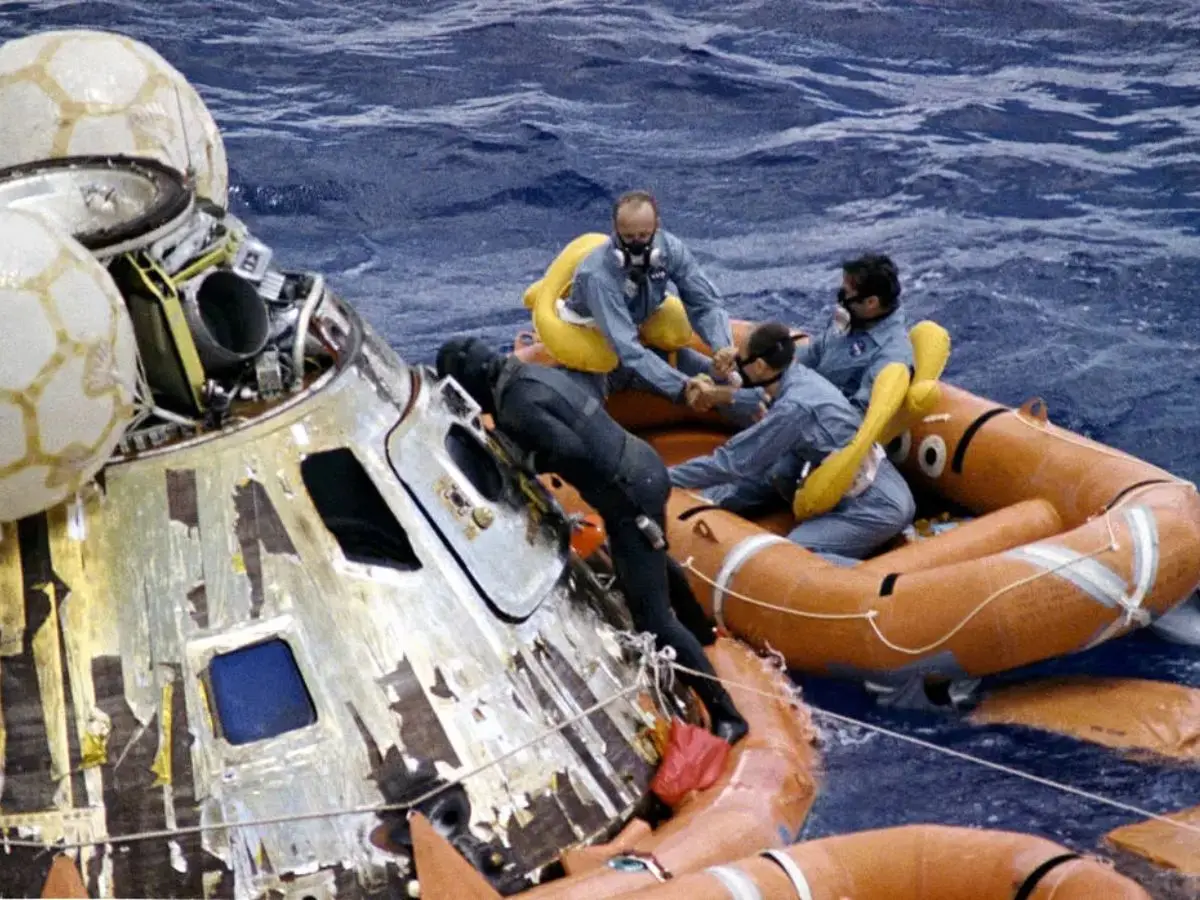
After re-entry, spacecraft typically deploy two drogue parachutes around 18,000 feet to stabilise descent, followed by four main parachutes around 6,500 feet to slow speed further. Capsules descend at an angle, covering 5,000–7,000 km before splashdown. Once in water, inflatable flotation collars keep them upright until recovery teams secure them.
Cost and complexity advantages
Ocean splashdowns avoid costly infrastructure like runways, landing pads, or airbags. Water provides natural shock absorption, so capsules do not need heavy landing legs or complex braking rockets. This makes splashdowns not only safer but also more cost-effective for current and future human spaceflight missions.
A method built for now and the future
With missions like Gaganyaan, SpaceX’s Crew Dragon, Boeing’s Starliner, and NASA’s Orion all built for sea recovery, splashdowns remain central to modern crewed spaceflight. Beyond history, they reflect a design philosophy: keep the system simpler, safer, and suited to the vastness of the ocean, still the best landing site we have.
)
)
)
)
)