JWST spots a galaxy that ideally should not exist

JWST
Space continues to mesmerise and though it has always held these wonders for billions of years, our improved capacity to actually witness the amazing stellar show means that the wide expanse would continue to bowl us over. And its not just about glittery stars, but also about expanding our knowledges of the cosmos. James Webb Space Telescope (JWST) has stumbled upon a stellar population bigger than our own galaxy can upend our understanding of how galaxies are formed. As the study published in Nature suggests, this stellar mass should not exist!
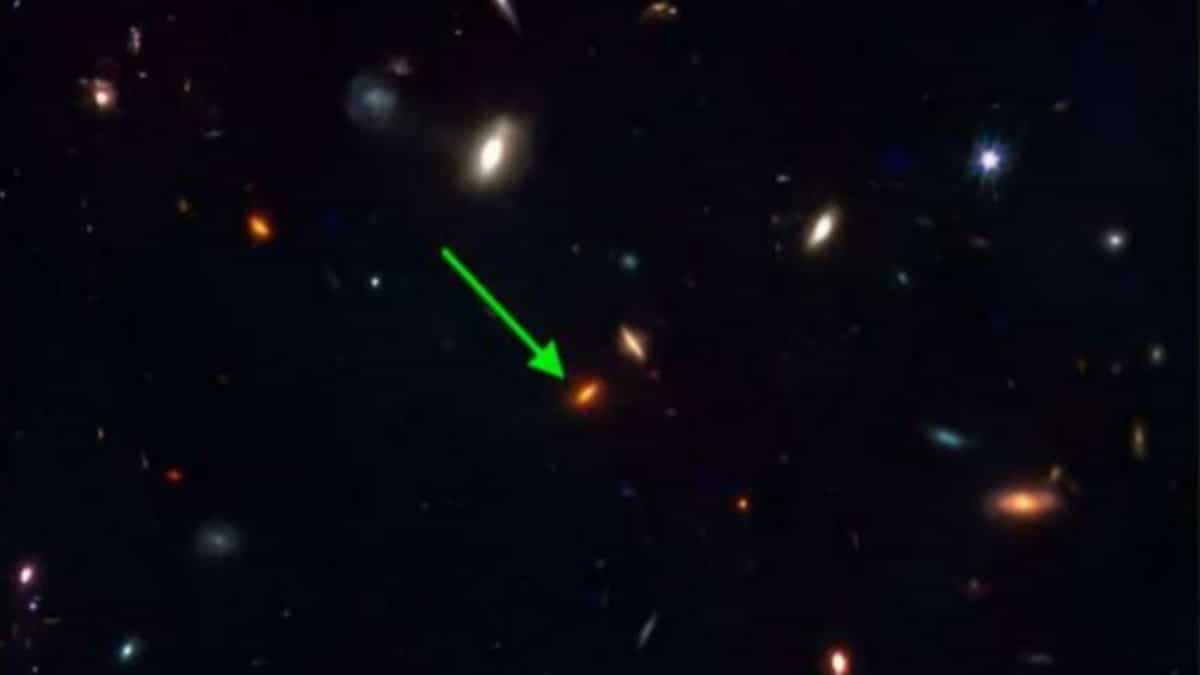
The study, led by Swinburne University of Technology's Professor Karl Glazebrook has observed a massive galaxy about 11.5 billion years away. The study says that the galaxy contains stars that are older than the actual galaxy by 1.5 billion years.
"We've been chasing this particular galaxy for seven years and spent hours observing it with the two largest telescopes on earth to figure out how old it was. But it was too red and too faint, and we couldn't measure it. In the end, we had to go off Earth and use the JWST to confirm its nature." says Glazebrook as quoted by Phys[dot]org.

Watch | All about NASA and SpaceX’s private lunar lander mission
Glazebrook worked with a team which had leading researchers from the world
"This was very much a team effort, from the infrared sky surveys we started in 2010 that led to us identifying this galaxy as unusual, to our many hours on the Keck and Very Large Telescope where we tried, but failed to confirm it, until finally the last year where we spent enormous effort figuring out how to process the JWST data and analyze this spectrum," said Glazebrook.
Also Read | An asteroid hit ended dinosaurs' reign. But did birds flourish because of it?
It is generally held that massive galaxies, such as the one observed by the team of researchers, did not exist in early Universe. The observation of this galaxy challenges this notion.
"We are now going beyond what was possible to confirm the oldest massive quiescent monsters that exist deep in the universe. This pushes the boundaries of our current understanding of how galaxies form and evolve. The key question now is how they form so fast very early in the universe, and what mysterious mechanisms lead to stopping them forming stars abruptly when the rest of the universe doing so," said Dr. Themiya Nanayakkara who was part of the research team.
(With inputs from agencies)