Humans to live on the Moon by 2029? NASA awards $600mn in contracts, unveils next phase of lunar base plans

&imwidth=600&imheight=450&format=webp&quality=medium "Humans to live on the Moon by 2029? NASA awards $600mn in contracts, unveils next phase of lunar base plans")
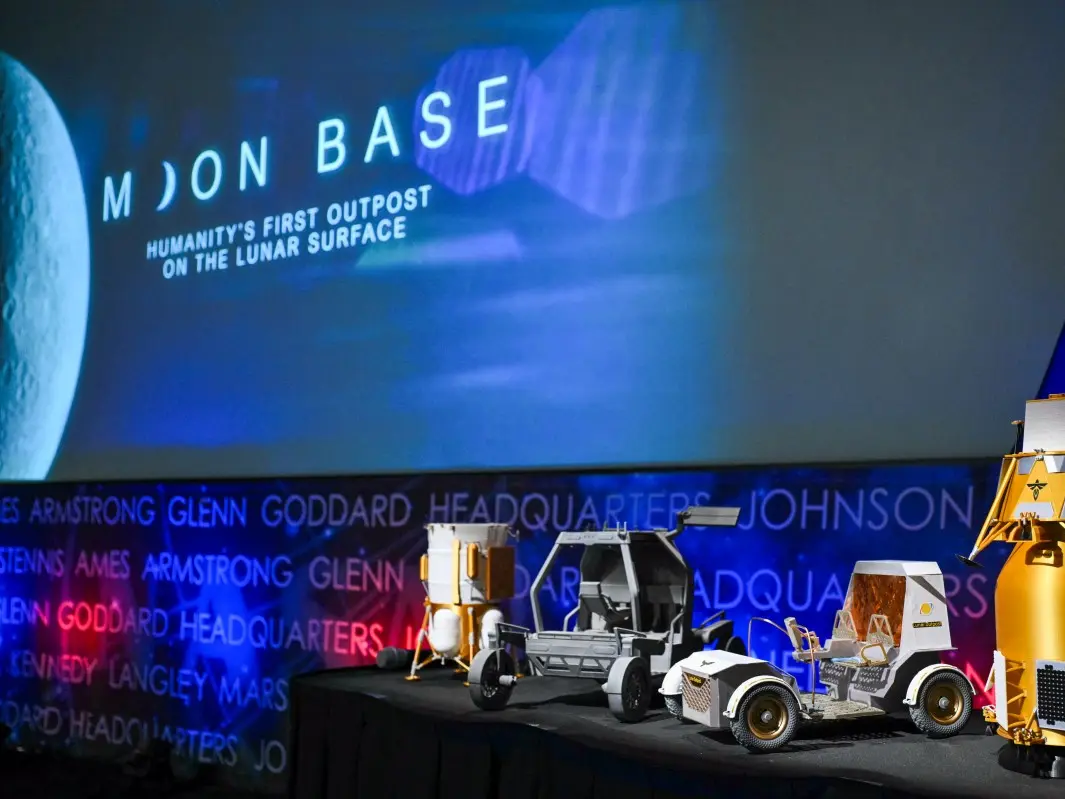
Models of lunar rovers and landers are displayed during a news conference at NASA headquarters in Washington, DC, on May 26, 2026, to outline plans for NASA's "Moon Base" lunar base and progress toward a sustained human presence on the Moon. Photograph: (AFP)
NASA has awarded nearly $600 million in new lunar contracts as it pushes forward with plans to establish a permanent base near the Moon's south pole. The agency says the missions will deliver cargo, scientific instruments and technology needed to identify future construction sites.
NASA has accelerated its timeline for setting up a permanent lunar human base. The US space agency on Tuesday (Jun 30) awarded nearly $600 million in fresh contracts to three commercial space companies. This will ensure that four automated logistics missions will head to the Moon’s south pole by late 2028, bridging a critical infrastructure gap as the agency eyes the start of actual Moon base construction by 2029.
The cash injection lands at a volatile time for NASA's ambitious programme. Just last month, Jeff Bezos’s Blue Origin suffered a high-profile setback when its New Glenn rocket exploded during a static-fire pad test, wrecking launchpad infrastructure and tossing a wrench into NASA's immediate robotic schedules.
Why does NASA want a base on the Moon?
For years, NASA focused on Gateway, a planned space station orbiting the Moon.
That changed earlier this year. In March, the agency shifted its attention towards building infrastructure directly on the lunar surface, pledging roughly $20 billion over the next seven years for the effort.
Trending Stories
&imwidth=280&imheight=210&format=webp&quality=medium)
&imwidth=280&imheight=210&format=webp&quality=medium)
&imwidth=280&imheight=210&format=webp&quality=medium)
&imwidth=280&imheight=210&format=webp&quality=medium)
&imwidth=280&imheight=210&format=webp&quality=medium)
&imwidth=280&imheight=210&format=webp&quality=medium)
&imwidth=280&imheight=210&format=webp&quality=medium)
&imwidth=280&imheight=210&format=webp&quality=medium)
&imwidth=280&imheight=210&format=webp&quality=medium)
&imwidth=280&imheight=210&format=webp&quality=medium)
&imwidth=280&imheight=210&format=webp&quality=medium)
&imwidth=280&imheight=210&format=webp&quality=medium)
&imwidth=280&imheight=210&format=webp&quality=medium)
&imwidth=280&imheight=210&format=webp&quality=medium)
&imwidth=280&imheight=210&format=webp&quality=medium)
&imwidth=280&imheight=210&format=webp&quality=medium)
&imwidth=280&imheight=210&format=webp&quality=medium)
&imwidth=280&imheight=210&format=webp&quality=medium)
&imwidth=280&imheight=210&format=webp&quality=medium)
&imwidth=280&imheight=210&format=webp&quality=medium)
&imwidth=280&imheight=210&format=webp&quality=medium)
&imwidth=280&imheight=210&format=webp&quality=medium)
&imwidth=280&imheight=210&format=webp&quality=medium)
&imwidth=280&imheight=210&format=webp&quality=medium)
&imwidth=280&imheight=210&format=webp&quality=medium)
&imwidth=280&imheight=210&format=webp&quality=medium)
&imwidth=280&imheight=210&format=webp&quality=medium)
&im=FitAndFill=(700,400)&imwidth=280&imheight=210&format=webp&quality=medium)
&imwidth=280&imheight=210&format=webp&quality=medium)
&imwidth=280&imheight=210&format=webp&quality=medium)
&imwidth=280&imheight=210&format=webp&quality=medium)
&imwidth=280&imheight=210&format=webp&quality=medium)
&imwidth=280&imheight=210&format=webp&quality=medium)
&imwidth=280&imheight=210&format=webp&quality=medium)
&imwidth=280&imheight=210&format=webp&quality=medium)
&imwidth=280&imheight=210&format=webp&quality=medium)
The preferred location is the Moon's south pole, a region that has become increasingly important because scientists believe large quantities of water ice are trapped in permanently shadowed craters there.
This water could one day provide drinking supplies, oxygen and even rocket fuel, making it a critical resource for long-term lunar exploration.
Who just won NASA's new contracts?
Rather than gambling on entirely unproven spacecraft, NASA is banking on upgrades to hardware that has already been built or flown. The strategy is designed to drive down research costs and force a much faster launch cadence.
The $600 million funding has been split between three companies:
- Astrobotic (Pittsburgh): Secured the lion's share at $297.9 million to fund two separate cargo deliveries using scaled variants of its Peregrine framework.
- Intuitive Machines (Houston): Granted $148.3 million for a single delivery mission.
- Firefly Aerospace (Austin): Awarded $144.2 million to execute one surface landing.
These landers will transport scientific arrays, data-gathering sensors, and navigation experiments to map ice deposits and analyse soil erosion before heavy human habitats arrive.
Mars rover on the Moon?
The most unexpected development from the briefing was NASA's plan to repurpose a massive piece of Martian hardware for the lunar surface. The agency is preparing to strip down and rebuild PROMISE (Polar Rover for Observation, Mapping, and In-Situ Exploration), a heavy testbed vehicle housed at the Jet Propulsion Laboratory that was originally engineered to mirror the Curiosity and Perseverance rovers currently on Mars.
"We are thinking very hard right now about sending Promise to the moon," said NASA administrator, Jared "Rook" Isaacman.
Promise's internal machinery offers a massive tactical advantage for lunar operations. The Mars rover runs on a Radioisotope Thermoelectric Generator (RTG). Unlike solar-powered rovers that freeze and die during the two-week-long lunar night, PROMISE's nuclear core will keep it fully operational in pitch-black, permanently shadowed craters where scientists suspect massive deposits of water ice are trapped.
Overcoming the Blue Origin disaster
Carlos García-Galán, the Moon Base program manager, acknowledged that while Blue Origin's May explosion has created a logistical headache. "We're working with Blue Origin very closely to understand their timelines to recovery and also looking at other options," he said.

