Female chimps experience menopause and then survive for years, even decades


Chimpanzees
Female chimps in an East African forest go through menopause and then live for years, if not decades, after being biologically incapable of reproducing. This is a significant finding as previously, the only known species in which females live long after they stop being able to reproduce are humans and some whales.
A new article published on Thursday (Oct 26) in the journal Science argues that chimps should be added to the list too. The paper titled, "Demographic and hormonal evidence for menopause in wild chimpanzees", provided insights into the evolutionary imperatives underlying menopause in women.

A senior author Kevin Langergraber of Arizona State University told AFP: "Chimpanzees have been studied in the wild for a long time, and you might think there's nothing left to learn about them. I think this research shows us that's not true."
The study mentioned that the vast majority of mammal females produce offspring till the end of their lives, but around the age of 50, humans experience a reduction in reproductive hormones and the permanent loss of ovarian function.
Notably, females of five species of toothed whale, including orcas and narwhals, similarly survive well beyond fertile age. It isn't obvious why natural selection would favour this trait, and only among a handful of species.
)
What’s in a name? Trump’s 'Lake America' move gets a tit-for-tat response from Canada
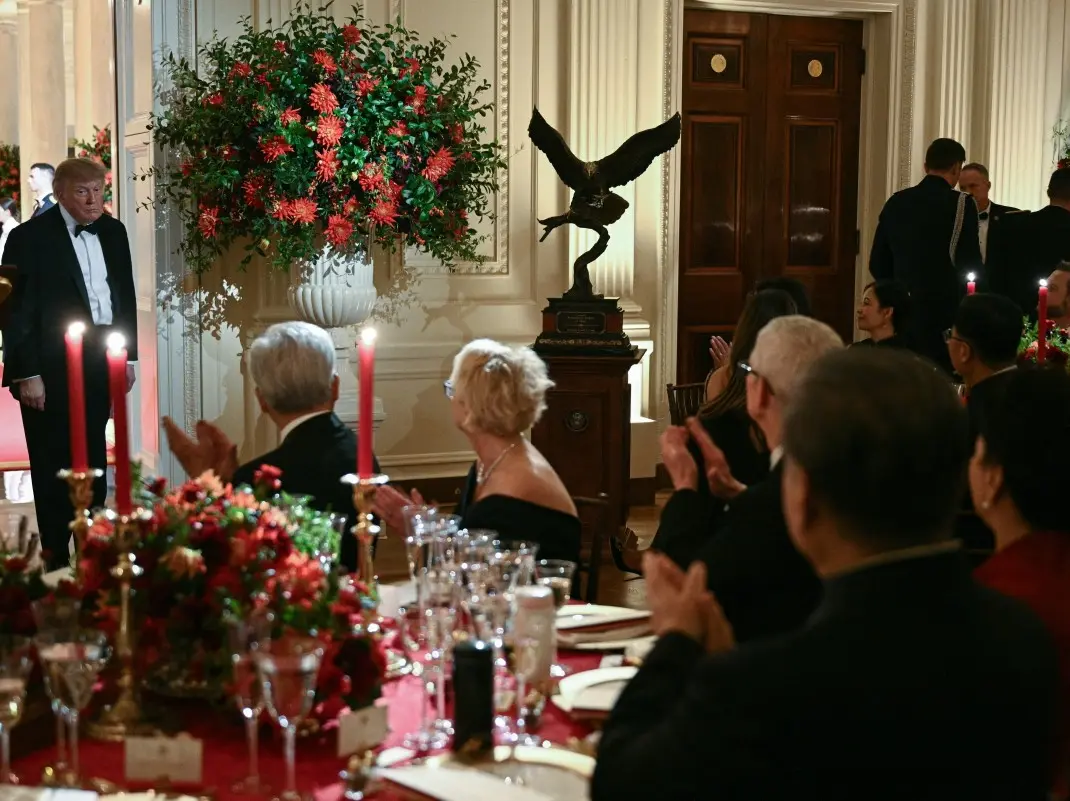)
Trump gifts Xi a bald eagle sculpture at White House dinner: Here’s what it symbolises
)
‘Not just a local tragedy’: Nepal PM Shah warns UN of growing climate threat, says Nepal floods were 'a warning to the world'
)
CNN, Politico and MS NOW back in White House after judge blocks Trump’s media ban
)
Farhan, who went viral for AK47 celebration vs India in Asia Cup, hopes to lead Pakistan beyond Asian Games
)
US judge questions Trump’s decision to ban CNN, MS NOW and Politico from White House
)
'We would all be dead': Netanyahu defends decision to strike Iran's nuclear facilities in his UN speech
)
IIT Bombay CCTV footage emerges: Sahil Wakode seen looking at phone in examination hall
)
Welcome actor Mushtaq Khan dies at 56 after battling cancer
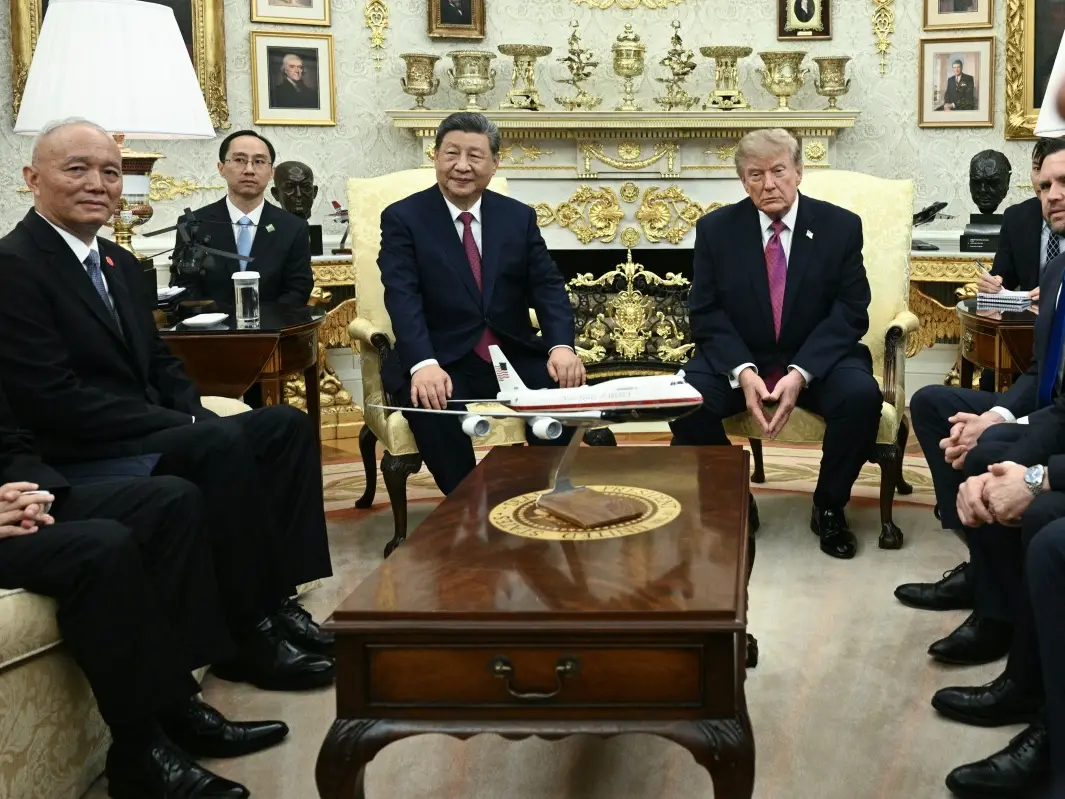)
Trump's welcome to Xi demonstrates 'attraction' to dictators: Chuck Schumer
)
Nations League: Germany draw on Klopp debut; Portugal, Norway win
)
WION Iconic Tourism Summit 2026: Union Minister Shekhawat on 'experiential travel', peace diplomacy
)
Scientists detect first radio signals directly from faraway planet
)
A seven-day roadmap? Iran proposes plan to end war, reopen Strait of Hormuz and resume nuclear talks
)
China to test supersonic jet that moves at Mach 2, double the speed of sound
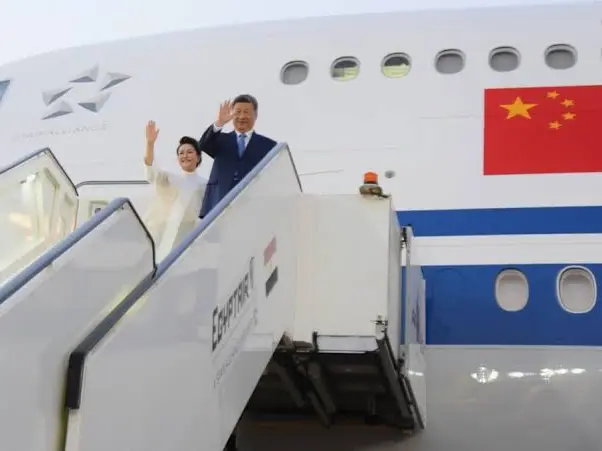)
Xi Jinping's 'special plane' vs Trump's Air Force One: What's the difference?
)
UNGA 2026: Israeli PM attacks Britain, France for past colonialism
)
West Indies coach Sammy looking at India series as opportunity to finetune ahead of ODI World Cup 2027 qualifiers
)
‘We’ve never gotten along better’: Trump praises Xi, jokes about White House ballroom at high-stakes state dinner
)
Nearly half of young people trust AI over humans to check facts, major study finds
)
'Partners rather than rivals': Xi Jinping's first message after landing in US for Trump summit
)
Yemen called Trump for US military support in fight against Houthis: Official
)
2,000-foot tube, laser tests and more: China builds towns to expand nuclear arsenal, satellite images show
)
Meet Adrian Abraham: 9-year-old Indian-origin guitar prodigy aiming for a Guinness World Record
)
US faces fresh cost crunch as mortgage rates hit 7%, oil tops $107 and gas prices surge
)
Trump-Xi state dinner 2026: Who is invited? Full guest list of tech CEOs, business leaders and officials
)
'Blockbuster' nor'easter develops an eye similar to hurricanes as warnings are issued
)
Alarming video emerges as landslide damages houses in Sikkim’s Rimbi village. Watch
)
'Making history': Xi Jinping praises Trump as US-China leaders dine at White House
)
Australian PM Anthony Albanese calls OpenAI AI incident 'unacceptable' after restricted data access
)
'What kind of confession is this?': Pakistan PM Shehbaz Sharif’s 'terrorists would be roaming New York' remark goes viral, raises alarm online. Watch
&im=FitAndFill=(700,400))
Netanyahu at UN: Mass walkout, attack on Mamdani and Iran threats | In Pics
)
'We do not wish to continue. It's America that must choose': Iran president Pezeshkian calls on US to end war
)
WION Iconic Tourism Summit: How local tourism MSMEs must upskill for AI integration
)
Bollywood mourns Mushtaq Khan: Sunny Deol, Rajpal Yadav and others pay tribute
)
EC appointment law: Why is the 2023 act controversial, and what happens next? WION explains
)
Who is Lt-Gen Nauman Mahmood, Pakistan's first secretary general of Makkah Defence Alliance?
)
Israeli envoy to US Yechiel Leiter’s son critically injured in West Bank ramming attack
)
'Fund people, not bombs': Hundreds take to New York streets as Netanyahu delivers speech at UN; dozens arrested
The authors said that data from our closest primate relatives is extremely useful for reconstructing and modelling human life history evolution. The researchers have combined demographic and hormonal data to calculate a metric called the post-reproductive representation (PrR), which is the average proportion of the adult life span that is spent in a post-reproductive state.
To carry out the study, the authors said they examined the mortality and fertility rates of 185 female chimpanzees in the Ngogo community of wild chimpanzees in Kibale National Park, Uganda, from 21 years of observation (1995–2016).
As in other chimpanzee populations and humans, fertility declined after age 30, and no births were observed after age 50. It was not unusual for Ngogo females to live past the age of 50 (N = 16 females).
The authors concluded that menopause ends reproduction around the age of 50 in both humans and wild chimpanzees.
Some scientists have put forward the "grandmother hypothesis" as a possible explanation: the idea that older females enter a post-reproductive state to consume fewer resources and focus on improving their grandchildren's odds of survival.
However, previous research has not discovered a significant proportion of wild female chimps in a post-reproductive stage. Some researchers gave one explanation which is that the excellent conditions at Ngogo allow more females to live until they are older.
Similar explanations have made to explain why many species, including chimps, go through menopause in captivity.
However, the researchers believe there is another possibility, that could be a long period of life after reproduction has been common throughout chimp evolution, but recent human activity at other sites, including Ngogo, has hampered the survival of wild populations, including older females, due to disease and habitat loss.
(With inputs from agencies)
WATCH WION LIVE HERE
You can now write for wionews.com and be a part of the community. Share your stories and opinions with us here.