'Chilling' success: Russian scientists cultivate watermelons in the coldest part of Earth

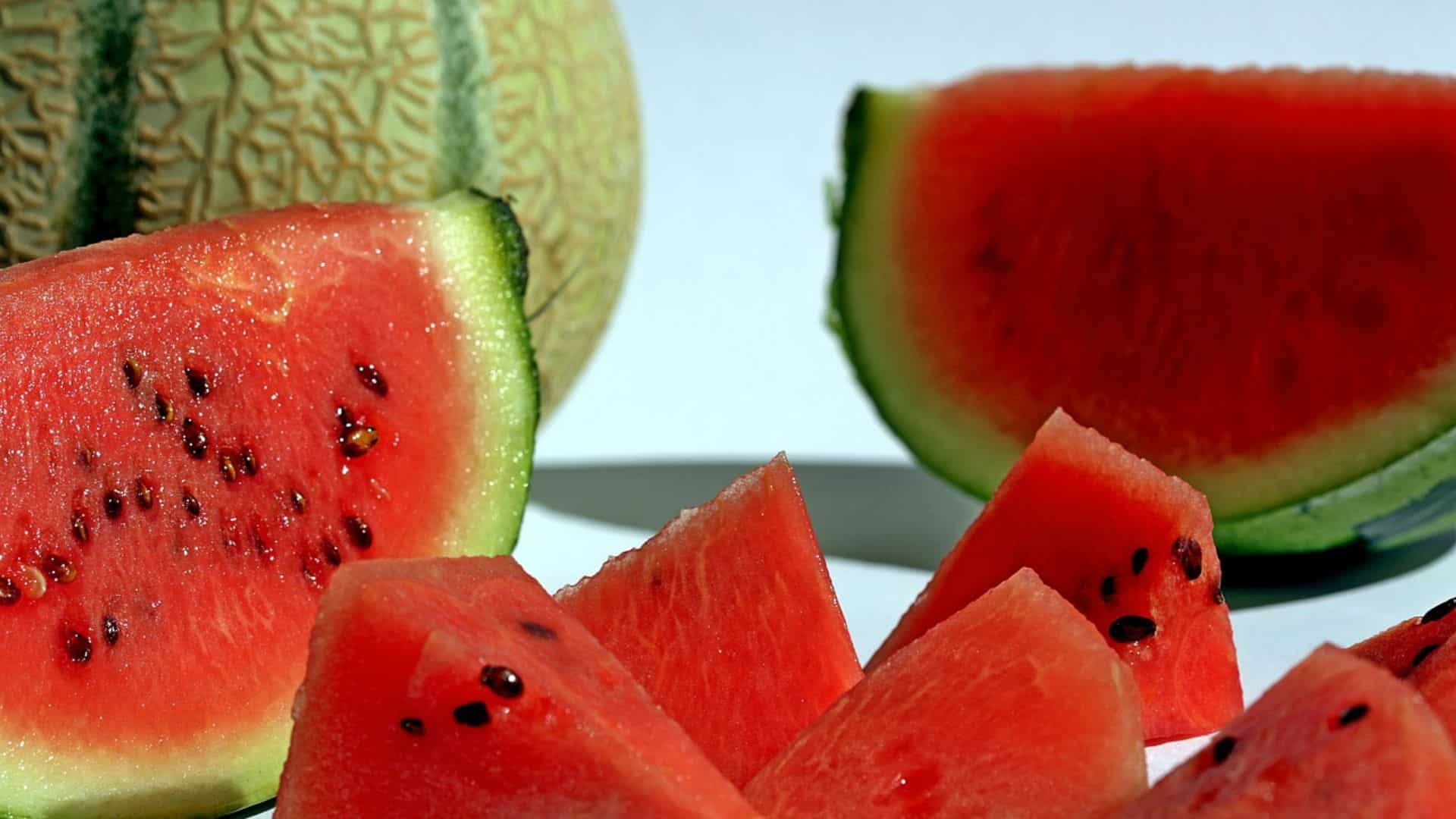
Representational image of a watermelon
In an astonishing feat of agriculture, scientists have achieved the remarkable milestone of cultivating watermelons in the seemingly inhospitable terrain of Antarctica.
This groundbreaking endeavour took place at the Vostok Station, a year-round Russian research facility situated at the Pole of Cold, according to Live Science.
This locale has earned its name due to its classification as the coldest spot on Earth, where temperatures plummetto a bone-chilling minus 128.6 degrees Fahrenheit (minus 89.2 degrees Celsius).

Evolutionary origins of watermelons and the Antarctic challenge
Watermelons, originating over 4,300 years ago in present-day Sudan, are an ancient fruit deeply rooted in the region's historical artwork, even making appearances in Egyptian tomb paintings in Saqqara.
&imwidth=180&imheight=135&format=webp&quality=medium)
NFl 2026/27 - Saints vs Steelers to go ahead in Paris next week despite protest
&imwidth=180&imheight=135&format=webp&quality=medium)
4 killed, 19 critically injured in grass fire at Canada's largest military base
&imwidth=180&imheight=135&format=webp&quality=medium)
Lizard people? Ex-US Army sniper claims soldier killed by 'reptilian beings' in battle near Area 51
&im=FitAndFill=(700,400)&imwidth=180&imheight=135&format=webp&quality=medium)
5 technologies that could make the Tesla Roadster one of the most unusual cars ever built
&imwidth=180&imheight=135&format=webp&quality=medium)
'It's a joy to see the makers bring it on such a grand scale': SS Rajamouli on Ramayana
&imwidth=180&imheight=135&format=webp&quality=medium)
China responds to Trump's Press Secretary Katie Zacharia after toilet remark: 'Visit China more often'
&imwidth=180&imheight=135&format=webp&quality=medium)
No Ravindra Jadeja, Yashasvi Jaiswal in India’s 2027 ODI World Cup plans: Report
&imwidth=180&imheight=135&format=webp&quality=medium)
WATCH | iPhones, luxury perfumes floating in Hormuz? Iranian fishermen make bizarre discovery
&im=FitAndFill=(700,400)&imwidth=180&imheight=135&format=webp&quality=medium)
New OTT releases this week (October 19-25, 2026): Gajab Raat to Chaar Yaar-8 titles to watch during Dussehra week on Netflix, Prime Video and more
&imwidth=180&imheight=135&format=webp&quality=medium)
'Those who have destroyed must pay': Macron says France feels 'anger and shame' over protest violence
&im=FitAndFill=(700,400)&imwidth=180&imheight=135&format=webp&quality=medium)
Tesla Roadster engineering: The hidden hardware behind its flying demonstration
&imwidth=180&imheight=135&format=webp&quality=medium)
Putin seeks Trump-Xi summit on Ukraine war, proposes talks alongside APEC: Report
&imwidth=180&imheight=135&format=webp&quality=medium)
Brendan Taylor overtakes Andy Flower to become Zimbabwe’s leading ODI run-scorer
&imwidth=180&imheight=135&format=webp&quality=medium)
Nobel laureate Machado, who dedicated prize to Trump, confirmed as Venezuela opposition leader
&imwidth=180&imheight=135&format=webp&quality=medium)
Tiger Shroff attacked by three gunmen in Mumbai, actor safe, two injured
&imwidth=180&imheight=135&format=webp&quality=medium)
'We feel like Mr India': Gujarat’s undercover SHE team guard garba nights at Navratri
&imwidth=180&imheight=135&format=webp&quality=medium)
Flying car race: Alef Aeronautics welcomes Tesla Roadster '11 years' later, but are the two models the same?
&imwidth=180&imheight=135&format=webp&quality=medium)
Cattle feed found in biscuits of Indian company, FSSAI sends legal notice
&imwidth=180&imheight=135&format=webp&quality=medium)
Tiger Shroff shows injuries after Juhu firing incident; Eknath Shinde says Mumbai won’t tolerate gang wars
&imwidth=180&imheight=135&format=webp&quality=medium)
2.5 lakh cap, 4-passenger limit: What is Delhi's new e-rickshaw draft policy
&imwidth=180&imheight=135&format=webp&quality=medium)
Priest dies after crucifix falls on his head during livestreamed Mass in Ecuador | VIDEO
&imwidth=180&imheight=135&format=webp&quality=medium)
Pujara says 'Samson and Vaibhav cannot be in Playing XI' for India on NZ tour
&imwidth=180&imheight=135&format=webp&quality=medium)
Kylie Jenner makes Victoria’s Secret debut in $50 million diamond-encrusted design as Timothée Chalamet cheers
&imwidth=180&imheight=135&format=webp&quality=medium)
Cattle-feed bran in biscuits, detergent in milk: FSSAI acts against 3 companies
&imwidth=180&imheight=135&format=webp&quality=medium)
After Kennedy Center and reflecting pool disputes, Trump turns to Washington golf course plan amid legal battle
&imwidth=180&imheight=135&format=webp&quality=medium)
Anirudh Ravichander-Kavya Maran wedding: Telangana CM reveals Chennai reception date
&imwidth=180&imheight=135&format=webp&quality=medium)
US to review Russia sanctions waiver within 60 days as Rubio cites India’s ‘substantial’ Russian energy imports
&imwidth=180&imheight=135&format=webp&quality=medium)
Why France looks the most fragile in the G7 amid protests and budget deadlock
&imwidth=180&imheight=135&format=webp&quality=medium)
India moves to buy 10,000 more AI chips for a national compute pool open to startups
&imwidth=180&imheight=135&format=webp&quality=medium)
Anthropic’s public benefit plan: What its 5% share commitment means for AI’s future
&imwidth=180&imheight=135&format=webp&quality=medium)
Elon Musk features on Lucknow's 'anti-India' Ravan poster alongside Rahul Gandhi, Akhilesh
&imwidth=180&imheight=135&format=webp&quality=medium)
MI5 is opening an AI threat centre, and OpenAI just told MPs the worst isn't over
&imwidth=180&imheight=135&format=webp&quality=medium)
No Kings' Instagram suspended during early-voting campaign
&imwidth=180&imheight=135&format=webp&quality=medium)
Lawrence Bishnoi gang claims responsibility for firing at Tiger Shroff over ties to Salman Khan
&imwidth=180&imheight=135&format=webp&quality=medium)
Researchers name newly discovered Andean plant after Argentina legend Lionel Messi
The evolution of this succulent berry occurred in a climate vastly dissimilar from the extreme cold of Antarctica.
Creating ahaven for watermelons
The innovative experiment unfolded under the purview of researchers from the Russian Antarctic Expedition of the Arctic and Antarctic Research Institute (AARI), in collaboration with experts from the Agrophysical Research Institute and the Institute of Biomedical Problems of the Russian Academy of Sciences.
Their endeavour involved transforming the Vostok Station's greenhouse into an oasis conducive to watermelon growth.
By manipulating the air temperature and humidity, the scientists managed to create an environment favourable to nurturing these juicy fruits.
Strategic selection and cultivation
The research team meticulously handpicked two varieties of early-ripening watermelons, focussing not only on taste but also on adaptability to the greenhouse's unique challenges, such as low atmospheric pressure and oxygen deficiency.
The selected watermelon seeds were sowed in a thin layer of soil substitute and exposed to specialised lighting emulating natural sunlight. Since natural pollinators were absent, researchers undertook the task of manual pollination, ensuring the plants' reproductive success.
Fruitful harvest and beyond
After a span of precisely 103 days from the initial seed planting, the scientists were rewarded with an astonishing yield: eight ripe and delectable watermelons sprawled across six distinct plants.
These watermelons boasted sizes of up to 2 pounds (1 kilogram) each and diameters reaching 5 inches (13 centimetres), as detailed by the Russian Geographical Society.
Also watch |Antarctica: Scientists find ocean-floor like sediments under ice stream
This accomplishment adds to a growing series of triumphs in Antarctic agriculture. In 2020, researchers at Vostok Station successfully nurtured various plants, including dill, basil, parsley, arugula, and cabbage.
Moreover, Korean scientists achieved watermelon cultivation at the King Sejong Station in West Antarctica in 2021, a site known for its recorded temperature low of minus 78.1 F (minus 25.6 C), as documented by The Korean Bizwire.
Looking ahead, the scientific community aspires to diversify its Antarctic crops. Plans are in place to cultivate an array of fruits, encompassing blackberries, blueberries, and strawberries.
WATCH WION LIVE HERE: