Secret text from 3,000 years ago unknown to today's humans discovered in Turkey

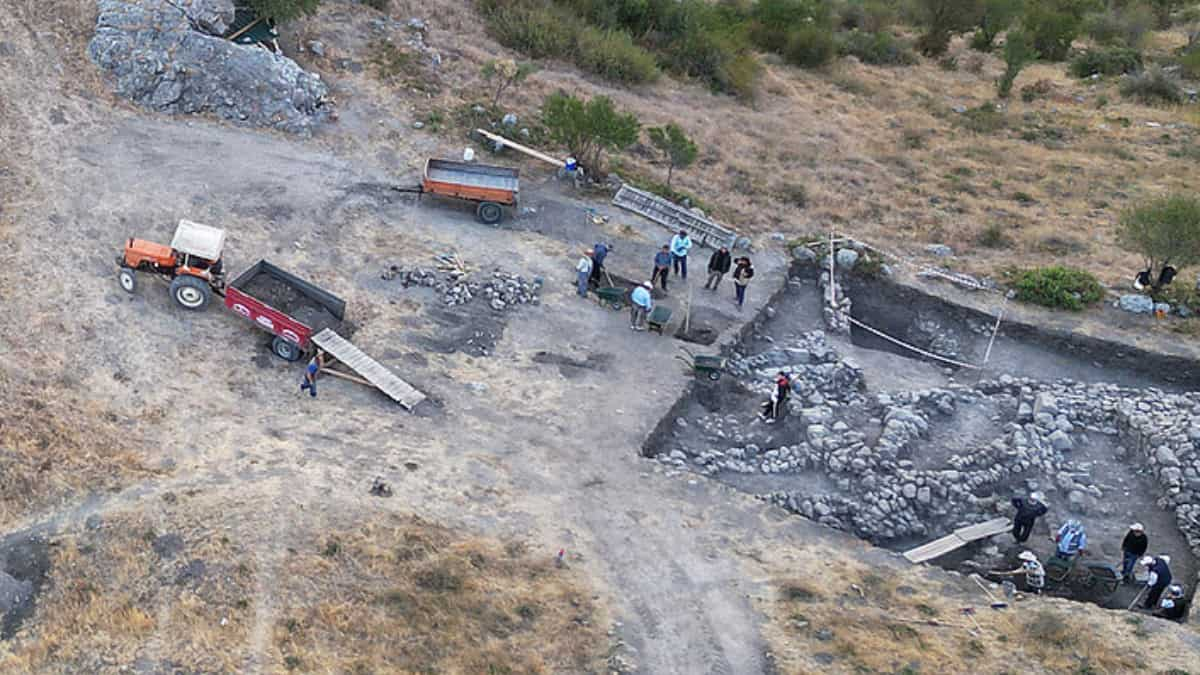
Boğazköy
Tens of thousands of ancient clay tablets that were found in Turkey have unveiled a secret text. The tablets were written in the time of the Hittite Empire during the second millennium BCE.So far, the experts are not aware of the script, however, it is believed to be a long-lost language from more than 3,000 years ago.
It looks similar to other Anatolian-Indo-European languages but is different from any other ancient written language found in the Middle East.
The scribblings begin at the end of a cultic ritual document written in Hittite, which is the oldest known Indo-European language.

It follows an introduction that, according to experts, translates to: "From now on, read in the language of Kalama."
In the translation, the reference to Kalašma is to an organised society from the Bronze Age, which probably was from the northwest fringe of the Hittite Empire in ancient Anatolia.

'Built as a team, won as a team': India head coach reacts to T20I series win

Doomsday warning? Why governments are warning people to stockpile emergency supplies for 72 hours

Shah Rukh Khan turns 61: 5 lesser-known facts about Bollywood's King that you may not know

IND vs NZ, 1st ODI: When and where to watch live streaming in India?

California desert lights up brighter than full moon as part of controversial project

Sacred relics of the Buddha unveiled in Arunachal Pradesh

F1 2026: Kimi Antonelli, 20, becomes youngest world champion after 3rd place in Mexico City GP

US midterms: Prediction markets give Democrats 71% chance of Senate control, 95% for House

Five Kuki men killed in Manipur in ethnic clashes between Kuki and Naga groups

New OTT releases this week (November 2-8, 2026): I'm Game, Meesaya Murukku 2, Blind Game- 8 latest titles to watch this Diwali on OTT platforms

Captured on CCTV video: Six-year-old special needs girl brutally attacked by Class III student at Panchkula school

Earth is splitting apart in Iceland and humans can literally fall through the crack

Fires, clashes and arrests: France-inspired protests turn violent in Switzerland | WATCH

US midterm elections 2026: THESE battleground counties could decide Trump’s Senate fate

Netanyahu pushing Trump hard to attack Iran immediately after midterm elections: Report

Andhra chainsaw school attacker shot in police encounter while trying to flee

Iran to be hit by nuclear bomb soon? US commentator makes big claim

India become first team to smash 400 T20I sixes in a calendar year

'Holy fu*k, we’re out of time...mayday': Pilot's desperate final call before deadly Florida plane crash

Israel Elections: Eisenkot vows to use Knesset majority against Netanyahu as Arab leader backs PM's ouster

Six Indian tourists rescued from snow-hit Dolpa district in Nepal

‘Engage with open heart to avoid fresh election,’ Israel’s President Isaac Herzog tells parties

Plane crashes into Florida residential area, erupts into massive fireball; 9 killed

Democrat Haley Stevens endorses GOP against El-Sayed in Michigan Senate race after feud over Israel

Tear gas, grenades, stone-pelting: Bangladesh on the boil as workers wage protest turn violent

India U-19 Asia Cup Squad: Aaryavir Sehwag and Anvay Dravid picked; check full team

Former Man Utd manager Erik ten Hag says Cristiano Ronaldo 'can no longer deliver'

'Radiation warning, public threat': Russia, Ukraine suffer massive cyberattacks on emergency alert systems

IND vs NZ: Mark Chapman, Rachin Ravindra ruled out of India ODI series

VIDEO: High speed SUV hits multiple cars in Gurugram, dashcam captures accident

Trump prepares for life after midterm defeat, says 'I'll become Mr Veto'

India signs $6.4bn deal for eight home-built Naval warships

Marvel’s 2,000-drone show takes over Seoul’s Han River ahead of Avengers: Doomsday release | Watch

Shah Rukh Khan skips balcony appearance at Mannat on his 61st birthday, shares a hand written note for fans instead

'One little banana heist': UP Police shares elephant mom-calf clip to teach honesty, internet teaches it a lesson instead | Viral video

'I want teams to feel intimidated coming to Mumbai,' says new MI batting coach Robin Uthappa

Omar Abdullah marries journalist Nidhi Razdan, announces ‘new journey’ on social media
It was believed to be some distance from the capital city of Hattusa, where this clay tablet was later unearthed.
During an excavation at Boğazköy-Hattusha, which is a UNESCO historic site in north-central Turkey near present-day Bolu or Gerede, the cuneiform writing was reportedly discovered.
Also read:NASA's James Webb telescope observes planet that rains sand on a planet, like water on Earth
Were Hittites interested in foreign languages?
As quoted in the report, Andreas Schachner, who is the head of Hattusa Ruins Archaeological Excavations, said that he could feel the weight of its importance when he held the tablet for the first time.
He said that he was particularly impressed by its preservation as compared to more than 25,000 others found at the same site in what is now Boğazköy.
Professor Daniel Schwemer, who is the head of the Chair of Ancient Near Eastern Studies at Julius-Maximilians-Universität (JMU) Würzburg in Germany, explained that "the Hittites were uniquely interested in recording rituals in foreign languages" as it was noted in the recent report that the discovery of another language is exciting, but not so surprising.
In news reports, Schwemer was quoted as saying that the text will be published in the seventh instalment of a series of volumes of cuneiform texts on Feb 9, 2024, with a transliteration published in the Thesaurus Linguarum Hethaeorum Digitalis, which is a peer-reviewed archive of transliterations of cuneiform manuscripts from Hittite tablet collections.