'Death sentence for star formation', yet Andromeda XXXV survived. How?

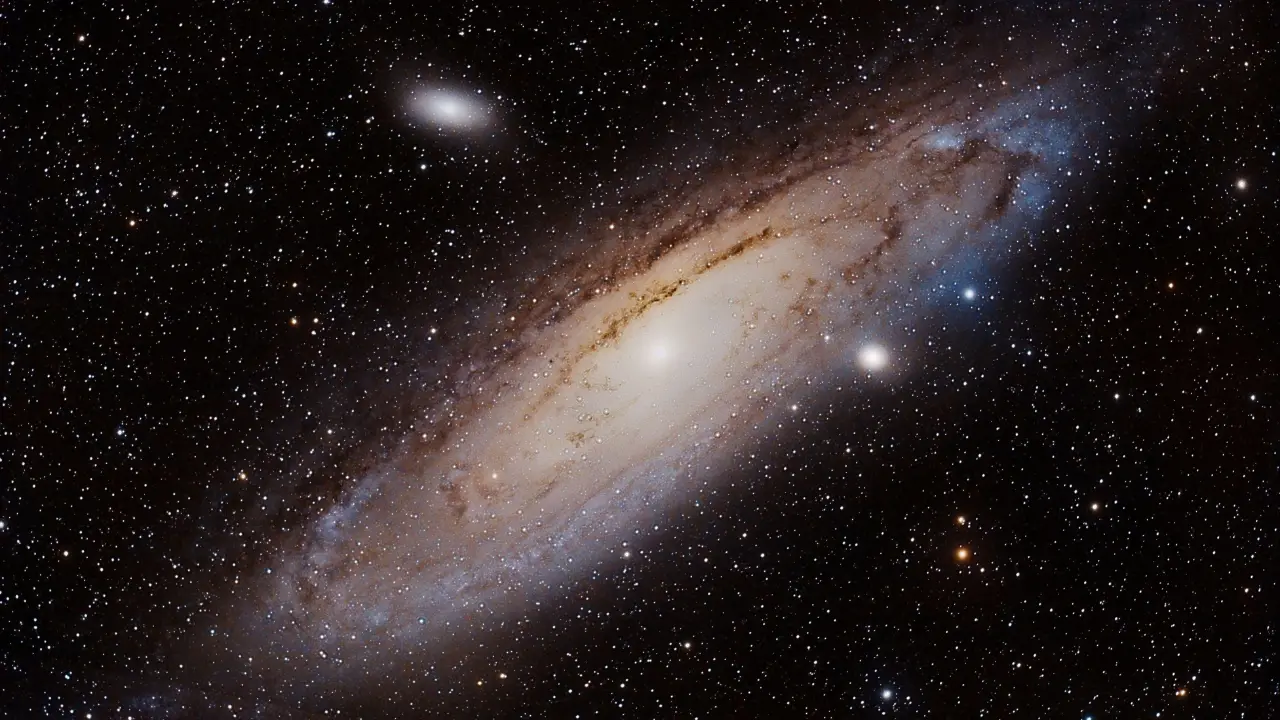
Andromeda XXXV was still churning out more stars, while stars in the satellite galaxies around the Milky Way mostly only had ancient stars. Science & Tech Trending
The Andromeda Galaxy, the nearest major galaxy to the Milky Way, has something lurking around its outskirts, something that should not exist at all. Astronomers have discovered a satellite galaxy called Andromeda XXXV. It is the dimmest and smallest satellite galaxy to be ever discovered. Experts are shocked to see this satellite galaxy since according to calculations, it should not be there.
Scientists are now trying to solve the mystery, since while Milky Way's satellite galaxies stopped churning out stars billions of years ago, Andromeda XXXV has continued to birth more stars.
The discovery of this satellite galaxy on the outer edges of the Andromeda was published in Astrophysical Journal Letters. A team of researchers led by the University of Michigan found the structure and the finding has changed their ideas about how galaxies form and survive in different cosmic environments.

Also Read: EUREKA! Barnard’s Star, the 'great white whale' of astronomy, is hiding four planets
The dwarf galaxy is about 3 million light-years away and is proof that the universe harbours more mysteries and "helps correct what we do know and reveals more about what we don’t," Marcos Arias, lead author of the study, said.
Milky Way's satellite galaxies
&imwidth=180&imheight=135&format=webp&quality=medium)
Rahul Gandhi's plea against Election Commission delayed as Supreme Court registry flags 14 ‘defects’
&im=FitAndFill=(700,400)&imwidth=180&imheight=135&format=webp&quality=medium)
Navratri 2026: 9 days, 9 forms of Goddess Durga and 9 colours- Check the complete list
&imwidth=180&imheight=135&format=webp&quality=medium)
Korean peninsula tensions escalate as North Korea launches multiple ballistic missiles, PACOM says 'no threat to US personnel'
&imwidth=180&imheight=135&format=webp&quality=medium)
Trump weighs firing Kimberly Guilfoyle as US ambassador to Greece amid misconduct allegations: Report
&imwidth=180&imheight=135&format=webp&quality=medium)
Anti-SIR protest in Mumbai: Protestors wear black masks & ribbons in Mumbai
&imwidth=180&imheight=135&format=webp&quality=medium)
UK PM Andy Birnham renews claims of Russian meddling in Brexit vote
&imwidth=180&imheight=135&format=webp&quality=medium)
BCCI rejects venue shift reports, India vs Sri Lanka 1st ODI to remain in Delhi
&imwidth=180&imheight=135&format=webp&quality=medium)
'Absolutely disgusting': Australia slams US plan to livestream Nidal Hasan's execution; Mike Johnson raises concerns, warns of terrorist propaganda
&imwidth=180&imheight=135&format=webp&quality=medium)
1,500 drones illuminate Mumbai sky as Cordelia Cruises unveils second ship, Cordelia Sky
&imwidth=180&imheight=135&format=webp&quality=medium)
Houthis warns US of 'painful response' if Washington joins Saudi war in Yemen as airlines suspend flights to Saudi Arabia
&imwidth=180&imheight=135&format=webp&quality=medium)
Congress demands action against chief election commissioner
&imwidth=180&imheight=135&format=webp&quality=medium)
'Turn approver, resign, we'll forgive you': Rahul Gandhi claims receiving messages from CEC Gyanesh Kumar
&imwidth=180&imheight=135&format=webp&quality=medium)
'I will not be silenced': Ilhan Omar alleges political intimidation after federal officers search her Washington home
&imwidth=180&imheight=135&format=webp&quality=medium)
Robotic surgery, advanced treatment: What is coming to this small Gujarat town?
&imwidth=180&imheight=135&format=webp&quality=medium)
Pakistan's government blames PTI for rise of terrorism in Khyber Pakhtunkhwa
&imwidth=180&imheight=135&format=webp&quality=medium)
‘This is just the start’: Maaya Rajeshwaran on historic ITF title, confidence boost and future goals
&imwidth=180&imheight=135&format=webp&quality=medium)
I.N.D.I.A. Bloc lists 10 requests to Supreme Court
&im=FitAndFill=(700,400)&imwidth=180&imheight=135&format=webp&quality=medium)
How does a robot decide what to do next?
&imwidth=180&imheight=135&format=webp&quality=medium)
Trump says he 'may' meet North Korean leader Kim Jong Un during upcoming Asia trip
&imwidth=180&imheight=135&format=webp&quality=medium)
'Ouch!!! That must hurt': Kangana Ranaut hails Kamal Haasan's sharp reply to Elon Musk over Starlink row
&imwidth=180&imheight=135&format=webp&quality=medium)
Sidhu Moose Wala’s younger brother wins hearts by recreating late singer’s signature move at Toronto Hologram Show
&imwidth=180&imheight=135&format=webp&quality=medium)
Girl 'dead' for 8 hours wakes up at her own funeral, dad insists she wasn't breathing
&imwidth=180&imheight=135&format=webp&quality=medium)
UK school ditches technology, shifts from screen to pen and paper for learning
&imwidth=180&imheight=135&format=webp&quality=medium)
Opposition’s 10 demands in Supreme Court petition range from stay on SIR to audit of voter rolls
&imwidth=180&imheight=135&format=webp&quality=medium)
'I am thoroughly unamused': Judge slams Trump administration after 400 trees cut at Washington golf course
&im=FitAndFill=(700,400)&imwidth=180&imheight=135&format=webp&quality=medium)
New OTT releases this week (October 12-18, 2026): Sacrifice, Koffee with Karan S9, Roadies Rebirth- 6 titles coming on Netflix, JioHotstar and more
&imwidth=180&imheight=135&format=webp&quality=medium)
Delhi protest: CJI Surya Kant declines to meet India Bloc leaders
&imwidth=180&imheight=135&format=webp&quality=medium)
China’s gold rush puts billion in focus
&imwidth=180&imheight=135&format=webp&quality=medium)
India's Ajit Doval, Iran's Mohsen Rezaei hold talks amid escalating West Asia tensions, discuss 'issues of mutual interest'
&imwidth=180&imheight=135&format=webp&quality=medium)
'Almost certainly': UK Prime Minister Andy Burnham says Iran's IRGC behind RAF Fairford threat
&imwidth=180&imheight=135&format=webp&quality=medium)
Elon Musk pumps $276 million into Republican campaigns ahead of US midterm elections
&imwidth=180&imheight=135&format=webp&quality=medium)
'Never met' him: Melbourne Imam denies links to Flydubai co-pilot Hamam al-Hammami
The Milky Way is also surrounded by several satellite galaxies, and this is not the first one seen around Andromeda. However, what's different is that the earlier satellite galaxies were too big and bright, while this one is the faintest one yet seen.
Also Read: Astronomers find 128 new moons orbiting planet Saturn: 'Don't think Jupiter will ever catch up'
“These are fully functional galaxies, but they’re about a millionth of the size of the Milky Way,” the study’s senior author, Eric Bell, U-M professor and associate chair of astronomy said.
Till now, scientists have only managed to study the tiny galaxies around the Milky Way because of their proximity. Bell said, "It’s the first time we’ve done that outside our system.”
Hubble helped find the satellite galaxy
Bell and Eric used the Hubble Space Telescope to study the galaxy. The National Science Foundation and NASA, through the Space Telescope Science Institute, also supported the program.
'Murder mystery' in Andromeda
What they found fascinated them. They saw that Andromeda XXXV was still churning out more stars, while stars in the satellite galaxies around the Milky Way mostly only had ancient stars.
“Most of the Milky Way satellites have very ancient star populations. They stopped forming stars about 10 billion years ago,” Arias said. “What we’re seeing is that similar satellites in Andromeda can form stars up to a few billion years ago—around 6 billion years.”
Also Read: 'Second home for humanity?' Super-Earth 20 light-years away excites scientists
Bell says there is a "murder mystery in Andromeda", where the larger host likely sucked the gas supply from the smaller galaxies, ending star formation.
Bell further said that when the universe got extremely hot for a second time after its birth, it was "a death sentence for star formation."
“We thought they were basically all going to be fried because the entire universe turned into a vat of boiling oil,” Bell said. However, why was Andromeda XXXV not fried is a question that might not get an answer anytime soon.

