India's Gen Z rebellion: Can the 'Lehra Do Tiranga' movement reshape the political order? | The Verdict

&imwidth=600&imheight=450&format=webp&quality=medium "India's Gen Z rebellion: Can the 'Lehra Do Tiranga' movement reshape the political order? | The Verdict")
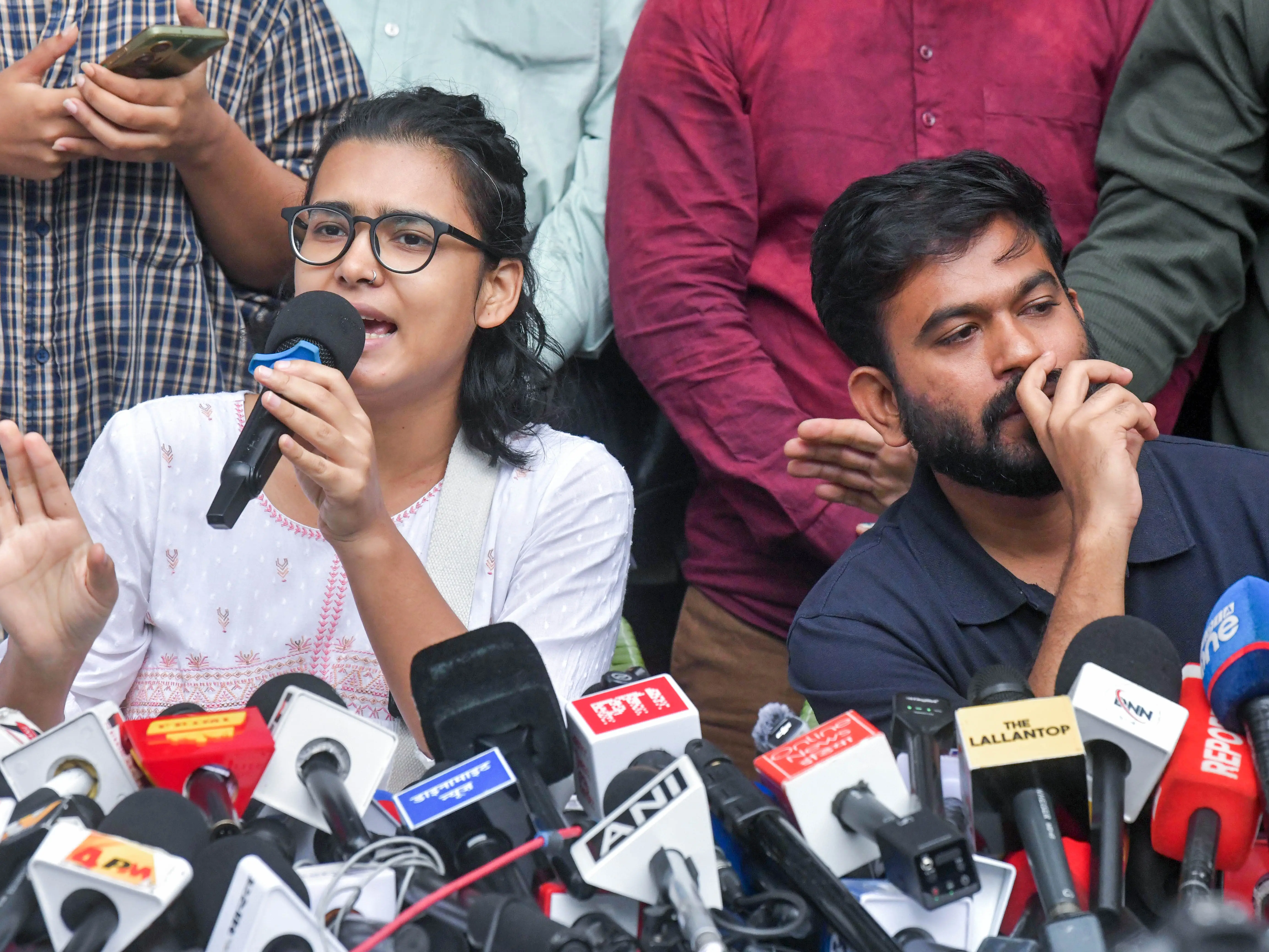
All India Students' Association (AISA) National President Neha Bora addresses a press conference at the Press Club of India, in New Delhi on Thursday. CJP Founder Abhijeet Dipke also present. Photograph: (ANI)
India's youth-led protests, including the CJP's Lehra Do Tiranga campaign, have reignited debate over electoral accountability, civil liberties and the right to protest, raising questions about whether Gen Z can translate street mobilisation into lasting democratic reforms.
From Delhi to Mumbai, youth-led demonstrations have reignited debate over electoral accountability, civil liberties and the constitutional right to protest. But as political demands grow louder and police restrictions face scrutiny, a larger question emerges: can India's Gen Z translate street mobilisation into lasting change?
India's youth-led political activism has entered another consequential phase.
At the centre of the latest demonstrations is the Cockroach Janta Party, or CJP, whose campaign over electoral transparency has drawn attention to the boundaries between peaceful dissent and public-order enforcement.
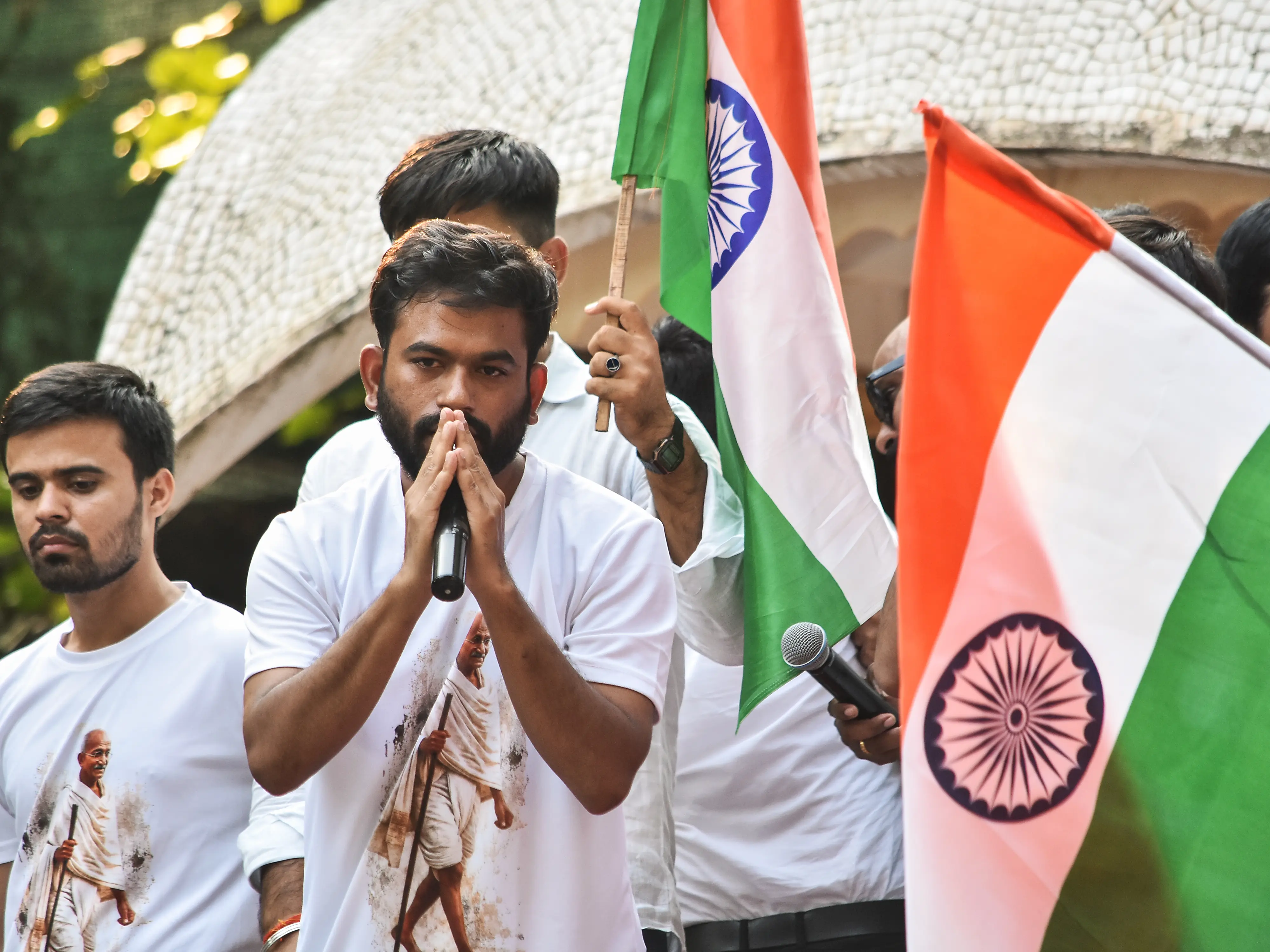
The movement has dubbed its latest march “Lehra Do Tiranga” — Let the Tricolour Fly, presenting the Tiranga Yatra as a demonstration of democratic expression and national identity.
Its immediate demands include electoral accountability and the resignation of Chief Election Commissioner Gyanesh Kumar.
Some voices in the wider protest movement have also called for Prime Minister Narendra Modi and Home Minister Amit Shah to resign.
Trending Stories
&im=FitAndFill=(700,400)&imwidth=280&imheight=210&format=webp&quality=medium)
&imwidth=280&imheight=210&format=webp&quality=medium)
&imwidth=280&imheight=210&format=webp&quality=medium)
&imwidth=280&imheight=210&format=webp&quality=medium)
&imwidth=280&imheight=210&format=webp&quality=medium)
&imwidth=280&imheight=210&format=webp&quality=medium)
&imwidth=280&imheight=210&format=webp&quality=medium)
&imwidth=280&imheight=210&format=webp&quality=medium)
&imwidth=280&imheight=210&format=webp&quality=medium)
&imwidth=280&imheight=210&format=webp&quality=medium)
&imwidth=280&imheight=210&format=webp&quality=medium)
&imwidth=280&imheight=210&format=webp&quality=medium)

&imwidth=280&imheight=210&format=webp&quality=medium)
&imwidth=280&imheight=210&format=webp&quality=medium)
&imwidth=280&imheight=210&format=webp&quality=medium)
&imwidth=280&imheight=210&format=webp&quality=medium)
&im=FitAndFill=(700,400)&imwidth=280&imheight=210&format=webp&quality=medium)
&im=FitAndFill=(700,400)&imwidth=280&imheight=210&format=webp&quality=medium)
&imwidth=280&imheight=210&format=webp&quality=medium)
&im=FitAndFill=(700,400)&imwidth=280&imheight=210&format=webp&quality=medium)
&imwidth=280&imheight=210&format=webp&quality=medium)
&imwidth=280&imheight=210&format=webp&quality=medium)
&imwidth=280&imheight=210&format=webp&quality=medium)
&imwidth=280&imheight=210&format=webp&quality=medium)
&imwidth=280&imheight=210&format=webp&quality=medium)
&imwidth=280&imheight=210&format=webp&quality=medium)
&imwidth=280&imheight=210&format=webp&quality=medium)
&im=FitAndFill=(700,400)&imwidth=280&imheight=210&format=webp&quality=medium)
&imwidth=280&imheight=210&format=webp&quality=medium)
&imwidth=280&imheight=210&format=webp&quality=medium)
&imwidth=280&imheight=210&format=webp&quality=medium)
&im=FitAndFill=(700,400)&imwidth=280&imheight=210&format=webp&quality=medium)
&imwidth=280&imheight=210&format=webp&quality=medium)

&imwidth=280&imheight=210&format=webp&quality=medium)
&im=FitAndFill=(700,400)&imwidth=280&imheight=210&format=webp&quality=medium)
However, those broader demands should not be confused with the CJP's stated immediate objective.
The distinction is important because calls for accountability, demands for political resignation and attempts to change a government involve different political and constitutional processes.
Delhi and Mumbai: One movement, two police responses
The contrasting treatment of demonstrations in Delhi and Mumbai has become central to the debate.
Mumbai Police permitted a Tiranga rally at Azad Maidan, while Delhi Police restricted a proposed gathering at Connaught Place, citing public-order concerns and the potential disruption of commercial activity.
Ahead of the Delhi demonstration, police officers visited the residence where CJP founder Abhijeet Dipke was staying and served him a notice concerning the planned march.
The notice referred to restrictions under Section 163 of the Bharatiya Nagarik Suraksha Sanhita.
Dipke questioned the intervention, arguing that peaceful demonstrations involving the national flag should not be treated as unlawful political activity.
Police, however, maintained that gatherings must comply with restrictions intended to preserve public order.
Reports subsequently indicated that Dipke was placed in preventive detention ahead of the proposed march.
The dispute raises a fundamental question: when does legitimate regulation of public gatherings become a disproportionate restriction on peaceful political expression?
What does India's Constitution guarantee?
Article 19 of the Indian Constitution protects freedom of speech and the right to assemble peaceably and without arms.
These protections are fundamental to democratic participation.
However, the right to assembly is subject to reasonable restrictions, including those imposed in the interests of public order.
This means that protesters do not possess an unrestricted right to occupy any public location at any time.
Equally, authorities must exercise their regulatory powers within constitutional limits.
The Supreme Court has been asked to examine disputes connected to the demonstrations, including restrictions affecting protest sites and allegations concerning police conduct.
Judicial scrutiny does not automatically establish wrongdoing by either protesters or police.
It provides a mechanism for determining whether competing claims have been handled lawfully and proportionately.
The politics behind the protests
The controversy surrounding electoral-roll revisions has attracted opposition parties, student organisations and civil society groups.
Opposition leaders have questioned the removal of large numbers of names from voter lists, warning that eligible citizens could be excluded.
The Election Commission rejects allegations of political manipulation and maintains that revisions are necessary to improve electoral accuracy.
The broader mobilisation has also drawn participation from Left-associated student organisations and political activists.
That support gives the issue greater national visibility.
But it also raises questions about the relationship between independent youth activism and established political parties.
Movements often bring together groups that share particular grievances without agreeing on every political objective.
The presence of opposition parties does not, by itself, mean that every demonstrator supports calls for regime change.
Can India follow Bangladesh or Nepal?
Comparisons with youth-led political upheavals in Bangladesh and Nepal have become part of the discussion.
Both countries have experienced major political consequences from sustained mobilisation.
Yet India's circumstances differ substantially.
Its parliamentary democracy, federal system, population, regional political diversity and established electoral institutions create a distinct political environment.
A successful demonstration can generate attention and compel public discussion.
But national political transformation generally requires more than crowd mobilisation or social media engagement.
It demands organisation, sustained participation, clear objectives and engagement with constitutional institutions.
Calls for the resignation of elected leaders are legitimate forms of peaceful political expression.
However, replacing a government requires lawful constitutional mechanisms.
The experience of neighbouring countries therefore offers lessons about the influence of youth activism, not a predetermined roadmap for India's political future.
The challenge facing India's Gen Z
The immediate impact of the protests is visible in the national debate surrounding electoral transparency and civil liberties.
Their longer-term consequences remain uncertain.
For the movement, a central challenge will be translating public anger into achievable reforms.
For authorities, the challenge is maintaining public order without imposing unnecessary restrictions on peaceful expression.
For political parties, it is responding to legitimate grievances without reducing youth activism to a partisan contest.
And for India's institutions, the test is whether public concerns can be addressed through credible, transparent and accountable processes.
The Verdict
The Lehra Do Tiranga campaign has brought together questions about national identity, democratic participation and the limits of state authority.
Its political significance cannot be measured by crowd size alone.
Nor should its future be judged solely by whether protesters secure the resignation of individual officials.
A more meaningful measure will be whether the movement contributes to greater electoral transparency, stronger protections for peaceful assembly and sustained civic participation.
India's Gen Z has demonstrated that it can mobilise and attract national attention.
The harder question is whether it can turn that mobilisation into institutional accountability and lasting reform.
Because the power to fill the streets is one thing.
The power to influence the future of a democracy requires something more.