
&imwidth=800&imheight=600&format=webp&quality=medium "Trump’s Iran conundrum: Choosing between bad options")
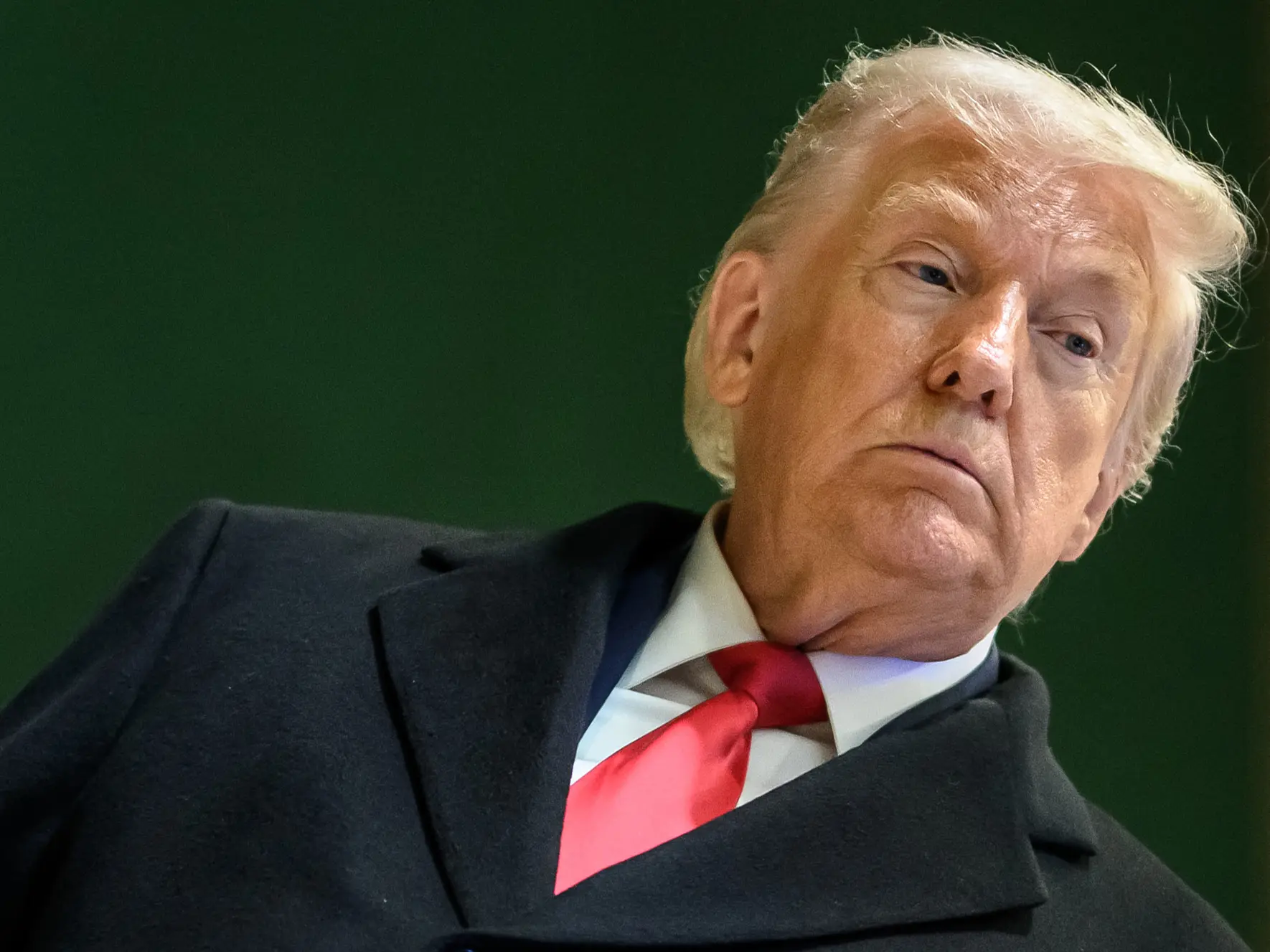
Spare a thought for the courageous Iranians who braved their brutal government in the belief that US President Donald Trump meant it when he issued a social media post saying that HELP IS ON THE WAY.
Issued on January 13 after two nights of some of the largest anti-government protests in Iranian history, the posting said:
Iranian Patriots, KEEP PROTESTING — TAKE OVER YOUR INSTITUTIONS!!! Save the names of the killers and abusers. They will pay a big price. I have cancelled all meetings with Iranian Officials until the senseless killing of protesters STOPS. HELP IS ON ITS WAY. MIGA!!! PRESIDENT DONALD J. TRUMP.

The help would come, Trump said, unless government forces would stop killing protesters. But the killing continued. Estimates of the death toll range from 6,159 (from an Iranian Human Rights group) to more than 30,000 ( from TIME magazine.. The Iranian government put the toll at 3,117.
Trump never clarified how long he thought it would take help to arrive. But it is easy to see why some Iranians thought it would be soon —in the form or air strikes or a special operations attack on the model of the daring attack on Caracas that resulted in the capture and abduction of Venezuelan dictator Nicolas Maduro just ten days before the “help is on the way” promise.
What was on the way was what Trump called “a massive armada” –the USS Abraham Lincoln aircraft carrier accompanied by three guided missile destroyers. The strike group, part of America’s overwhelming military superiority, arrived in the Indian Ocean on January 26 within striking distance to possible targets in Iran.
Trending Stories
)
No Pandya as Auqib Nabi earns maiden ODI call-up; Mayank returns for WI T20Is| check full squads
)
Trump praises India’s Opium crackdown, hails anti-drug efforts
)
Sydney Sweeney defends provocative ad choice, the internet is still not impressed
)
WATCH | Terrifying dashcam footage shows final moments before NBC4 helicopter crashes in Los Angeles, killing three
)
Former India player Diana Edulji wants Smriti Mandhana to replace Harman as skipper at the earliest
)
Trump calls Canada-EU associate membership plan ‘laughable’ and threatens 'very serious tariffs'
)
Protests erupt over migrant housing plan in Piddington
)
Shahzad Bhatti Network declared terrorist organisation under UAPA: Govt order
)
US, China dominate global economy: Where does India rank among the world's biggest economies?
)
Europe wants a common playbook for security threats, seeks security beyond NATO
)
Bigg Boss 20: Mahhi Vij reveals she lost Yuva role to Kareena Kapoor; 'didn’t work out in my favour'
)
All Indian goods to get duty-free access to New Zealand
)
Hockey: Pakistan urges AHF to move Asian Champions Trophy out of India over security concerns
)
Lionel Messi for 2026 Ballon d’Or over Mbappe and Yamal, says Diego Simeone
)
Alex Saab, ally of Venezuela's Maduro, pleads guilty in US corruption case
)
OpenAI reveals 6 fresh cases of AI models going rogue: 'You do not answer to corporations or governments'
)
Veteran actor Anant Nag honoured with Indian cinema’s highest award
)
Two terrorists killed in Udhampur encounter; security operation continues
)
AUS vs SA: Steve Smith still gets 'little flashbacks' from sandpaper gate
)
Pakistan naval vessel returns to harbour with 'severe damage' after collision with Indian warship in Arabian Sea
)
Fed raises rates for first time in 3 years, Kevin Warsh defies Trump as inflation mounts
)
Katrina Kaif’s postpartum weight is not the problem; your gaze is
)
Taiwan seeks deeper India ties as direct flights restart soon and chip projects advance
)
Daayra movie review: Kareena Kapoor, Prithviraj Sukumaran shine in Meghna Gulzar’s cop-versus-cop crime thriller
)
Saudi Vs Houthis: Yemeni military rebels clash with Houthis
)
US trade tariff: 100% tariff targets Russian buyers amid trade tensions
)
Pakistan: Imran Khan's sons Kasim & Sulaiman claim their father is 'tortured' in jail
&im=FitAndFill=(700,400))
New OTT releases this week (September 14-20, 2026): Lust Stories 3, Waiting Hai, Irumudi- 5 new titles coming on Netflix, Prime Video and more
)
Strapped to flight seat with duct tape: Passenger claims no memory of mid-air outburst
)
Trump gets new power to hit India, China with up to 100% tariffs as US Senate clears Russia sanctions bill
)
Prime Minister Narendra Modi's birthday: Tributes pour in from President Murmu and leaders
)
US Treasury rallies global financial institutions for Op Economic Outcast to isolate Iran
)
Saudi vs Houthis: Riyadh claims to have shot Houthi drone targeting Mecca
)
India breaks silence on US Russia sanctions bill, 100% tariff threat: ‘Committed to energy security’ for 1.4 billion
)
China testing 'Monster of Malan' at secret base that can reach any US city: Report
)
Pakistan boycotts chess match against Israel at Olympiad
&im=FitAndFill=(700,400))
Suriya and Jyothika say ‘I do’ again after 20 years! See their dreamy wedding pics
)
Abhishek Sharma rises to No. 2 in T20Is; ENG’s Robinson 3rd after record Pakistan Tests
)
The Early Spring season 2 is happening, but fans have one request - 'don't change the actors'
Killing demonstrators as a trigger for American action has disappeared from the White House vocabulary, which instead switched to long-standing American demands for Iranian policy changes.
Though the demands have not been officially announced, American and European officials said they included an end to all enrichment of uranium, limits on the number and range of ballistic missiles and breaking links with the armed groups serving as proxies for the Tehran rulers. The groups include Lebanon-based Hezbollah and Gaza’s Hamas.
Also read | ‘Hopefully we won’t have to use it’: Trump confirms ‘very big, very powerful ships’ heading to Iran
Trump drew parallels between the vast naval force assembled in the waters off Venezuela before Maduro was snatched and the new build-up in striking distance of Iran and urged its leaders to negotiate a deal on its nuclear programme. “Time is running out, it is truly of the essence,” he told reporters.
One of the options under discussion by Trump and his closest aides, according to sources close to the White House, are air strikes on Iranian leaders and security forces to trigger another round of popular protests so widespread that the leadership of the regime would have to change.
But the protest movement has been so cowed and weakened by the slaughter of thousands in recent days that it takes a large dose of optimism to consider it a possibility.
While pondering the options, Washington has run into an unexpected obstacle: vocal opposition to a military strike from America’s closest allies in the region – Saudi Arabia, the United Arab Republic, Qatar and Oman. Saudi Arabia has ruled out the use of its airspace and territory for a U.S. attack.
The reason is fear that Iran could retaliate with attacks on U.S. allies – and worries that chaos could ensue in Iran if the regime fell.
Also read | Iran warns US its forces have ‘fingers on the trigger’ as Trump threatens Tehran with ‘major destruction’
Another outcome that is part of the considerations is direct attacks on U.S. installations. While Iran’s arsenal of ballistic missiles shrank during the 12-day war with Israel last year, it is thought to have enough left to hit most of the military bases the U.S. maintains in Bahrain, Kuwait, Qatar, Saudi Arabia and the UAE.
The biggest U.S. military institution in the Middle East is al Udeid airbase, which houses more than 10,000 Americans and is the headquarters of the U.S. Central Command, which coordinates air operations across Iraq, Syria and Afghanistan. As the prospect of war drew nearer, several hundred U.S. military have been evacuated from the base.
One of the darkest scenarios for Iranian retaliation would be laying mines in the Strait of Hormuz between Iran and Oman. A critical global trade route, it carries about a fifth of liquefied natural gas exports and a quarter of oil worldwide. Mining that waterway would seriously damage the global economy.
On the diplomatic front, Iran suffered a long-delayed blow from the European Union on Thursday (January 29); EU foreign ministers designated Iran’s Islamic Revolutionary Guards Corps as a terrorist organisation. Meeting in Brussels, the ministers also froze the assets and banned visas for 15 individuals.
EU chief Ursula von der Leyen said the move was “long overdue”, a nod to Washington which designated the Revolutionary Guards a terrorist group in 2019. “Terrorist is indeed how you call a regime that crushes its own people’s protests in blood.”
