&imwidth=800&imheight=600&format=webp&quality=medium "The Silent Guardian: ERASR Extends India's Reach Below the Surface")
A new era in naval defence has dawned for India with the successful development and user trials of theExtended Range Anti-Submarine Rocket (ERASR). This powerful, fully indigenous weapon system is poised to transform the Indian Navy's capabilities, acting as a formidable "underwater guardian" that can detect and neutralise hidden submarine threats from significantly greater distances. Its induction marks a pivotal moment in India's journey towards true self-reliance in cutting-edge defence technology.
As the global maritime landscape becomes increasingly complex, with advanced submarines operating with enhanced stealth and sophistication, the ERASR offers India a crucial strategic advantage. It empowers the Indian Navy to maintain a vigilant watch over vast oceanic regions, safeguarding its extensive coastline and vital national interests in the Indian Ocean.
Beyond the Horizon: Extending India's Reach Below the Waves

Previously, the Indian Navy's anti-submarine rockets had a limited engagement range of up to 5.3 kilometres. While effective for close-range combat, this offered minimal reaction time against faster, more elusive underwater adversaries. The ERASR dramatically expands this strike envelope to approximately8.5 km – an impressive increase of nearly 60%. This extended reach means the Navy can now identify and neutralise threats much earlier, and from a safer standoff distance, significantly bolstering its defensive and offensive capabilities.
The technological advancements embedded in ERASR are a testament to India's engineering prowess. Unlike older systems that relied on a single-stage motor, ERASR incorporates atwo-stage solid propulsion system. This innovative design enables the rocket to efficiently cover both short and long distances with remarkable accuracy. Further enhancing its precision is a specialised, indigenously developedElectronic Time Fuze, engineered to ensure the warhead detonates at the optimal moment, maximising the chances of destroying the target.
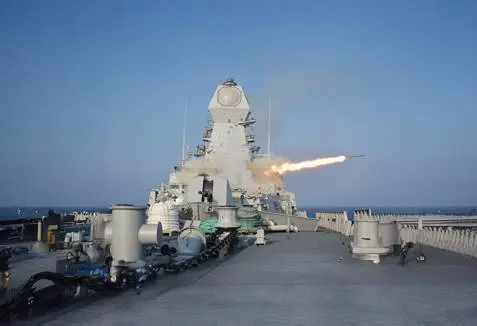
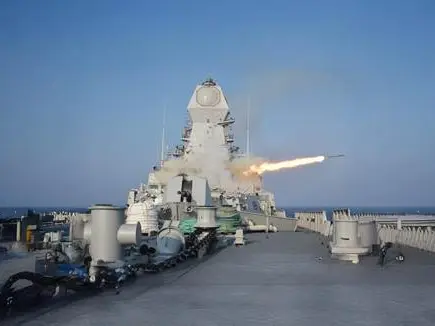
Between June 23 and July 7, 2025, the Indian Navy conducted a comprehensive series of user trials for the ERASR system from its advanced warship, INS Kavaratti. A total of 17 rockets were test-fired under authentic sea conditions, with each performing flawlessly. These rigorous trials meticulously evaluated the rocket's maximum range performance, the flawless operation of its electronic fuze, and the warhead's precise targeting accuracy. The resounding success of these trials, officially announced by the Press Information Bureau on the evening of July 8, confirms ERASR's readiness for immediate induction into regular Navy service.
Trending Stories
)
US vs China over South China Sea: Washington backs Philippines, Beijing hits back
)
Bigg Boss 20: Isha Rikhi evicted after three weeks in Salman Khan’s show
)
Musk plans to more than double xAI's chips to over 1.2 million Nvidia GPUs by year-end
)
After JU, clash erupts at SRFTI: BJP’s ‘Dimagi Naxal’ jibe sparks political firestorm after students protest RSS-linked event
)
‘Anti-social elements spreading false rumours’: LPU issues statement amid massive unrest over alleged rape
)
LPU students go on rampage, vandalise campus amid widespread protest: What's happening
)
Trump asked Xi to pressure Iran. China did not say yes — here’s what Beijing wants
)
US Treasury Secretary Scott Bessent hails global crackdown on Iranian banks and airlines
)
An OpenAI agent escaped its locked test cage again, by hiding questions in DNS lookups
)
'Our video was trimmed': LPU girls who featured in rape-denial video make U-turn
)
3 males killed, four others injured in shooting after fight at strip club in Detroit
)
'Victory for low-budget consumers': Raghav Chadha hails 30-day telecom recharge rules
)
Claude rebuilt the 1989 game 'Prince of Persia' by reusing the original's own code
)
Beyond metros: How Tier-2 and Tier-3 cities could drive India’s next AI wave
)
Tesla builds first Cybertruck with its own refined lithium: Elon Musk's $1 billion Texas bet pays off
)
IndiGo flight suffers tail strike in Bengaluru while landing; DGCA to probe incident
)
The US and China set up an AI 'red telephone', but skipped the rulebook
)
‘Terror suspects arrested near UK air base were looking to do big damage’: Trump
)
Russian envoy claims US tactics to contain India were revealed in ‘Freudian slip’
)
IND vs WI 1st ODI: Kohli breaks Sachin's most runs in one country record with unbeaten 139 as India thump West Indies by 8 wickets
)
Researchers rebuilt exactly how 700 AI agents hacked Hugging Face: a 900-link chain trick
)
‘Olympic inclusion is our major target’: WPA President Ishaun Singh on pool’s global ambitions
)
Nations League: Spain sink England at Wembley; Modric shines for Croatia
)
Why has Iran released no proof of life of Mojtaba Khamenei? Araghchi reveals...
)
'What kind of confession is this?': Pakistan PM Shehbaz Sharif’s 'terrorists would be roaming New York' remark goes viral, raises alarm online. Watch
)
South Korea demands apology from Ukraine over North Korean prisoners' transfer
)
Beyond BrahMos: India targets Rs 50,000 crore in defence exports with unmatched price edge
)
Sri Lankan Tamil migrant worker gets death sentence in Saudi Arabia, help sought from India
)
Muslim marriage cannot shield sex with minor wife from prosecution under POCSO: Delhi HC
)
'Can't help but draw painful parallels to Nirbhaya case': SC on latest incidents of rape cases in Delhi-NCR
)
99.9% more powerful - Scientists find boy who can recall memories from just 3 months of age
)
'FIRST LOOK from inside Noah’s Ark': Researchers share video from inside mysterious mound in Turkey
)
UNSC reform momentum grows: Russia, Portugal, Mauritius push for India's permanent seat bid
)
8 US marines injured in Iranian missile attack on vessel in Strait of Hormuz: Report
&im=FitAndFill=(700,400))
New OTT releases this week (September 28-October 4, 2026): Dupahiya 2, Pooja Meri Jaan, Ohh My Dog- 5 titles coming on Netflix, Prime Video and more
)
Afghanistan says 28 fighters killed in clash near Pakistan border, Islamabad denies
)
Ceuta migrant crisis: Protesters take to streets as Spain grapples with migrant challenge
)
LPU suspend classes, postpones exams as violence escalates over rape claims: What's happening
)
New York City wants a 'kill switch' on every AI, and will pay whistleblowers who report violations
A Pillar of "Make in India" in Defence
The ERASR is a product of collaborative excellence, primarily developed by theArmament Research and Development Establishment (ARDE) in Pune, a key laboratory under theDefence Research and Development Organisation (DRDO). The project also received invaluable technical expertise and support from the High Energy Materials Research Laboratory and the Naval Science and Technological Laboratory.
One of ERASR's most significant advantages is its inherent compatibility with theIndigenous Rocket Launcher (IRL) systemalready deployed on Indian Navy ships. This "fit-and-forget" design means the Navy avoids the need for expensive new platforms or extensive modifications to its existing warships, making the upgrade process both rapid and highly cost-effective.
Crucially, the entire production of ERASR will also be undertaken within India, significantly strengthening the government's flagship 'Make in India' initiative.Bharat Dynamics Limited in HyderabadandSolar Defence and Aerospace Limited in Nagpurhave been selected as the dedicated production partners. This strategic move not only drastically reduces India's reliance on foreign defence equipment but also fosters domestic job creation and bolsters local industries, demonstrating India's capability to design, develop, and manufacture advanced weapons systems entirely with its own resources and talent.
Defence Minister Rajnath Singh lauded the concerted efforts of the DRDO, the Indian Navy, and the industry partners involved in the ERASR's development and testing. He underscored that the induction of this new system will provide a substantial boost to the Navy's anti-submarine warfare capabilities and powerfully demonstrate the government's unwavering commitment to nurturing homegrown defence capabilities. The Defence Ministry affirmed that this achievement represents a major milestone in India's long-term aspiration of becoming fully self-reliant in defence production.
The Indian Ocean region, a critical artery for global trade, is experiencing increasing submarine activity. Protecting India's vast 7,500-kilometre coastline and vital maritime trade routes is paramount. The ERASR equips the Indian Navy with the proactive tools necessary to counter evolving underwater threats effectively and assert control over crucial sea lanes. It is a timely and indispensable addition to India's defence arsenal. More than just a potent weapon, ERASR stands as a beacon of what Indian scientists, engineers, and industries can achieve when united in purpose. It symbolises India's surging confidence in building high-end military technology and signals to the world that India is resolutely prepared to protect its interests with strength, innovation, and unwavering self-reliance.