Pakistan 'blocks' Al Jazeera website over PoJK reportage: So it's not about 'kafirs', is it?

&imwidth=600&imheight=450&format=webp&quality=medium "Pakistan 'blocks' Al Jazeera website over PoJK reportage: So it's not about 'kafirs', is it?")
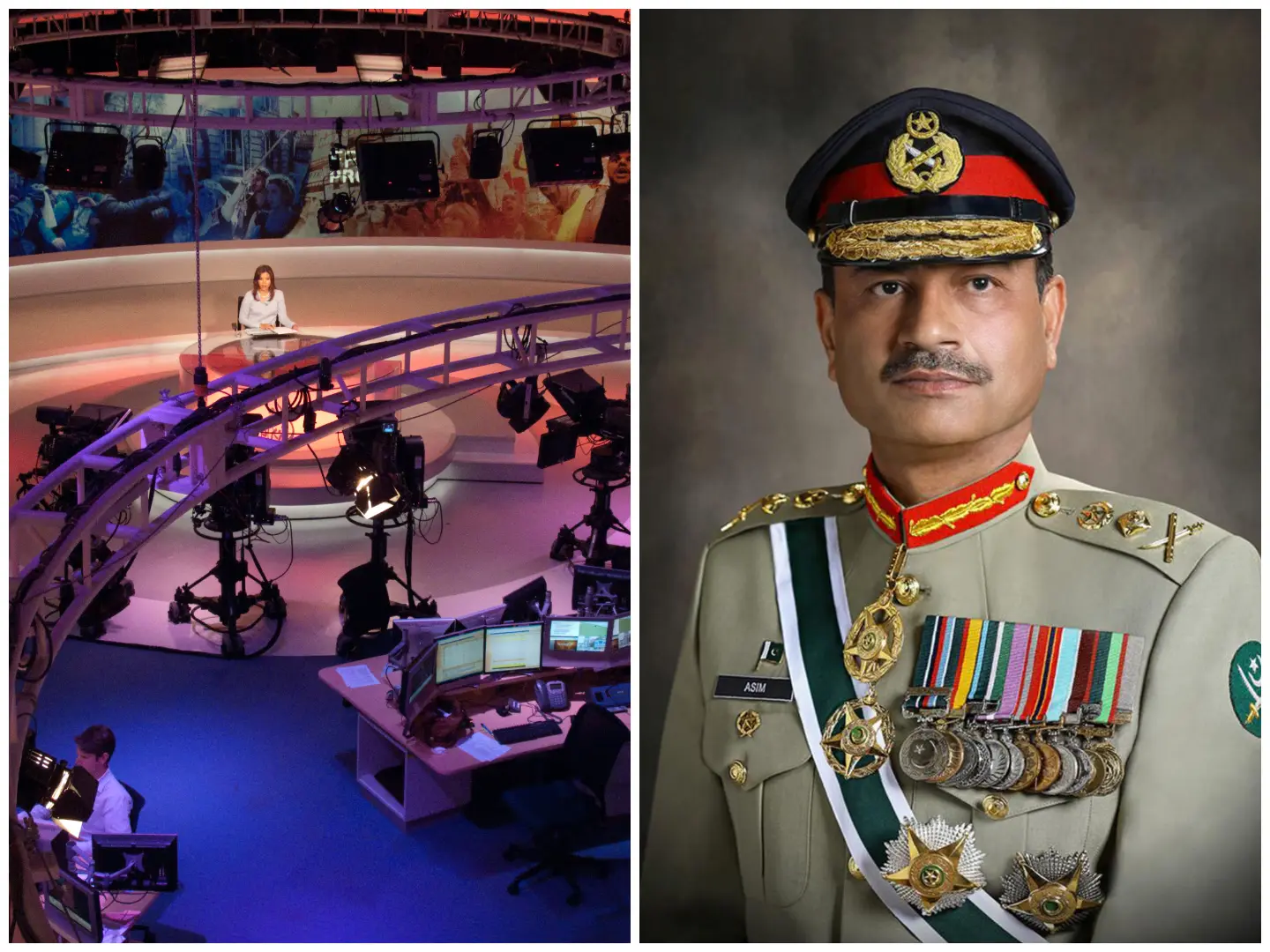
The newsroom of Al Jazeera and Pakistani Field Marshal Asim Munir are shown in this combo Photograph: (Others)
Pakistan's restrictions on Al Jazeera over PoJK election coverage expose a pattern of media censorship, internet control and narrative management. This has nothing to do with its 'kafir' rhetoric against critics, as the broadcaster is from Qatar, a fellow Muslim nation.
Pakistan's Ministry of Information and Broadcasting accused Al Jazeera of "yellow journalism" for its coverage of violence during the Pakistan-occupied Jammu and Kashmir (PoJK) elections. Users in Pakistan reported that access to the Qatari broadcaster's website had been blocked, though there is no formal government directive on this. This came days after a Pakistani general warned against Afghanistan-India ties, asking the Muslim-majority neighbour not to associate with 'kafirs', or disbelievers. But Al Jazeera is a channel from Qatar, a Muslim-majority nation with which Pakistan has traditionally enjoyed friendly relations. So it is not about ‘’kafirs". Then what is it?
Kafir narrative punctured: Criticism of Pakistan is the problem
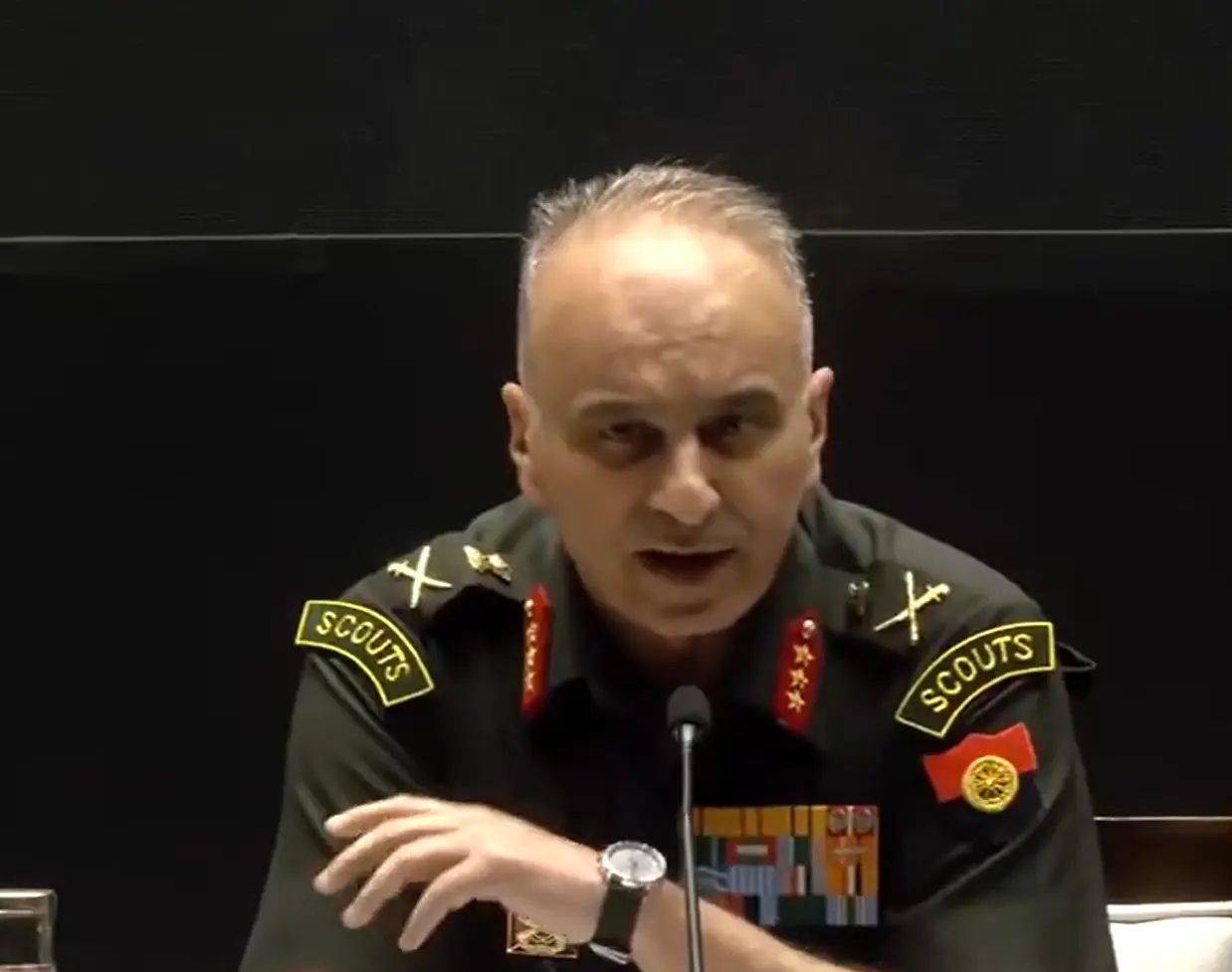
On July 31, Pakistan Army spokesperson Lieutenant General Ahmed Sharif Chaudhry said: "Allah Almighty has made it very clear — do not take the kafirs [disbelievers] as your friends or protectors. If you do so, then you are no longer among the Muslims." Reacting to recent remarks by an Afghan Taliban minister that India and Afghanistan shared the same DNA, Chaudhry framed the relationship as one of master and slave. "RSS-BJP are masters, Taliban their slaves," he said, referring to India's ruling Bharatiya Janata Party (BJP) and its ideological fountainhead, the Rashtriya Swayamsevak Sangh (RSS).
This is typical Pakistan, invoking a religious binary to explain geopolitical rivalries and casting itself as the defender of the Muslim world confronting hostile, non-Muslim adversaries.
But none of this matters when Pakistan is killing or suppressing its own people, from PoJK to the regions along its border with Afghanistan, including Khyber Pakhtunkhwa and Balochistan.
If Pakistan can restrict, vilify, and delegitimise reporting by one of the most influential media organisations in the Islamic world, then kafirs are not its problem; scrutiny is.
Trending Stories
)
)
)
)
)
)
)
&im=FitAndFill=(700,400))
)
)
)
)
)
)
)
)
)
)
)
)
)
)
)
)
)
)
)
)
)
)
)
&im=FitAndFill=(700,400))
)
&im=FitAndFill=(700,400))
)
)
)
)
)
)
)
Don't kill the messenger: Nothing wrong with Al Jazeera reporting on PoJK violence
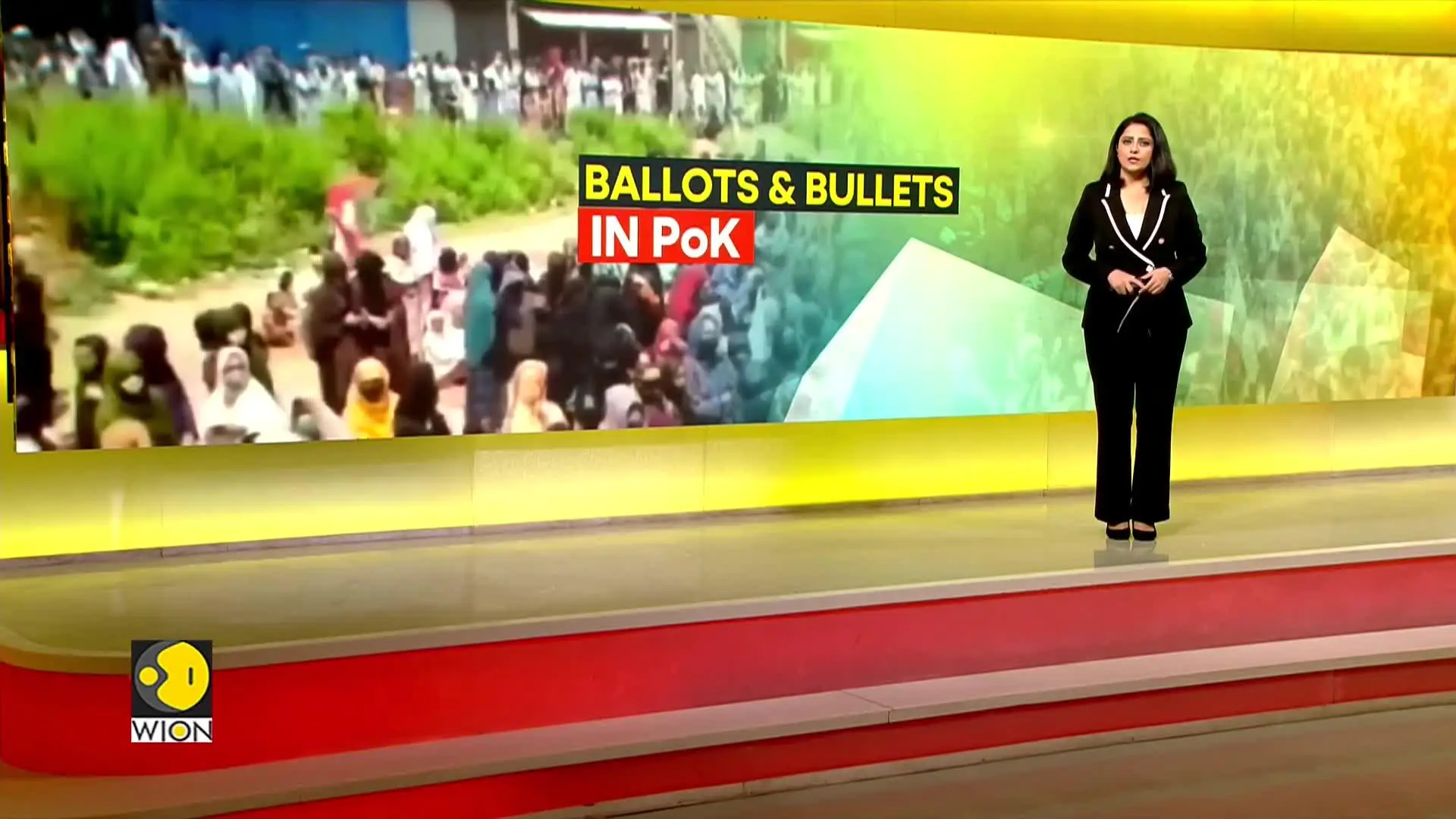
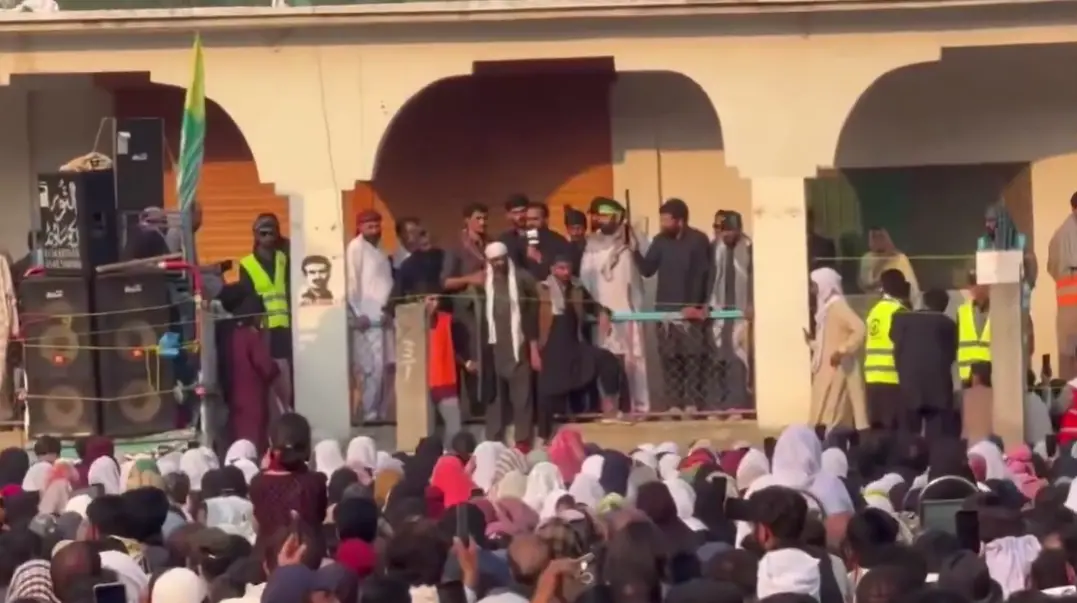
The recent protests and their violent suppression in PoJK followed allegations of electoral irregularities and unrest surrounding the polls in the territory, which New Delhi does not recognise as part of Pakistan, maintaining that Jammu and Kashmir, including areas under Pakistan's illegal occupation, are inalienable parts of India.
Pakistan could have responded with fact-based arguments addressing the substance of Al Jazeera's reportage through transparency or independent verification. Instead, its Ministry of Information and Broadcasting accused the broadcaster of "selective reporting" from "handpicked polling stations". It alleged that Al Jazeera had used "scripted statements" to serve "external actors with vested interests".
It amounted to questioning, and then 'killing', the messenger rather than addressing the events on the ground, and asing the crucial question: Why are people in PoJK unhappy?
There was no transparent, publicly notified prohibition on Al Jazeera issued by either the Pakistan Electronic Media Regulatory Authority (PEMRA) or the Ministry of Information and Broadcasting, at the time of writing this.
Instead, users reported that Al Jazeera's website had become inaccessible, suggesting an unofficial or extra-legal restriction rather than a formally declared ban.
A Chinese model of digital censorship architecture: Pakistan's 'little Great Firewall'
By the time you read this, access to the Al Jazeera website may well have been restored. And that is precisely the problem. In recent years, this has become a familiar pattern in Pakistan's digital censorship regime: websites disappear without formal orders, only to reappear later without explanation, making accountability almost impossible.
That censorship is possible because Pakistan now has one of South Asia's — and perhaps the world's — most sophisticated systems of internet control, increasingly modelled on China's approach to censorship.
Under Section 37 of the Prevention of Electronic Crimes Act (PECA), further strengthened through subsequent amendments, the Pakistan Telecommunication Authority (PTA) can block online content on broad and vaguely defined grounds such as "national security", "public order", or even the "glory of Islam".
To facilitate this, Pakistan has deployed a Web Monitoring System, initially built around technology supplied by Sandvine.
This has been expanded with capabilities comparable to China's internet filtering system, commonly referred to as the Great Firewall.
Much like the Chinese model, Pakistan now possesses the technological capability to block URLs, filter keywords, inspect internet traffic through deep packet inspection, and compel online platforms to remove content within prescribed timelines.
Circumventing these restrictions has become increasingly difficult because of VPN registration requirements and tighter licensing frameworks.
Journalism, monitored: Pakistan's multipronged attack on media
This digital control is reinforced by expanding bureaucratic oversight of journalism itself. The 2026 Foreign Media Facilitation Guidelines mandate that all foreign correspondents, freelancers, and stringers operating in Pakistan register with the government and obtain prior No Objection Certificates (NOCs) before reporting from most parts of the country outside Islamabad, Lahore, and Karachi.
As reporting on PoJK increased amid the violence that killed dozens, the government tightened the implementation of these guidelines and further restricted access to sensitive areas.
Clearly, the objective is to manage and suppress narratives, not enable independent reporting.
Pakistan's media blackouts are nothing new: Remember the Osama raid?
The curbs on Al Jazeera are nothing new. Remember the Abbottabad raid that killed Osama bin Laden in 2011? That single operation exposed the fact that the world's most wanted terrorist had been living for years inside Pakistan, close to a major military academy, raising uncomfortable questions that Islamabad struggled to answer for years.
When the US Navy SEALs entered Pakistani territory to eliminate the al-Qaeda chief behind the September 11, 2001, terrorist attacks, Pakistan asked international broadcasters, including CNN, the BBC, Al Jazeera, Fox News, Voice of America, and Sky News, to halt live reporting and leave the area.
Radio Mashaal was suspended in 2018 after being accused of anti-Pakistan reporting. The BBC has periodically faced restrictions. Local broadcasters such as Geo News have repeatedly been suspended or taken off air. Indian television channels remain banned. Numerous digital platforms critical of the government have been blocked or throttled.
Press freedom: A 'very serious' problem in Pakistan
Pakistan ranks 153rd out of 180 countries in the 2026 World Press Freedom Index published by Reporters Without Borders (RSF), placing it in the "Very Serious" category. Freedom House classifies Pakistan as only "Partly Free" overall, while rating its internet environment as "Not Free".
Military influence over the media, legal intimidation, digital censorship, enforced disappearances of journalists, and restrictions on independent reporting all contribute to these dubious distinctions.
Is external criticism ‘anti-Muslim’ for Pakistan?
The Pakistani establishment — comprising the government, military, and intelligence apparatus — often invokes Islam as the defining faultline separating Pakistan from India.
External criticism is frequently portrayed as an extension of prejudice against a Muslim state. Such religious framing collapses when critical reporting on Pakistan originates not from New Delhi, London, or Washington, but from Doha.
Al Jazeera's reporting is not the work of a "kafir" state pursuing an anti-Islam agenda.
So what's the moral of this story?
States that are uncomfortable with independent journalism resort to crackdowns regardless of ideology, religion, or the geography of their critics.
Discredit the reporter, question the channel's motives, invoke national security, tighten access, and restrict the flow of information.
Pakistan's handling of Al Jazeera demonstrates precisely this instinct. It reveals that the Pakistani establishment's objection is not to criticism from non-Muslim countries.
It is to criticism itself.
It is about inconvenient truths.
DISCLAIMER: The opinions expressed in this article are solely those of the author and do not necessarily reflect the views of WION.