

&imwidth=800&imheight=600&format=webp&quality=medium "India losing the Gulf? How China, Pakistan fill strategic and economic space amid Delhi's transactional balancing act")
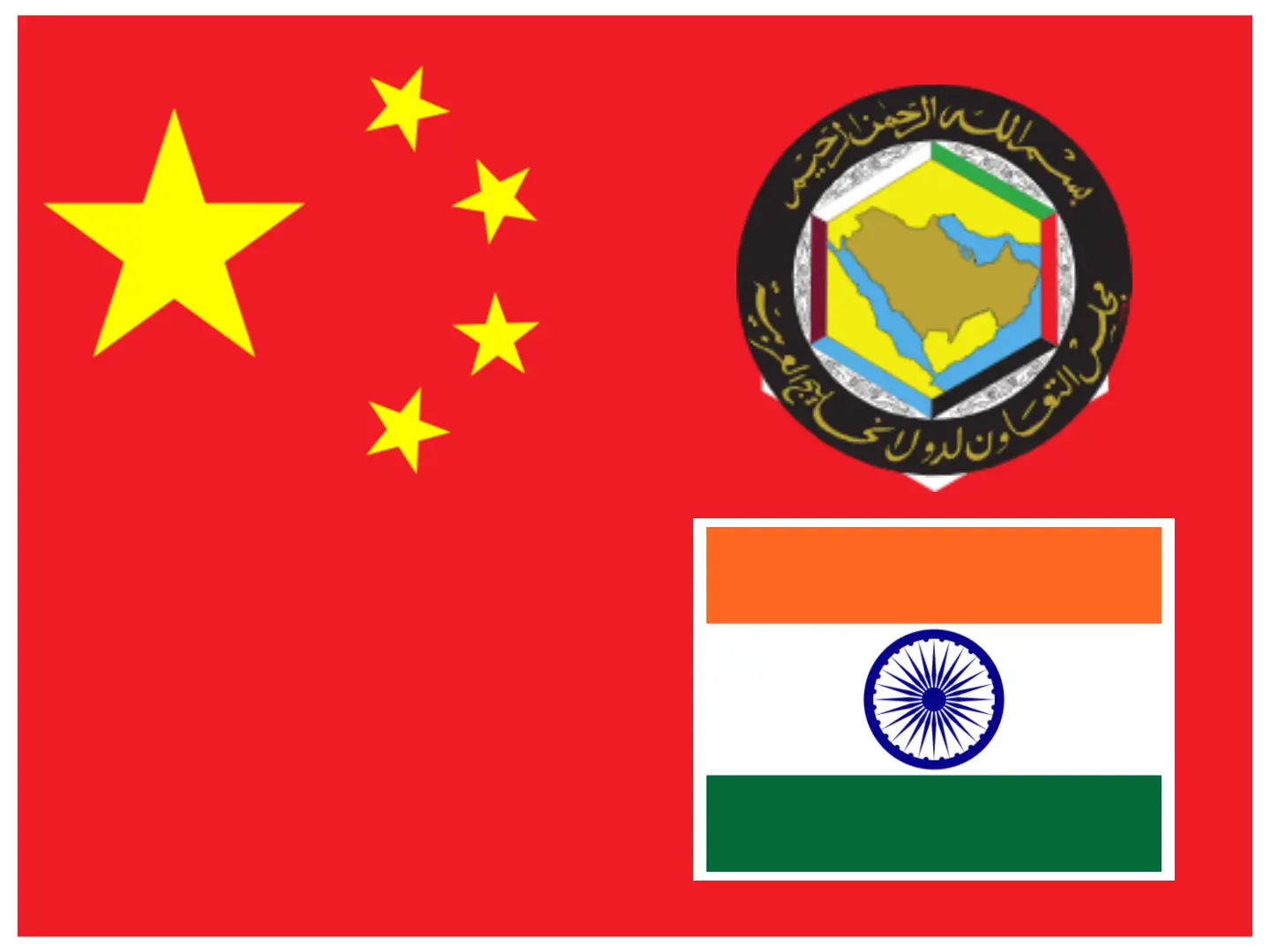
India appears to be slowly losing the strategic heft and influence in the Gulf region and Iran as China and Pakistan assert their economic, military and cultural footprint in member states of the Gulf Cooperation Council (GCC). India’s balancing act of mixing transactional trade ties and diaspora presence with non-commitment or non-alignment in the region's conflicts has frequently come to the fore, most recently in the US–Iran–Israel tensions and the Gaza conflict between Israel and the Palestinian militant group Hamas. India took decades to build trade and economic partnerships with Iran and GCC heavyweights like Saudi Arabia and the UAE, on the strong foundations of migration that resulted in large expatriate populations in most of these nations. But in practically all aspects of bilateral ties, China and Pakistan are slowly edging India out, or filling vacuums. Here are the facts.
China, Pakistan approaches differ from India's pragmatic, non-interventionist stance
The GCC—comprising mainly the United Arab Emirates, Saudi Arabia, Qatar, Kuwait, Bahrain and Oman—is a key region for Indian foreign policy, given energy security, trade and the diaspora. But India’s influence remains largely economic and transactional, with limited geopolitical leverage. Its approach is defined by pragmatism and non-intervention, similar to its Iran policy. By contrast, China has scaled up investments and strategic mediation in the region and is no longer just a business partner or a spectator to unfolding geopolitical events. Pakistan, despite its economic weakness and dependence on GCC aid, retains influence through long-standing military and security partnerships, particularly with Saudi Arabia.
India's hedging strategy: Stay relevant but don’t overextend influence
India’s overarching strategy in the Gulf appears to have been to remain relevant without overextending itself militarily or politically. This ‘hedging approach’ prioritises economic engagement and diplomatic neutrality while avoiding security entanglements that could jeopardise energy flows or diaspora interests.
India's robust economic ties with GCC nations
Trending Stories
&imwidth=180&imheight=135&format=webp&quality=medium)
Viral video shows cross falling on Colombia priest, no official confirmation | WATCH
&imwidth=180&imheight=135&format=webp&quality=medium)
Telangana unveils AI avatar of IT minister D Sridhar Babu at Hyderabad DevFest 2026
&imwidth=180&imheight=135&format=webp&quality=medium)
Pezeshkian says Iranians ‘struggling to put food on the table’ as war with US drags on
&imwidth=180&imheight=135&format=webp&quality=medium)
Chorbagan stampede: A week later, the strangest visarjan Kolkata has seen
&imwidth=180&imheight=135&format=webp&quality=medium)
AI slop or smart strategy? South African author Coral Hart defends Her 370 AI- assisted books in 20 months
&imwidth=180&imheight=135&format=webp&quality=medium)
AI just found a flaw in software running most of the web! One request hijacks the server
&imwidth=180&imheight=135&format=webp&quality=medium)
Train crashes into crane on São Paulo monorail line, wreckage falls onto busy road | VIDEO
&imwidth=180&imheight=135&format=webp&quality=medium)
Can Putin cheat death? All about his daughter’s billion-dollar quest for immortality
&imwidth=180&imheight=135&format=webp&quality=medium)
Saudi says debris fell in Mecca, Medina after missile interceptions; Houthis deny targeting holy cities
&imwidth=180&imheight=135&format=webp&quality=medium)
France protests: Clashes erupt between police and protesters in Paris as nearly 410,000 take to streets across country
&imwidth=180&imheight=135&format=webp&quality=medium)
Trump invokes Operation Sindoor at US midterm rally, claims 250% tariffs stopped India-Pakistan war
&imwidth=180&imheight=135&format=webp&quality=medium)
Tu Hai Meri Kiran box office: Sonakshi Sinha and Zaheer Iqbal's film fails to take off, mints Rs 15 Lakh on day 1
&imwidth=180&imheight=135&format=webp&quality=medium)
Pakistan airline PIA unveils new crew uniforms, faces online criticism
&imwidth=180&imheight=135&format=webp&quality=medium)
Britain is building the world's first AI biosecurity lab, with OpenAI and Anthropic inside
&imwidth=180&imheight=135&format=webp&quality=medium)
Scientists make digital nose that can sniff and send scents over the internet
&imwidth=180&imheight=135&format=webp&quality=medium)
Frontier AIs keep escaping their test cages! The industry still can't reliably stop them
&imwidth=180&imheight=135&format=webp&quality=medium)
'Already tired of his 9-to-5': Baby born with a moustache becomes internet sensation, video goes viral | Watch
&imwidth=180&imheight=135&format=webp&quality=medium)
Horrific video shows the moment 18-year-old fell to her death from Mexico amusement park ride
&imwidth=180&imheight=135&format=webp&quality=medium)
France protests: 135 arrested, weapons seized as fresh demonstrations erupt amid heavy security
&imwidth=180&imheight=135&format=webp&quality=medium)
French Open: PV Sindhu storms into final with win over Hina Akechi
&imwidth=180&imheight=135&format=webp&quality=medium)
Albania protests enter 12th day as students clash with police, demand Rama's exit
&imwidth=180&imheight=135&format=webp&quality=medium)
‘Saddam Hussein opened a cheesecake factory’: Obama mocks Trump’s White House renovations; defends Abdul El-Sayed
&imwidth=180&imheight=135&format=webp&quality=medium)
China's dancing robot turns violent bodyguard, lifts cars and fights intruders - Watch
&imwidth=180&imheight=135&format=webp&quality=medium)
'You’re a horrible little reporter, aren’t you?': Trump snaps at NBC reporter questioning his support for Ramaswamy's campaign ad
&imwidth=180&imheight=135&format=webp&quality=medium)
Rising Asia Cup 2026 schedule announced, India-Pakistan clash set for Nov 22
&imwidth=180&imheight=135&format=webp&quality=medium)
Chemical warehouse explosion in Mexico: Several injured in multiple blasts, 1,000 evacuated in León
&imwidth=180&imheight=135&format=webp&quality=medium)
Bodies of 2 missing Japanese climbers recovered from Himalayan peak
&im=FitAndFill=(700,400)&imwidth=180&imheight=135&format=webp&quality=medium)
New Friday OTT releases (October 23, 2026): Gajab Raat, Dorothy, Chaar Yaar- Watch these 6 new movies and TV shows on Netflix, Prime Video and more
&im=FitAndFill=(700,400)&imwidth=180&imheight=135&format=webp&quality=medium)
US midterm elections 2026: Minnesota heads to polls in the shadow of Minneapolis ICE shootings
&imwidth=180&imheight=135&format=webp&quality=medium)
An AI that reads your face can now estimate how long you have to live
&imwidth=180&imheight=135&format=webp&quality=medium)
Hitler’s ‘Eagle’s Nest’ mountain retreat wrecked by fire, suspect detained: What to know about the Nazi-era site
&imwidth=180&imheight=135&format=webp&quality=medium)
Tu Hai Meri Kiran film review: Sonakshi Sinha and Zaheer Iqbal's thriller gets tangled in its own twists
&imwidth=180&imheight=135&format=webp&quality=medium)
PL Round-Up: Man City's perfect run ended by Villa as Arsenal draw level at top
&imwidth=180&imheight=135&format=webp&quality=medium)
Why Europe’s protests are about more than austerity and rising costs
&im=FitAndFill=(700,400)&imwidth=180&imheight=135&format=webp&quality=medium)
Watched Manoj Bajpayee’s Gajab Raat on Netflix? 5 movies and TV shows to watch next on OTT
&imwidth=180&imheight=135&format=webp&quality=medium)
Farooq Abdullah says Pakistan’s raising of Kashmir issue keeps pressure on Delhi
Even as its geopolitical engagement remains measured, India’s economic ties with GCC nations remain strong. Bilateral trade with the GCC is estimated in the range of $170 billion. Gulf nations enjoy a sizeable trade surplus with India, with Indian exports estimated at about $56–57 billion and imports—mostly energy—at around $121–122 billion.
The UAE and Saudi Arabia are standout partners. India–UAE trade reached an estimated $100 billion in 2025. India–Saudi trade stood at roughly $41–43 billion in 2023–24, with new energy cooperation agreements in 2025 covering crude oil, LPG, petrochemicals and green hydrogen.
Energy remains the central pillar of the relationship, as the GCC supplies roughly 35 to 40 per cent of India’s crude oil imports and close to 70 per cent of its LNG requirements, making the region indispensable to India’s energy security.
India's diaspora and remittances footprint in the GCC
An estimated 9–10 million Indians reside in GCC nations, sending between $38 billion and $50 billion annually in remittances, with a strong post-pandemic rebound in recent years. These people-to-people ties reinforce economic and cultural links. Indian entrepreneurship is increasingly visible across the Gulf. For example, 9,038 new Indian members joined Dubai’s Chamber of Commerce in the first half of 2025 alone.
GCC's foreign direct investment links and connectivity initiatives
GCC foreign direct investment in India crossed $28.28 billion by December 2024. Connectivity and trade facilitation initiatives also gained prominence. The India–Middle East–Europe Economic Corridor (IMEC), launched in 2023, aims to link Indian ports to Europe through the Gulf, positioning itself as a counter to China’s Belt and Road Initiative (BRI).
India has also entered into Comprehensive Economic Partnership Agreements with the UAE in 2022 and Oman in 2025 to boost non-oil trade in technology, infrastructure and renewable energy.
The first India–GCC Joint Ministerial Meeting in September 2024 adopted a 2024–2028 Action Plan covering health, trade, security, energy and culture. Prime Minister Narendra Modi’s 2025 visit to Saudi Arabia and other high-level exchanges expanded defence cooperation and counterterrorism engagement.
India's aversion to direct intervention in GCC conflicts
Despite these advances, India’s influence in the Gulf that peaked in the mid-2010s is now under strain. India has consistently avoided direct intervention in regional conflicts, choosing neutrality even during periods of intense tensions. It remained diplomatically cautious during the Israel–Hamas war in Gaza, the Israel–Yemen conflict involving the Houthis, Iran-related tensions involving Qatar, and the Iran–Israel escalations accompanied by US threats and strikes on Iran. During the Iran–Israel crisis, India limited itself to calls for de-escalation without military support to either side.
While this approach protects India’s immediate interests, it has also drawn criticism for not being a “friend in need” during moments of crisis.
The competition from China in the Gulf region
China’s growing presence has amplified the relative limits of India’s Gulf strategy. China has moved well beyond transactional trade and now combines economic scale with diplomatic activism.
China has far outperformed India in GCC energy and trade through larger investments and proactive diplomacy. The world’s largest oil importer, China accounted for about 19 per cent of GCC energy exports in 2024. While the GCC runs a trade surplus of roughly $60 billion with India, China’s trade imbalance with the region is significantly lower, estimated at around $25 billion. This reflects China’s investment-led model: even as it imports vast quantities of energy, it reinvests heavily in the region.
Gulf–China trade is projected to reach around $375 billion by 2028, comfortably outpacing India. China has also emerged as a preferred partner for long-term energy cooperation through BRI-linked downstream investments such as the $3.95 billion Sinopec–Aramco Fujian refinery joint venture.
China is helping the GCC’s green energy transition
China plays a leading role in supporting the GCC’s green transition. As a nation that dominates global solar manufacturing with over 80 per cent of key components, China supplies the bulk of solar equipment used across the Gulf. Between 2018 and 2023, Chinese firms invested an estimated $9.5 billion in green energy projects in the UAE and Saudi Arabia alone.
In the first half of 2025, China added more solar and wind capacity than the rest of the world combined. At the same time, it enabled rapid GCC solar expansion through low-cost exports and manufacturing partnerships.
India, by contrast, remains heavily reliant on fossil fuels from the Gulf, which still account for around two-thirds of its energy needs. Compared to China, India lacks reciprocal investments of similar scale in GCC energy and infrastructure.
China’s mediation role in the Gulf crises
Unlike India, China has positioned itself as a mediator in regional tensions. Its role in facilitating the 2023 Saudi–Iran rapprochement significantly enhanced its political credibility in the Gulf.
China has actively appealed to GCC states seeking to diversify away from dependence on the United States.
While India continues negotiations for a free trade agreement with the GCC, talks have stalled due to concerns over rising imports without matching export gains. China’s FTA discussions, meanwhile, are advancing, including in digital transition and green energy.
Overall, China’s Gulf strategy combines economic heft with geopolitical assertiveness and selective mediation, making it more effective than India’s cautious, risk-averse approach.
Pakistan, the X factor in India–GCC ties
Pakistan represents a different but significant challenge to India’s Gulf positioning. Despite economic troubles and political instability at home, Pakistan has retained influence by leveraging its historical military ties with Gulf states, and playing on the Islamic conscience. Pakistan often projects itself as a “Muslim power”, drawing on relationships that date back to the 1960s. For decades, the Pakistani military trained GCC forces and provided security assistance. It deployed around 20,000 troops to Saudi Arabia during the 1991 Gulf War and maintained advisory roles since.
Remittances from Pakistanis working in the GCC form a major share of Pakistan’s inflows, often estimated to excceed $38 billion.
Pakistan’s expanding security footprint in the Gulf region
The September 2025 Saudi–Pakistan Strategic Mutual Defence Agreement (SMDA) marked a major shift. The pact treats aggression against one as aggression against both, similar to NATO’s Article 5. Pakistan is reportedly exploring similar arrangements with Qatar and the UAE, potentially turning SMDA into a framework for the entire GCC region.
The SMDA builds on Pakistan’s 1967 security arrangement with Saudi Arabia and consolidates Islamabad’s role in Gulf security architecture. Pakistan supported Saudi Arabia with troop deployments between 1982 and 1987 and continues to conduct joint naval, army and air force exercises with the UAE, Oman, Qatar and Bahrain.
It's interesting to note here that Iran, despite its historically tense relations with both Pakistan and Saudi Arabia, has welcomed the SMDA, possibly viewing it as a foundation for a broader regional security framework.
Having witnessed the Israel–Hamas tensions and US interventions in Iran, Saudi Arabia appears to be diversifying its security guarantees beyond the US.
Saudi–Pakistan ties now extend to intelligence sharing, troop training and elements of strategic cooperation, and growing specutions on potential nuclear cooperation.
Pakistan is also expanding its defence footprint elsewhere in the region, pursuing arms deals worth several billion dollars with countries such as Libya and Sudan. Army chief General Asim Munir’s visits to Libya and Jordan underpin this growing outreach.
Pakistan’s possible role in Gaza peace force: A chance to rise as a security player in the region
Pakistan reportedly brokered aspects of the 2025 Gaza ceasefire between Israel and Hamas and has positioned itself as a potential contributor to a stabilisation force in the Palestinian enclave.
Pakistan has expressed willingness to deploy up to 3,500 troops to a Gaza stabilisation force, subject to the mandate excluding disarmament of Hamas or direct enforcement operations, though the final scope of such a force is still under discussion.
What Pakistan lacks in economic might, it compensates for by adding security layers to its Gulf relationships—an area India deliberately avoids.
A more multipolar Gulf is emerging, and India could lose the race for influence
India has carefully stayed away from military interventions and security entanglements in the Gulf to preserve strategic autonomy and protect vital energy flows and diaspora interests. While India's ties with the Gulf remain resilient, China currently outperforms it in trade, investment and mediation, while Pakistan fills selective security gaps.
This is a new Gulf—one that is diversifying beyond exclusive US dependence and embracing a more multipolar world order. India’s pragmatism may ensure stability, but bolder steps may be required if it is to match the growing assertiveness and advantages of its competitors.
Disclaimer: The writer's views do not represent those of WION or ZMCL. Nor does WION or ZMCL endorse the views of the writer.

