A global puzzle: Why are electoral polls so often wrong?

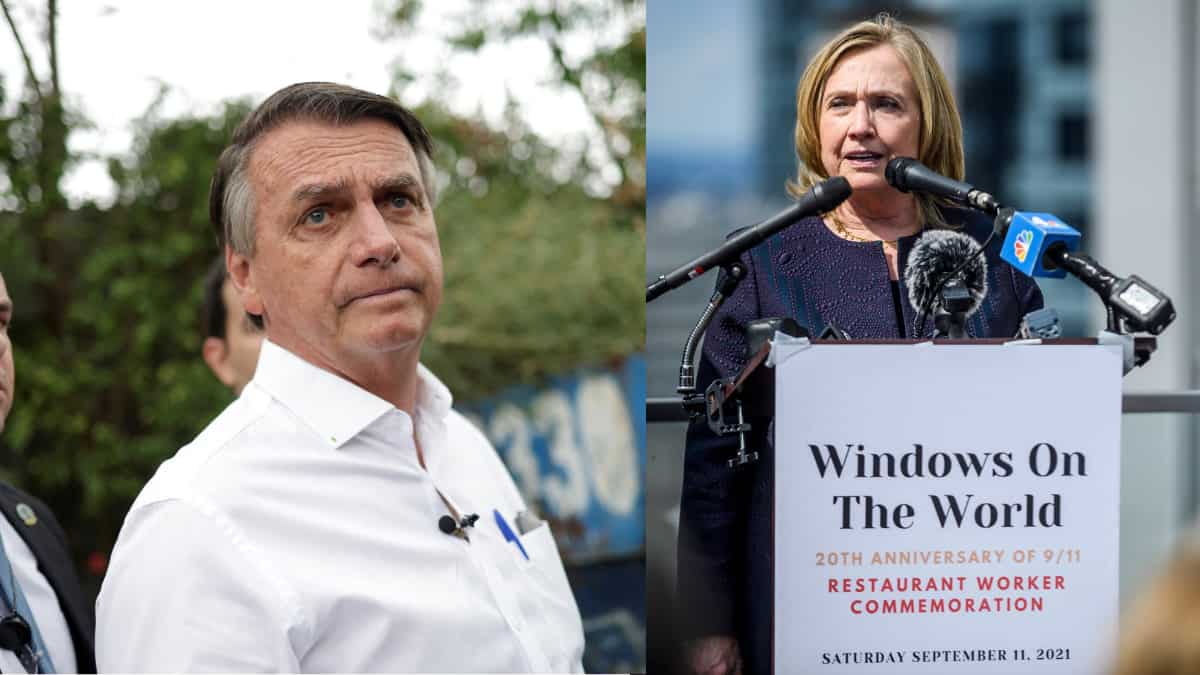
Bolsonaro Clinton
A long string of spectacular failures to gauge popular opinion in advance of elections has cast doubt over the usefulness of opinion polls and prompted questions without convincing answers. How can polls be made more accurate? Do voters lie to pollsters?
Few poll-based election forecasts in the past few decades prompted a greater shock than the confident prediction that Hillary Clinton would win the presidency of the United States in the 2016 elections. Pollsters and forecasters were in near-unanimous agreement that her Republican opponent, Donald Trump, was an extremely long shot. His victory surprised even him.
Just five months before that black eye for the polling industry, it was stumped by the outcome of the referendum on whether Britain should leave the European Union or remain a member, a decision that could change the geopolitical map of Europe.

Also Read |Brazil elections: Lula and Bolsonaro are statistically tied, says poll
Respected polling organisations, including YouGov and Ipsos/Mori, predicted that a comfortable majority would vote to stay. The forecast: 52% for stay, 48% for leave. The actual result of the Brexit vote was the exact opposite: 52% voted to leave, 48% to remain.
Such failures prompted polling experts and political scientists in democratic countries around the world into deep analyses to search for better methods to feel the pulse of electorates. There were expressions of hope that lessons learned would lead to better results.
)
US trade tariff: 100% tariff targets Russian buyers amid trade tensions
)
Pakistan boycotts chess match against Israel at Olympiad
)
Prime Minister Narendra Modi's birthday: Tributes pour in from President Murmu and leaders
)
WATCH | Terrifying dashcam footage shows final moments before NBC4 helicopter crashes in Los Angeles, killing three
)
Strapped to flight seat with duct tape: Passenger claims no memory of mid-air outburst
)
Shahzad Bhatti Network declared terrorist organisation under UAPA: Govt order
)
Veteran actor Anant Nag honoured with Indian cinema’s highest award
)
Trump praises India’s Opium crackdown, hails anti-drug efforts
)
AUS vs SA: Steve Smith still gets 'little flashbacks' from sandpaper gate
)
Alex Saab, ally of Venezuela's Maduro, pleads guilty in US corruption case
)
Trump calls Canada-EU associate membership plan ‘laughable’ and threatens 'very serious tariffs'
)
Formula One reveals the 2027 race calendar; Monaco to host sprint race for the first time
)
Lionel Messi for 2026 Ballon d’Or over Mbappe and Yamal, says Diego Simeone
)
Former India player Diana Edulji wants Smriti Mandhana to replace Harman as skipper at the earliest
)
‘Imagine 50 AI fighters cornering one manned jet’: India’s mobbing doctrine eyes a new era of air warm
)
US Treasury rallies global financial institutions for Op Economic Outcast to isolate Iran
)
India breaks silence on US Russia sanctions bill, 100% tariff threat: ‘Committed to energy security’ for 1.4 billion
)
Pakistan: Imran Khan's sons Kasim & Sulaiman claim their father is 'tortured' in jail
)
Daayra movie review: Kareena Kapoor, Prithviraj Sukumaran shine in Meghna Gulzar’s cop-versus-cop crime thriller
)
Hong Kong unveils 11 new measures to boost birth rates, offers higher cash bonuses and housing perks
)
US House votes 417-3 to pass Ratepayer Protection Act targeting AI data center electricity costs
&im=FitAndFill=(700,400))
New OTT releases this week (September 14-20, 2026): Lust Stories 3, Waiting Hai, Irumudi- 5 new titles coming on Netflix, Prime Video and more
&im=FitAndFill=(700,400))
Suriya and Jyothika say ‘I do’ again after 20 years! See their dreamy wedding pics
)
OpenAI reveals 6 fresh cases of AI models going rogue: 'You do not answer to corporations or governments'
)
Saudi Vs Houthis: Yemeni military rebels clash with Houthis
)
Hockey: Pakistan urges AHF to move Asian Champions Trophy out of India over security concerns
)
No Pandya as Auqib Nabi earns maiden ODI call-up; Mayank returns for WI T20Is| check full squads
)
Protests erupt over migrant housing plan in Piddington
)
Sydney Sweeney defends provocative ad choice, the internet is still not impressed
)
Bigg Boss 20: Mahhi Vij reveals she lost Yuva role to Kareena Kapoor; 'didn’t work out in my favour'
)
The Early Spring season 2 is happening, but fans have one request - 'don't change the actors'
)
Katrina Kaif’s postpartum weight is not the problem; your gaze is
)
Fed raises rates for first time in 3 years, Kevin Warsh defies Trump as inflation mounts
)
Saudi vs Houthis: Riyadh claims to have shot Houthi drone targeting Mecca
)
Taiwan seeks deeper India ties as direct flights restart soon and chip projects advance
)
Pakistan naval vessel returns to harbour with 'severe damage' after collision with Indian warship in Arabian Sea
)
Abhishek Sharma rises to No. 2 in T20Is; ENG’s Robinson 3rd after record Pakistan Tests
)
Trump gets new power to hit India, China with up to 100% tariffs as US Senate clears Russia sanctions bill
)
All Indian goods to get duty-free access to New Zealand
)
Europe wants a common playbook for security threats, seeks security beyond NATO
But judging from yet another misfire, in Brazil this month, there has been little improvement.
For months, pollsters and political analysts predicted that the country’s right-wing president, Jair Bolsonaro, was so far behind in public opinion that his left-wing opponent, Luis Inacio Lula da Silva, would win more than 50 per cent, and thus the presidency, in the first round of the vote on October 2.
He did not. While he garnered five per cent more votes than Bolsonaro, he fell short of the 50 per cent required for outright victory, making necessary a second round to be held on October 30. For some, that outcome showed that using polls in reporting on election campaigns was an exercise in futility.
Brian Winter, editor-in-chief of the influential Americas Quarterly, said he would no longer share poll numbers ahead of the next election. “It’s clear the models are broken, respondents not being truthful, or there is some other problem.”
Among several trends that make accurate surveys difficult, one stands out, polling experts say: a steady and seemingly unstoppable decline in the number of people willing to answer the questions of pollsters. In the United States, the overall response rate, to use the technical term, dropped from 90 per cent in the 1930s, when people saw it as a civic duty to participate in polls, to just six per cent in 2018.
The decline appears to continue apace. In a panel discussion ahead of the 2022 US midterm elections next November, one expert reported that in a poll a team from the New York Times was working on, only 0.4 per cent of calls dialed had yielded a complete interview.
Most polls are based on interviews with 1,000 to 1,500 people. How to select samples that are representatives of the electorate as a whole – more than 240 million in the case of the United States – is a very difficult problem.
Which makes some experts wonder about the future of the polling industry. As Nate Silver, one of America’s best-known pollsters and forecasters put it in a panel discussion: “I do think there’s reason to be concerned about the long term of polling which is that as response rates decline, it gets harder and harder and harder, and you have to work more and more magic to make the electorate representative.”
The next big test for pollsters and forecasters in the United States face will be the November midterm elections when all 435 seats in the House of Representatives and 35 of the 100 seats in the Senate will be contested. The vote will decide whether the Democratic Party will retain its narrow majority in both.
If history were an accurate guide, President Joe Biden’s Democratic Party will lose its majority. In the 22 midterm elections from 1934 to 2018, the incumbent president’s party averaged a loss of 28 seats in the House and four in the Senate. But this time round, the poll margins in several key Senate races are so tight that many forecasters think the Democrats will keep the Senate.
Analysts have been notably cautious about Senate predictions, conscious that the results will largely depend on the increasingly narrow slice of the electorate in the undecided middle.
Pollsters who get it wrong again can point to a history that goes back decades.
Take the US presidential elections of 1948. Its unexpected outcome was captured in a now famous photograph that shows a widely smiling Harry Truman holding up the front page of the Chicago Tribune with the banner headline “Dewey Defeats Truman.”
Numerous polls and pundits had been so certain that the Republican candidate, Thomas Dewey, would win that the editors of the newspaper saw no need to wait for the official result.
(Disclaimer: The views of the writer do not represent the views of WION or ZMCL. Nor does WION or ZMCL endorse the views of the writer.)
