Wife forced out over dowry demands can't be accused of desertion: Jharkhand HC rejects husband's divorce plea

&imwidth=600&imheight=450&format=webp&quality=medium "Wife forced out over dowry demands can't be accused of desertion: Jharkhand HC rejects husband's divorce plea")
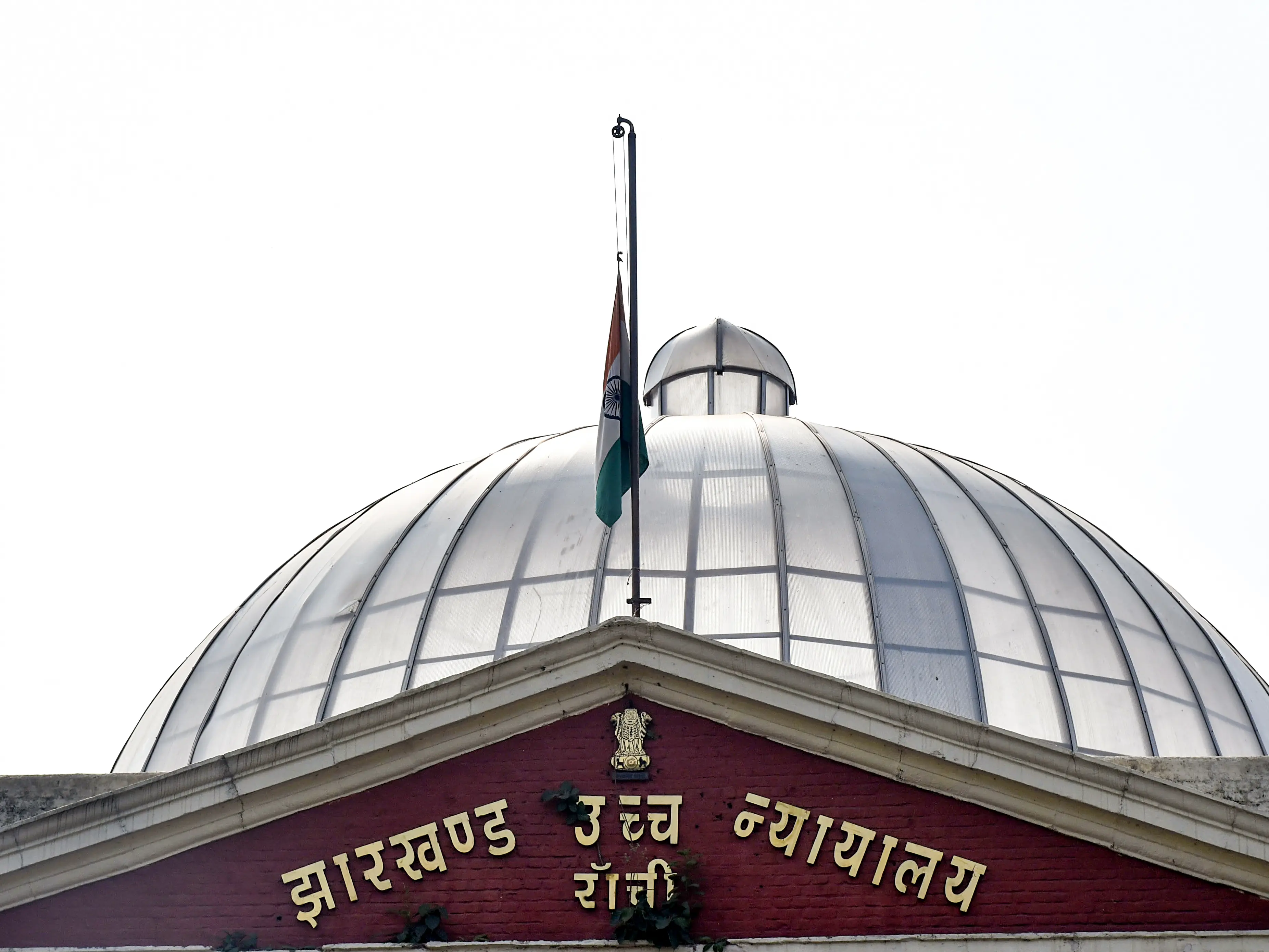
The Jharkhand High Court. Photograph: (ANI)
The husband accused his wife of continuously quarrelling with him soon after the marriage and insisted that he stay separate from his parents. When he rejected her wish, the woman left the matrimonial home in May 2005 and filed false criminal cases against him and his family.
The Jharkhand High Court has ruled that a husband cannot claim divorce on the grounds of being abandoned by his wife when the evidence indicates that she left the matrimonial home due to alleged dowry-related harassment and has continuously shown her willingness to return. On this basis, the court rejected a man’s plea to end their 25-year-old marriage.
A bench comprising Justices Sujit Narayan Prasad and Pradeep Kumar Srivastava was hearing an appeal filed by an estranged husband against the July 19, 2022, judgment and the subsequent July 29, 2022, decree of the Family Court in Rajmahal, which had refused to grant him a divorce under the provisions of the Hindu Marriage Act.
“The law consistently has been laid down by the Court that desertion means the intentional abandonment of one spouse by the other without the consent of the other and without a reasonable cause… it is evident that the appellant and his family members were pressurising the respondent for demand of Rs 3,00,000/- cash, one bed and 25 Bigha of land and when their demand was not fulfilled, she along with her daughter was ousted from the matrimonial house in year 2005… Even otherwise, there is no desertion on the part of the respondent-wife as she in her evidence also has deposed that she is very keen and desirous to live and stay with her husband all through her life,” said the high court on June 25, dismissing the appeal of her husband.
The couple married on May 1, 2001; however, they began living separately in 2005 after a matrimonial dispute. After more than 20 years, both of them became embroiled in multiple criminal, maintenance and matrimonial proceedings, which include a dowry harassment case, maintenance litigation and accusations of a second marriage, before the husband demanded dissolution of marriage in 2019.
The husband accused his wife of continuously quarrelling with him soon after the marriage and insisted that he stay separate from his parents. When he rejected her wish, the woman left the matrimonial home in May 2005 and filed false criminal cases against him and his family.
He further accused that even after several efforts to save the marriage from divorce, including court-sponsored mediation, the wife refused to return home. He also accused her and her family of assaulting him amid the reconciliation meeting in June 2017, claiming that the marriage had irrecoverably broken down and there was no possibility of reconciliation. In response, he demanded a decree of divorce based on cruelty and desertion.
Trending Stories
)
)
)
)
)
)
)
)
)
)
)
)
)
)
)
)
)
)
)
)
)
)
)
)
)
&im=FitAndFill=(700,400))
)
)
)
&im=FitAndFill=(700,400))
)
)
)
)
)
)
)
)
Wife accuses of dowry harassment
The wife strongly opposed the divorce petition, arguing that she was the one who had suffered cruelty during the marriage. She told the court that about six months after their wedding, her husband and his family allegedly demanded Rs 3 lakh in cash, a bed worth Rs 50,000, and 25 bighas of land as dowry. When her family could not fulfil these demands, she claimed she was subjected to physical and mental harassment and was eventually forced out of the matrimonial home along with their daughter in 2005.
She highlighted that the criminal case she filed under Section 498A of the IPC and the Dowry Prohibition Act resulted in the conviction of her husband and his relatives, a verdict later upheld by an appellate court. The wife maintained that she had never voluntarily deserted her husband and remained willing to return if assured of safety, respect, and dignified treatment. Their daughter also testified that her father neither supported nor contacted her, forcing her to abandon medical entrance preparation due to financial difficulties.
WATCH:
The court says cruelty is not proved
After reviewing the evidence on record, the Jharkhand High Court concluded that the husband had failed to prove his allegations of cruelty against his wife, which formed the basis of his divorce petition. The bench observed that although allegations of cruelty had been made, the husband did not present convincing material to demonstrate that the wife's behaviour amounted to cruelty within the meaning of the Hindu Marriage Act.
The court also concurred with the Family Court's earlier findings that the allegations were largely vague and lacked specific details. It was noted that the husband had failed to provide particulars such as dates, circumstances, or the manner in which the alleged acts of cruelty were committed, making the claims insufficient to justify the dissolution of the marriage.

