What is Most Favoured Nation? India, European Union agree on MFN status for 5 years

&imwidth=600&imheight=450&format=webp&quality=medium "What is Most Favoured Nation? India, European Union agree on MFN status for 5 years")
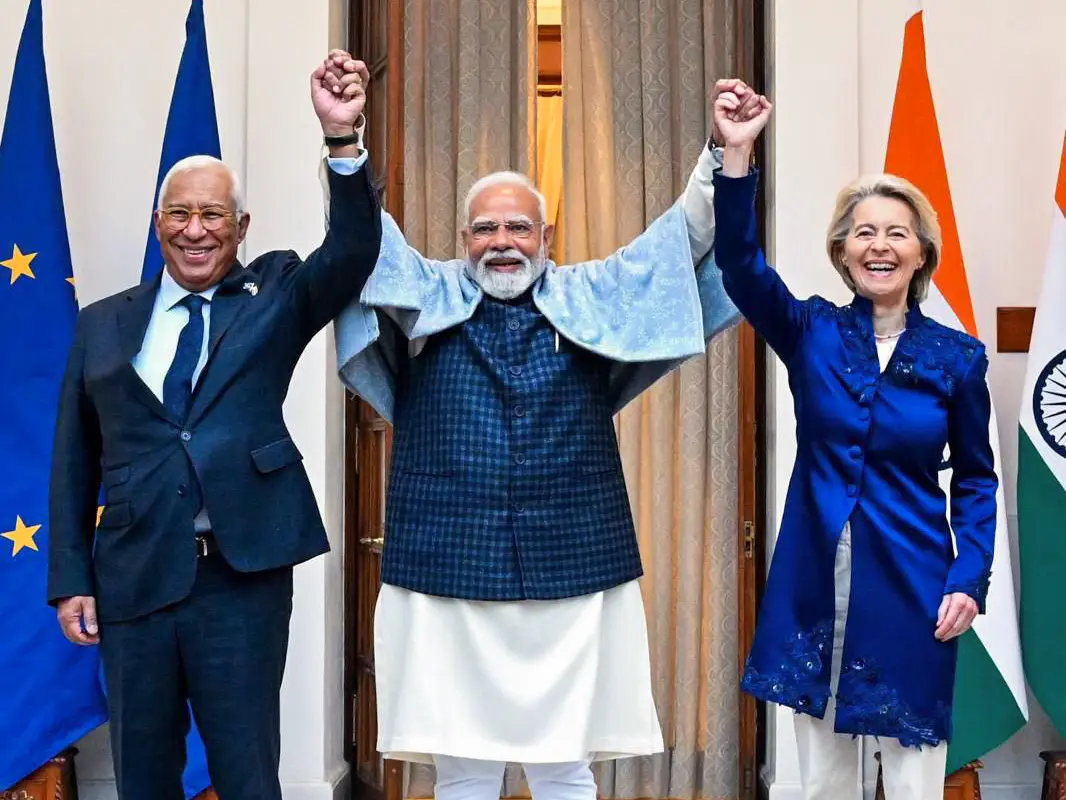
Prime Minister Narendra Modi, with President of the European Council António Luís Santos da Costa, and President of the European Commission Ursula von der Leyen, at Hyderabad House, in New Delhi on Jan 27. Photograph: (ANI)
India and the EU will grant each other ‘Most Favoured Nation’ status for five years once their FTA takes effect, following high-level talks in New Delhi between PM Modi and top EU leaders a month earlier.
India and the European Union are set to grant each other ‘Most Favoured Nation’ status for five years from the date the Free Trade Agreement (FTA) comes into effect, according to a draft of the deal released on Friday (Feb 27). This comes a month after the top European leaders visited New Delhi, during which European Commission President Ursula von der Leyen and European Council President Antonio Costa held talks with Indian Prime Minister Narendra Modi to finalise the draft of the trade deal.
What is ‘Most Favoured Nation’ status?
According to the World Trade Organisation, ‘Most Favoured Nation’ status guarantees trade between the nations without discrimination and “treating other people equally”. Under the agreement, countries cannot normally discriminate between their trading partners. The status also grants special favours like a lower customs duty rate.
The status also implies that neither side can give more favourable tariff terms to other trading partners for the next five years.
The draft released by India’s trade ministry states that both sides have agreed not to impose new import or export restrictions beyond World Trade Organisation rules. It also adds that India and the EU will deepen cooperation on digital trade under the proposed free-trade agreement.
India and the EU will begin sharing annual import data one year after the deal comes into effect to track how the agreement is being implemented and oversee tariff benefits. The two sides have also agreed to provide each other with fair and accessible appeal processes for customs decisions regarding imports, exports or goods in transit.
Trending Stories
)
&im=FitAndFill=(700,400))
)
)
)
)
)
)
)
&im=FitAndFill=(700,400))
)
&im=FitAndFill=(700,400))
)
)
)
)
)
)
)
)
)
)
)
)
)
)
)
)
)
)
)
)
)
)
)
)
)
)
)
India-EU trade deal
Earlier, on January 27, India and the EU announced that the talks on the FTA had concluded. Hailed as “mother of all deals” by von der Leyen, the deal will allow 93 per cent of Indian goods to enter the 27-nation bloc duty-free. The agreement is also expected to bring down the cost of luxury cars and wine imports from the European Union.

