Suvendu Adhikari proposes anti-conversion law to tackle 'love jihad' in West Bengal: Key provisions, penalties and more | WION Decodes

&imwidth=600&imheight=450&format=webp&quality=medium "Suvendu Adhikari proposes anti-conversion law to tackle 'love jihad' in West Bengal: Key provisions, penalties and more | WION Decodes")
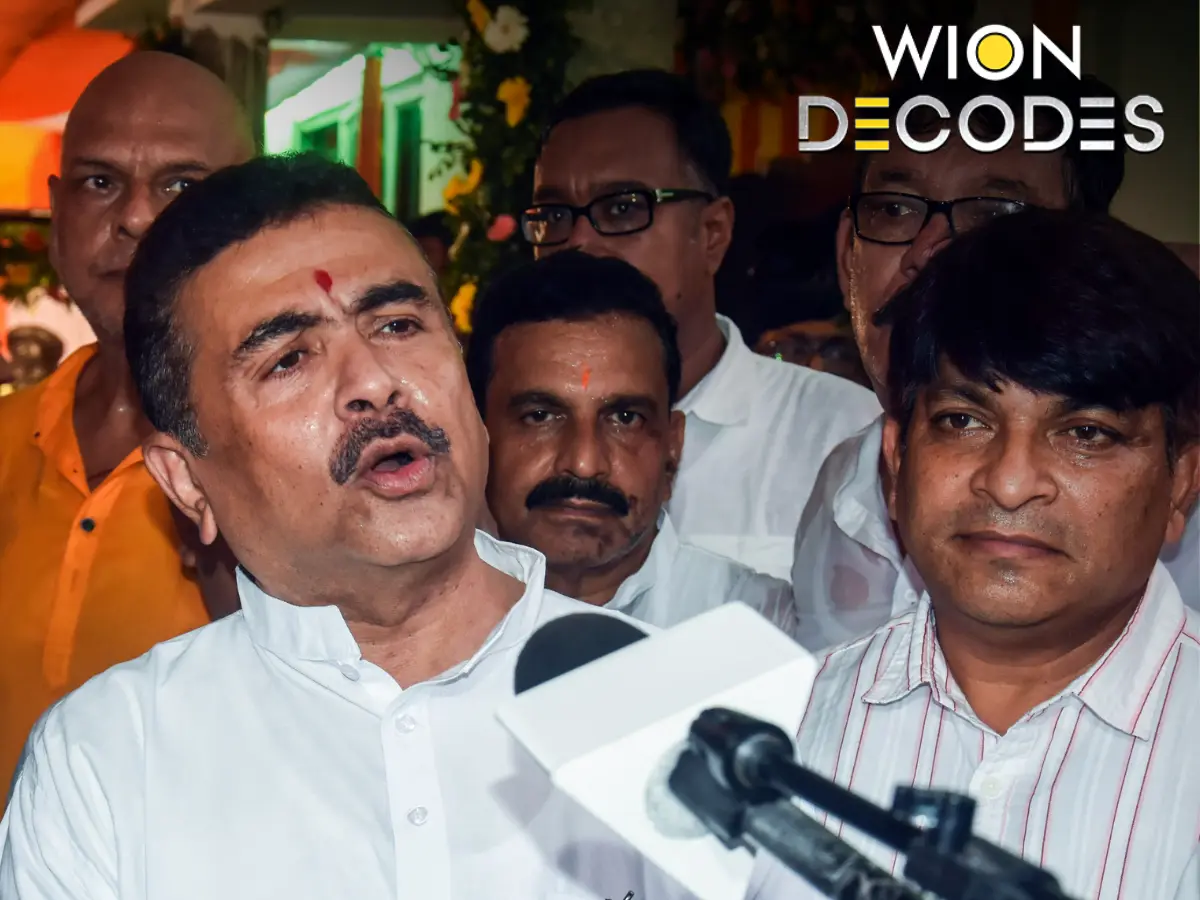
West Bengal Chief Minister Suvendu Adhikari speaks to the media on the occasion of the birth anniversary of novelist and poet Bankim Chandra Chattopadhyay, at Bankim Smriti Granthagar, in Kolkata on Friday (Jun 26). Photograph: (ANI)
West Bengal BJP leader Suvendu Adhikari has proposed a sweeping legal overhaul that includes an anti-conversion law, Uniform Civil Code and NRC, potentially reshaping marriage, inheritance, religious conversion and citizenship-related frameworks in the state. WION Decodes.
West Bengal Chief Minister Suvendu Adhikari on Friday (Jun 26) announced that his government will enact a strict anti-conversion law in West Bengal, while also implementing the Uniform Civil Code (UCC) and the National Register of Citizens (NRC) in the state. The proposals could significantly reshape the state's legal landscape and are likely to trigger intense political, legal and constitutional debates. While the final drafts have not yet been made public, clues from BJP statements, existing laws in other states and recent policy positions offer a glimpse of what could be on the table. Here's what we know.
What is the proposed anti-conversion law?
Addressing a programme at Rabindra Sadan to mark the 150th anniversary of Vande Mataram, Adhikari proposed an anti-conversion law for West Bengal. He alleged that infiltration through the state’s international border had contributed to religious conversions, “love jihad”, and demographic changes. This, Adhikari said, poses a threat to West Bengal’s social fabric and national security. However, he did not provide evidence to support the claims.
Notably, anti-conversion laws already exist in several BJP-ruled states, including Uttar Pradesh, Madhya Pradesh, Uttarakhand and Gujarat. These laws are generally aimed at preventing religious conversions carried out through force, fraud, coercion, inducement or misrepresentation.
If West Bengal follows a similar template, the law could include:
Trending Stories
)
)
)
)
)
)
)
)
)
)
)
)
)
)
)
)
)
)
)
)
&im=FitAndFill=(700,400))
)
)
)
)
)
)
)
)
&im=FitAndFill=(700,400))
)
)
)
)
)
)
- Ban on forced or fraudulent conversions: Conversions obtained through coercion, threats, deception, marriage solely for conversion purposes or material inducements could be declared illegal.
- Advance notice requirements: Individuals seeking to convert may be required to notify district authorities before and after the conversion process. Religious officiants conducting conversions could also face reporting obligations.
- Criminal penalties: Violations may attract prison terms and financial penalties, with stricter punishment in cases involving women, minors, Scheduled Castes, Scheduled Tribes or persons with disabilities.
- Burden of proof provisions: Like some existing state laws, the responsibility to prove that a conversion was voluntary could shift partly onto the person conducting or facilitating the conversion.
How could West Bengal's law differ from other states?
The proposal appears likely to go beyond conventional anti-conversion legislation in three ways.
What is the Uniform Civil Code?
A Uniform Civil Code seeks to replace religion-specific personal laws with a common set of rules governing civil matters, such as:
- Marriage
- Divorce
- Adoption
- Maintenance
- Inheritance
- Succession
Supporters argue that a common civil code promotes equality before the law. Critics contend that it may affect religious freedom and cultural autonomy.
How could a UCC affect existing personal laws?
If implemented, the UCC could override or replace civil provisions contained in several personal laws, including:
- Hindu Marriage Act, 1955
- Hindu Succession Act, 1956
- Hindu Adoptions and Maintenance Act, 1956
- Indian Christian Marriage Act, 1872
- Indian Divorce Act, 1869
- Parsi Marriage and Divorce Act, 1936
- Muslim personal laws governing marriage, divorce and inheritance
Marriage and live-in relationships
A common framework could standardise marriage registration, minimum age requirements, consent provisions and rules governing live-in relationships, regardless of religion.
Divorce and maintenance
Different religious procedures for divorce could be replaced by a single legal process. Rules relating to alimony, maintenance and child custody may also become uniform.
Inheritance and property rights
One of the most significant changes could involve inheritance laws. A UCC could establish common rules on property distribution among heirs, replacing religion-based succession systems.
Adoption
A uniform law may allow all citizens equal access to legal adoption frameworks, irrespective of religious affiliation.
Succession and wills
The code could create standard rules governing estates, wills and succession rights, reducing variations across communities.
Why is the proposal significant?
Unlike some states that have debated or implemented aspects of a Uniform Civil Code, West Bengal would be the first large state with a substantial Muslim population, around 27 per cent according to recent estimates, to move towards such a framework.
That makes the proposal politically significant as well as legally consequential.
The final shape of both laws will depend on the text eventually introduced in the legislature. However, if implemented as outlined by BJP leaders, West Bengal's anti-conversion law and Uniform Civil Code could become among the most far-reaching legal reforms undertaken by any Indian state in recent years, affecting everything from religious conversions and marriage registration to inheritance rights and family law.

