Social media ban for teens on the cards? PM Modi praises Australia's under-16 ban, says 'we're taking lessons from you'

&imwidth=600&imheight=450&format=webp&quality=medium "Social media ban for teens on the cards? PM Modi praises Australia's under-16 ban, says 'we're taking lessons from you'")
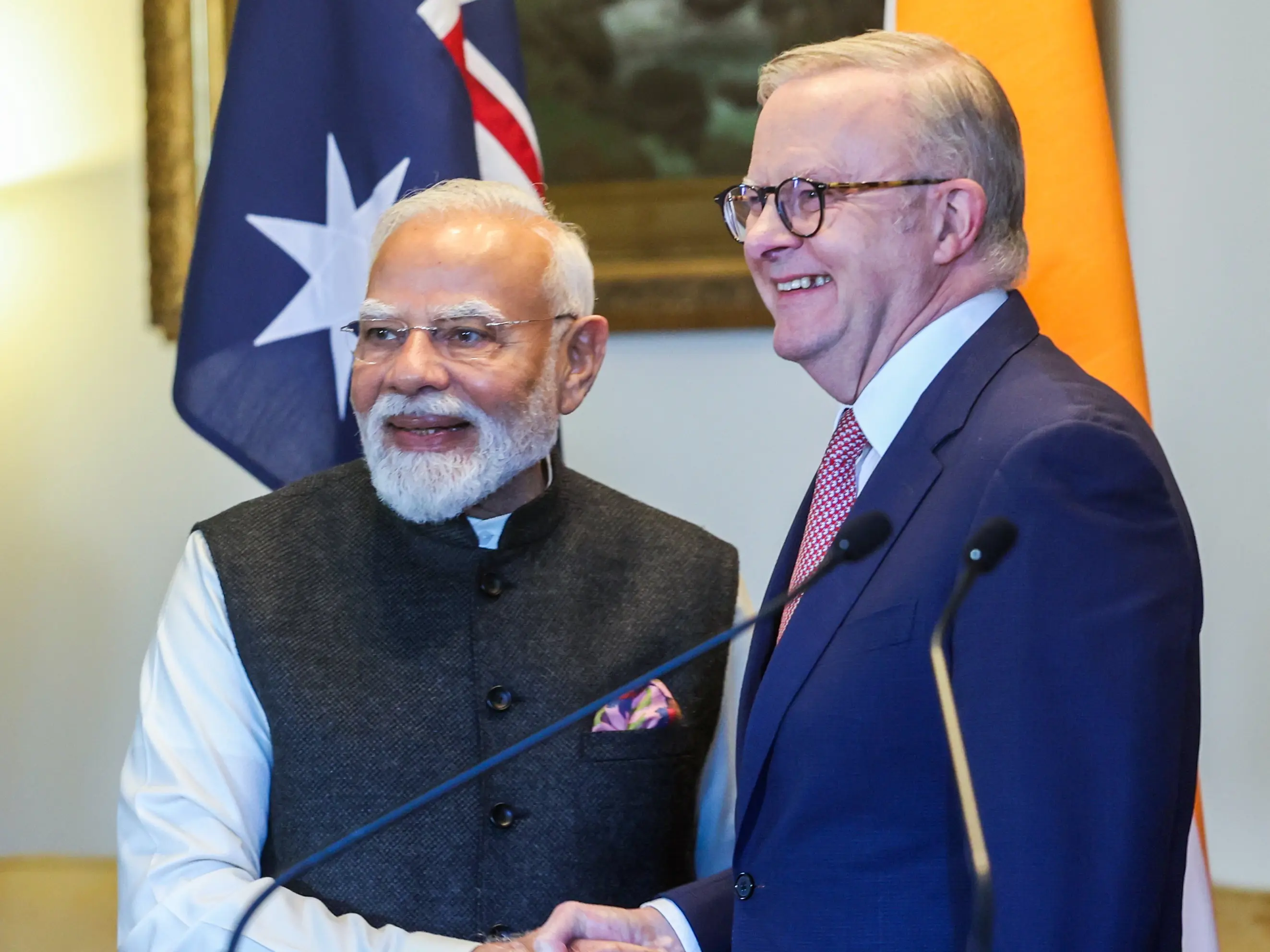
rime Minister Narendra Modi and Australian Prime Minister Anthony Albanese during the joint press meet, in Melbourne on Thursday. Photograph: (ANI)
Prime Minister's comments carry added weight, as calls for such restrictions grow in India, with Karnataka already banning social media for under-16s and Andhra Pradesh considering similar rules.
Prime Minister Narendra Modi on Thursday (July 09) praised Australia's decision to stop children under 16 from using major social media platforms, calling it an example that India and the rest of the world can learn from. Speaking at the Australia-India Annual Leaders' Summit in Melbourne, Modi said Australia's steps to regulate social media and protect young users were setting an important example for other nations to follow.
"The way you are bringing changes in laws related to information technology and social media, and working to protect society, is highly inspiring for the world. We are learning a lot from your efforts and taking many lessons from them," he said while addressing the leaders, including his counterpart, Anthony Albanese.
Modi made these remarks during a visit that also saw India and Australia sign several major agreements covering civil nuclear energy, maritime security and critical minerals.
His comments assume added significance as the state governments are considering similar restrictions, given that calls for these measures are growing across India.
Karnataka has already moved to ban social media access for children under 16, and Andhra Pradesh has signalled that it may bring in similar rules soon.
Modi's reference was to Australia's landmark law that bars children under 16 from holding accounts on several major platforms. The law took effect in December 2025, making Australia the first country in the world to bring in such a nationwide restriction. Platforms covered under this rule include TikTok, X, Facebook, Instagram, YouTube and Snapchat.
Trending Stories
)
)
)
)
)
)
)
)
)
)
)
)
)
)
)
)
)
)
)
)
)
)
)
)
)
)
)
)
)
)
)
)
)
)
&im=FitAndFill=(700,400))
)
)
)
)
Other countries consider similar bans
Other countries are now watching Australia's move closely. Following its under-16 social media ban, several nations have either introduced or proposed similar restrictions to protect youth mental health. Brazil and Indonesia have already enforced bans for children under 16, while the United Kingdom, France and Turkey have passed laws targeting under-15 or under-16 age groups. The United Arab Emirates has restricted access for children under 15, and countries like Canada and Spain are working on drafting their own under-16 rules.
To enforce these restrictions properly, governments are asking tech platforms to use advanced age-verification tools. These include digital identity links, AI-based age estimation and biometric facial scans.