

&imwidth=800&imheight=600&format=webp&quality=medium "‘Skill, chance irrelevant if money staked’: SC upholds retrospective 28% GST levy on online gaming companies")
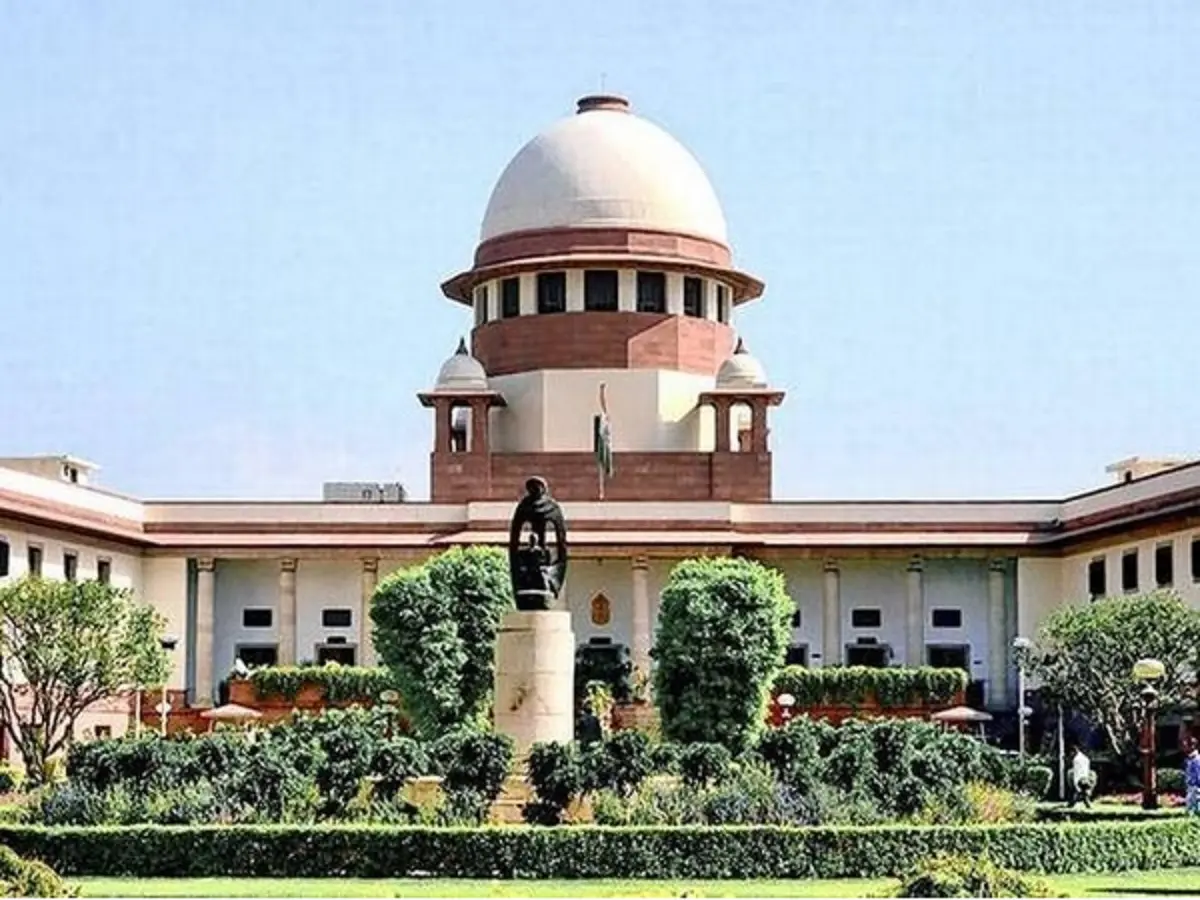
The Supreme Court on Wednesday upheld the government’s retrospective imposition of 28% Goods and Service Tax (GST) on online gaming companies, backing its tax demands on past transactions in a ruling that could have major financial implications for the sector.
The case arose from GST notices issued to real-money gaming companies who challenged whether 28% GST could be levied on the full face value of bets placed through their platforms.
A bench of Justices JB Pardiwala and R Mahadevan held that such a GST levy was constitutionally valid and could not be said to violate the Constitutional scheme governing GST. The levy is supported by statutory authority under the GST Act, the court held.
It also clarified that online gaming platforms cannot be treated merely as intermediaries or facilitators, holding instead that they supply “actionable claims” that are taxable under the GST framework.
It proceeded to uphold CGST rules that empowered the levy of GST on the full value of bets placed through online gaming platforms as well as casinos.
Trending Stories
&imwidth=180&imheight=135&format=webp&quality=medium)
'Hell of a beautiful a**': Trump compliments Nicki Minaj as rapper joins him in Michigan rally
&imwidth=180&imheight=135&format=webp&quality=medium)
'Hire the robot, fire the human': Bill Gates's words hint at a bleak future
&imwidth=180&imheight=135&format=webp&quality=medium)
Telangana unveils AI avatar of IT minister D Sridhar Babu at Hyderabad DevFest 2026
&imwidth=180&imheight=135&format=webp&quality=medium)
Who is Eyal Zamir, Israeli army chief, who reportedly clashed with Netanyahu over Iran?
&imwidth=180&imheight=135&format=webp&quality=medium)
Fire breaks out at Delhi’s North Block, thick black smoke seen | VIDEO
&im=FitAndFill=(700,400)&imwidth=180&imheight=135&format=webp&quality=medium)
Armoured vehicles vs main battle tanks: What is the real difference?
&imwidth=180&imheight=135&format=webp&quality=medium)
IND vs NZ: Tilak Varma sets world record with most T20I catches in a year
&imwidth=180&imheight=135&format=webp&quality=medium)
Harry Kane favourite to win 2026 Ballon d’Or ahead of Lamine Yamal and Kylian Mbappé
&imwidth=180&imheight=135&format=webp&quality=medium)
FIR filed against opposition MPs for ‘trespassing’ amid Jamia Millia students’ protest
&imwidth=180&imheight=135&format=webp&quality=medium)
WATCH | Virat Kohli returns to training ahead of New Zealand ODI series
&imwidth=180&imheight=135&format=webp&quality=medium)
Can Putin cheat death? All about his daughter’s billion-dollar quest for immortality
&imwidth=180&imheight=135&format=webp&quality=medium)
Daler Mehndi controversy: Mika Singh’s team confirms Subodh Uniyal’s apology
&im=FitAndFill=(700,400)&imwidth=180&imheight=135&format=webp&quality=medium)
How do army night-vision systems see in almost complete darkness?
&imwidth=180&imheight=135&format=webp&quality=medium)
Netanyahu warns Israelis of ‘existential threat’ from Iran, posts AI image of nuclear strike
&imwidth=180&imheight=135&format=webp&quality=medium)
Brazil re-elects factory worker Lula for fourth term; Indian PM Modi congratulates 'dear friend'
&imwidth=180&imheight=135&format=webp&quality=medium)
Pakistan airline PIA unveils new crew uniforms, faces online criticism
&imwidth=180&imheight=135&format=webp&quality=medium)
‘That is a miss’: Ravi Ashwin questions Sooryavanshi’s demotion to No. 3 in 2nd T20I vs NZ
&im=FitAndFill=(700,400)&imwidth=180&imheight=135&format=webp&quality=medium)
Why does this fighter jet have a golden window that looks like alien technology?
&im=FitAndFill=(700,400)&imwidth=180&imheight=135&format=webp&quality=medium)
New OTT releases this week (October 26-November 1, 2026): Baththa, Akka, The One About Matthew Perry- 7 titles coming on Netflix, Prime Video and more
&imwidth=180&imheight=135&format=webp&quality=medium)
Elon Musk’s Grok releases first AI-generated Odyssey episode, months after promising ‘historically accurate’ full-length film
&imwidth=180&imheight=135&format=webp&quality=medium)
'Already tired of his 9-to-5': Baby born with a moustache becomes internet sensation, video goes viral | Watch
&imwidth=180&imheight=135&format=webp&quality=medium)
Serbia’s student-led movement defeats Vucic’s party after 14 years in power: Why it matters
&imwidth=180&imheight=135&format=webp&quality=medium)
'I promised Gautam & Kotak Sir that...': Tilak Varma opens up on match-winning mindset against NZ
&imwidth=180&imheight=135&format=webp&quality=medium)
Maldives opposition leader demands transparency on Muizzu Govt's Pakistan defence, security deals
&im=FitAndFill=(700,400)&imwidth=180&imheight=135&format=webp&quality=medium)
Why do some fighter jets have two engines while others use one?
&imwidth=180&imheight=135&format=webp&quality=medium)
Formula 1: Mercedes' Kimi Antonelli one race and ninth spot finish away from title after US Grand Prix win
&imwidth=180&imheight=135&format=webp&quality=medium)
Delhi's new entry rules for vehicles begin November 1. Here's all you need to know about the ban
&imwidth=180&imheight=135&format=webp&quality=medium)
'Clear overkill': Putin rejects claims Russia is behind mass protests in Europe
&imwidth=180&imheight=135&format=webp&quality=medium)
'I've done my work sincerely': AR Rahman on facing backlash over Ramayana soundtrack
&imwidth=180&imheight=135&format=webp&quality=medium)
Clayface tops North American box office, Elizabeth Holmes documentary follows close behind
&imwidth=180&imheight=135&format=webp&quality=medium)
Nagpur man fails to pay rent, allegedly prints fake Rs 500 notes worth Rs 37 lakh
&imwidth=180&imheight=135&format=webp&quality=medium)
Israel elections 2026: How the country is gearing up for a crucial vote
&imwidth=180&imheight=135&format=webp&quality=medium)
Donald Trump targets Bill Maher in lengthy post after White House dinner, says ‘Don’t call anymore’
&imwidth=180&imheight=135&format=webp&quality=medium)
'He is a red flag': Ex-India strength and conditioning coach on Rohit's fitness regime
On the question of whether the online games in question could be termed as a betting activity or were skill-based games, the top court held that even skill-based games acquire the character of betting and gambling for GST once money is staked on uncertain outcomes.
The apex court also set aside a Karnataka High Court judgment in favour of online gaming platform, Gameskraft. It restored the September 2022 show-cause notice issued to Gameskraft, which had demanded around ₹21,000 crore in GST.
The Court, however, clarified that the final decision in the matter is left to the concerned GST authorities.
The gaming industry had pleaded that GST could only be levied on gross gaming revenue, which is the amount retained by platforms after deducting winnings. The companies argued that taxing the entire stake or deposit amount was disproportionate and commercially unviable.
The controversy intensified after the GST Council decided in 2023 to impose 28% GST on the full face value of online gaming, casinos and horse racing. Gaming companies, however, argued that the levy could not be applied retrospectively for the period before October 1, 2023.
The demands against the industry initially stood at around ₹1.12 lakh crore. With interest and penalties, the potential exposure was estimated to be much higher. Some later reports placed the total exposure at around ₹2.5 lakh crore.
Gameskraft had challenged the notice before the Karnataka High Court, which ruled in its favour, holding that rummy is a game of skill and that the company was not supplying actionable claims in the manner alleged by the tax department.
The GST department appealed to the Supreme Court. In September 2023, the Supreme Court stayed the Karnataka High Court ruling.
The gaming companies were represented by Senior Advocates Harish Salve, AM Singhvi, Mukul Rohatgi, Neeraj Kishan Kaul, Arvind Datar, Dhruv Mehta, Balbir Singh, Sajan Poovayya, V Sridharan, Gopal Sankaranarayanan, Vikram Nankani, Tarun Gulati, Abhishek Malhotra, Sanjay Jhanwar, Jay Savla and Vivek Reddy.

