&imwidth=800&imheight=600&format=webp&quality=medium "Shibu Soren dies: A timeline of the political life of Jharkhand Mukti Morcha leader who helped form Indian tribal state")
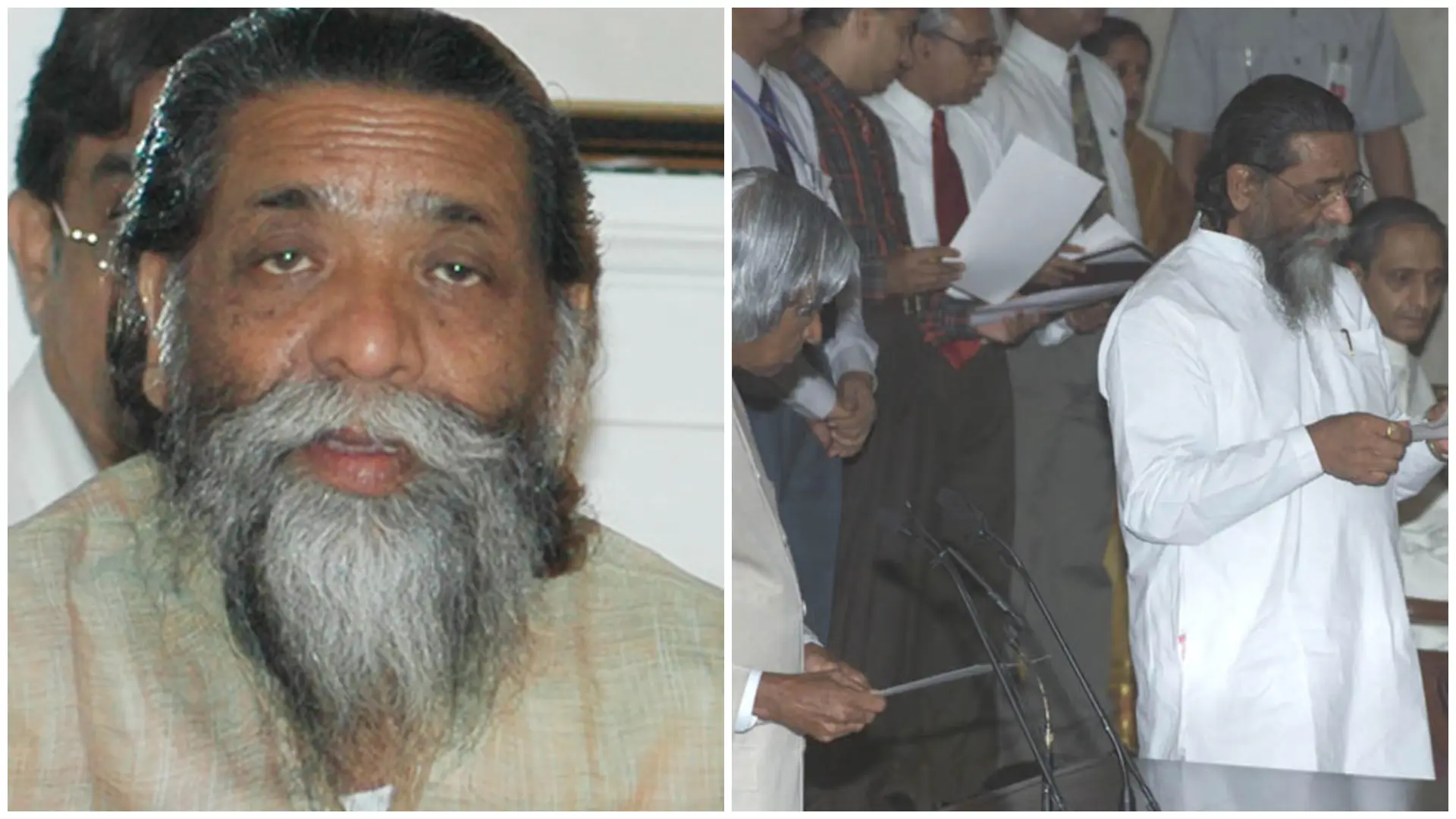
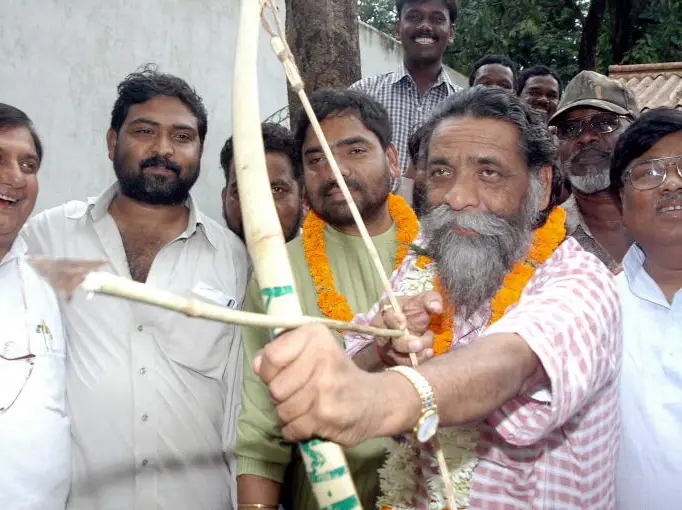
Shibu Soren, one of the most important tribal leaders of India, died on Monday (Aug 4) after a prolonged illness. He was 81. Soren’s leadership was central to the formation of the tribal state of Jharkhand in 2000. The state empowered tribals with political representation that included 28 reserved Assembly seats for Adivasi communities. Soren was known for his confrontational style of functioning, but that was the oxygen for his movement.
Here is a brief timeline of his storied life:
Shibu Soren early life and activism
Shibu Soren was born on 11 January 1944, in Nemra village in present-day Jharkhand to a Santhal tribal family. When Soren was young, his father was murdered allegedly by moneylenders, leading him to leave school and turn to activism for tribal resistance. At the age of 18, Soren founded the Santhal Navyuvak Sangh to mobilise tribal youth against exploitation. In later life, he worked as a school teacher.
Shibu Soren political life: Founding of JMM and tribal mobilisations

In 1972, Soren co-founded the Jharkhand Mukti Morcha or JMM with AK Roy, Binod Bihari Mahato and other leaders. The JMM aimed to reclaim tribal lands and demand a separate, tribal-majority state. This was achieved through a combination of mass agitations, cultural mobilisation, and political alliances.
The JMM addressed exploitation in the Chotanagpur and Santhal Pargana regions, and agitated for tribal land rights, cultural preservation, and control over natural resources, with the slogan 'jal, jungal, zameen' (water, forest, land).
Soren led the Dhankatni Movement, which encouraged tribals or 'adivasis' to forcibly harvest crops from land seized by outsiders. This movement was a symbol of resistance to economic marginalisation.
Shibu Soren's career in Indian and Jharkhand politics
Between 1980 and 2019, Shibu Soren was elected to the Lok Sabha from Dumka, becoming a key voice for Adivasi rights at the centre. Fondly called 'Dishom Guru', he led the Jharkhand statehood movement for nearly three decades, fulfilling his dream when the state was formed by the division of Bihar on 15 November 2000.
He served as chief minister of Jharkhand three times (2005, 2008–2009 and 2009–2010). At the centre, he was the Union Coal Minister in 2004–2006, though legal troubles interrupted most of his terms. In 2020, he was elected to the Rajya Sabha, the upper house of Indian parliament.
Trending Stories
)
No Pandya as Auqib Nabi earns maiden ODI call-up; Mayank returns for WI T20Is| check full squads
)
Chiefs tight end Travis Kelce named one of the victims in $35 million ponzi scheme
)
Trump praises India’s Opium crackdown, hails anti-drug efforts
)
Sydney Sweeney defends provocative ad choice, the internet is still not impressed
)
Former India player Diana Edulji wants Smriti Mandhana to replace Harman as skipper at the earliest
)
Trump calls Canada-EU associate membership plan ‘laughable’ and threatens 'very serious tariffs'
)
Protests erupt over migrant housing plan in Piddington
)
Shahzad Bhatti Network declared terrorist organisation under UAPA: Govt order
)
Europe wants a common playbook for security threats, seeks security beyond NATO
)
Formula One reveals the 2027 race calendar; Monaco to host sprint race for the first time
)
All Indian goods to get duty-free access to New Zealand
)
240-million-year-old bizarre 'pig with a tusk' creature creates new dilemma over origin of dinosaurs
)
Bigg Boss 20: Mahhi Vij reveals she lost Yuva role to Kareena Kapoor; 'didn’t work out in my favour'
)
Lionel Messi for 2026 Ballon d’Or over Mbappe and Yamal, says Diego Simeone
)
US House votes 417-3 to pass Ratepayer Protection Act targeting AI data center electricity costs
)
Hong Kong unveils 11 new measures to boost birth rates, offers higher cash bonuses and housing perks
)
Former OpenAI researcher warns of growing risks from Artificial Intelligence
)
Veteran actor Anant Nag honoured with Indian cinema’s highest award
)
Wildfire tears through forests in Spain's Valencia
)
AUS vs SA: Steve Smith still gets 'little flashbacks' from sandpaper gate
)
Pakistan naval vessel returns to harbour with 'severe damage' after collision with Indian warship in Arabian Sea
)
Fed raises rates for first time in 3 years, Kevin Warsh defies Trump as inflation mounts
)
Katrina Kaif’s postpartum weight is not the problem; your gaze is
)
Taiwan seeks deeper India ties as direct flights restart soon and chip projects advance
)
Daayra movie review: Kareena Kapoor, Prithviraj Sukumaran shine in Meghna Gulzar’s cop-versus-cop crime thriller
)
Saudi Vs Houthis: Yemeni military rebels clash with Houthis
)
Pak batter Rizwan's petition against being questioned by cyber crime agency rejected by court
)
US trade tariff: 100% tariff targets Russian buyers amid trade tensions
)
Pakistan: Imran Khan's sons Kasim & Sulaiman claim their father is 'tortured' in jail
&im=FitAndFill=(700,400))
New OTT releases this week (September 14-20, 2026): Lust Stories 3, Waiting Hai, Irumudi- 5 new titles coming on Netflix, Prime Video and more
)
Trump gets new power to hit India, China with up to 100% tariffs as US Senate clears Russia sanctions bill
)
Prime Minister Narendra Modi's birthday: Italian PM Meloni sends birthday wishes
)
‘Imagine 50 AI fighters cornering one manned jet’: India’s mobbing doctrine eyes a new era of air warm
)
Saudi vs Houthis: Riyadh claims to have shot Houthi drone targeting Mecca
)
US Treasury rallies global financial institutions for Op Economic Outcast to isolate Iran
)
India breaks silence on US Russia sanctions bill, 100% tariff threat: ‘Committed to energy security’ for 1.4 billion
)
Want to get married within a year? Why 18 lakh people rush to Jaipur for ‘sacred henna’
)
Pakistan boycotts chess match against Israel at Olympiad
)
UN General Assembly 2026: What is veto power. Which countries have it and how does it work?
&im=FitAndFill=(700,400))
Suriya and Jyothika say ‘I do’ again after 20 years! See their dreamy wedding pics
)
Abhishek Sharma rises to No. 2 in T20Is; ENG’s Robinson 3rd after record Pakistan Tests
)
The Early Spring season 2 is happening, but fans have one request - 'don't change the actors'
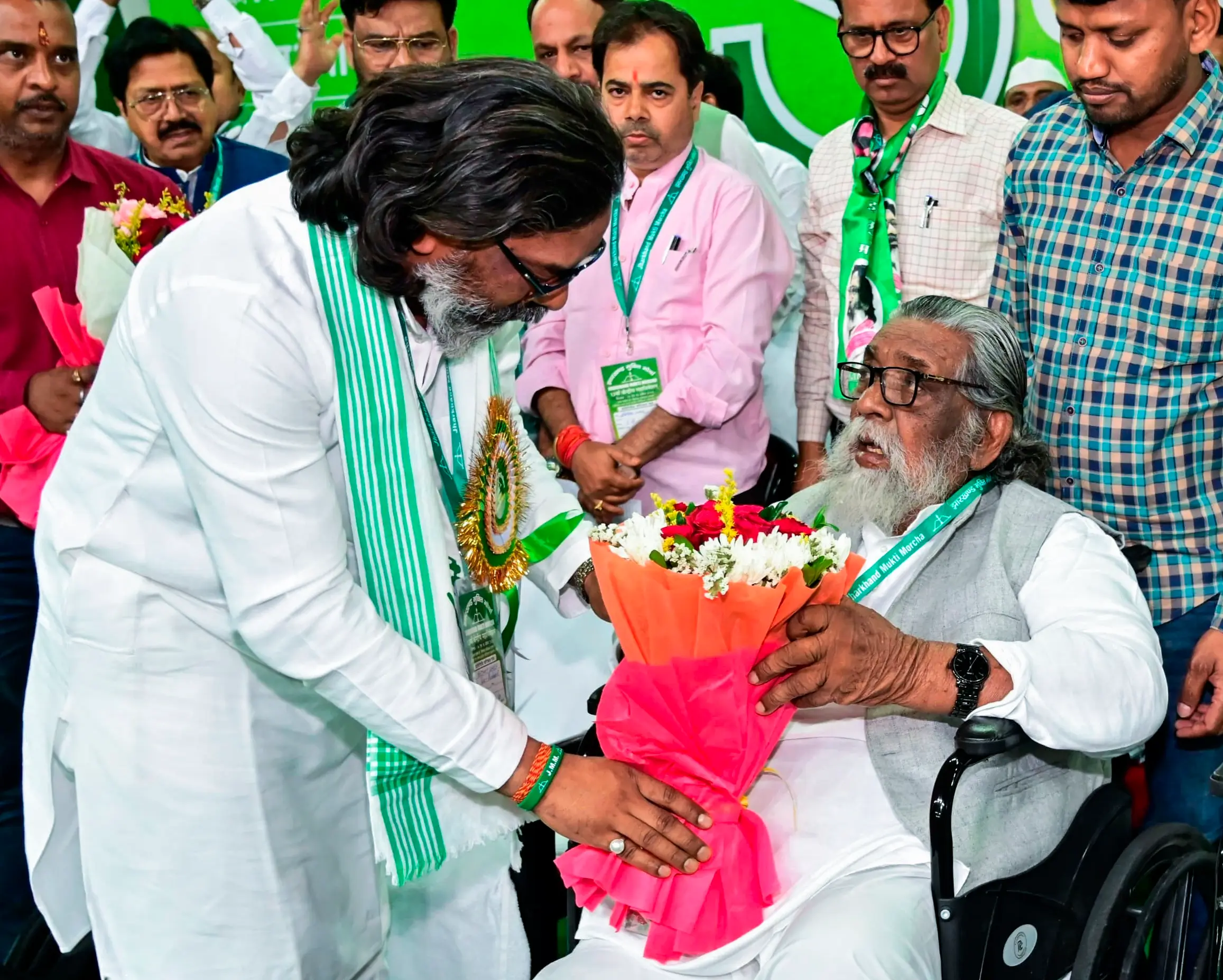
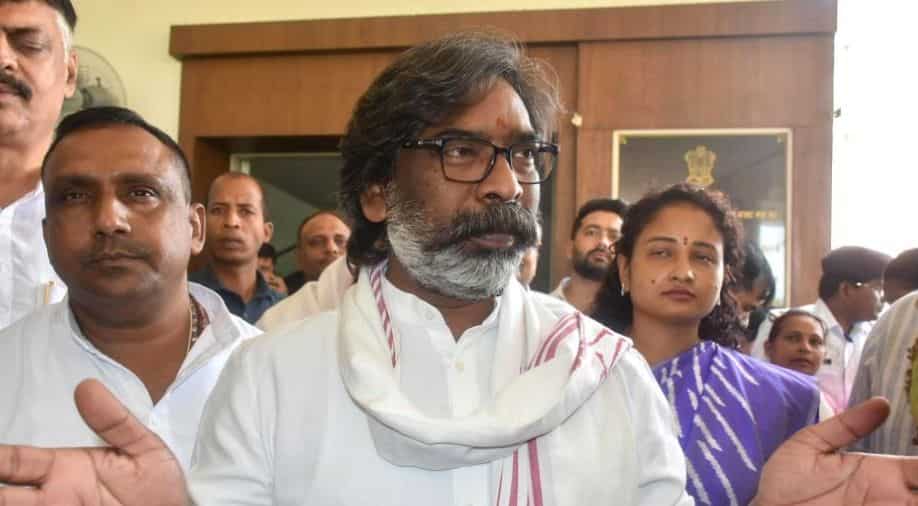
Soren paved the way for his son, Hemant Soren, who currently leads the JMM and serves as Jharkhand’s chief minister.
The politics of JMM, however, was later diluted by the fragmentation and factionalism of its leaders, who later joined, or formed alliances with, major parties like the Congress and BJP.
Shibu Soren's legal controversies and murder allegations faced by him
Throughout his political career, Shibu Soren faced legal cases. Soren was accused in a 1974 double murder case, in which two people were killed over a dispute over goat slaughter. He was cleared of the case in 2010.
The Chirudih Massacre of 1975 is another major one. Soren was among the accused in the killing of 10 people during a clash between tribals and 'outsiders'. He was issued an arrest warrant in 2004 and went underground. In 2008, he was acquitted due to insufficient evidence.
But perhaps the most damning for Soren's political career was the Shashi Nath Jha murder of 1994. Jha was Soren's secretary, and the allegation was that he was murdered because he had knowledge of a bribery scandal. Soren was convicted in the case in 2006 and sentenced to life. But he was acquitted in 2007, which was upheld in 2018.
Shibu Soren legacy: JMM bribery scandal of 1993 marred his reputation
The JMM bribary scandal dates back to 1993. The alllegation was that Soren or his party accepted bribes to support the Narasimha Rao government of Congress. He was not convicted in the case, but the Jha murder case was linked to the bribery scandal. Soren was also criticised for holding “kangaroo courts” and extrajudicial methods during his time in power. In 2007, he survived a bomb attack targeting his convoy.
Though Soren was acquitted in most of the criminal cases he was linked to, his legacy suffered as a result. While he championed tribal rights, the JMM was accused of creating dynastic politics. Several JMM leaders left to join other major national parties, including the BJP, thus diluting JMM's original role as a beacon of tribal rights.
In spite of all this, Shibu Soren remains a pivotal figure in Jharkhand’s history, revered for his contribution to Adivasi empowerment.