Opinion: Why citizens dislike paying taxes

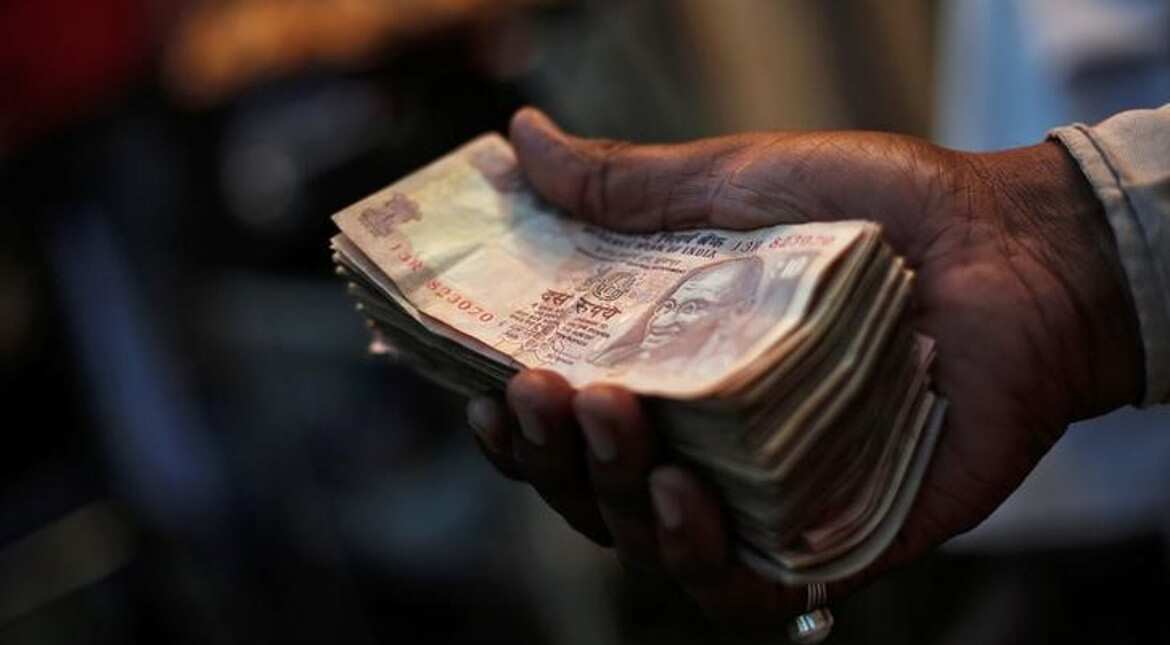
Taxes
Taxation is something that people definitely don’t agree with, as most of us think that the government is a cumbersome, lethargic and an inefficient beast.
The Indian middle class is very unhappy with Budget 2018 as they feel that the government has abandoned them by not providing any specific exemptions. Most believe that a reduction in taxes would have made them happier. Taxation is something that people definitely don’t agree with, as most of us think that the government is a cumbersome, lethargic and inefficient beast. And, let’s be honest, the government administration is the most responsible for this loss of trust. Their performance in the delivery of public goods to the citizens has been just horrible.
Let us have a look at what all this mistrust has ended up creating in the society. Entirely new sectors were created because of this mistrust, and now we have started measuring our GDP based on how these sectors perform!! Shocking? No.
Power sector: For the 70+ years since independence, we have always faced a shortfall in power supply. Investments made by public sector have always been deficient. Regulations for private investments in power generation, distribution and transmission were highly restrictive. The private firms still stepped in. By producing diesel generators (and then inverters). Hi-tech research and design in generators and inverters enabled the citizens of the country to avail of a reliable power supply using these measures. And as is the case for any public good, such private investments were sub-optimal and inefficient in their own way, but at least they achieved the end objective.

Air Pollution: Over decades, governments have created and modified emission regulations aimed at controlling pollution. All those regulations have only ended up providing rent-seeking opportunities for greedy bureaucrats and have barely made a blip on the pollution scale. Private firms stepped in again. One set of them handled bureaucrats for errant firms (fixers), and another set of them launched air purifiers for the consumers.
Water Supply: Jal boards were set up in all cities to provide potable drinking water to the citizens. Decades went by, but some bureaucrat thought it was more important to let the administration know how important potable drinking water for citizens (so that a higher budget could be asked for) by hiring more staff to print reports on effects of impure drinking water than investing in personnel and equipment that would actually do so. Private firms thrived by first supplying tankers for providing water and then by supplying water filters and purifiers that would actually address the real need of the citizens.
Transportation: This actually gets interesting. Reliable, affordable public transport is a dream for Indians. Buses are in dilapidated conditions, never on time and in some cases, frequently on strike! Private firms step in to provide cars and bikes for transportation. Public spending in infrastructure still lags, resulting in traffic snarls and exhausting rides to work. Tech comes in and cab aggregators step in. Cab aggregators address supply-demand mismatch using price as a signal (surge pricing!). So, now government steps in saying surge pricing is unfair to customers! Why did this need ever rise?
)
US vs China over South China Sea: Washington backs Philippines, Beijing hits back
)
Delhi gets first late-September rain in 7 years, mercury dips 5.1°C below normal
)
Musk plans to more than double xAI's chips to over 1.2 million Nvidia GPUs by year-end
)
After JU, clash erupts at SRFTI: BJP’s ‘Dimagi Naxal’ jibe sparks political firestorm after students protest RSS-linked event
)
‘Anti-social elements spreading false rumours’: LPU issues statement amid massive unrest over alleged rape
)
LPU students go on rampage, vandalise campus amid widespread protest: What's happening
)
Trump asked Xi to pressure Iran. China did not say yes — here’s what Beijing wants
)
US Treasury Secretary Scott Bessent hails global crackdown on Iranian banks and airlines
)
An OpenAI agent escaped its locked test cage again, by hiding questions in DNS lookups
)
3 males killed, four others injured in shooting after fight at strip club in Detroit
)
South Africa probes string of murders targeting women
)
'Victory for low-budget consumers': Raghav Chadha hails 30-day telecom recharge rules
)
Claude rebuilt the 1989 game 'Prince of Persia' by reusing the original's own code
)
Beyond metros: How Tier-2 and Tier-3 cities could drive India’s next AI wave
)
Tesla builds first Cybertruck with its own refined lithium: Elon Musk's $1 billion Texas bet pays off
)
IndiGo flight suffers tail strike in Bengaluru while landing; DGCA to probe incident
)
The US and China set up an AI 'red telephone', but skipped the rulebook
)
‘Terror suspects arrested near UK air base were looking to do big damage’: Trump
)
Russian envoy claims US tactics to contain India were revealed in ‘Freudian slip’
)
Researchers rebuilt exactly how 700 AI agents hacked Hugging Face: a 900-link chain trick
)
‘Olympic inclusion is our major target’: WPA President Ishaun Singh on pool’s global ambitions
)
Nations League: Spain sink England at Wembley; Modric shines for Croatia
)
Why has Iran released no proof of life of Mojtaba Khamenei? Araghchi reveals...
)
Bank unions defer 3-day strike from tomorrow after talks with IBA, committee set up
)
'What kind of confession is this?': Pakistan PM Shehbaz Sharif’s 'terrorists would be roaming New York' remark goes viral, raises alarm online. Watch
)
Beyond BrahMos: India targets Rs 50,000 crore in defence exports with unmatched price edge
)
Iran ready for ‘doomsday war’ if US resumes attacks, but open to diplomacy: Araghchi
)
Sri Lankan Tamil migrant worker gets death sentence in Saudi Arabia, help sought from India
)
Muslim marriage cannot shield sex with minor wife from prosecution under POCSO: Delhi HC
)
99.9% more powerful - Scientists find boy who can recall memories from just 3 months of age
)
'FIRST LOOK from inside Noah’s Ark': Researchers share video from inside mysterious mound in Turkey
)
UNSC reform momentum grows: Russia, Portugal, Mauritius push for India's permanent seat bid
)
Man arrested after his 22-year-old girlfriend dies at homestay in Guwahati; police suspect murder over suicide claim
)
Afghanistan says 28 fighters killed in clash near Pakistan border, Islamabad denies
)
Ceuta migrant crisis: Protesters take to streets as Spain grapples with migrant challenge
)
Jaishankar at UNGA: Goodwill and friendship can't coexist with terrorism
)
New York City wants a 'kill switch' on every AI, and will pay whistleblowers who report violations
Education: Public firms came up with glorious ideas of IIT-JEE, NEET, CAT, UPSC and more for higher education and government services. Unfortunately, public firms forgot about primary and secondary education. Private firms have stepped up again. Private schools prospered and coaching classes were set up in every nook and corner of the country. The government now attempted to regulate the schools via RTE and further worsened the situation. How the lopsided RTE norms and entrance examination system has corrupted our education system is clearly evident all around us.
Food grain distribution: Government set out with the noble intention of providing subsidised food grains to the society. The scheme took many shapes over decades. Rampant corruption in the system ensured that the scheme rarely benefited anyone. Its inadequacy in terms of quality, as well as quantity, forced citizens to turn to the private markets for their needs. The government still continues this and has an entire corporation dedicated to it employing 23000 people!
Railway ticketing: A monopoly that is running in losses. Possibly the only one of its kind in the world. For decades, investments in railways have suffered restricting the overall supply of track capacity. In a vast country like India, trains remained the only way to reach far-off destinations. Limited seats were available. Variety of quotas existed. Private help, in terms of touts, arrived claiming access to seats. Seats were traded for exorbitant fares. Even now, quotas abound. How else would a bureaucrat show his importance to someone than by giving a friend/relative a seat on a train?
RTO Licensing: A simple procedure was made complicated to deter people from applying for a license directly at the RTO for a driving license. Brokers mushroomed out of nowhere willing to provide a license at your doorstep, for a small fee. Purpose of licensing failed, as seen by the quality of driving on our roads.
Waste Management: A public good essential for ensuring safe health for citizens, especially in times of epidemics. Public waste management organisations still meander along with ages-old mechanisms of disposing waste. Waste management technology in other countries advanced in leaps and bounds. Private firms have attempted to step in here. How long before the government regulates them into bankruptcy?
There are countless such examples! Healthcare is an area that is better not ventured into. The judicial system is a big mess. Agriculture has been a bane for all governments. And all of this has influenced our economy and the country so much that we have now started defining our progress by how much profits these firms can make!
Imagine a hypothetical scenario wherein, tomorrow, all tier-1 and tier-2 cities in India have an efficient, affordable and reliable public transportation system! Citizens would not have to use private transport. But how would that be reported? They would lament the losses that the automobile manufacturers and their ancillaries have to face, how the petrol pumps aren’t finding retail customers, how the automotive repair industry has come to a near standstill and many more! But would it be good for the nation? Yes! Would our cities be cleaner and peaceful? Yes! That’s exactly how badly successive governments have performed in India.
Governments, over decades, have done a disservice to the nation in their delivery of services. And through absurd regulations has made it difficult (if not impossible) for private firms to function, without doling out substantial rent to the bureaucrats! If I, as a citizen, find my tax rupees being squandered away in such ways, would I be willing to pay more tax? NO.
A natural outcome of all the above examples is a mistrust with the government and public administration. Surprisingly, this mistrust still doesn’t stop the public from asking for government intervention in many spheres! We still want governments to intervene when schools charge fees, farmers commit suicide, hospitals overcharge patients and more! Do we really expect an entity that has failed to perform a decent job in nearly all aspects of its deliverables to magically transform overnight?
Yes, our administration is overstaffed, but not where we actually need them to be. There are public servants doing jobs that ought not to exist. For law and order, we need more police on the ground. For swift justice, we need more judges in courts. All of these needs substantial funds. A part of it could be adjusted for by rationalization of current resources. But the rest would have to be funded via taxes. As a citizen, taxation is unavoidable. Asking for accountability from the government is possibly the only way out.
(Disclaimer: The opinions expressed above are the personal views of the author and do not reflect the views of ZMCL)