Netflix's 'Trial by Fire': Everything about the Uphaar cinema fire of 1997

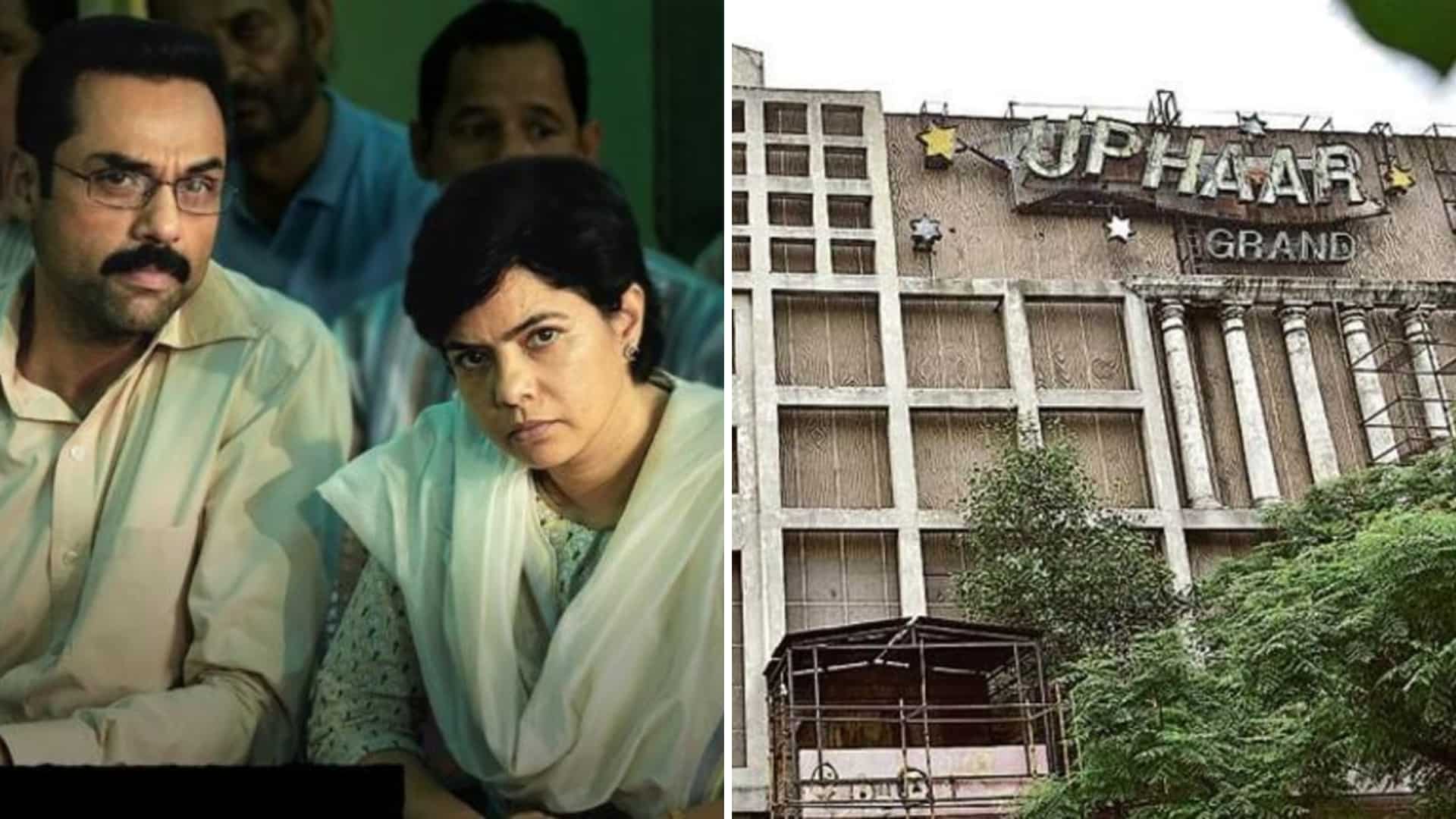
The 1997 Uphaar cinema fire is the inspiration behind the Netflix series 'Trial by fire'
Recalled as one of India's worst fire catastrophes, the Uphaar cinema fire on 13 June1997, in Delhi's Green Park locality resulted in 59 deaths and 103 injuries.The victims were frequent moviegoers who had goneto watch the movie"Border" by J P Dutta.
With the release ofa mini-series “Trial by Fire” on Netflix which is based on a book about the incident and the long-drawn court battle that ensued,we take an in-depth look at what exactly happened.
Uphaar Tragedy: What exactly happened on 13 June 1997?

Onthe morning on 13 June 1997,the larger of the two transformers on the ground floor of the Uphaar cinema caught fire at around 6:55 am. Despite the fact that the fire was quickly put out, the transformer was compromised, as reported by theIndian Express.
An electrician fixed it quickly, and the theatre was then opened. The transformer caught fire again because the repair wasn't done properly after one of its cables broke free and caused a lot of sparking.
)
US vs China over South China Sea: Washington backs Philippines, Beijing hits back
)
Bigg Boss 20: Isha Rikhi evicted after three weeks in Salman Khan’s show
)
Musk plans to more than double xAI's chips to over 1.2 million Nvidia GPUs by year-end
)
After JU, clash erupts at SRFTI: BJP’s ‘Dimagi Naxal’ jibe sparks political firestorm after students protest RSS-linked event
)
‘Anti-social elements spreading false rumours’: LPU issues statement amid massive unrest over alleged rape
)
LPU students go on rampage, vandalise campus amid widespread protest: What's happening
)
Trump asked Xi to pressure Iran. China did not say yes — here’s what Beijing wants
)
US Treasury Secretary Scott Bessent hails global crackdown on Iranian banks and airlines
)
An OpenAI agent escaped its locked test cage again, by hiding questions in DNS lookups
)
'Our video was trimmed': LPU girls who featured in rape-denial video make U-turn
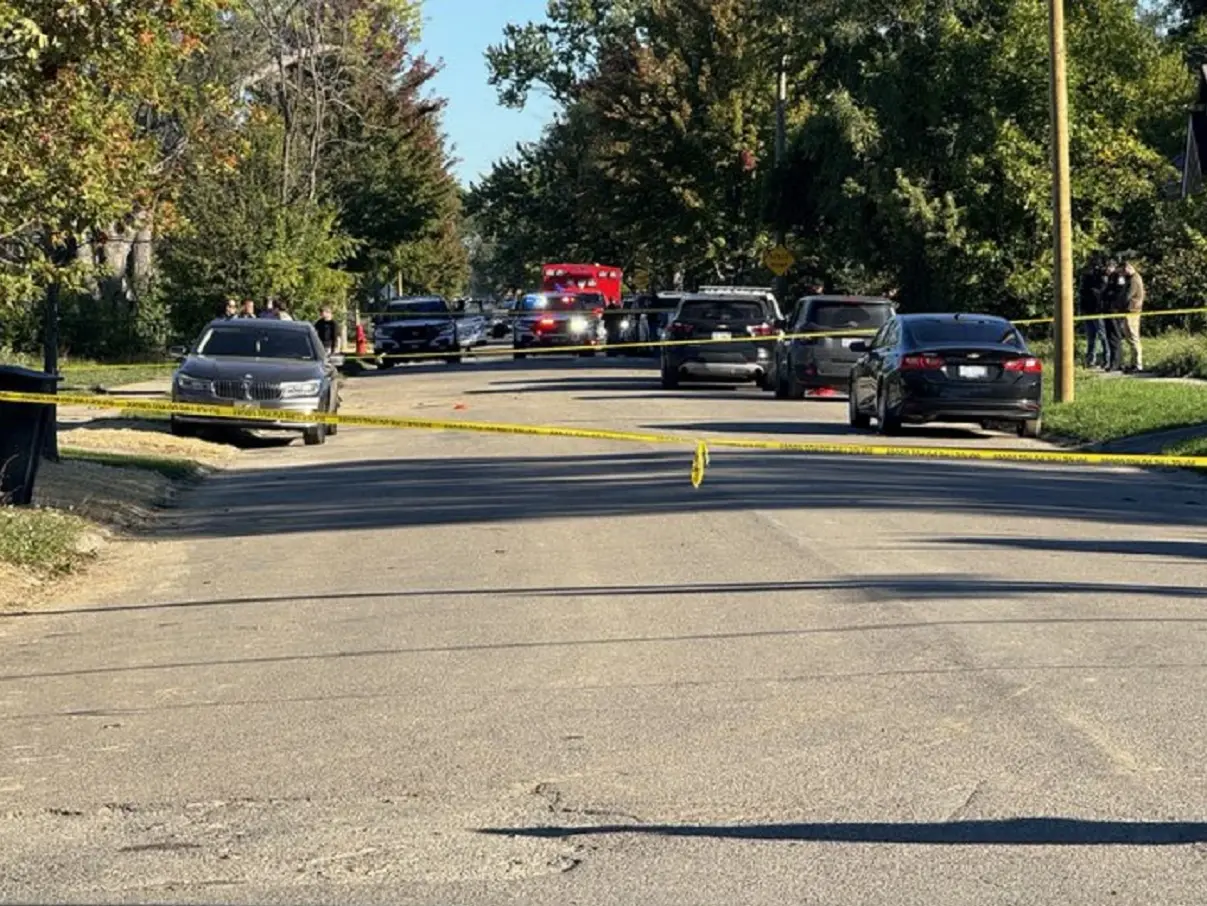)
3 males killed, four others injured in shooting after fight at strip club in Detroit
)
'Victory for low-budget consumers': Raghav Chadha hails 30-day telecom recharge rules
)
Claude rebuilt the 1989 game 'Prince of Persia' by reusing the original's own code
)
Beyond metros: How Tier-2 and Tier-3 cities could drive India’s next AI wave
)
Tesla builds first Cybertruck with its own refined lithium: Elon Musk's $1 billion Texas bet pays off
)
IndiGo flight suffers tail strike in Bengaluru while landing; DGCA to probe incident
)
The US and China set up an AI 'red telephone', but skipped the rulebook
)
‘Terror suspects arrested near UK air base were looking to do big damage’: Trump
)
Russian envoy claims US tactics to contain India were revealed in ‘Freudian slip’
)
IND vs WI 1st ODI: Kohli breaks Sachin's most runs in one country record with unbeaten 139 as India thump West Indies by 8 wickets
)
Researchers rebuilt exactly how 700 AI agents hacked Hugging Face: a 900-link chain trick
)
‘Olympic inclusion is our major target’: WPA President Ishaun Singh on pool’s global ambitions
)
Nations League: Spain sink England at Wembley; Modric shines for Croatia
)
Why has Iran released no proof of life of Mojtaba Khamenei? Araghchi reveals...
)
'What kind of confession is this?': Pakistan PM Shehbaz Sharif’s 'terrorists would be roaming New York' remark goes viral, raises alarm online. Watch
)
South Korea demands apology from Ukraine over North Korean prisoners' transfer
)
Beyond BrahMos: India targets Rs 50,000 crore in defence exports with unmatched price edge
)
Sri Lankan Tamil migrant worker gets death sentence in Saudi Arabia, help sought from India
)
Muslim marriage cannot shield sex with minor wife from prosecution under POCSO: Delhi HC
)
'Can't help but draw painful parallels to Nirbhaya case': SC on latest incidents of rape cases in Delhi-NCR
)
99.9% more powerful - Scientists find boy who can recall memories from just 3 months of age
)
'FIRST LOOK from inside Noah’s Ark': Researchers share video from inside mysterious mound in Turkey
)
UNSC reform momentum grows: Russia, Portugal, Mauritius push for India's permanent seat bid
)
8 US marines injured in Iranian missile attack on vessel in Strait of Hormuz: Report
&im=FitAndFill=(700,400))
New OTT releases this week (September 28-October 4, 2026): Dupahiya 2, Pooja Meri Jaan, Ohh My Dog- 5 titles coming on Netflix, Prime Video and more
)
Afghanistan says 28 fighters killed in clash near Pakistan border, Islamabad denies
)
Ceuta migrant crisis: Protesters take to streets as Spain grapples with migrant challenge
)
LPU suspend classes, postpones exams as violence escalates over rape claims: What's happening
)
New York City wants a 'kill switch' on every AI, and will pay whistleblowers who report violations
According to reports, the transformer lacked an oil soak pit, which is required by law, and allowed the burning oil to spread to other places. Even distant automobiles were engulfed in the fire.
The theatre lost power, and smoke started to fill in. While viewers seated on the lower floor were able to find an escape, those seated on the balcony were trapped. As a result,59 people died inside due to asphyxiation -suffocation from a lack of oxygen.
Over 103 peoplewere critically injured during a scramble to escape the theatre. Most importantly, it took fire tenders nearly an hour to get to the scene owing to traffic.
The lapses in safety measures
The tragic fire was caused by a number of failures in "safety measures." TheIndian Expressquoted senior advocate Harish Salve, who was appearing on behalf of the Central Bureau of Investigation (CBI) told theDelhiHigh Court in 2007, “Safety measures, meant for panic situations, were not in place in the ill-fated theatre… the persons, who were getting financial gains from the operation of the cinema, were criminally liable for the lapses.”
The investigation stated that the generator that caught fire lacked safety features and, more crucially, was installed in a space that was being utilised as a parking lot whichmade it easier for gasoline-powered vehicles to catch fire, as reported by the Indian Express.
Additional information claimed that the generator had not received the periodic maintenance mandated by law.
When the theatre lost electricity, the movie hall became completely dark since it lacked emergency lighting, footlights, or exit lights. The audience was not informed of the fire via any public notice system, reported the Indian Express.
A protracted legal battle
Victims and surviving family members of the deceased sought to hold the theatre owners accountable in a protracted court case. 16 defendants, including the business owners Sushil and Gopal Ansal, were named in the original charge sheet submitted by the CBI conducting the investigation. However, the trial had many unexpected turns. Even now, there is a case of evidence tampering against the Ansals, thus the quest for justice continues.
The Ansal brothers were found guilty of criminal negligence in 2007, 10 years after the fire, and were given the maximum term that could be imposed in such a case: two years in jail. The Delhi High Court maintained the verdict but reduced the sentence to one year after a year.
The case was heard by the Supreme Court for over ten years. The two brothers were ordered to pay a fine of Rs 30 crores each in 2017, which was used to build a trauma centre, by the supreme court. Sushil Ansal, who has already served five months in prison, was spared additional time in prison due to his advanced age (77) and medical issues. Gopal was sentenced to a year in jail.
Compensation for the deceased's kin was set at Rs10 lakh for those above the age of 20, and Rs7.5 lakh for those under the age of 20. Each injured individual receives Rs1 lakh.
The brothers were convicted for tampering with evidence in a different case. ADelhi court sentenced both of them to seven years of simple jail in 2021. The court additionally fined each of the Ansals Rs2.5 crore. The brothers have challenged their conviction in this ongoing case.
Shekhar and Neelam Krishnamoorthy: The couple that lost their kids to the Uphaar tragedy
“We didn’t spend as much time with our children on this Earth as we have seeking justice for their murders. We are serving a living death sentence; it has been 26 years, and it is still on,” Shekhar and Neelam Krishnamoorthy toldThe Indian Expressbefore the release of the Netflix seriesthatchronicles the couple's fight for justice.
In 2022,Gopal and Sushil Ansal were released from jail. The court had indicated that the ruling was based on taking the ages of the brothers into account, despite the fact that nothing could make up for what the victims' families had lost.
WATCH WION LIVE HERE: