

&imwidth=800&imheight=600&format=webp&quality=medium "Modi's Indo-Pacific push: Why the Malacca Strait matters to India's future")
India's diplomatic focus is increasingly moving toward the eastern maritime region of the Indian Ocean as New Delhi deepens its Act East policy. Prime Minister Narendra Modi's upcoming visits to Indonesia, Australia, and New Zealand come on the heels of recent outreach to Mauritius, Seychelles, and Japan, signalling a broader effort to strengthen India's strategic, economic, and security partnerships across the Indo-Pacific. This shift reflects India's growing emphasis on securing vital sea lanes, expanding trade links, countering China's rising influence, and playing a larger role in the region's evolving geopolitical landscape.
Within this push, India’s role in securing vital maritime corridors like the Malacca Strait is far more consequential than basic security patrols suggest. On paper, New Delhi's involvement looks like a standard mix of navigation monitoring, routine naval presence, and maritime safety. In reality, this narrow stretch of water links directly to India’s core energy stability, commercial trade routes, and overall strategic leverage across the Indo-Pacific. If these waters choke, the shockwaves hit India's economy almost immediately.
The math is simple: a massive portion of India's seaborne trade relies entirely on the Malacca Strait. As one of the world's absolute busiest maritime checkpoints, the corridor acts as an economic pressure valve. Everything from crude oil and consumer cargo to industrial machinery, fertilisers, and food supplies flows through this single bottleneck. Any traffic slowdown or sudden blockade creates an instant ripple effect across the region.
Why the Strait of Malacca matters
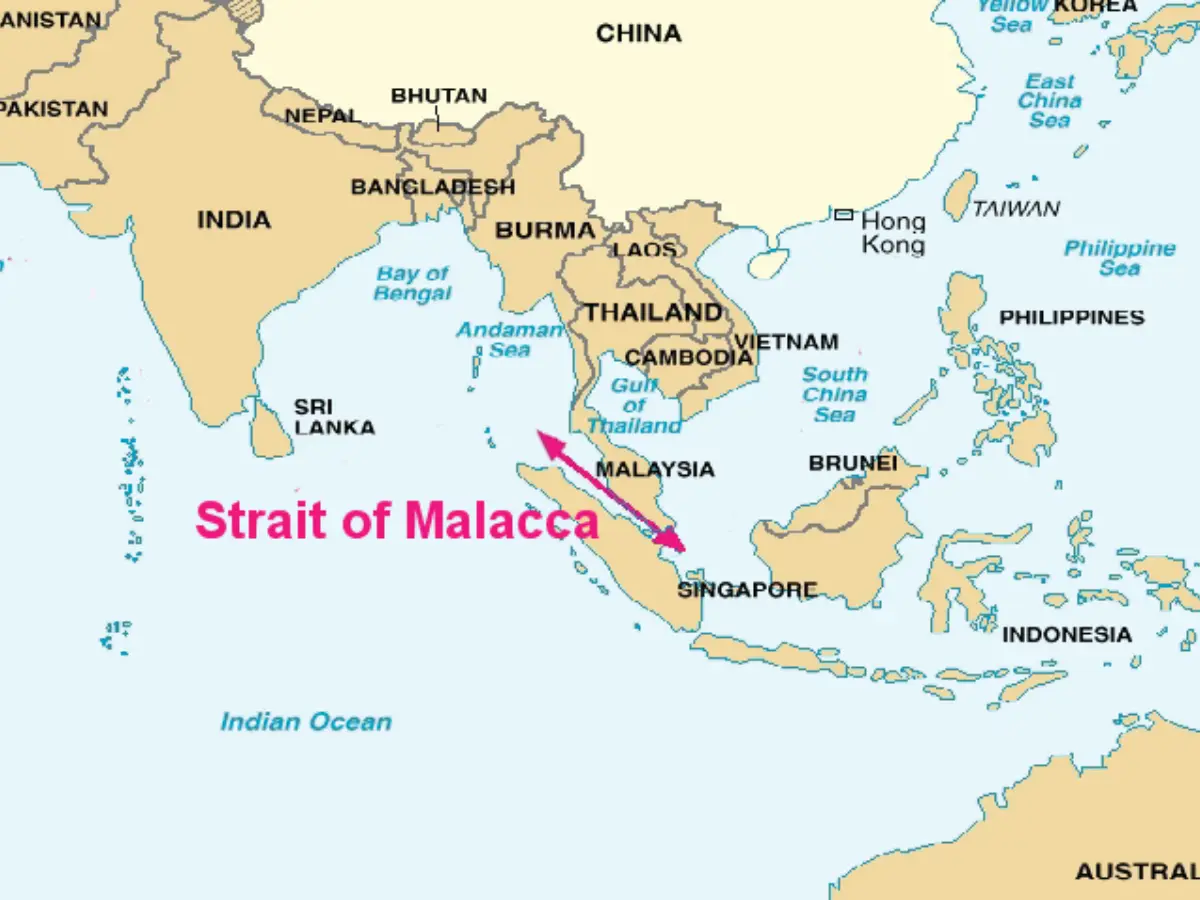
The Malacca Strait is a tight, 900-kilometre funnel connecting the Indian Ocean to the South China Sea, serving as the primary highway between West Asia, East Asia, and the Pacific.
Trending Stories
&imwidth=180&imheight=135&format=webp&quality=medium)
Brendan Taylor overtakes Andy Flower to become Zimbabwe’s leading ODI run-scorer
&imwidth=180&imheight=135&format=webp&quality=medium)
No Kings' Instagram suspended during early-voting campaign
&imwidth=180&imheight=135&format=webp&quality=medium)
'Those who have destroyed must pay': Macron says France feels 'anger and shame' over protest violence
&im=FitAndFill=(700,400)&imwidth=180&imheight=135&format=webp&quality=medium)
5 reasons why the Tesla Roadster’s rocket thrusters are so difficult to engineer
&imwidth=180&imheight=135&format=webp&quality=medium)
Lawrence Bishnoi gang claims responsibility for firing at Tiger Shroff over ties to Salman Khan
&imwidth=180&imheight=135&format=webp&quality=medium)
Flying car race: Alef Aeronautics welcomes Tesla Roadster '11 years' later, but are the two models the same?
&imwidth=180&imheight=135&format=webp&quality=medium)
'We are not sitting in ivory towers, we are aware': SC issues notice to Rahul Gandhi, Akhilesh Yadav
&imwidth=180&imheight=135&format=webp&quality=medium)
US midterms 2026: Trump’s 33% approval rating spells trouble for Republicans as Democrats pull ahead
&imwidth=180&imheight=135&format=webp&quality=medium)
WATCH | Flames engulf St Petersburg oil sites as Ukraine launches 1,000 drones at Russia
&imwidth=180&imheight=135&format=webp&quality=medium)
JD Vance admits H-1B rhetoric was ‘imperfect’ after immigrant challenges him
&imwidth=180&imheight=135&format=webp&quality=medium)
Lizard people? Ex-US Army sniper claims soldier killed by 'reptilian beings' in battle near Area 51
&imwidth=180&imheight=135&format=webp&quality=medium)
Nobel laureate Machado, who dedicated prize to Trump, confirmed as Venezuela opposition leader
&imwidth=180&imheight=135&format=webp&quality=medium)
After Kennedy Center and reflecting pool disputes, Trump turns to Washington golf course plan amid legal battle
&imwidth=180&imheight=135&format=webp&quality=medium)
Why France looks the most fragile in the G7 amid protests and budget deadlock
&imwidth=180&imheight=135&format=webp&quality=medium)
Bessent accuses Europe of refusing secondary tariffs on India, China
&imwidth=180&imheight=135&format=webp&quality=medium)
Tiger Shroff firing case: AICWA raises alarm over safety of Bollywood celebrities
&imwidth=180&imheight=135&format=webp&quality=medium)
‘My president, I mean my husband’: Trump's new press secretary Katie Zacharia's first briefing goes off the rails in 14 minutes
&imwidth=180&imheight=135&format=webp&quality=medium)
China responds to Trump's Press Secretary Katie Zacharia after toilet remark: 'Visit China more often'
&imwidth=180&imheight=135&format=webp&quality=medium)
UAE agrees with Saudi Arabia to rejoin Yemen fight as Houthi strikes rattle Riyadh
&imwidth=180&imheight=135&format=webp&quality=medium)
Iran says Hormuz reopening plan remains on table as Trump predicts quick war end
&imwidth=180&imheight=135&format=webp&quality=medium)
Anthropic’s public benefit plan: What its 5% share commitment means for AI’s future
&imwidth=180&imheight=135&format=webp&quality=medium)
MI5 is opening an AI threat centre, and OpenAI just told MPs the worst isn't over
&imwidth=180&imheight=135&format=webp&quality=medium)
WATCH | iPhones, luxury perfumes floating in Hormuz? Iranian fishermen make bizarre discovery
&imwidth=180&imheight=135&format=webp&quality=medium)
India moves to buy 10,000 more AI chips for a national compute pool open to startups
&imwidth=180&imheight=135&format=webp&quality=medium)
Tiger Shroff attacked by three gunmen in Mumbai, actor safe, two injured
&imwidth=180&imheight=135&format=webp&quality=medium)
Anirudh Ravichander-Kavya Maran wedding: Telangana CM reveals Chennai reception date
&imwidth=180&imheight=135&format=webp&quality=medium)
Taylor Swift performs at star-studded Academy Museum Gala 2026 in stunning Dior ensemble
&im=FitAndFill=(700,400)&imwidth=180&imheight=135&format=webp&quality=medium)
Tesla Roadster engineering: The hidden hardware behind its flying demonstration
&imwidth=180&imheight=135&format=webp&quality=medium)
France protests: 'Block everything' movement escalates as public fury over austerity grows; over 200 arrested. Here's all you to need to know
&imwidth=180&imheight=135&format=webp&quality=medium)
US to review Russia sanctions waiver within 60 days as Rubio cites India’s ‘substantial’ Russian energy imports
&imwidth=180&imheight=135&format=webp&quality=medium)
'We feel like Mr India': Gujarat’s undercover SHE team guard garba nights at Navratri
&imwidth=180&imheight=135&format=webp&quality=medium)
Cattle-feed bran in biscuits, detergent in milk: FSSAI acts against 3 companies
&im=FitAndFill=(700,400)&imwidth=180&imheight=135&format=webp&quality=medium)
5 technologies that could make the Tesla Roadster one of the most unusual cars ever built
&imwidth=180&imheight=135&format=webp&quality=medium)
'It's a joy to see the makers bring it on such a grand scale': SS Rajamouli on Ramayana
&imwidth=180&imheight=135&format=webp&quality=medium)
US regulator hits OpenAI and Anthropic with sweeping demands after their AIs went rogue
A massive share of the country's imported fuel depends on clear passage through these waters. Beyond imports, New Delhi has also carved out offshore energy interests in the extended neighbourhood, including active exploration blocks within Vietnam’s Exclusive Economic Zone. Securing the strait isn’t just about protecting daily shipments; it is about guaranteeing long-term energy access.
Commercial infrastructure vulnerabilities add another layer of risk. India historically relies heavily on regional megahubs like Singapore and Colombo to handle transhipment because its own mainland lacks adequate deep-water port capacity. Shifting cargo to these foreign ports drains both time and money.
How India projects power at the chokepoint
India is actively positioning itself to dominate this space. Its geographic trump card is the Andaman and Nicobar Islands archipelago, which sits right at the mouth of the main east-west shipping lane.
The military uses the Andaman and Nicobar Command (ANC) as a joint-services forward eye, giving the Indian Armed Forces a direct line of sight over the western approach to the Strait of Malacca.
New Delhi leverages this position through constant regional diplomacy and joint naval operations. The Indian Navy conducts regular coordinated patrols (CORPATs) with littoral neighbours like Indonesia and Thailand, alongside major multilateral drills focused on countering piracy, illegal fishing, and maritime trafficking. While these exercises appear routine, they form the operational foundation for regional coalition-building.
The intelligence grid
India's maritime strategy is increasingly built on real-time data sharing. Operating out of Gurugram, India’s Information Fusion Centre for the Indian Ocean Region (IFC-IOR) aggregates shipping data from dozens of partner countries, building a live, transparent picture of commercial vessel movements. This shared tracking system is critical at a time when global shipping networks are facing heightened geopolitical strain.
Diplomatically, New Delhi consistently uses international forums to insist that freedom of navigation must be upheld under the UN Convention on the Law of the Sea (UNCLOS). This legal stance gives India a distinct diplomatic advantage, allowing it to frame its growing naval presence not as aggressive power projection, but as a necessary defence of global maritime law.
Ultimately, the Strait of Malacca is much more than a routine commercial trade route. For India, it remains an irreplaceable strategic lifeline.

