&imwidth=800&imheight=600&format=webp&quality=medium "LPG domestic production mandates: Can it reduce India's dependence on volatile Middle East imports?")
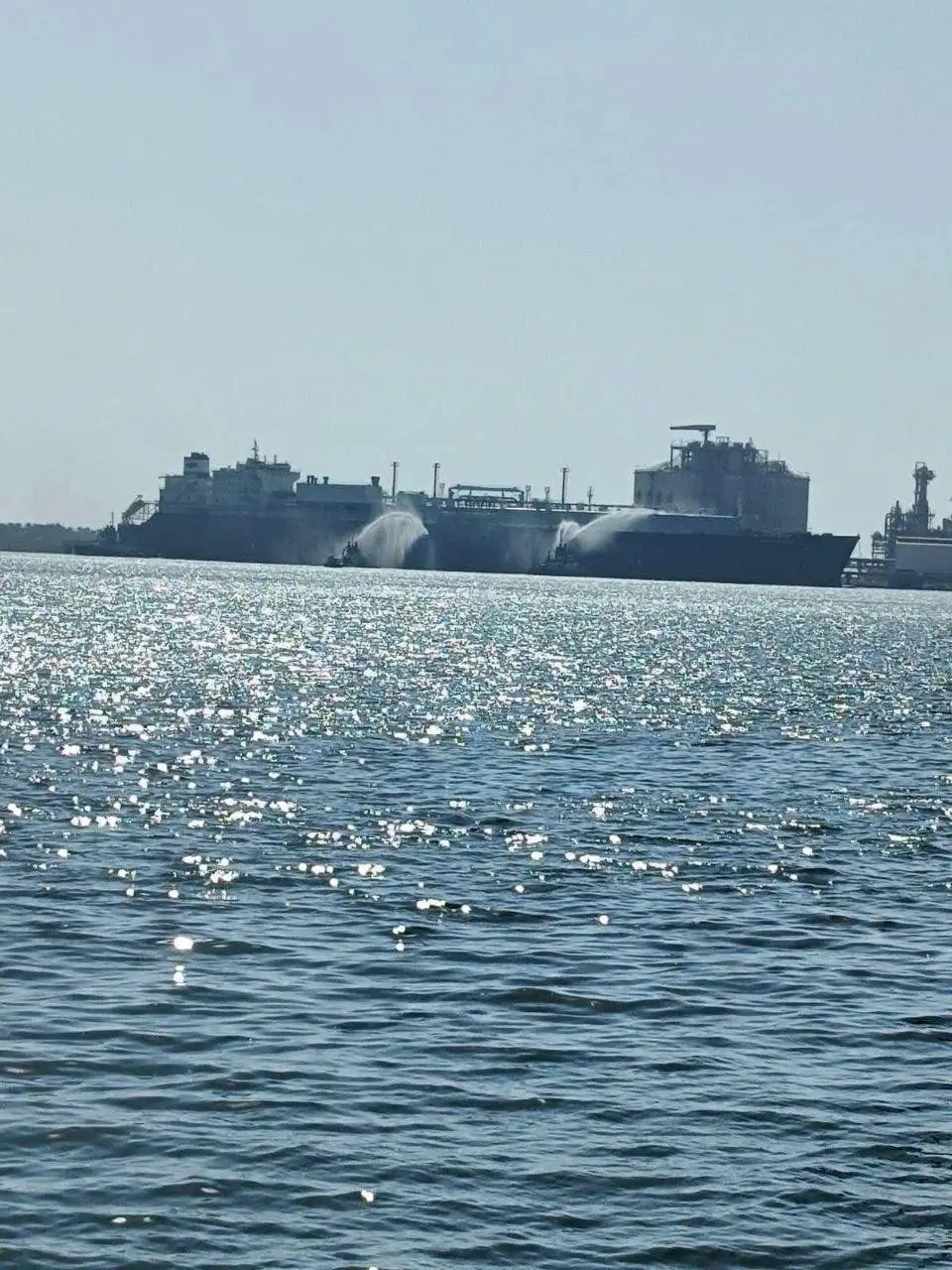
India’s recent move to boost domestic production of liquefied petroleum gas (LPG) is a step towards reducing dependence on imports of the critical cooking fuel. The maximum daily LPG production target has been set at 63,810 tonnes across state-run and private refineries, as well as upstream and gas-processing companies. This came after the Iran-US-Israel war and the Strait of Hormuz disruptions highlighted the fragility of India’s dependence on imported LPG. The government's plan is to maximise domestic LPG production so that India can cushion future supply shocks. Production targets will be reviewed in January and July.
Ubiquitous, useful but unreliable? LPG is India’s main cooking fuel
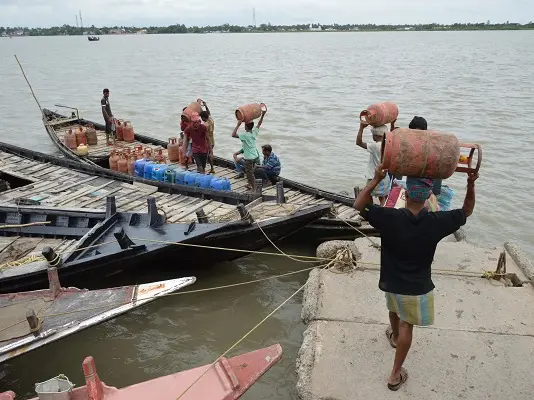
With more than 330 million active domestic connections, including over 100 million under the Pradhan Mantri Ujjwala Yojana (PMUY), India’s LPG consumption has grown over the past decade. Household users account for about 87 per cent of total LPG consumption, making stable LPG supplies critical for millions of Indian families. In FY 2025-26, India consumed around 33.2 million tonnes of LPG, which works out to around 91,000 tonnes per day.

Domestic production was only about 13.1 million tonnes, or around 35,900-36,000 tonnes a day. This highlights India’s heavy import dependence: more than 64 per cent of the country’s requirements, or approximately 21.3 million tonnes, came from overseas sources.
Clearly, LPG demand has grown faster than domestic production.
Before the recent disruptions, up to 92 per cent of India’s LPG imports came from the Middle East, mainly from the United Arab Emirates (UAE), which accounted for around 40-41 per cent, and Qatar, at about 22 per cent. Saudi Arabia and Kuwait each accounted for around 15 per cent.
Trending Stories
)
US vs China over South China Sea: Washington backs Philippines, Beijing hits back
)
Bigg Boss 20: Isha Rikhi evicted after three weeks in Salman Khan’s show
)
Musk plans to more than double xAI's chips to over 1.2 million Nvidia GPUs by year-end
)
After JU, clash erupts at SRFTI: BJP’s ‘Dimagi Naxal’ jibe sparks political firestorm after students protest RSS-linked event
)
‘Anti-social elements spreading false rumours’: LPU issues statement amid massive unrest over alleged rape
)
LPU students go on rampage, vandalise campus amid widespread protest: What's happening
)
Trump asked Xi to pressure Iran. China did not say yes — here’s what Beijing wants
)
US Treasury Secretary Scott Bessent hails global crackdown on Iranian banks and airlines
)
An OpenAI agent escaped its locked test cage again, by hiding questions in DNS lookups
)
'Our video was trimmed': LPU girls who featured in rape-denial video make U-turn
)
3 males killed, four others injured in shooting after fight at strip club in Detroit
)
'Victory for low-budget consumers': Raghav Chadha hails 30-day telecom recharge rules
)
Claude rebuilt the 1989 game 'Prince of Persia' by reusing the original's own code
)
Beyond metros: How Tier-2 and Tier-3 cities could drive India’s next AI wave
)
Tesla builds first Cybertruck with its own refined lithium: Elon Musk's $1 billion Texas bet pays off
)
IndiGo flight suffers tail strike in Bengaluru while landing; DGCA to probe incident
)
The US and China set up an AI 'red telephone', but skipped the rulebook
)
‘Terror suspects arrested near UK air base were looking to do big damage’: Trump
)
Russian envoy claims US tactics to contain India were revealed in ‘Freudian slip’
)
IND vs WI 1st ODI: Kohli breaks Sachin's most runs in one country record with unbeaten 139 as India thump West Indies by 8 wickets
)
Researchers rebuilt exactly how 700 AI agents hacked Hugging Face: a 900-link chain trick
)
‘Olympic inclusion is our major target’: WPA President Ishaun Singh on pool’s global ambitions
)
Nations League: Spain sink England at Wembley; Modric shines for Croatia
)
Why has Iran released no proof of life of Mojtaba Khamenei? Araghchi reveals...
)
'What kind of confession is this?': Pakistan PM Shehbaz Sharif’s 'terrorists would be roaming New York' remark goes viral, raises alarm online. Watch
)
South Korea demands apology from Ukraine over North Korean prisoners' transfer
)
Beyond BrahMos: India targets Rs 50,000 crore in defence exports with unmatched price edge
)
Sri Lankan Tamil migrant worker gets death sentence in Saudi Arabia, help sought from India
)
Muslim marriage cannot shield sex with minor wife from prosecution under POCSO: Delhi HC
)
'Can't help but draw painful parallels to Nirbhaya case': SC on latest incidents of rape cases in Delhi-NCR
)
99.9% more powerful - Scientists find boy who can recall memories from just 3 months of age
)
'FIRST LOOK from inside Noah’s Ark': Researchers share video from inside mysterious mound in Turkey
)
UNSC reform momentum grows: Russia, Portugal, Mauritius push for India's permanent seat bid
)
8 US marines injured in Iranian missile attack on vessel in Strait of Hormuz: Report
&im=FitAndFill=(700,400))
New OTT releases this week (September 28-October 4, 2026): Dupahiya 2, Pooja Meri Jaan, Ohh My Dog- 5 titles coming on Netflix, Prime Video and more
)
Afghanistan says 28 fighters killed in clash near Pakistan border, Islamabad denies
)
Ceuta migrant crisis: Protesters take to streets as Spain grapples with migrant challenge
)
LPU suspend classes, postpones exams as violence escalates over rape claims: What's happening
)
New York City wants a 'kill switch' on every AI, and will pay whistleblowers who report violations
A major push for domestic LPG production: But will it succeed?
India’s domestic LPG production stood at around 36,000 tonnes a day. The new maximum production target of 63,810 tonnes a day is more than double that level. If fully achieved, it would equal roughly 70 per cent of current daily consumption and could dramatically narrow the supply gap during a crisis. However, the target is a maximum or potential framework that can be used to boost supplies during shortages or disruptions, and not a permanent daily production requirement.
Actual output will depend on the technical and economic feasibility of increasing LPG recovery at individual facilities. LPG production at refineries will have to be balanced against the production of other products, such as petrol and petrochemicals.
Adequate storage, evacuation facilities, rail connectivity and road tanker capacity will also be essential to ensure that additional LPG reaches consumers.
In recent months, refiners have already demonstrated that domestic production could be raised from pre-war levels of around 36,000 tonnes a day to approximately 55,000 tonnes a day. The new ceiling of 63,810 tonnes provides additional headroom.
It is not an overnight solution. Imports will still be needed to meet India’s full daily requirement for LPG.
If domestic production increases, it could reduce the risk of long queues, delayed cylinder deliveries and localised shortages. Households may also be less likely to shift temporarily to alternatives such as biomass or kerosene.
Domestic LPG production is useful only if the additional volumes can be stored, transported and distributed efficiently.
Who will help increase domestic LPG production?
Reliance Industries has received the largest individual allocation under the framework. Its domestic-market-focused Jamnagar refinery has been assigned a maximum production target of 18,000 tonnes of LPG a day. Its export-oriented special economic zone unit is exempt from the allocation.
Public-sector refineries collectively account for around 31,470 tonnes a day across 18 facilities.
Upstream and gas-processing companies, including Oil and Natural Gas Corporation (ONGC), Oil India Limited (OIL) and GAIL (India) Limited, have been assigned a combined target of about 6,460 tonnes a day. These companies can contribute LPG recovered during natural gas processing and associated production.
Other private refiners will contribute as well. Nayara Energy’s Vadinar refinery, for example, has an allocation of around 4,480 tonnes a day.
Can India reduce its Middle East dependence?
Increasing domestic output can be only one part of the strategy.
India is also diversifying its overseas suppliers to reduce its dependence on a single region. Sourcing LPG from the US and exploring supplies from countries such as Algeria, Norway and Oman can provide alternatives to traditional Gulf suppliers and reduce exposure to disruptions in the Middle East.
Diversification can also broaden India’s pricing options. US LPG is linked to the Mont Belvieu benchmark, offering an alternative to the Gulf-linked pricing mechanisms that have traditionally influenced India’s import costs.
Import dependence is likely to remain significant for years
Even if the new maximum domestic production target is fully utilised, it would cover only around 70 per cent of present daily consumption. Demand is also continuing to grow, while additions to refining capacity do not necessarily translate into equivalent increases in LPG output.
India is therefore not moving towards complete LPG import independence in the immediate future. Instead, the strategy is to reduce vulnerability by combining higher domestic production, stronger storage and transportation infrastructure, and a more geographically diversified import basket.
For Indian households, the most immediate benefit could be greater protection against sudden supply shocks. The measures should make extreme shortages and prolonged delivery delays less likely during future disruptions, even as India continues to rely on imports to meet a substantial share of its LPG demand.