Jaish and Lashkar yet to recover from Indian strikes under Operation Sindoor, Indian govt assessment

&imwidth=600&imheight=450&format=webp&quality=medium "Jaish and Lashkar yet to recover from Indian strikes under Operation Sindoor, Indian govt assessment")
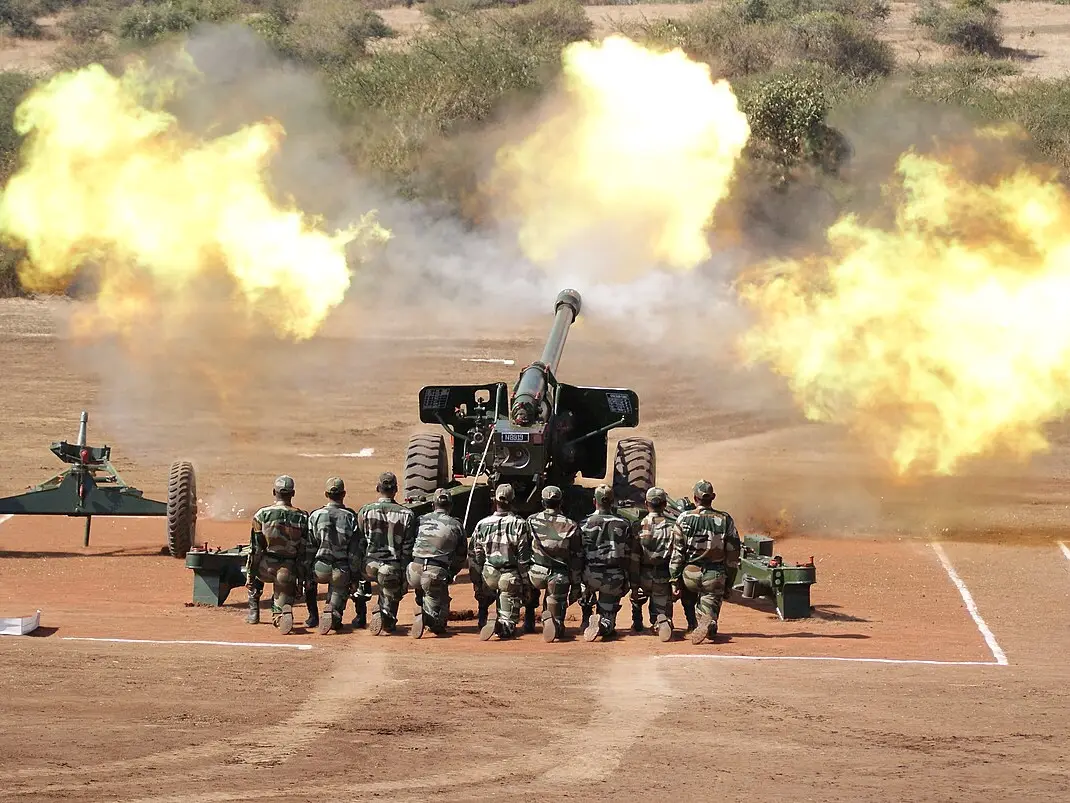
Representative image. Photograph: (Wikimedia Commons)
The operation focused on facilities long identified by Indian intelligence as key nodes for Lashkar-e-Taiba (LeT), Jaish-e-Mohammed (JeM) and Hizbul Mujahideen (HM). Among the primary targets was the Sawai Nala camp, also known as Bait-ul-Mujahideen.
According to the Indian Government's latest assessment, Pakistani terror groups are yet to recover from the strikes under Operation Sindoor, India's counter-terror operation inside Pakistan after the Pahalgam terror attack. The assessment in form of a dossier, as seen by WION, says that Indian Army & Air Force strikes under Operation Sindoor delivered a significant blow to the operational capabilities of major Pakistani terror groups by targeting a network of training and staging camps in Pakistan-occupied Jammu and Kashmir (PoJK) and, for the first time in decades, locations across the International Border (IB) in Pakistan's Punjab province.
The operation focused on facilities long identified by Indian intelligence as key nodes for Lashkar-e-Taiba (LeT), Jaish-e-Mohammed (JeM) and Hizbul Mujahideen (HM). Among the primary targets was the Sawai Nala camp, also known as Bait-ul-Mujahideen, near the Chelabandi bridge on the Muzaffarabad-Neelum Road. For over two decades, it served as the main entry point for LeT recruits undergoing basic combat training, known as Daura-e-Aam. Its neutralisation is expected to severely hamper the group's ability to process and prepare new fighters.
In the Kotli sector, strikes hit the Abbas camp, approximately 13 km from the Line of Control (LoC), a specialised facility for preparing LeT fidayeen (suicide) squads. Indian assessment indicated a squad had completed indoctrination ahead of Operation Sindoor and was poised for deployment towards high-value targets in Jammu.
Nearby, the Gulpur camp, a LeT operational base coordinating attacks in Rajouri and Poonch, was also targeted, aiming to disrupt logistical networks sustaining militancy in the Jammu region. Jaish-e-Mohammed's capabilities were affected by strikes on the Syedna Bilal camp in Muzaffarabad, described as a major staging area and centre for weapons, explosives and jungle survival training. Further strikes targeted the Barnala camp in Bhimber district, just 9 km from the LoC.
The operation crossed the IB with a strike on the Sarjal camp, 6 km inside Punjab near Sialkot. Pakistani authorities had long assumed the IB remained a sanctuary; the action challenged that assumption. Another Sialkot-area target, the Mehmoona Joya camp (12-18 km from the IB), served as a key HM facility and control centre for reviving operations in Kathua and Jammu. Heavy warheads delivered by loitering munitions destroyed its communications centre and administrative block, significantly impairing HM's ability to coordinate with sleeper cells inside India.
The cumulative effect has been profound for the three groups' leadership. LeT, which has relied on PoJK infrastructure for recruitment and deployment, faces disrupted training pipelines and loss of experienced instructors, delaying planned operations and forcing a leadership rethink on force replenishment. JeM's specialised training assets have been degraded, limiting its capacity for sophisticated attacks. For HM, the loss of a critical communications hub has blinded regional commanders, complicating the direction of assets already inside Indian territory. Indian assessment described the strikes as precise and punitive, one that shows a shift in India's strategy, moving beyond the legacy of "strategic restraint".
Trending Stories
)
&im=FitAndFill=(700,400))
)
)
)
&im=FitAndFill=(700,400))
)
&im=FitAndFill=(700,400))
)
&im=FitAndFill=(700,400))
&im=FitAndFill=(700,400))
)
)
)
)
)
)
)
&im=FitAndFill=(700,400))
)
)
)
)
)
)
)
)
)
)
)
