

&imwidth=800&imheight=600&format=webp&quality=medium "ISRO to launch US firm's Bluebird-6 satellite on December 24")
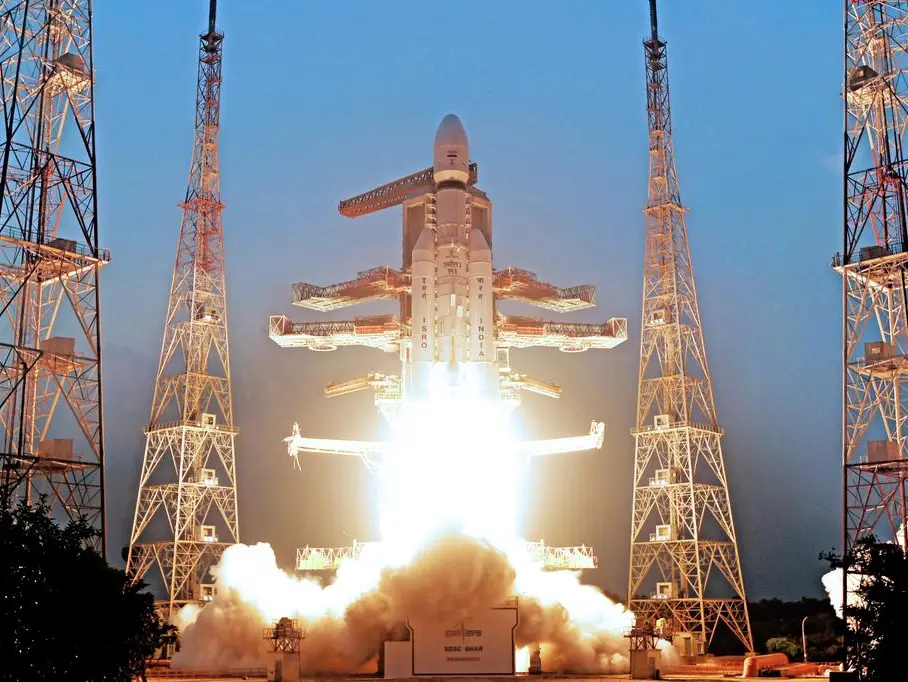
The Indian Space Research Organisation (ISRO) is preparing to launch US firm AST SpaceMobile's BlueBird-6 satellite on Wednesday (Dec 24) from the second launchpad of the Satish Dhawan Space Centre in Sriharikota, Andhra Pradesh. The three-stage LVM3 rocket, the most capable space launch vehicle in India's fleet, is expected to liftoff at 8:54 am Indian time, carrying the 6,500kg BlueBird 6 to orbit(about 550 km above earth). This satellite would be the heaviest payload to be carried by an Indian rocket. LVM3 has a track record of delivering success in all its eight missions to date.
This mission is being executed as part of a commercial deal between ISRO's business arm, NewSpace India Limited(NSIL,) and the Texas-based AST SpaceMobile. As a launch services provider(rocket builder and operator), ISRO launches foreign-origin satellites to space on a commercial basis. Facilitated by NSIL, these commercial space missions are like a taxi ferrying a passenger. In this case, the passenger is the US firm, which pays the Indian Government for the launch service. This is the third commercial mission of LVM3, and the first time that the Indian LVM3 rocket is executing the mission for an American customer. Earlier, it had executed two launches for a European customer, OneWeb(now Eutelsat OneWeb).
About AST SpaceMobile and their internet-beaming satellites
AST SpaceMobile is a Texas-based telecom company that aims to build and launch a fleet of satellites that can directly provide internet connectivity to mobile phones. Typically, only purpose-built satellite phones can facilitate satellite communication. These traditional satellite phone handsets are bulky and require visible antennas; they offer voice connectivity, and low-bandwidth texting and data services. Such services are offered by firms such as Iridium and Thuraya, among others. They are widely used in the defence and maritime sectors for providing connectivity where no communications infrastructure exists.
Firms like AST and Starlink are attempting to change this by ensuring direct connectivity between smartphones and satellites. They intend to ensure that Android and Apple devices available in the market can communicate with the support of satellites, without any extra or special hardware. Thanks to the global coverage planned using a fleet of satellites, such services would eventually enable cell phone connectivity almost anywhere on Earth. In simple terms, one need not worry about being "not reachable" or "out of coverage area".
As per reports, AST presently has a fleet of five first-generation (Block-1) satellites in orbit. The firm plans to launch a fleet of 45-60 second-generation (Block-2)satellites to offer services in major global regions, it is said.
Trending Stories
&imwidth=180&imheight=135&format=webp&quality=medium)
100,000 strikes in 3 years: How October 7 redefined Israel's war
&im=FitAndFill=(700,400)&imwidth=180&imheight=135&format=webp&quality=medium)
Happy Birthday Rekha: Watch these 7 evergreen Bollywood hits on Netflix, Prime Video and more
&imwidth=180&imheight=135&format=webp&quality=medium)
‘Your people don’t even let us near it’: IAF chief’s blunt response on US F-35; India yet to decide on Russia’s Su-57
&imwidth=180&imheight=135&format=webp&quality=medium)
Real or fake? PIB fact-checks protest videos; Delhi Police clarifies on Gurdwara Bangla Sahib clip
&imwidth=180&imheight=135&format=webp&quality=medium)
UK navy hit by espionage scandal: Sailor accused of spying for Russia | Gravitas
&imwidth=180&imheight=135&format=webp&quality=medium)
Delhi on high alert for CJP protest: Delhi police to use body cams to 'prove whether we did anything’; Pink Force, RAF, 35,000 personnel deployed
&imwidth=180&imheight=135&format=webp&quality=medium)
‘Never-ending flow of cheap labour’: JD Vance hits back at Indian-origin Congresswoman over US green card curbs for major tech companies
&imwidth=180&imheight=135&format=webp&quality=medium)
Panama president declares ‘major disaster’ after powerful 7.7-magnitude earthquake; over 80 aftershocks recorded
&imwidth=180&imheight=135&format=webp&quality=medium)
HYBE’s Weverse Con India sets ticket sale date for March 2027 festival
&imwidth=180&imheight=135&format=webp&quality=medium)
'Jantar Mantar not the story of India': BJP's Sambit Patra claims 'anarchists' tried to hold Delhi captive
&imwidth=180&imheight=135&format=webp&quality=medium)
BJP MP Ravi Shankar Prasad slams CJP protests, calls it 'shadow boxing for AAP'
&imwidth=180&imheight=135&format=webp&quality=medium)
Riyadh airport hit in missile attack, dozens injured; 5 in intensive care
&imwidth=180&imheight=135&format=webp&quality=medium)
'Spent Rs 2,000 cr to elect Trump': Elon Musk bought US President's loyalty by writing the biggest political cheque in human history
&imwidth=180&imheight=135&format=webp&quality=medium)
Powerful 7.7 magnitude earthquake strikes Panama, tsunami warning issued
&imwidth=180&imheight=135&format=webp&quality=medium)
US mid-term elections: What are PACs - Unique American System that lets corporates shape voting
&imwidth=180&imheight=135&format=webp&quality=medium)
Elon musk & India clash over Starlink's market entry terms
&imwidth=180&imheight=135&format=webp&quality=medium)
Who is Ajinkya Shinde, announced to lead CJP protest after Dipke, Das and Ranka's detention?
&imwidth=180&imheight=135&format=webp&quality=medium)
'Ouch!!! That must hurt': Kangana Ranaut hails Kamal Haasan's sharp reply to Elon Musk over Starlink row
&imwidth=180&imheight=135&format=webp&quality=medium)
‘Right to protest must be protected, but...’: Delhi Police reveals why it denied CJP permission for October 10 Jantar Mantar protest
&imwidth=180&imheight=135&format=webp&quality=medium)
Hamas used double agents, deceived Israel to carry out October 7 massacre
&imwidth=180&imheight=135&format=webp&quality=medium)
NIA files FIR in Flydubai hijack attempt and attack on Smit Machchhar, probes ‘larger conspiracy’
&imwidth=180&imheight=135&format=webp&quality=medium)
Portugal Federation confirms Cristiano Ronaldo’s return to national team despite suspension
&imwidth=180&imheight=135&format=webp&quality=medium)
All 22 Indian seafarers safe in attack on Panama-flagged tanker off UAE coast
&imwidth=180&imheight=135&format=webp&quality=medium)
‘Time for Ukraine to get a new president’: Trump lashes out at Zelensky over Russia strikes
&im=FitAndFill=(700,400)&imwidth=180&imheight=135&format=webp&quality=medium)
Food shortages, suicide attempts and more: USS Abraham Lincoln returns to US after 321 day deployment — What happened aboard the US carrier?
&imwidth=180&imheight=135&format=webp&quality=medium)
Thai queen becomes first reigning monarch to fly jet solothailand #queen #wion
&imwidth=180&imheight=135&format=webp&quality=medium)
‘Every game against Liverpool is special’: Erling Haaland ahead of Anfield clash
&imwidth=180&imheight=135&format=webp&quality=medium)
Rahul Gandhi calls Modi, Shah ‘cowards’ amid CJP protest crackdown in Delhi
&imwidth=180&imheight=135&format=webp&quality=medium)
Four years, 3 licenses, zero launch: Why is Elon Musk’s Starlink still struggling to crack Indian market? EXPLAINED
&imwidth=180&imheight=135&format=webp&quality=medium)
Why was CJP founder Abhijeet Dipke detained? What Delhi Police said
&imwidth=180&imheight=135&format=webp&quality=medium)
Putin conveys Iran’s proposal to Trump, offers to take Tehran’s enriched uranium
&imwidth=180&imheight=135&format=webp&quality=medium)
'It’s been 12 hours': CJP writes to Delhi Police, demands release of Dipke, Saurav Das and Ranka
Also Read: Lightning strikes world tallest Burj Khalifa, Dubai Crown Prince shares dramatic visuals - WATCH
The firm has announced that they have a series of satellites that will be launched in the coming months. BlueBird 7 has shipped to the Cape Canaveral, Florida launch site this month, BlueBirds 8-16 are in various stages of production, with launches planned every 1-2 months on average during 2025 and 2026, the firm announced.
They expect to have 45-60 satellites in orbit by year-end 2026. It is touted that these BlueBird satellites(by size) will be the largest commercial satellites ever deployed in Low Earth orbit (about 600kms above Earth). Each of these satellites would carry a 2,400-foot phased array antenna with true direct-to-cell broadband, with a claimed capability of up to 10,000 MHz of processing bandwidth and claimed peak speeds of 120 Mbps per cell.
The firm says they have partnered with 50+ mobile network operators serving nearly 3 billion subscribers, "supported by a flexible spectrum strategy blending our own licensed spectrum with partner spectrum".
