At 4,500 metres above sea level, this Himalayan village is India’s best place to see the Milky Way!

This village has earned national and international recognition for its pristine dark skies, scientific observatories and community-led conservation efforts that protect this natural treasure.
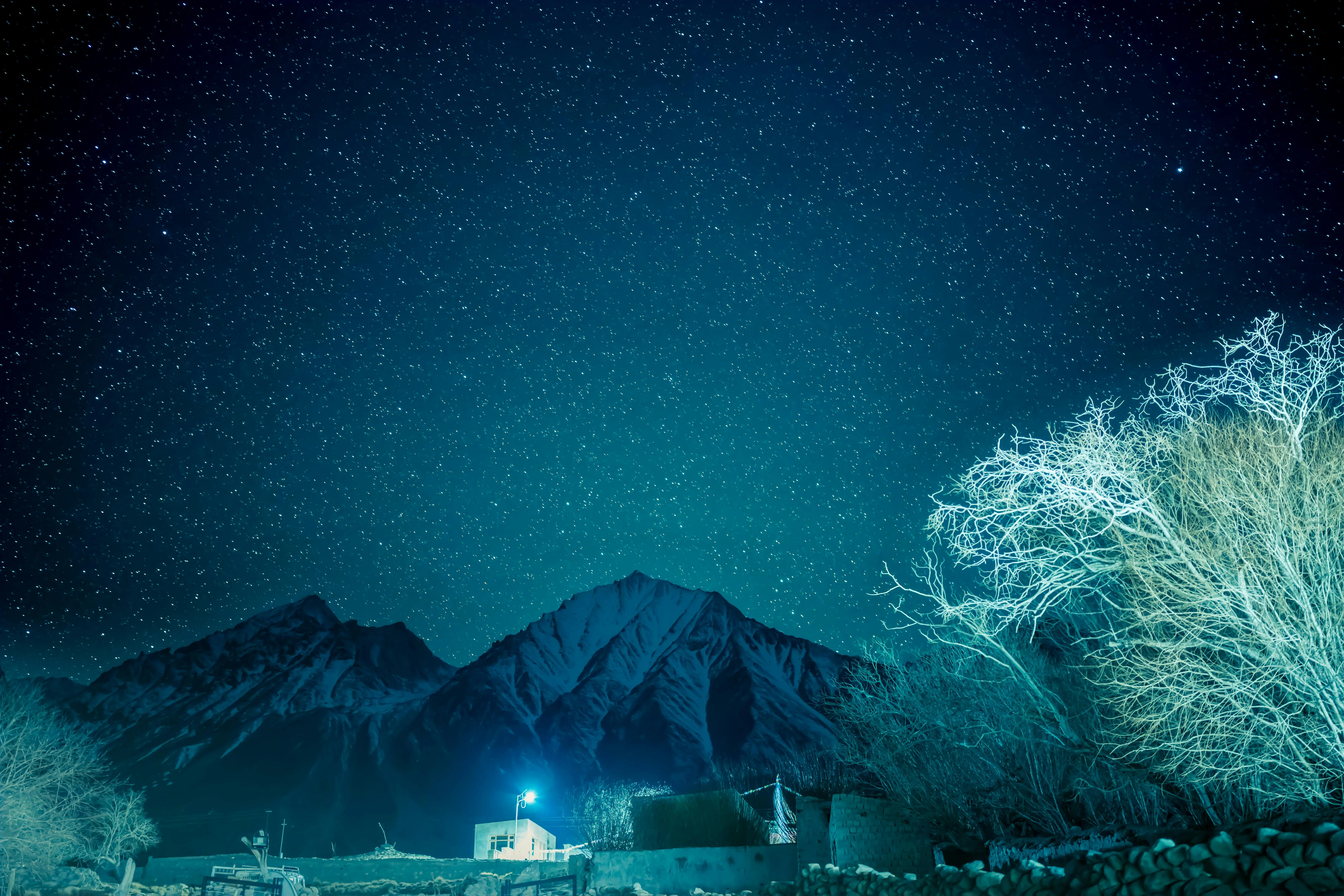
A Window to the Cosmos
Far from the light pollution of India’s cities, a remote Himalayan village in Ladakh is highly regarded as the ideal location in India where the Milky Way can be observed. The night sky in this village called Hanle, invites visitors to witness celestial wonders that are all but invisible in urban skies. This village has earned national and international recognition for its pristine dark skies, scientific observatories and community-led conservation efforts that protect this natural treasure.

Hanle: The Heart of the Dark Sky
Hanle sits on the high plateau of eastern Ladakh at approximately 4,500 metres above sea level. The combination of features like remote location, arid climate and elevation of Hanle, creates conditions that are ideal for astronomical observation. With negligible light pollution, millions of stars, planets and the band of the Milky Way are visible to the naked eye.
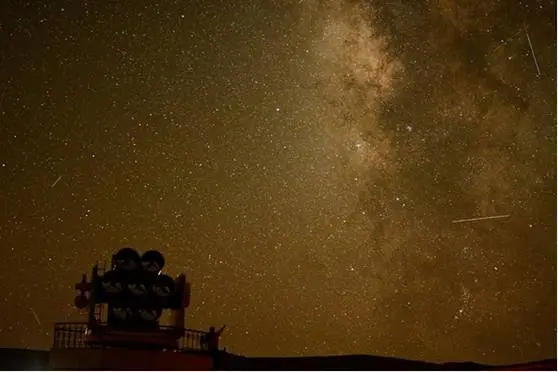
India’s First Dark Sky Reserve
The Hanle Dark Sky Reserve (HDSR) was officially notified by the Government of Ladakh in December 2022 and is renowned for its exceptionally dark night skies today. The reserve has become a highly sought-after destination for astrophotographers and amateur astronomers alike.The protected status of this village places strict limits on artificial lighting, mandating the use of warm-toned lamps, and thus enforcing measures designed to preserve natural darkness after sunset. Resultantly, Hanle’s skies rank among the darkest in the world, achieving the highest classification on the Bortle scale.

The Indian Astronomical Observatory
Hanle’s global reputation is bolstered by the presence of the Indian Astronomical Observatory which is one of the highest astronomical facilities in the world. This facility houses major telescopes, including the Himalayan Chandra Telescope, enabling professional and amateur astronomers alike to study deep-space phenomena.
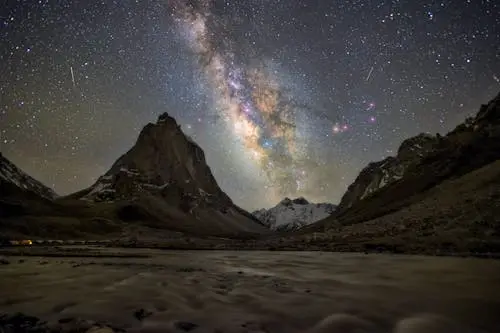
Best Time to Look Up
Although clear skies prevail for most of the year in Hanle, the stargazing season typically runs from March to October. During new-moon phases, when moonlight does not interfere, stars and galaxies appear even more vivid. Due to the high altitude, visitors are advised to acclimatise in Leh before ascending to Hanle.

Community-Led Astro-Tourism
Hanle's local guides that have been trained as astro-ambassadors now welcome visitors, thus offering insight into both the cultural heritage of the region and astronomical phenomena.

A Unique Himalayan Experience
Although, other notable locations, ideal for seeing the Milky Way include other high-altitude spots like Spiti Valley (Himachal Pradesh) and remote areas like the Rann of Kutch as well as Andaman & Nicobar Islands, Hanle remains the top choice of astrophiles. It is a combination of both, raw natural beauty with scientific exploration. At night, the skies stretch endlessly above rugged mountain terrain, offering a sense of connection to the wider universe and the cosmos, thus for those seeking a travel experience that transcends landscapes this Himalayan destination remains unmatched in India.
)
)
)
)
)