India’s export targets: Can new policies meet global demand?

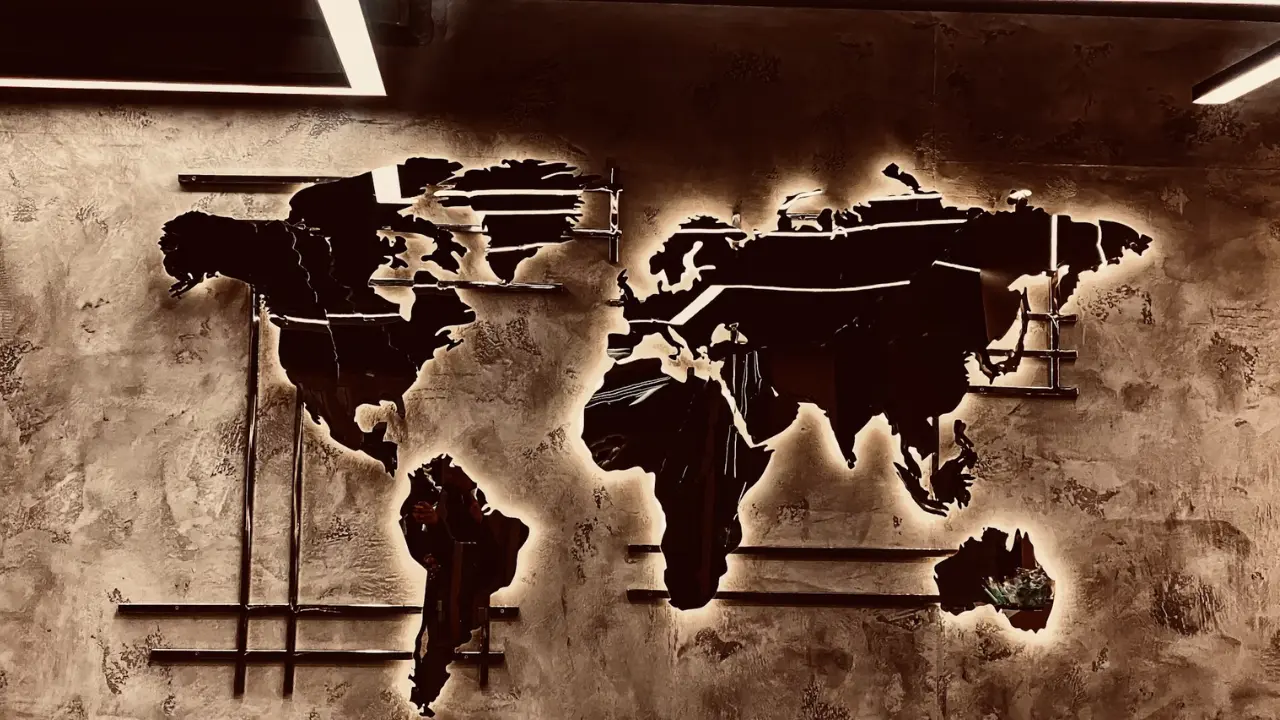
India news, business & economy : India’s economy has shown steady growth, shifting from an agriculture-driven economy to one powered by industry and services.
What will it take for India to hit its export goals? Can new government strategies and policies really help meet the growing needs of the global market? These are key questions as India aims for ambitious export targets in the coming years — aiming for US$ 2 trillion in exports by 2030.
India’s economy has shown steady growth, shifting from an agriculture-driven economy to one powered by industry and services. Today, exports play a major role, contributing over 21% to India’s GDP in 2023. The big question is whether current policies can support even higher export numbers while meeting global demand.
India’s export targets are focused on US$ 2 trillion by 2030

India’s export targets are focused on reaching US$ 2 trillion by 2030. This target reflects not only economic growth but also India’s desire to strengthen its role in global trade. In 2023, exports of goods and services made up nearly 22% of India’s GDP, a large jump from 13% in 2000.
To reach this goal, India depends on both policy changes and sector-specific strategies. New export targets are supported by major programs like Make in India, Atmanirbhar Bharat, and Production Linked Incentive (PLI) schemes. These programs aim to grow industries, create jobs, and reduce dependence on imports.
Government policies play a big role in export growth
)
Trump says Russia has ‘lost control’ of its diesel industry, calls for end to ‘ridiculous, never-ending’ war
)
Asian Games: Indian women's hockey team thrash Indonesia 17-1, blasts 36 goals in 2 matches
)
Putin's United Russia party wins 355 seats in Duma election; 4 other parties cross threshold to enter parliament
)
Delhi Air pollution: Strict crackdown on waste burning
)
'I never imagined…': Bihar-born Japan cricketer Abhishek Anand on historic India clash
)
‘0% chance’: Nvidia CEO Jensen Huang dismisses AI extinction fears by 2030
)
Samay Raina-Mukesh Chhabra controversy explained: What happened over girlfriend joke on India's Got Latent?
)
Four decades after leaving Kolkata, the Birlas may be coming back for more
)
BTS' fans question iHeartRadio’s treatment of group after brief festival set
)
Glitch in the matrix caught on camera: Woman vanishes after talking to reporter
)
Samsung raises Galaxy S26 prices by Rs 20,000: Here’s what each model now costs
)
IIT Bombay tensions ease after three-hour open house; director’s assurances pacify students
)
J&K Assembly Session begins amid chaos: BJP, ruling alliance clash as statehood demand dominates
)
8,000 bees worth over $20,000 stolen from hives in Queensland
)
Four Hands, Two Sonatas ep (5-8) review: Song Kang Lee, Jun Young elevate the emotional stakes after a tragic turn
)
The Verdict | The Mecca Agreement is under scrutiny as Houthis attack Saudis
)
Who was Sheikh Ahmed bin Rashid Al Maktoum? From Dubai Royal family to police, sports and racing
)
Saudi Arabia exits China-led mBridge digital currency platform amid Saudi-Houthi conflict
)
Maharashtra TET paper leak: Chargesheet reveals papers smuggled in shoe insoles for Rs 8,000
)
'Lot of things to learn from experienced players': Jayasuriya backs Rohit, Virat for 2027 ODI World Cup
)
Taylor Swift has a 'proud wife' moment as Travis Kelce scores first touchdown of season: 'That’s my husband!'
)
North Korea's nuclear tests triggered 1,399 earthquakes: Earth is still shaking | Gravitas
)
Mahabharat actor Saurav Gurjar arrested in Hyderabad, sent to 14-day judicial custody in sexual exploitation case
&im=FitAndFill=(700,400))
New OTT releases this week (September 21-27, 2026): Shaque: Trust No One, Hunkkaar, Don’t Be Shy- 5 new titles coming to Netflix, Prime Video and more
)
WATCH | Mysterious lights over Tehran caught on video. Drone, aircraft or something else?
)
What is Yom Kippur and why is it celebrated? All you need to know about the Jewish Day of Atonement
)
White House TV pool halts Trump coverage after CNN barred from UNGA events
)
Iranian airlines to shut worldwide on Sept 23, Bessent warns of US banking ban
)
Pilot recreates Mona Lisa in sky over Oklahoma and Arkansas in four-hour flight: VIDEO
)
Fitna Al-Khawarij: Decoding biggest security threat to Pakistan | Gravitas
)
Jailer 2: Vidya Balan joins Rajinikanth's upcoming film as Kantha | Watch
)
Microsoft executive called AI training the ‘largest theft of labour in human history’
)
40-foot waves crash into cruise ship in dangerous stretch near Antarctica. Watch
)
Mystery explosions rock Aleppo, residents told to stay indoors
)
BTS fans mock iHeartRadio’s day 2 turnout after short set controversy
)
The Scandal, why so scandalous? Ji Chang Wook leaves you gasping for air
Government policies play a big role in export growth. The Make in India program, launched in 2014, focuses on turning India into a global manufacturing hub. Since its start, the manufacturing sector has seen increased investment and is expected to contribute 25% to India’s GDP by 2025.
The Atmanirbhar Bharat initiative, introduced in 2020, also aims to boost local manufacturing and exports. This program includes financial support for key sectors like electronics, pharmaceuticals, and automobiles, with around US$ 27 billion allocated between 2020 and 2025. The goal is to make India more self-reliant while improving its position in global markets.
Production Linked Incentive schemes are designed to encourage exports
Production Linked Incentive schemes are designed to encourage exports by rewarding companies based on their output and export performance. In 2021, India’s government allocated nearly US$ 24 billion across 13 sectors under the PLI program. The key areas include electronics, pharmaceuticals, and automobiles, all major contributors to India’s export numbers.
For example, the electronics sector alone is expected to generate US$ 100 billion in exports by 2025. In the pharmaceutical sector, the focus is on high-value drugs and key ingredients. These incentives not only boost production but also make Indian goods more competitive worldwide.
Infrastructure development supports export expansion
Infrastructure development supports export expansion by improving transportation and logistics systems. India has invested heavily in port modernization, logistics parks, and inland waterways. Programs like the Sagarmala Project, with a US$ 123 billion investment, focus on making ports more efficient and better connected to manufacturing hubs.
To reduce shipping costs and delivery times, 35 multi-modal logistics parks have been developed. Investments of about US$ 2 billion are being made in waterways, and over US$ 1 billion in cold chain infrastructure for perishable goods. Better infrastructure ensures that goods can reach international markets faster and at lower costs.
Special Economic Zones (SEZs) boost export numbers
Special Economic Zones (SEZs) boost export numbers by offering tax benefits, easier regulations, and reliable infrastructure. SEZs have grown to contribute around 38% of India’s total exports in 2023, up from 30% in 2018. These zones provide tax exemptions on export income, reduced bureaucracy, and improved facilities for businesses.
Between 2017 and 2023, exports from SEZs grew from US$ 90 billion to nearly US$ 164 billion. Major export destinations include the US, UAE, Australia, and the UK. SEZs continue to be a strong driver of export growth, especially in sectors like IT, manufacturing, and pharmaceuticals.
Digital infrastructure improves trade efficiency
Digital infrastructure improves trade efficiency by streamlining processes and reducing paperwork. Platforms like the Indian Customs Electronic Gateway and Directorate General of Foreign Trade (DGFT) portal allow exporters to access customs services and trade data easily. These tools simplify procedures and save businesses time.
Another focus is blockchain technology, which helps verify transactions, track goods in real time, and prevent fraud. For industries like pharmaceuticals and agriculture, where product authenticity matters, blockchain can play a major role. Using secure technology is becoming a priority not only in large systems but also at the individual business level.
Many businesses and exporters are now turning to tools like VPN for PC to protect sensitive trade data and secure communication channels. VPNs help safeguard financial transactions and confidential export information, especially when companies operate across multiple global markets. By making trade faster, safer, and more transparent, these digital upgrades support export growth.
India’s service sector is a key part of export strategy
India’s service sector is a key part of its export strategy, contributing almost 50% of the country’s GDP. In FY2022-2023, service exports reached a record US$ 323 billion, with strong growth continuing in 2024. While IT services lead, other sectors like consulting, finance, and education are growing quickly.
India is also a top location for global capability centers (GCCs), which are expected to reach over 1,900 by 2025. This presents opportunities beyond IT, as companies increasingly invest in financial services, engineering, and digital products. The government’s focus on skilling the workforce is helping to support this expansion.
Meeting global demand depends on steady reforms and investments
Meeting global demand depends on steady reforms and investments across key sectors. India’s government is working to improve access to finance for MSMEs, expand trade agreements, and modernise customs processes. Export targets can only be reached if production scales up, supply chains run smoothly, and businesses remain competitive.
While challenges like market concentration and compliance costs remain, policies in place today are setting a strong foundation. India’s ability to meet global demand will rely on balancing policy initiatives, infrastructure investments, and sectoral growth.
Disclaimer: The above mentioned article is a paid publication and does not have journalistic/editorial involvement of WION, and WION claims no responsibility whatsoever.