
&imwidth=800&imheight=600&format=webp&quality=medium "Indian Govt to set up two fast breeder nuclear reactors in Tamil Nadu")
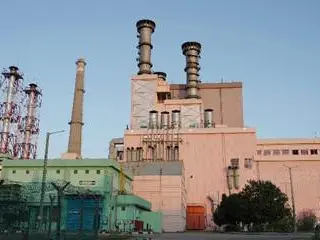
Indian government firm Bharatiya Nabhikiya Vidyut Nigam Limited (BHAVINI), which operates under the country's Department of Atomic Energy(DAE), said that pre-project activities are already underway for establishing a twin-unit Nuclear Fast Breeder Reactor project adjacent to the present Prototype Fast Breeder Reactor(PFBR) at Kalpakkam, near Chennai in Southern India. In the long term, BHAVINI plans a phased, nationwide deployment of additional fast reactors, supported by ongoing site identification and preparatory assessments. This announcement comes two months after India's 500 Megawatt PFBR successfully attained first criticality in April 2026. In simple terms, first criticality is the start of a controlled fission chain reaction, which is the first step towards generating heat and electricity. In due course, the power generated by the PFBR will be injected into the power grid.
This announcement comes after Dr AK Mohanty, Chairman, Atomic Energy Commission (AEC) and Secretary, Department of Atomic Energy (DAE), visited the PFBR to review the critical technical milestones. Accompanied by Suresh Babu, Chairman & Managing Director BHAVINI, and senior officials, Dr Mohanty assessed the plant’s present status. The review focused on ongoing low-power physics experiments and the overhauling of the Turbine Generator (TG) system. The TG overhauling is being executed by its Original Equipment Manufacturer (OEM), Bharat Heavy Electricals Limited (BHEL).

A turbine generator converts the immense thermal energy generated by a Fast Breeder Reactor (FBR) into usable electricity for the power grid. As the nuclear reactor's core generates heat, it boils water into high-pressure steam, which then physically spins the turbine to drive the generator.
What is India's three-stage Nuclear programme?
India’s 3-stage nuclear programme is a sequential strategy to convert uranium into plutonium and finally utilise thorium for generating sustainable nuclear energy.
Trending Stories
&im=FitAndFill=(700,400))
National Handloom Day 2026: From Alia Bhatt to Samantha Ruth Prabhu; Actresses who celebrated India's textile heritage as brides
)
The Royals enter the Doctor Who universe: King Charles and Queen Camilla beam into Commonwealth Games in TARDIS
)
Unitree Robotics targets $9 billion valuation in landmark IPO backed by DeepSeek and Tencent
)
India names 27 sites in Arunachal Pradesh
)
Bharat Bhhagya Viddhaata OTT: When will Kangana Ranaut's film stream online?
&im=FitAndFill=(700,400))
How many soldiers operate one S-400 battery?
)
Shakib Al Hasan ready to return to Bangladesh—under one condition
)
‘Fake news’: MEA rejects report claiming India sought defence pact with Israel after Pakistan, Saudi Arabia, Turkey deal
)
Rockstar to unveil GTA 6 extended look ahead of November launch
)
Russia forms Ukrainian Volunteer Spetsnaz Brigade to fight Ukraine
)
Drug-resistant fungus that hides in hair and enters bloodstream reported in 23 US states
)
Technology transfer deal boosts India's defence manufacturing ambitions
)
Border row erupts in Europe after Ceuta crossings, Spain imposes border controls on Italy
)
Morale plummets on USS Abraham Lincoln: Are US sailors reaching a breaking point? | GRAVITAS
)
'Security can't be bought with Pakistan, Turkey deal': Iran tells Saudi Arabia
)
Baba Vanga's 2026 prophecy: 2 predictions 'already came true', 3 terrifying ones remain. Details inside
)
Colombia’s new president Abelardo de la Espriella vows to ‘defeat narco-terrorists’, signals hardline shift
&im=FitAndFill=(700,400))
New Friday OTT releases (August 7, 2026): Operation Safed Sagar, Vadhandhi, Main Vaapis Aaunga- 6 movies and TV shows on Netflix, Prime Video and more
)
Squadron Leader Bhawana Kanth scripts history as Indian Air Force gets its first woman ‘Top Gun’ pilot
)
RSS says Gen Z protests reflect genuine distress
)
Trump says Iranian school bombing photos could be AI-generated - 'I don’t think...'
)
IAF officer held for sharing sensitive information in 'honey trap' case, booked under Official Secrets Act
)
Stray Kids under scrutiny? Fans react to Grammy submission silence after BTS boycott
&im=FitAndFill=(700,400))
Why the Su-30MKI doesn't need external fuel tanks to fly vast distances
)
Jugal Hansraj reunites with Shekhar Kapur after 40 years for Masoom: The Next Generation
)
New speed limits, automatic challans: Big traffic change coming to Delhi-Meerut Expressway. All you need to know
)
India officially names 27 places in Arunachal to counter China's renaming claims
)
Trump calls White House ballroom ruling a 'national disgrace' as court says Congress approval needed
)
US sanctions Iran’s crypto network after Strait of Hormuz attacks, offers $15m bounty for intel on IRGC finance
&im=FitAndFill=(700,400))
Why the Su-30MKI is one of the heaviest fighters ever built
)
Uttarakhand young innovator builds India's own flying vehicle, conducts first test flight: WATCH
)
Chilling video shows students take cover as teen opens fire at Thai school
)
Reese Witherspoon's father hospitalised after poolside incident in Nashville: Report
In the first stage, Pressurised Heavy Water Reactors (PHWRs) use natural Uranium to generate electricity and produce Plutonium-239 as a by-product. At present, India has about two dozen PHWR Nuclear power plants, which contribute about 3percent of India's total power generation.
The second stage employs Fast Breeder Reactors (FBRs), which use Plutonium(by-product from the first stage) to generate more fissile material, while converting Thorium into Uranium-233.
In the third stage, advanced reactors utilise Uranium-233 along with Thorium to produce sustainable nuclear energy.
In simple terms, India's Fast Breeder Reactor technology forms the vital bridge between the current fleet of pressurised heavy water reactors and the future deployment of Thorium-based reactors.
This long-term strategy is particularly suited to India, which possesses minimal Uranium reserves but one of the world’s largest Thorium reserves. While the first stage is fully operational, the second stage has just begun and has a long way to go, while the third stage remains in the research phase.
India's goal to expand its nuclear power generation capacity
At present, India has the capacity to generate about 8,780 megawatts of Nuclear energy from over two dozen facilities across the country. India's Nuclear power generation capacity is expected to increase to 22,380 MW by 2031-32 on progressive completion of projects under implementation, as per Government data.
