India's AI problem: From teachers to students to workers, the workplace readiness skill gap that needs fixing

&imwidth=600&imheight=450&format=webp&quality=medium "India's AI problem: From teachers to students to workers, the workplace readiness skill gap that needs fixing")
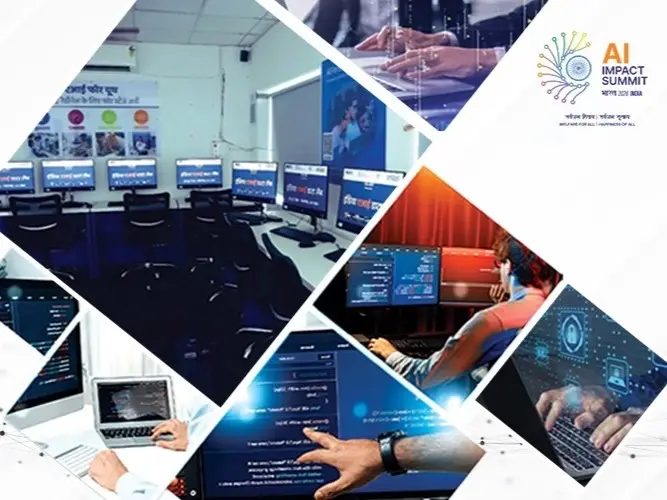
Image strictly for representational purposes only. Credit : Pexels/Cotton Bro Studio Photograph: (Others)
India's AI ambitions face a workforce challenge. Multiple reports, from Kyndryl to UN to the Indian government, highlight shortages in AI skills, teacher and student readiness for the workplace, despite rapid AI adoption in the country. Here is why it's concerning
On India's AI workplace readiness, there are two narratives: One that says the nation is heavily invested in it, and the other that brings out several gaps. The recent Kyndryl's People Readiness Report 2026 found that only 25 per cent of Indian organisations consider their workforce adequately prepared to leverage Artificial Intelligence, down 12 percentage points from 2025. While 56 per cent of organisations have AI deployed broadly or embedded in their core business processes, 81 per cent of Indian leaders believe AI is advancing faster than their workforce, governance and operating models. The AI skill gaps, from schools to the workplace, are ones that need urgent fixing in India. Here is why:
India's AI skill readiness: Demand outrunning supply
Recent data from the Ministry of Electronics and Information Technology of India (MeitY) showed only about 16 per cent of India's IT professionals are AI-skilled. A study by NASSCOM-McKinsey projected a shortage of more than 1.4 million AI professionals by 2026 without accelerated upskilling. A NASSCOM-Deloitte estimate said India's AI talent pool will grow from 600,000-650,000 to over 1.25 million between 2022 and 2027, while demand is expected to expand at 25-35 per cent annually.
Indian graduates are only half-ready to tackle AI-led workplaces
The Mercer-Mettl India Graduate Skill Index 2025 reported an overall graduate employability at 42.6 per cent with 46 per cent of graduates employable for AI and machine learning roles. Employability stood at 48.4 per cent in Tier 1 colleges, 46.1 per cent in Tier 2 institutions and 43.4% in Tier 3 colleges. This indicates that Indian graduates are only half-ready for AI-intensive workplaces.
Trending Stories
&imwidth=280&imheight=210&format=webp&quality=medium)
&im=FitAndFill=(700,400)&imwidth=280&imheight=210&format=webp&quality=medium)
&imwidth=280&imheight=210&format=webp&quality=medium)
&imwidth=280&imheight=210&format=webp&quality=medium)
&imwidth=280&imheight=210&format=webp&quality=medium)
&imwidth=280&imheight=210&format=webp&quality=medium)
&imwidth=280&imheight=210&format=webp&quality=medium)
&imwidth=280&imheight=210&format=webp&quality=medium)
&imwidth=280&imheight=210&format=webp&quality=medium)
&imwidth=280&imheight=210&format=webp&quality=medium)
&imwidth=280&imheight=210&format=webp&quality=medium)
&imwidth=280&imheight=210&format=webp&quality=medium)
&imwidth=280&imheight=210&format=webp&quality=medium)
&imwidth=280&imheight=210&format=webp&quality=medium)
&imwidth=280&imheight=210&format=webp&quality=medium)
&imwidth=280&imheight=210&format=webp&quality=medium)
&imwidth=280&imheight=210&format=webp&quality=medium)
&imwidth=280&imheight=210&format=webp&quality=medium)
&imwidth=280&imheight=210&format=webp&quality=medium)
&imwidth=280&imheight=210&format=webp&quality=medium)
&imwidth=280&imheight=210&format=webp&quality=medium)
&imwidth=280&imheight=210&format=webp&quality=medium)
&imwidth=280&imheight=210&format=webp&quality=medium)
&imwidth=280&imheight=210&format=webp&quality=medium)
&im=FitAndFill=(700,400)&imwidth=280&imheight=210&format=webp&quality=medium)
&imwidth=280&imheight=210&format=webp&quality=medium)
&imwidth=280&imheight=210&format=webp&quality=medium)
&imwidth=280&imheight=210&format=webp&quality=medium)
&imwidth=280&imheight=210&format=webp&quality=medium)
&imwidth=280&imheight=210&format=webp&quality=medium)
&imwidth=280&imheight=210&format=webp&quality=medium)
&imwidth=280&imheight=210&format=webp&quality=medium)
&imwidth=280&imheight=210&format=webp&quality=medium)
&imwidth=280&imheight=210&format=webp&quality=medium)
The vocational skills gap in India
AI skills gap is part of a larger problem. India's periodic labour force survey (PLFS) data shows that only 21 per cent of people aged 15-29 have received vocational or technical training, with just 4.4 per cent receiving formal training. The India Skills Report 2026, produced by Wheebox-ETS with AICTE and CII, found employability among computer science and IT engineers at nearly 80 per cent, compared with 45.95 per cent for ITI graduates and 32.92 per cent for polytechnic graduates. This should be seen in the context of what the report said was a 600 per cent growth in AI and machine learning job opportunities.
Catch them young: AI, school education and teacher readiness
The Ministry of Education plans to introduce AI from Class 3 in the 2026-27 academic year, with CBSE preparing the curriculum. But then, we are also dealing with lack of basic computer and internet access at school levels. The 2024-25 data from UDISE+ of India's Department of Education showed that about 65 per cent of schools have computers, but only 58 per cent are functional, while internet access stands at about 63 per cent nationally. Surveys conducted in 2025 indicate only about 15 per cent of teachers and educators are AI-fluent.
Also read: India's AI problem: Funding gap for AI startups, research and development is the core constraint
The larger picture of India AI skill gaps: Reports from the UN and national agencies
NITI Aayog's October 2025 roadmap estimated that AI could displace around 2 million traditional jobs while creating up to 8 million new roles if supported by appropriate policy and skilling measures. Against this, one has to look at the larger picture to compare India with the global situation. The UNCTAD Technology and Innovation Report of 2025 ranked India 113th in skills and 99th in ICT deployment, while placing it 10th globally in AI investment. The report warned that AI could affect up to 40 per cent of jobs worldwide.
The more recent one, UNESCO's India AI Readiness Assessment Report 2026, prepared with the IndiaAI Mission and MeitY, estimates India accounts for around 16 per cent of global AI talent and has filed more than 86,000 AI patents since 2010. Among other things, the report identifies gaps in AI governance, workforce transition planning and AI skills and computing infrastructure, warning that unequal access could widen economic inequalities.
The UN's 2026 AI Governance Report does not assess India separately, but warns that AI capabilities are advancing faster than governance systems. It said that compute, talent and frontier AI capabilities are becoming increasingly concentrated among a small number of countries and companies. This presents additional challenges for developing economies like India seeking to build AI-ready workforces.