

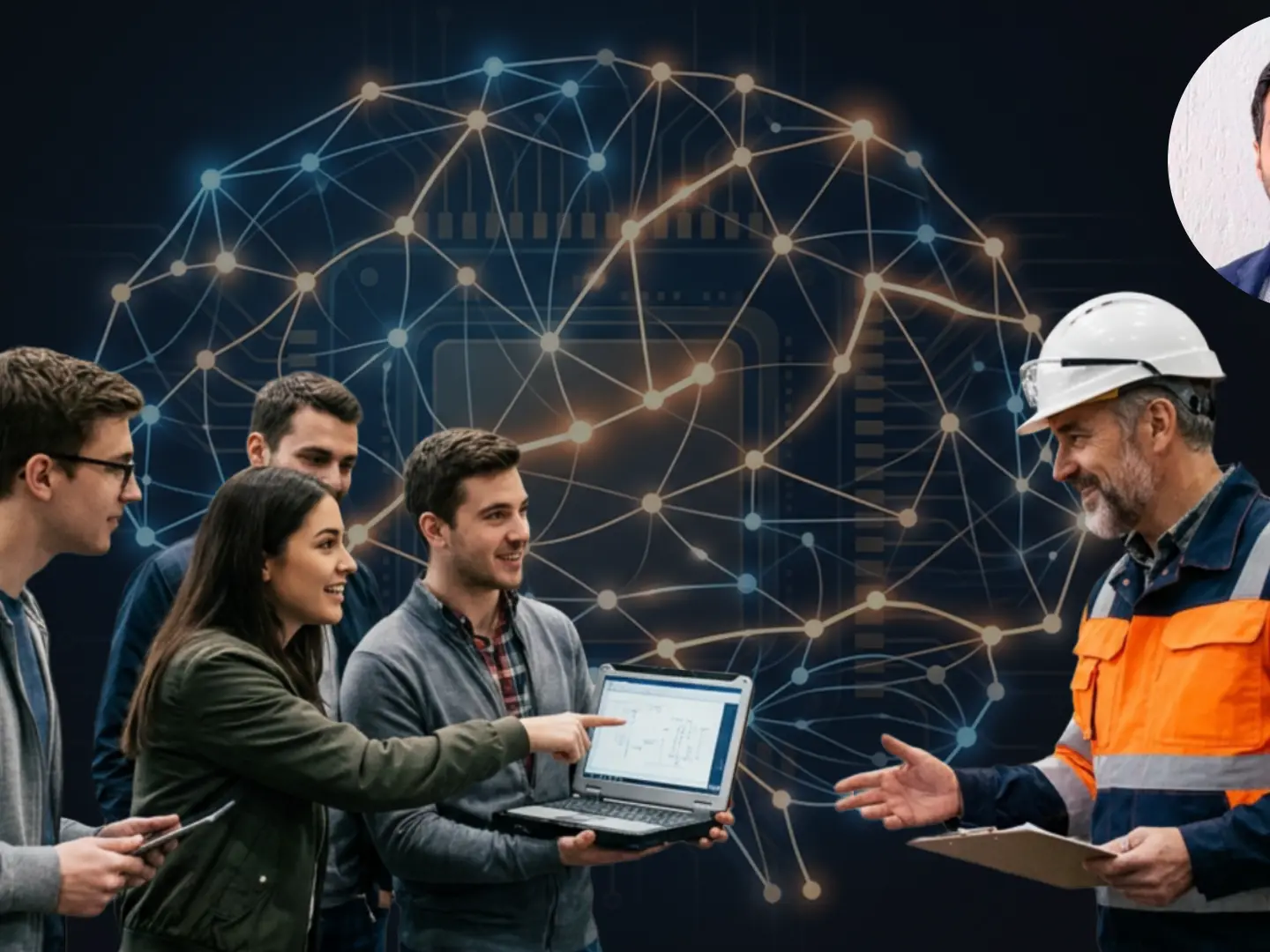
&imwidth=800&imheight=600&format=webp&quality=medium "India's Deep-Tech has a Prototype problem, that big Industry wants to fix")
India's deep-tech sector has several problems, and it isn't the one policymakers usually talk about.
The country is now home to approximately 3,600 deep-tech startups working across artificial intelligence, biotechnology, quantum computing and advanced engineering, according to government data cited in DPIIT's latest notification. New Delhi has responded with an unusually decisive policy. On February 4, 2026, the Department for Promotion of Industry and Internal Trade formally defined "deep-tech startup" as a distinct legal category for the first time, extending recognition to twenty years and raising the turnover ceiling to roughly 300 crore rupees, about 33.33 million dollars. In her February budget, Finance Minister Nirmala Sitharaman earmarked 20,000 crore rupees for private-sector research and innovation in the coming fiscal year, part of a wider one lakh crore rupee Research, Development and Innovation Scheme aimed at semiconductors, AI, quantum computing and biotechnology, alongside a dedicated Deep Tech Fund of Funds.
On paper, the ecosystem looks fully backed. In practice, industry figures say the money and the policy solve the wrong end of the problem.
"Most deep-tech startups die in the gap between a great prototype and a real deployment," said Akarsh Hebbar, Chairman of V-Spark DeepTech Ventures and President of the Vedanta Group, in an exclusive interaction with WION. "We built V-Spark to close that gap for good."
Where the money runs out
The gap Akarsh describes is well documented, if rarely named directly. India's deep-tech ventures typically require high R&D intensity and gestation periods of ten to fifteen years before a technology is commercially viable, a timeline that sits uneasily with venture capital's conventional return horizon.
Trending Stories
&imwidth=180&imheight=135&format=webp&quality=medium)
'Baseless and misconceived': India issues statement after Elon Musk's 'oligarchs' claim over Starlink delay
&imwidth=180&imheight=135&format=webp&quality=medium)
‘You earned that love’: Messi’s wife shares heartfelt message as football icon bids farewell to international stage
&imwidth=180&imheight=135&format=webp&quality=medium)
BJP chief Nitin Nabin calls Rahul Gandhi ‘anarchist’, says Oppn ‘spreading poison’ in society
&imwidth=180&imheight=135&format=webp&quality=medium)
‘Team first and team ahead’: India coach Gambhir pens heartfelt wish for chief selector Ajit Agarkar
&imwidth=180&imheight=135&format=webp&quality=medium)
Trump's naked 23-karat gold statue unveiled near European Parliament
&imwidth=180&imheight=135&format=webp&quality=medium)
Nana Patekar: Remembering a legend of the Indian cinema
&imwidth=180&imheight=135&format=webp&quality=medium)
Thai Actors Fourth Nattawat, Gemini Norawit face racism accusations from Indian fans over viral Bollywood act
&imwidth=180&imheight=135&format=webp&quality=medium)
Captain Smit Machchhar on feet again, walks 10 steps as recovery continues after Flydubai flight attack
&imwidth=180&imheight=135&format=webp&quality=medium)
Ronaldo sends 'a hug' after Messi says he misses 'wearing the blue and white'
&imwidth=180&imheight=135&format=webp&quality=medium)
Trump distances himself from senior political advisers over work for pro-Russian government
&imwidth=180&imheight=135&format=webp&quality=medium)
A Love Other Than Yours: The temptation to cheat and what pushes people over the edge
&imwidth=180&imheight=135&format=webp&quality=medium)
Narendra Modi Stadium bomb threat declared hoax; India & Australia U19 squads safe
&imwidth=180&imheight=135&format=webp&quality=medium)
BTS agency HYBE announces first-ever Weverse Con Festival in India
&imwidth=180&imheight=135&format=webp&quality=medium)
US Midterms 2026: Barack Obama hits campaign trail to boost Democratic candidates
&imwidth=180&imheight=135&format=webp&quality=medium)
Shia LaBeouf and Mia Goth head for divorce after nearly 10 years
&imwidth=180&imheight=135&format=webp&quality=medium)
Who is DogeDesigner? All we know about the X account that sparked India-Musk-Starlink ‘oligarchs’ controversy
&imwidth=180&imheight=135&format=webp&quality=medium)
India at UN: Pak allows terror groups to operate from its soil
&imwidth=180&imheight=135&format=webp&quality=medium)
Christa Pike wakes after failed execution, asks 'Where am I and who are you?'
&imwidth=180&imheight=135&format=webp&quality=medium)
Christa Pike 'angry' and 'confused' after failed execution; judge orders to preserve evidence
&imwidth=180&imheight=135&format=webp&quality=medium)
Nigerian President Bola Ahmed Tinubu hails Modi’s 25-year leadership milestone, calls for deeper Nigeria-India strategic ties
&im=FitAndFill=(700,400)&imwidth=180&imheight=135&format=webp&quality=medium)
US midterms 2026: 10 leaders and candidates to watch in the battle for Congress
&imwidth=180&imheight=135&format=webp&quality=medium)
Nana Patekar's #MeToo controversy: From Tanushree Dutta’s allegations to court ruling
&imwidth=180&imheight=135&format=webp&quality=medium)
Atlantic hurricane Isaias could make landfall as a strong Category 2 storm, tornado warnings issued
&imwidth=180&imheight=135&format=webp&quality=medium)
Veteran actor Nana Patekar dies at 75 after suffering cardiac arrest
&imwidth=180&imheight=135&format=webp&quality=medium)
Musk alleges ‘oligarchs’ blocking Starlink in India, here is what we know so far
&imwidth=180&imheight=135&format=webp&quality=medium)
Lightning strikes IndiGo Patna-Lucknow flight at 17,000 feet, damages nose; all 110 safe
&imwidth=180&imheight=135&format=webp&quality=medium)
Who is Nana Patekar's wife Neelakanti? The bank officer who earned Rs 2,500 when he earned Rs 50
&imwidth=180&imheight=135&format=webp&quality=medium)
France holds talks with Taliban government amid diplomatic outreach
&imwidth=180&imheight=135&format=webp&quality=medium)
New Cold War: Why is China buying more gold? Explained
&imwidth=180&imheight=135&format=webp&quality=medium)
Nadella to be honoured with national medal of technology & innovation
&imwidth=180&imheight=135&format=webp&quality=medium)
IndiGo flight struck by lightning at 17,000 feet, nose of Patna-Lucknow flight damaged
&imwidth=180&imheight=135&format=webp&quality=medium)
US readying to strike Iran? Report suggests Trump preparing to put on show of strength ahead of US midterms
&imwidth=180&imheight=135&format=webp&quality=medium)
Zendaya gives The Odyssey white lace jacket a stylish twist at Paris Fashion Week 2026
&im=FitAndFill=(700,400)&imwidth=180&imheight=135&format=webp&quality=medium)
World’s top vehicle producers: Top 10 countries making the most cars. Check where India stands
&imwidth=180&imheight=135&format=webp&quality=medium)
US suspends Microsoft, Infosys, Tata, Wipro from green card programme over alleged H-1B abuse
&imwidth=180&imheight=135&format=webp&quality=medium)
'We don't think so': Trump says Russian plague lab worker's death not linked to bio-weapon
&imwidth=180&imheight=135&format=webp&quality=medium)
Sri Lankan Tamil worker gets death sentence in Saudi Arabia over blasphemy, calls for pardon intensify
&imwidth=180&imheight=135&format=webp&quality=medium)
France protests: How a Gen Z school movement turned into a political war | The Verdict
Industry body Nasscom has pushed the government for years to recognise this mismatch, convening a policy roundtable in April 2025 with the electronics ministry, the Department of Science and Technology and venture funds specifically to articulate the need for patient capital and funding mechanisms aligned to longer innovation cycles.
What that leaves is a stretch of runway, after a startup has proven a working prototype but before it can prove commercial-scale reliability, where neither early-stage VC money nor conventional bank lending is well suited to the risk. It's here that large industrial groups, sitting on live plants and heavy balance sheets, have started to insert themselves.
Who are all big players here
Vedanta is not alone in making this bet. Tata Technologies runs its own version of the same engagement model, now in its fourth edition, running an engineering hackathon with Amazon Web Services and Emerson that pushes student and startup teams to solve real problems in automotive, heavy machinery and aerospace.
Reliance Industries, meanwhile, has committed a $100 million joint venture with Meta toward building sovereign AI infrastructure inside India, alongside separate collaborations with Google. Recently, Adani group also launched its startup incubator named Vandey-Bharatam. Taken together, these moves point to a broader pattern, that India's largest industrial conglomerates, not its venture funds, are increasingly building the infrastructure that decides which deep-tech ideas survive contact with a factory floor.
Vedanta's V-Spark, launched as a dedicated platform inside a conglomerate historically built on metals, mining and energy, is one of the more structured versions of this bet. Akarsh Hebbar described a three-stage model, Pilot, Project, Partner, under which startups first test solutions against real operational problems inside Vedanta's mining and processing sites, then scale successful pilots into full projects, and eventually move into long-term partnerships that can include co-investment and revenue-sharing arrangements.
The platform has set a target of engaging over 1,000 startups and projects unlocking $300-400 million in value over three years, figures Hebbar attributes to internal tracking of "realised savings, avoided losses, increase in volume, return on investment, uptime improvements... and the pace at which successful pilots are scaled." Those numbers, drawn from company-reported internal metrics rather than independently audited disclosures, illustrate the scale industrial players believe is achievable, even if they cannot yet be externally verified.
An intelligence gap, not just a manufacturing one
Whether India can convert this deployment gap into an advantage depends on how it stacks up globally, and the picture is mixed.
On raw AI capability signals, India performs strongly. The country leads the world in AI talent acquisition, with an annual hiring rate of about 33 percent, according to Stanford's HAI AI Index, and separate analysis using Stanford's AI vibrancy tool places India third globally in the Innovation domain, alongside strong rankings in AI-related public discourse.
But talent and enthusiasm are not the same as industrial deployment, and that is where the gap with global manufacturing leaders becomes stark. Stanford's 2026 Index, citing International Federation of Robotics data, found China installed 295,000 industrial robots in 2024, against roughly 44,500 in Japan and 34,200 in the United States, a scale of physical automation India does not yet approach.
That is the distinction Akarsh Hebbar's framing leans on as industrial AI, he argues, is not an extension of the dashboard-and-dataset digitisation Indian manufacturing pursued over the last decade, but a different discipline entirely, one operating inside "highly complex, high-risk, real-time physical environments," where systems have to augment safety and asset health, not just visualise them. Vedanta says it is already running computer vision, digital twins and self-optimising systems across its mining and metals operations, citing internal figures of a 10-15 percent cut in chemical consumption and close to $10 million in annual EBITDA impact from process optimisation, again, company-disclosed metrics rather than third-party audited figures.
The workforce question nobody wants to get wrong
Scaling industrial AI inside live plants raises an obvious second question, what happens to the people running those plants today.
Akarsh Hebbar's answer leans on augmentation rather than replacement, AI-enabled learning platforms, VR-based training, and what he called marrying "AI wit(h) HI," artificial intelligence with human intelligence, so that domain experts become "tech-augmented, predictive decision-makers" rather than being displaced by the systems they operate. It's a framing every large industrial employer investing in automation now uses, and it deserves the same scrutiny applied to the financial numbers, that none of it is independently audited, and India currently has no comprehensive, government-tracked data on industrial job displacement tied specifically to AI adoption, a gap that limits how far claims of this kind can be verified either way.
A capital story as much as a technology one
Strip away the branding, and what's playing out is a quiet reallocation of who funds India's hardest technology bets. Venture capital built India's app economy and its unicorn count, India has over 100 unicorns and more than 1.57 lakh DPIIT-recognised startups, generating over 1.6 million jobs. But hardware, robotics and industrial AI don't fit that model's return timeline, and the DPIIT's own February notification effectively admits it, by rewriting the rules specifically to give deep-tech ventures a longer runway.
Into that space have stepped conglomerates with something VCs don't have, i.e. live industrial sites to test on and balance sheets patient enough to wait. Whether that capital comes with the right incentives, or ends up steering deep-tech innovation toward the problems large industries finds convenient, rather than the ones India needs solved, is the question this story leaves open.
