India-EU trade deal | From chocolates to wines to cars: Products that may get cheaper after trade pact. See the complete list

&imwidth=600&imheight=450&format=webp&quality=medium "India-EU trade deal | From chocolates to wines to cars: Products that may get cheaper after trade pact. See the complete list")
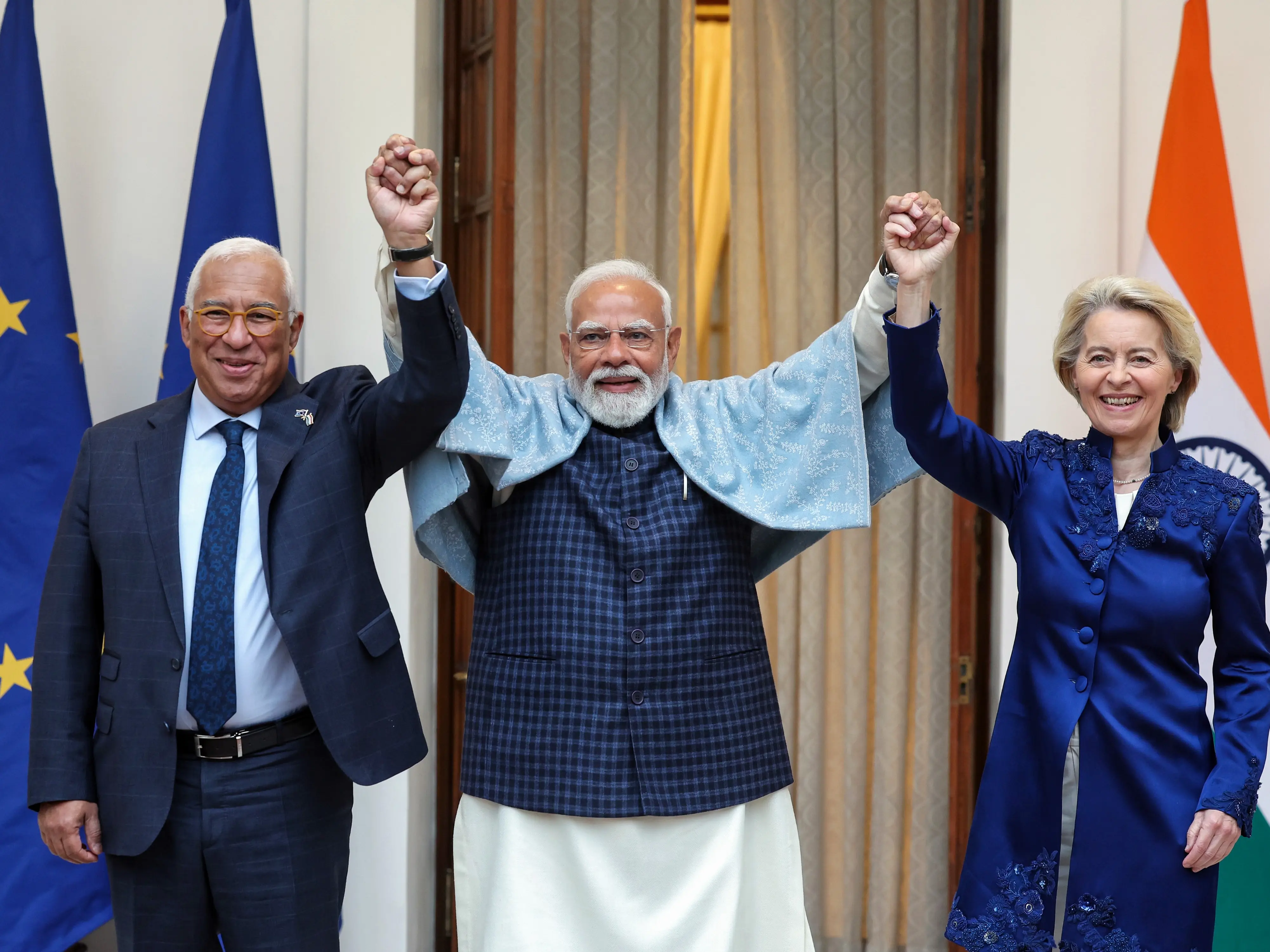
Prime Minister Narendra Modi, with President of the European Council António Luís Santos da Costa, and President of the European Commission Ursula von der Leyen Photograph: (ANI)
India and the EU on Tuesday (January 27) signed their largest-ever trade deal, cutting tariffs on 96.6% of EU exports and boosting trade, savings, and cooperation
A historic free trade agreement between India and the European Union is set to sharply cut import duties on nearly all European goods coming to India, making many products more affordable for Indian consumers across sectors such as agriculture, food, and automobiles. Under the deal, tariffs on about 96.6 per cent of EU exports to India will either be fully removed or significantly lowered. The agreement is expected to save European exporters up to €4 billion annually in customs duties.
Described as the biggest trade deal ever concluded by both sides, the agreement will bring down steep tariffs, currently ranging from 50 to 150 per cent, on items such as chocolate, wine, and cars to levels of zero to 20 per cent. The European Union said the deal comes at a critical moment, strengthening economic and strategic cooperation between the world’s two largest democracies amid global uncertainty and geopolitical strain.
Also Read: ‘Blueprint for shared prosperity’: How India-EU FTA redefines defence and security cooperation
By cutting red tape and easing market access, the agreement aims to make cross-border trade faster, simpler, and more cost-effective, the EU said. Prime Minister Narendra Modi, announcing the signing on Tuesday (January 27), said the pact would unlock significant benefits for citizens and businesses in both India and Europe.
Calling it a model partnership between major global economies, Modi noted that the agreement covers economies accounting for roughly 25 per cent of global GDP and one-third of worldwide trade. European Commission President Ursula von der Leyen welcomed the pact as a historic achievement, calling it the “mother of all” trade agreements. In a post on X, PM Modi wrote, “This agreement will drive trade, investment, and innovation while strengthening our strategic relationship. It reflects our shared resolve to shape a stable, prosperous, and future-ready economic relationship.”
Trending Stories
)
&im=FitAndFill=(700,400))
)
)
)
)
)
)
)
&im=FitAndFill=(700,400))
)
&im=FitAndFill=(700,400))
)
)
)
)
)
)
)
)
)
)
)
)
)
)
)
)
)
)
)
)
)
)
)
)
)
)
)
Check the complete list below. What gets cheaper for Indians after India-EU deal
| Product | Current tariffs | Future Tariffs |
| Machinery and electrical equipment | Up to 44% | 0% for almost all products |
| Aircraft and spacecraft | Up to 11% | 0% for almost all products |
| Optical, medical and surgical equipment | Up to 27,5% | 0% for 90% of the products |
| Plastics | Up to 16,5%
| 0% for almost all products |
| Pearls, precious stones and metals | Up to 22,5%
| 0% for 20% of the products and tariff reduction for another 36% of the products |
| Chemicals | Up to 22% | 0% for almost all products |
| Motor vehicles | 110% | 10% (quota of 250k) |
| Iron and steel | Up to 22% | 0% for almost all products |
| Pharmaceuticals | 11% | 0% for almost all products |
| Wine | 150% | 20% (premium range); 30% (medium range) |
| Spirits | Up to 150% | 40% |
| Beer | 110% | 50% |
| Olive Oil, margarine and other vegetable oils | Up to 45% | 0% |
| Kiwis and pears | 33% | 10% in-quota |
| Fruit juices and non-alcoholic beer | Up to 55% | 0% |
| Processed food (breads, pastries, biscuits, pasta, chocolate, pet food) | Up to 50% | 0% |
| Sheep meat | 33% | 0% |
| Sausages and other meat preparations | Up to 110% | 50% |

