
&imwidth=800&imheight=600&format=webp&quality=medium "IAF tests homegrown firefighting robot amid global conflict lessons")
In the searing aftermath of modern aerial warfare, fire has emerged as the silent killer of airbases. Images from the 2026 Iran conflict, rivers of burning fuel snaking through Tehran streets, toxic black rain, and chain-reaction blasts at ammunition depots in Isfahan, have driven home a stark lesson: a single missile strike can ignite cascading disasters that no human crew can immediately contain.
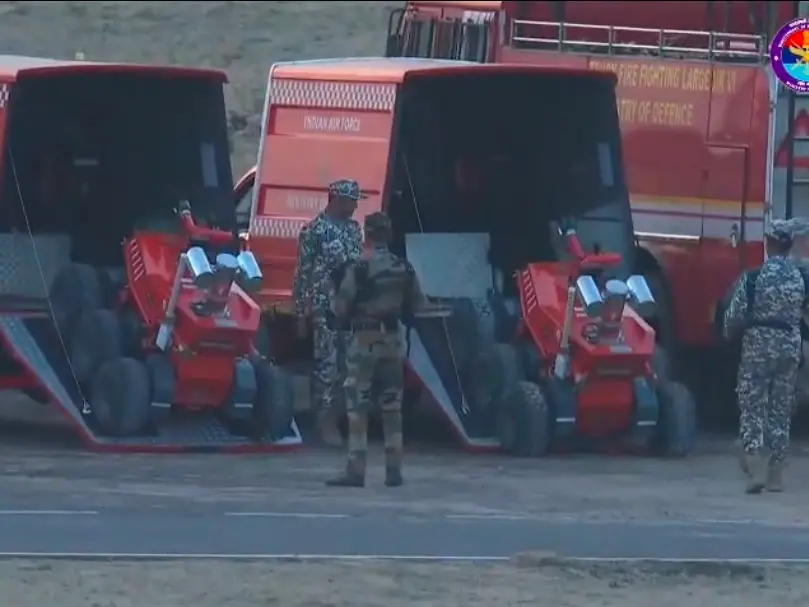
As fuel farms blaze and hangars fill with smoke, the critical minutes after impact often decide whether an airbase survives or is neutralised. It is here that India's indigenous FF Bot (Firefighting Robot), demonstrated during the Indian Air Force's Vayu Shakti 2026 exercise at Pokhran in February, offers a compelling answer.
Developed by Ahmedabad-based startup Swadeshi Empresa Pvt Ltd under the Ministry of Defence's iDEX (Innovations for Defence Excellence) initiative, the FF Bot is engineered for the most hazardous zones of military installations: fuel storage areas, explosive munitions bays, and smoke-choked aircraft hangars. Remotely operated, it features heat-resistant shielding, a rugged chassis capable of navigating debris and tight corridors, and a 360-degree turning radius suited to confined base geometries.

Equipped with thermal imaging that penetrates dense smoke where ordinary cameras fail, the robot delivers fire suppressants, water or foam, while streaming real-time visuals and hotspot data back to commanders. A self-cooling system allows it to operate under sustained high temperatures, buying precious time before secondary detonations or toxic fumes render areas inaccessible to humans.
The timing of its showcase was no coincidence. Vayu Shakti 2026, which featured the IAF's frontline assets like Rafales and Su-30MKIs, also quietly tested damage-control capabilities. FF Bot exceeded benchmarks for base-level firefighting equipment, validating its durability on uneven terrain and in low-visibility conditions through iterative trials involving IAF engineering branches. Similar systems have already seen interest from the Indian Army and Navy.
Trending Stories
)
The Royals enter the Doctor Who universe: King Charles and Queen Camilla beam into Commonwealth Games in TARDIS
)
India avoids higher US tariff, secures lower 10% rate. Here's how
)
He predicted COVID-19 and 2008 economic crisis, was labeled fearmonger. Now he has another dire warning
)
Sadie Sink's leaked Spider-Man: Brand New Day clip fuels fresh Jean Grey speculation
)
Trump's latest rant is about a 'massive television outage' that never happened
)
Putin rambles in TV speech after cancelling Navy Day parade fearing an attack by Ukraine
)
'Nobody tells me what to sell': Trump rejects Netanyahu's objections to Turkey F-35 deal
)
India aims for 200-ship Navy by 2035 to counter China and Pakistan | Gravitas
)
ChatGPT invoked God, told pastor not to worry about his symptoms. Then pulmonary embolism hit
)
'Islamic Republic will never make a deal with the US': Iran deputy speaker echoes Araghchi’s remark
)
NEET Protests riddled with misinformation? Delhi Police blocks 480 Pakistan-based handles spreading 'fake news' since Operation Sindoor
)
UCLA researchers turn to OnlyFans to raise funds. You'll be surprised to know the star of the show
)
Delhi Police issues BIG statement on viral 'don't leave national capital without permission' notice | FACT CHECK
&im=FitAndFill=(700,400))
Finished Kay Kay Menon's Adarsh Baal Vidyalaya? Here are 5 binge-worthy Hindi OTT series to stream next
)
Trump says Iranian school bombing photos could be AI-generated - 'I don’t think...'
)
China deploying advanced fighter jets closer to India's northern frontier
)
Giant iceberg flips violently near Greenland exposing its underside - 'I didn't know they could do that'
)
'We have far more than we need': Trump rejects US munitions shortage claims. But what do reports say?
)
Google ends Play Services Support, likely to stop these Android phones from downloading apps & games
&im=FitAndFill=(700,400))
New OTT releases this week (July 27-August 2, 2026): The Devil Wears Prada 2, Batman, Demon Slayer- 5 titles coming on Netflix, Prime Video and more
)
Asim Munir eyes defence deal with Qatar & Turkiye after Kuwait as Pakistan seeks investments | Gravitas
)
‘Kill Melania, Barron’: Why is IRGC-linked media outlet urging ‘freedom fighters’ to assassinate Trump’s family? WATCH
)
BTS' Jungkook opens up about attending Stray Kids' concert, praises Bang Chan in live broadcast
)
'Broader struggle for democracy...': Greta Thunberg joins Indian students protest in London - What she said
)
Kate Bush fans celebrate 'The Most Wuthering Heights Day Ever 2026'
)
Russia-Ukraine War: Russia drops 3-tonne Glide bombs on Ukraine
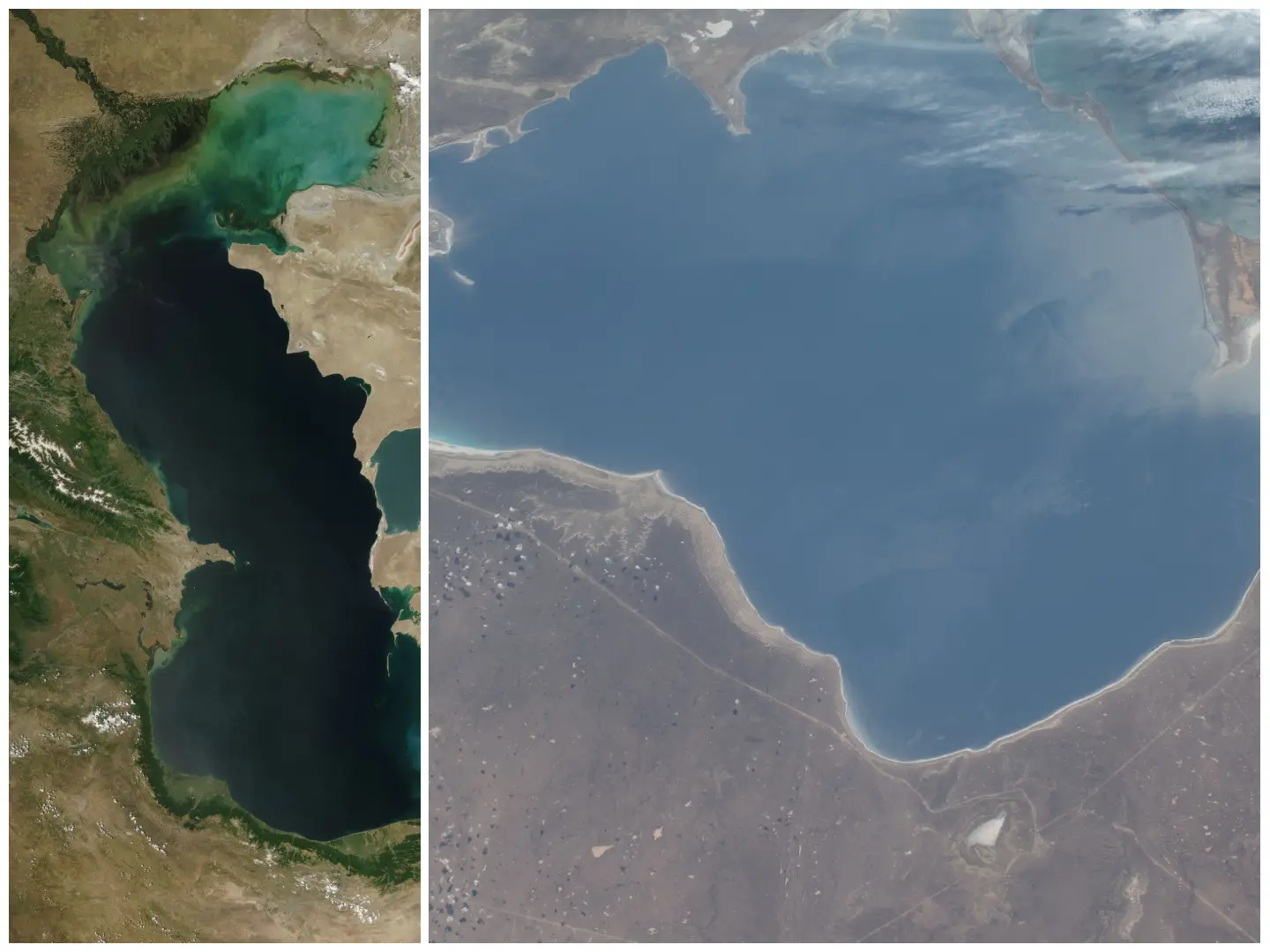)
'Won't go unanswered': Will the Ukrainian attacks on Caspian Sea vessels lead to the convergence of the Iran war and the Russia-Ukraine war?
)
NEET aspirant ends her life in Maharashtra after falling 11 marks short of cut-off
)
'Not in our DNA': Iran denies seeking US negotiations, rejects Trump's remarks
)
3,000 years ago, humanity spoke thousands of languages — then fell silent. Where did they all go?
)
‘Don't cry after elections': Owaisi extends alliance offer to Akhilesh for UP polls
)
Jennifer Lopez's ex-husband Ojani Noa claims he confronted Sean 'Diddy' Combs over alleged affair
This is more than a technological novelty. It reflects a broader shift in India's defence thinking: true readiness is not only about delivering strikes but about absorbing them and remaining operational. In conflicts from Ukraine to Iran, fires at depots and arsenals have caused disproportionate damage, sometimes registering as seismic events.
The FF Bot addresses the "second weapon", uncontrolled blaze, that conventional response teams cannot safely tackle in the opening moments. Its development highlights the maturing iDEX ecosystem, which has funnelled support to hundreds of startups, generating significant orders and accelerating problem-driven innovation over lengthy traditional procurement.
