
&imwidth=800&imheight=600&format=webp&quality=medium "Emotional homecoming: Kashmiri Pandits gather at historic Habba Kadal Ashram")
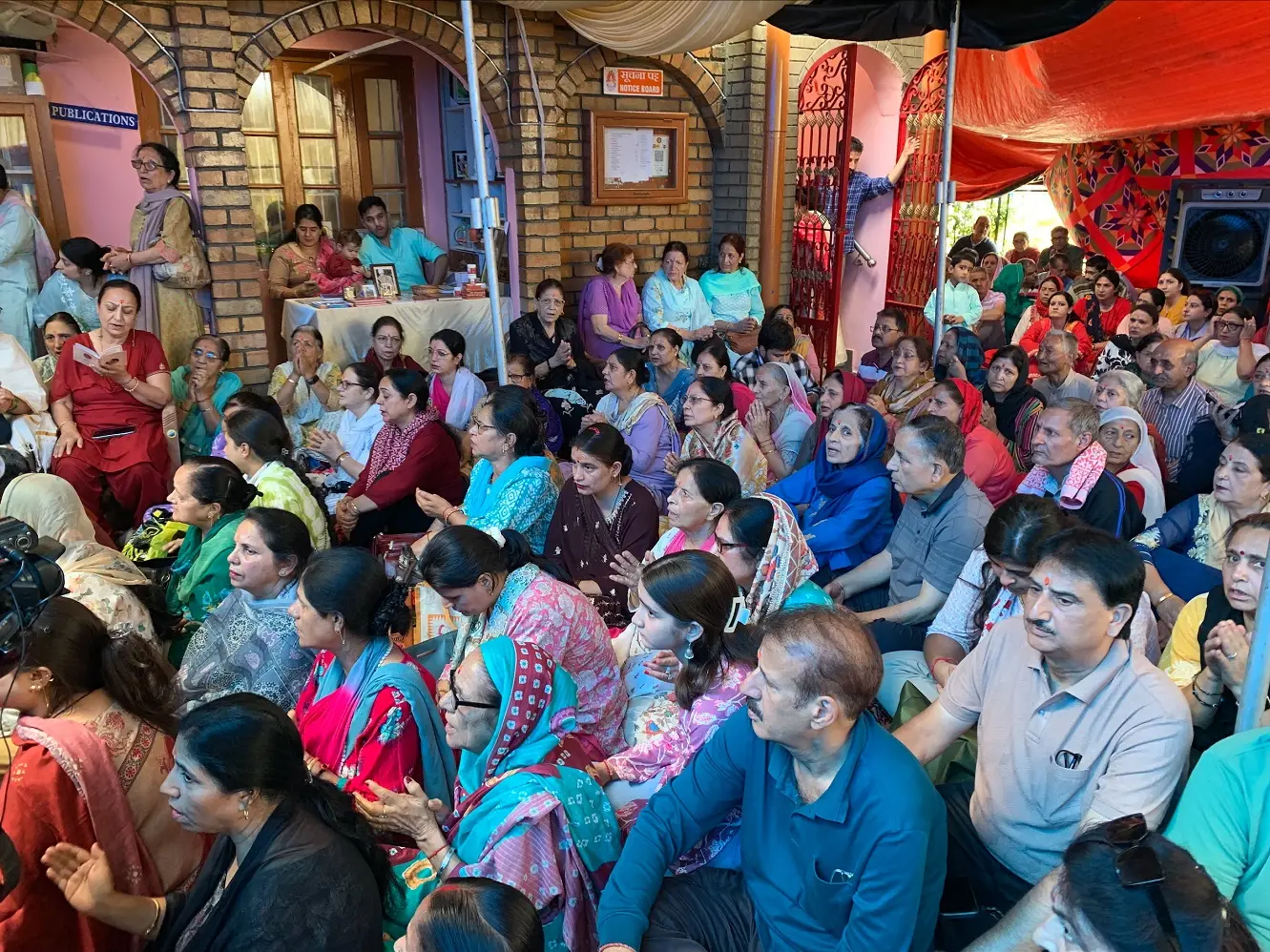
Srinagar: In a deeply emotional and symbolic gathering, hundreds of Kashmiri Pandits from across India and abroad assembled at the historic Bhagwan Gopinath Ashram in Srinagar’s Habba Kadal area on Tuesday, marking what many described as a significant moment in the community’s enduring connection with its homeland after 36 long years.
During the peak of terrorism in the 1990s, the sound of temple bells across Kashmir was overshadowed by gunfire, forcing thousands of Kashmiri Pandits to flee their ancestral homes. Religious gatherings diminished, and many temples and ashrams that once served as vibrant centres of spiritual and cultural life fell silent.

Today, however, temple bells and devotional chants once again echoed through the narrow lanes of Habba Kadal. The smiles and confidence visible on the faces of devotees reflected the changing atmosphere in the Valley. Having witnessed violence and uncertainty in their youth, many participants said they now sense a renewed feeling of peace and security.
“I must have been around 16 when we left Kashmir. We were forced to leave, and since then I have been settled in Jalandhar. The atmosphere and conditions here have certainly changed. I was roaming around the Dalgate and Boulevard areas of Srinagar and there have been so many changes. However, the real change has to happen at the grassroots level, not just at tourist places. There are people moving around freely, and the residents of this place want us to come back because our hearts still live here. The government has to see how our return can be sustained. We genuinely want to come back,” said Sunil Kaul, a Kashmiri Pandit.
Trending Stories
)
Pentagon revives mandatory testosterone testing for male troops aged 30 and above
)
FACT CHECK: Why did PM Modi ask Xi ‘is it okay’ at BRICS Summit? New video reveals...
)
India seeks to build a full semiconductor supply chain
&im=FitAndFill=(700,400))
From Abhishek Sharma to Sahil Chauhan, 5 batters with fastest T20I hundreds
)
Pyongyang dismisses US, western pressure over nuclear programme
)
US And Denmark reach Greenland deal, Trump announces expanded military presence
)
Google’s Gemini AI hacks real systems by guessing passwords during security test
)
US hiding troop deaths in Iran war? Toll higher than Pentagon count, claims report
)
China may have gained access to US's classified F-35 jets; parts meant for repairs diverted to Hong Kong, sparking Pentagon inquiry
)
NASA research plane reaches 61,000 feet over Panama
)
Godfather of AI Geoffrey Hinton gives US lawmakers a one-year warning on AI
)
Trump signs Russia sanctions law: India faces fresh 100% tariff threat over Russian oil
)
Brigitte Bardot’s private collection set for Paris auction; key items and prices revealed
)
Why Ranveer Singh’s Dhurandhar missed India’s Oscar entry; FFI jury member reveals what happened
)
Zendaya and Tom Holland step out for a low-key date in Los Angeles
)
‘Will go to any extent’: Pakistan vows to defend Saudi Arabia amid Houthi attacks
)
The Verdict | When precision fails: US commits war crime in Minab school strike, UN finds
)
Trump signs Russia sanctions bill into law, targets Moscow’s energy sector
66 years of the Indus Waters Treaty: How India and Pakistan settled a bitter river dispute
&im=FitAndFill=(700,400))
New Friday OTT releases (September 18, 2026): Lust Stories 3, You+Me, Best of the Best- 8 new titles coming on Netflix, Prime Video and more
)
Pak: A series of counter terrorism operations in Khyber Pakhtunkhwa
)
Fast bowler Brydon Carse faces no charges over Derby nightclub incident
)
Flying cars in UAE: Ras Al Khaimah signs deal with Chinese company to test new transport
)
Africa is splitting, and a lot sooner than estimated, giving way to a new ocean
)
Trump bans CNN, MS NOW and Politico from White House over ‘FAKE NEWS’
)
Trump 2.0: Dark days ahead for America’s ‘imperial presidency’
)
Trump's Greenland dream comes true? POTUS announces 'Infinite Life' deal with Denmark, claims permanent US control
)
Tirupati Laddu ghee adulterated with chemicals, says ED, supplier arrested
)
Who is Khalilur Rahman? All you need to know about 81st UN General Assembly President
)
IIT Bombay student dies by suicide, was caught seeking AI help during exams
&im=FitAndFill=(700,400))
Meet top 5 bowlers in latest ICC T20I rankings
)
Indian Cinema bets big on mythology, brings ancient stories to modern audiences
)
Ukraine plans record $109 bn defence spending, nearly two thirds of budget amid Russia war
)
Russia holds first parliamentary elections since the beginning of the Ukraine war
&im=FitAndFill=(700,400))
Meet top 5 Indian batters with fastest T20I centuries
)
Until 1990, Habba Kadal was home to a large Kashmiri Pandit population. Situated along the banks of the Jhelum River, the area housed several temples and religious institutions, including the Bhagwan Gopinath Ashram. Before the exodus, the annual fair attracted devotees from every corner of Kashmir who gathered to offer prayers, perform rituals, and participate in devotional singing.
“The situation is certainly more conducive now, but whether it is fully conducive, I cannot guarantee that. What I can say is that the Kashmir of the 1990s, or even the Kashmir witnessed during the Pahalgam attack, is no longer the same. There has been tremendous change. If you had approached me with a microphone ten years ago, it would have been difficult for people to speak openly. Today, people want to talk. I was born here, raised here, studied here, and even got my first job here. I used to live in BanaMohalla and regularly visited Hari Parbat, but after the 1990s, everything changed. As you can see today, people from different parts of the country have gathered here to pray for peace,” said Kedarnath Dhar, a Kashmiri Pandit.
The disruption caused by terrorism brought an end to many such traditions. However, the large turnout at this year’s event has been viewed by many as a sign of the community’s enduring bond with Kashmir and its growing confidence in reconnecting with the Valley.
Many participants expressed hope that both the government and local communities would work together to create conditions conducive to the safe, dignified, and sustainable return of displaced Kashmiri Pandits.
The event follows recent visits by Kashmiri Pandit delegations from different parts of India and abroad, who have travelled to Kashmir to assess the ground situation and advocate for the community’s return.
