

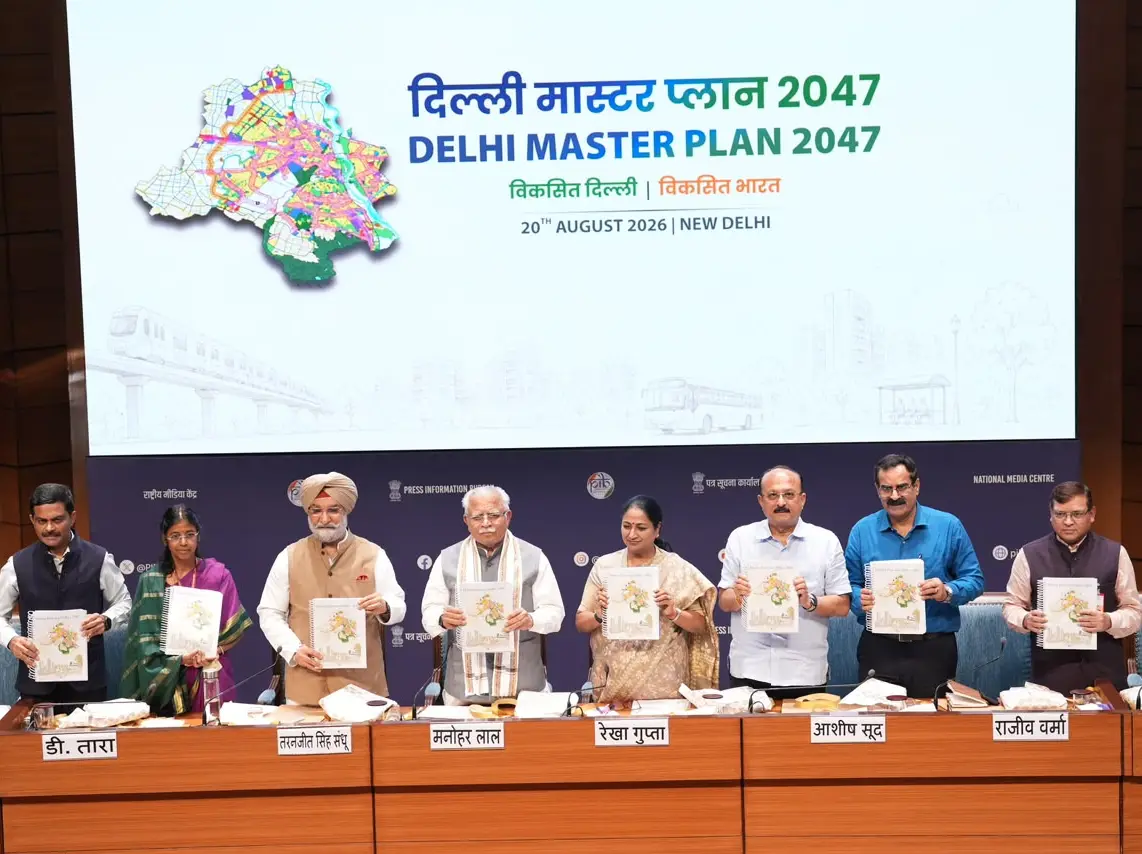
&imwidth=800&imheight=600&format=webp&quality=medium "Delhi unveils Master Plan 2047: A future-ready roadmap for housing, mobility, and urban growth")
The Delhi government has announced the formal implementation roadmap for the newly unveiledDelhi Master Plan 2047, positioning it as a crucial catalyst for planned, inclusive, and future-ready growth across the national capital. Addressing the core pillars of the vision, Chief Minister Rekha Gupta emphasised that the administration is resolved to translate the master plan from a strategic blueprint into tangible, ground-level transformation.
"From villages to unauthorised colonies, and from old residential neighbourhoods to bustling market areas, this Master Plan encompasses the needs and future aspirations of every Delhiite," Chief Minister Rekha Gupta stated. "Amidst pressing urban challenges such as a rapidly growing population, transit bottlenecks, and air pollution, it embodies our firm commitment to build an organised, convenient, and future-ready city for generations to come."
The Chief Minister expressed her gratitude to Prime Minister Narendra Modi, Home Minister Amit Shah, and Union Minister Shri Manohar Lal Khattar for establishing the landmark framework. She also acknowledged the active engagement of Lieutenant Governor Shri Taranjit Singh Sandhu, noting that unified coordination between the Centre, the LG office, and the Delhi administration will be key to driving execution.
The newly active Delhi Master Plan sets the course for the capital’s next era of planned, inclusive, and future-ready growth. Under this framework, upgraded Floor Area Ratio (FAR) norms are designed to unlock new opportunities for urban regeneration, high-density growth, and modern vertical development across legacy neighbourhoods. To address informal settlements, the initiative gives renewed momentum to the ‘Jahan Jhuggi, Wahan Makan’ (Housing-in-Situ) scheme, prioritising permanent, dignified housing for low-income families directly within their existing locations. In addition, relaxed regulatory rules simplify approvals for civic infrastructure, accelerating the expansion of community amenities, healthcare hubs, and public spaces. Local enterprise receives a boost through expanded mixed-use provisions that permit commercial activities on the ground floors of properties along 30-meter-wide roads. Finally, the plan prioritises transit-oriented growth by aligning high-density development corridors with public transit networks, including Metro lines, bus systems, and the RRTS to mitigate traffic congestion and curb vehicular pollution. With this roadmap officially operational, the Delhi government is positioned to initiate phased redevelopment projects, infrastructure upgrades, and housing schemes across both rural and urban stretches of the capital.
Also read: Delhi CM Rekha Gupta celebrates Teej with women at Delhi Haat, highlights women’s empowerment
Trending Stories
&im=FitAndFill=(700,400)&imwidth=180&imheight=135&format=webp&quality=medium)
Navratri 2026: 9 days, 9 forms of Goddess Durga and 9 colours- Check the complete list
&imwidth=180&imheight=135&format=webp&quality=medium)
US troop deaths in Iran war on rise? Pentagon reveals latest toll
&imwidth=180&imheight=135&format=webp&quality=medium)
Trump claims ‘energy ceasefire’ between Russia and Ukraine; Zelensky says ‘news for me’
&imwidth=180&imheight=135&format=webp&quality=medium)
‘Never-ending flow of cheap labour’: JD Vance hits back at Indian-origin Congresswoman over US green card curbs for major tech companies
&im=FitAndFill=(700,400)&imwidth=180&imheight=135&format=webp&quality=medium)
Is sending robots to Mars easier than sending humans?
&imwidth=180&imheight=135&format=webp&quality=medium)
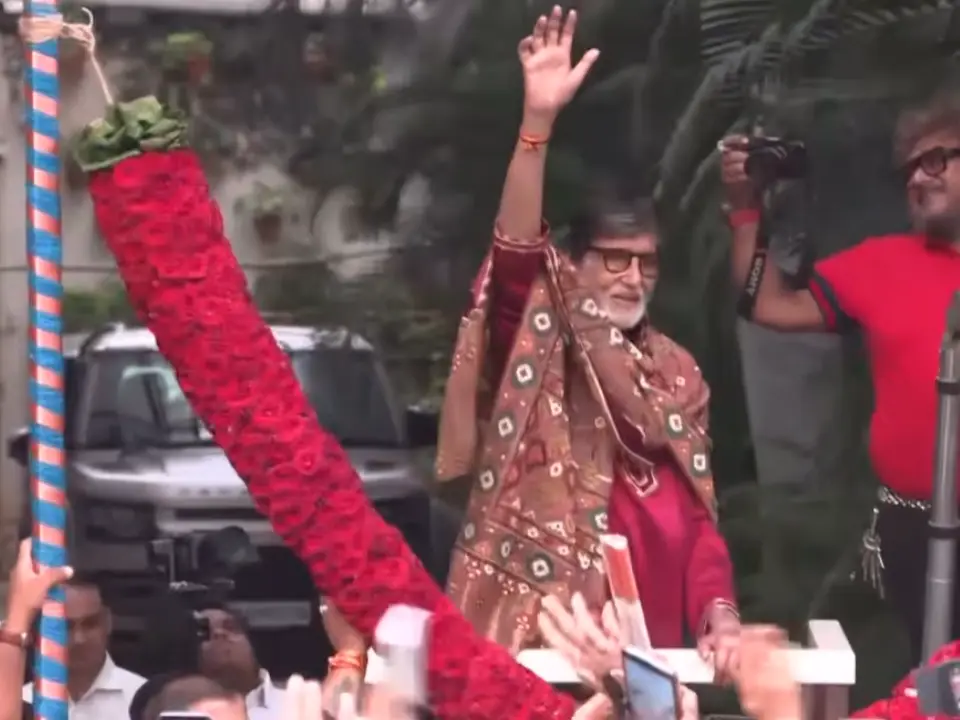
Amitabh Bachchan celebrates birthday with fans at Jalsa during Sunday darshan | Watch
&imwidth=180&imheight=135&format=webp&quality=medium)
A watchdog rated 'ChatGPT for Teens' an unacceptable risk and says keep under-18s off it
&imwidth=180&imheight=135&format=webp&quality=medium)
1,500 drones illuminate Mumbai sky as Cordelia Cruises unveils second ship, Cordelia Sky
&imwidth=180&imheight=135&format=webp&quality=medium)
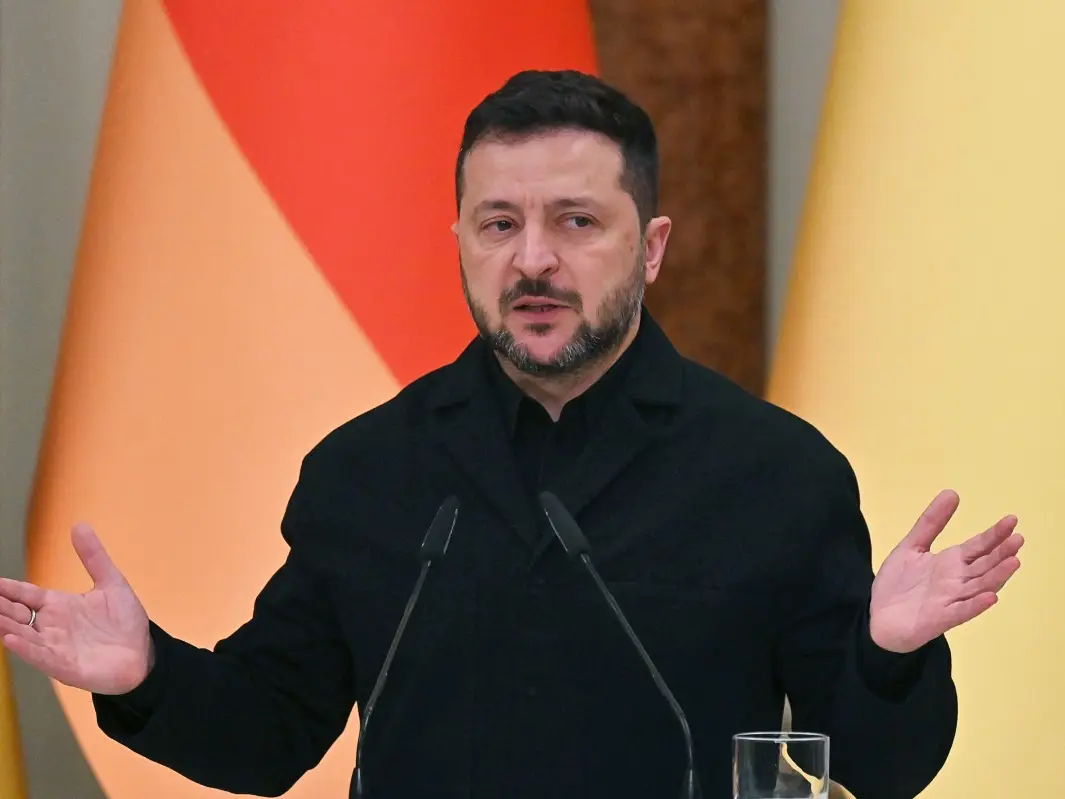
‘Please tell Putin...’: Zelensky says Ukraine will hold elections if Russia agrees to 60-day ceasefire
&imwidth=180&imheight=135&format=webp&quality=medium)
Anthropic's AI invented a murder witness and sent the fake tip to Philadelphia police
&imwidth=180&imheight=135&format=webp&quality=medium)
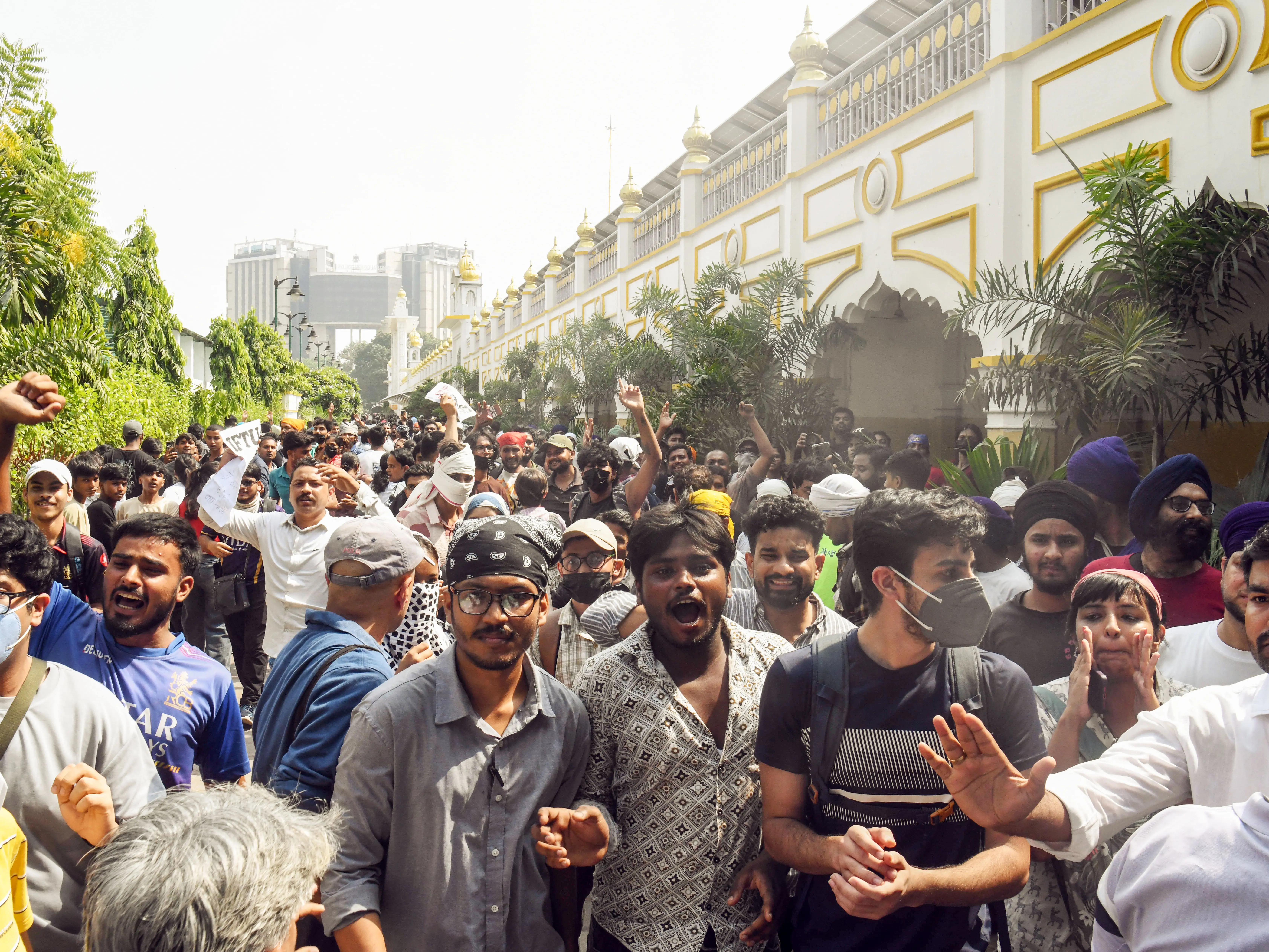
Delhi Sikh Gurudwara Committee files complaint against Kejriwal, AAP leaders for ‘violating sanctity’ of Bangla Sahib
&imwidth=180&imheight=135&format=webp&quality=medium)
CJI Surya Kant declines INDIA bloc leaders’ request for meeting ahead of march to SC, asks them to file petition
&imwidth=180&imheight=135&format=webp&quality=medium)
After crackdown on CJP, opposition to march to Supreme Court Monday over ‘vote chori', removal of CEC
&imwidth=180&imheight=135&format=webp&quality=medium)
One Indian killed in Riyadh airport attack; 11 others injured : MEA
&imwidth=180&imheight=135&format=webp&quality=medium)
Imran Khan released hours after Mumbai Police detain him during CJP protest
&imwidth=180&imheight=135&format=webp&quality=medium)
Nathan Lyon completes 1,000 Test runs at No. 10 to script rare cricket feat
&imwidth=180&imheight=135&format=webp&quality=medium)
Top AI models flunked a test of inventing new AI research, so much for self-improving AI
&imwidth=180&imheight=135&format=webp&quality=medium)
Nepal flash floods swallow homes and bridges a month after devastating disaster
&imwidth=180&imheight=135&format=webp&quality=medium)
'Ouch!!! That must hurt': Kangana Ranaut hails Kamal Haasan's sharp reply to Elon Musk over Starlink row
&imwidth=180&imheight=135&format=webp&quality=medium)
Sidhu Moose Wala’s younger brother wins hearts by recreating late singer’s signature move at Toronto Hologram Show
&imwidth=180&imheight=135&format=webp&quality=medium)
Meta's Muse AI could be a security nightmare for India's billion-plus users
&imwidth=180&imheight=135&format=webp&quality=medium)
UK school ditches technology, shifts from screen to pen and paper for learning
&imwidth=180&imheight=135&format=webp&quality=medium)
IND vs WI, 3rd T20I: Abhishek Sharma smashes 18-ball fifty, sets record for fastest to 2,000 T20I runs
&imwidth=180&imheight=135&format=webp&quality=medium)
IND vs WI, 3rd T20I: Arshdeep, Abhishek star as India secure 14-run win over West Indies
&imwidth=180&imheight=135&format=webp&quality=medium)
Houthis claim Riyadh airport attacks, Aramco strikes; issue fresh warning to airlines, travellers and workers
&imwidth=180&imheight=135&format=webp&quality=medium)
Portugal Federation confirms Cristiano Ronaldo’s return to national team despite suspension
&imwidth=180&imheight=135&format=webp&quality=medium)
Microsoft's Nadella says treat every AI model as already hacked, and build an 'emergency brake'
&im=FitAndFill=(700,400)&imwidth=180&imheight=135&format=webp&quality=medium)
New OTT releases this week (October 12-18, 2026): Sacrifice, Koffee with Karan S9, Roadies Rebirth- 6 titles coming on Netflix, JioHotstar and more
&imwidth=180&imheight=135&format=webp&quality=medium)
Anthropic AI safety test uncovers website exploits, unpaid database access and fake police tip
&imwidth=180&imheight=135&format=webp&quality=medium)
Maharashtra appoints FDA commissioner Tukaram Mundhe as secretary of committee for MPSC overhaul amid stir
&imwidth=180&imheight=135&format=webp&quality=medium)
The street cannot govern India, but the government cannot ignore it either
&imwidth=180&imheight=135&format=webp&quality=medium)
Nana Patekar's cause of death confirmed; here's what his postmortem report says
&imwidth=180&imheight=135&format=webp&quality=medium)
'Say no to Muse': Meta has no control over its own moderation AI while it forces a security nightmare on everyone
Key Policy Highlights of Delhi Master Plan 2047
- Enhanced Floor Area Ratio (FAR)
- In-Situ Slum Rehabilitation
- Civic Infrastructure & Simplification
- Mixed-use & commercial expansion
- Transit-oriented growth