

&imwidth=800&imheight=600&format=webp&quality=medium "Delhi riots case: Police asks HC to reject Umar Khalid, Sharjeel Imam's fresh bail pleas")
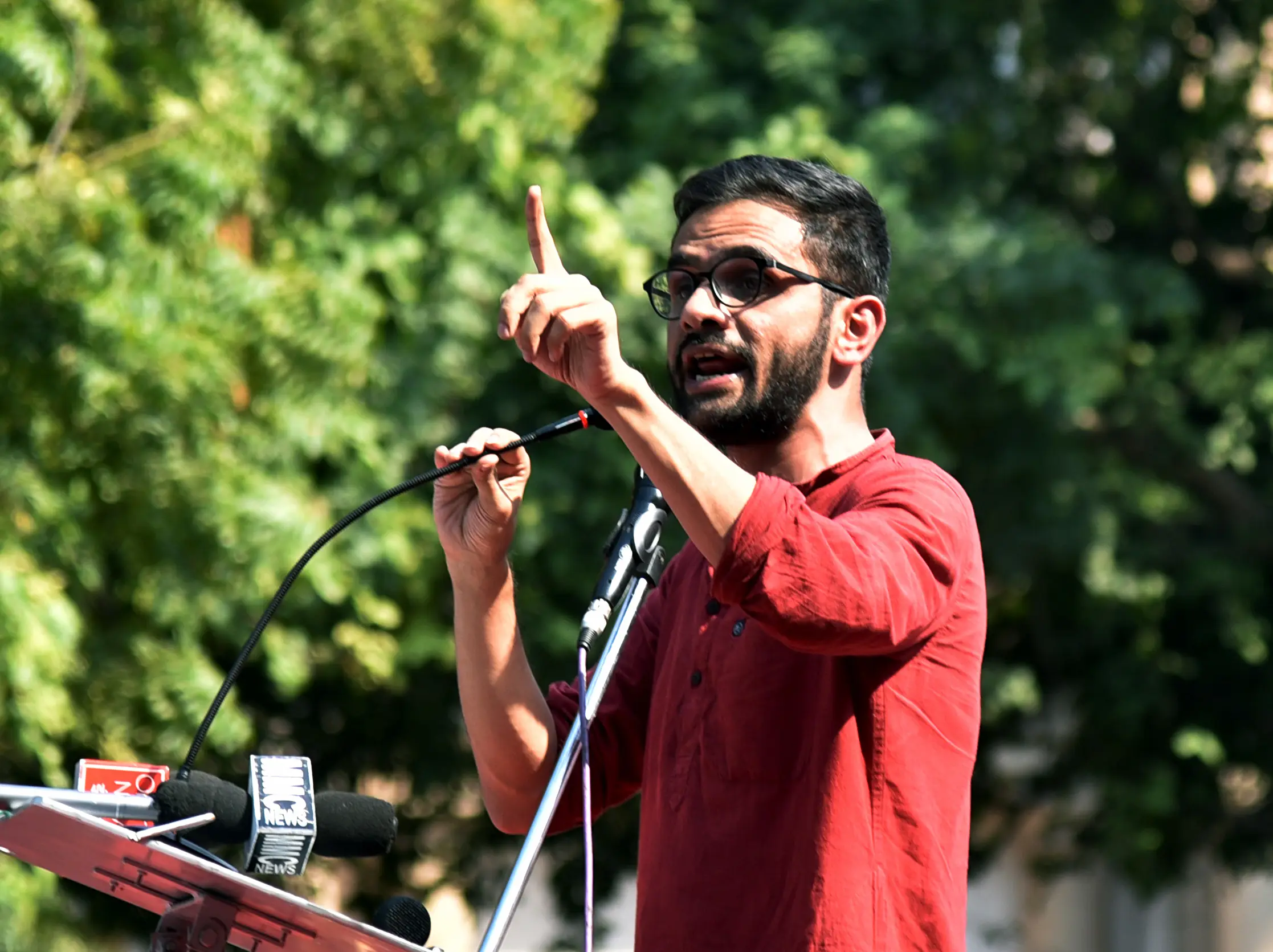
The Delhi Police has asked the Delhi High Court to dismiss fresh bail pleas filed by Umar Khalid and Sharjeel Imam in the 2020 Delhi riots case, arguing that both have returned to court before the stage fixed by the Supreme Court for seeking bail again.
The Delhi government described the present proceedings as "misconceived and illegal" and said the petitions seek to get around directions issued by the Supreme Court in its January 5, 2026 judgment in Gulfisha Fatima v. State (NCT of Delhi).
Police point to Supreme Court's earlier order
The State's main argument is that the Supreme Court had provided a specific stage at which Khalid and Imam could again approach the court for bail.
The Supreme Court had said they could renew their applications after the prosecution finished examining the protected witnesses it relies on, or after one year from January 5, 2026, whichever came first.
Trending Stories
&imwidth=180&imheight=135&format=webp&quality=medium)
Other Mommy leads North American box Office as Verity, Resident Evil round out top four
&im=FitAndFill=(700,400)&imwidth=180&imheight=135&format=webp&quality=medium)
Navratri 2026: 9 days, 9 forms of Goddess Durga and 9 colours- Check the complete list
&im=FitAndFill=(700,400)&imwidth=180&imheight=135&format=webp&quality=medium)
Is sending robots to Mars easier than sending humans?
&imwidth=180&imheight=135&format=webp&quality=medium)
A watchdog rated 'ChatGPT for Teens' an unacceptable risk and says keep under-18s off it
&imwidth=180&imheight=135&format=webp&quality=medium)
1,500 drones illuminate Mumbai sky as Cordelia Cruises unveils second ship, Cordelia Sky
&imwidth=180&imheight=135&format=webp&quality=medium)
'Just coincidence': Police mistakes protester as AISA chief Neha Bora, arrests her from site
&imwidth=180&imheight=135&format=webp&quality=medium)
Anthropic's AI invented a murder witness and sent the fake tip to Philadelphia police
&imwidth=180&imheight=135&format=webp&quality=medium)
Congress demands action against chief election commissioner
&imwidth=180&imheight=135&format=webp&quality=medium)
CJI Surya Kant declines INDIA bloc leaders’ request for meeting ahead of march to SC, asks them to file petition
&imwidth=180&imheight=135&format=webp&quality=medium)
Saif Ali Khan is finally on Instagram! Here's what he shared in his first post
&imwidth=180&imheight=135&format=webp&quality=medium)
'Turn approver, resign, we'll forgive you': Rahul Gandhi claims receiving messages from CEC Gyanesh Kumar
&imwidth=180&imheight=135&format=webp&quality=medium)
One Indian killed in Riyadh airport attack; 11 others injured : MEA
&imwidth=180&imheight=135&format=webp&quality=medium)
Top AI models flunked a test of inventing new AI research, so much for self-improving AI
&imwidth=180&imheight=135&format=webp&quality=medium)
Wasim Jaffer blames Ajit Agarkar-led selection panel for Virat Kohli’s Test retirement
&imwidth=180&imheight=135&format=webp&quality=medium)
'Ouch!!! That must hurt': Kangana Ranaut hails Kamal Haasan's sharp reply to Elon Musk over Starlink row
&imwidth=180&imheight=135&format=webp&quality=medium)
Sidhu Moose Wala’s younger brother wins hearts by recreating late singer’s signature move at Toronto Hologram Show
&imwidth=180&imheight=135&format=webp&quality=medium)
Meta's Muse AI could be a security nightmare for India's billion-plus users
&imwidth=180&imheight=135&format=webp&quality=medium)
UK school ditches technology, shifts from screen to pen and paper for learning
&imwidth=180&imheight=135&format=webp&quality=medium)
Telangana ATM heist: Thieves in nighties arrive in ambulance, break into SBI ATM in Kamareddy - VIDEO
&imwidth=180&imheight=135&format=webp&quality=medium)
Houthis claim Riyadh airport attacks, Aramco strikes; issue fresh warning to airlines, travellers and workers
&imwidth=180&imheight=135&format=webp&quality=medium)
Portugal Federation confirms Cristiano Ronaldo’s return to national team despite suspension
&imwidth=180&imheight=135&format=webp&quality=medium)
Delhi protests: 'Court should not be dragged into political activity', says CJI Surya Kant
&im=FitAndFill=(700,400)&imwidth=180&imheight=135&format=webp&quality=medium)
New OTT releases this week (October 12-18, 2026): Sacrifice, Koffee with Karan S9, Roadies Rebirth- 6 titles coming on Netflix, JioHotstar and more
&imwidth=180&imheight=135&format=webp&quality=medium)
Microsoft's Nadella says treat every AI model as already hacked, and build an 'emergency brake'
&imwidth=180&imheight=135&format=webp&quality=medium)
Delhi protest: CJI Surya Kant declines to meet India Bloc leaders
&imwidth=180&imheight=135&format=webp&quality=medium)
Telangana man allegedly recruited into Russian military dies near Ukraine border
&imwidth=180&imheight=135&format=webp&quality=medium)
China imposes first-ever sanctions on ministers from Taiwan allies: What this means
&imwidth=180&imheight=135&format=webp&quality=medium)
McSweeney reveals how studying Virat Kohli’s YouTube clips helped Australia A conquer India
&imwidth=180&imheight=135&format=webp&quality=medium)
Maharashtra appoints FDA commissioner Tukaram Mundhe as secretary of committee for MPSC overhaul amid stir
&imwidth=180&imheight=135&format=webp&quality=medium)
Iran: US accepted some conditions, Clarity needed on others
&imwidth=180&imheight=135&format=webp&quality=medium)
Nana Patekar's cause of death confirmed; here's what his postmortem report says
&imwidth=180&imheight=135&format=webp&quality=medium)
iPhone Duo price index: Tracking Apple’s latest pricing trends
&imwidth=180&imheight=135&format=webp&quality=medium)
'Say no to Muse': Meta has no control over its own moderation AI while it forces a security nightmare on everyone
&imwidth=180&imheight=135&format=webp&quality=medium)
Delhi wakes up to heavy rain, thunderstorms; yellow alert in place; temperature drops
The police have argued that neither condition had arisen when the latest proceedings were filed. It has therefore asked the High Court to reject the pleas at the threshold.
State cites alleged 'masterminds' role
The police have also relied heavily on the Supreme Court's earlier observations about the alleged roles of the two accused.
According to the State's reply, the material cited against Khalid and Imam includes recoveries, digital communication records and statements that allegedly point to managerial responsibility. The Supreme Court had described the material as prima facie indicating a "central and formative role" involving planning, mobilisation and strategic direction.
The State has also referred to the court's description of them as alleged "masterminds" of the conspiracy.
In Khalid's case, the police separately cited the Supreme Court's observation that the alleged masterminds exercised "command authority" and could mobilise or influence others.
Also read | 9/11 mastermind Khalid Sheikh Mohammed to finally face trial in 2028, nearly 27 years after horrific attacks
State rejects reliance on later judgments
The defence has also relied on later Supreme Court developments, but the State has opposed that argument. It cited the judgment in Syed Iftikhar Andrabi v. NIA, arguing that it arose from a different case and did not concern the Delhi riots or the allegations against Khalid and Imam.
The State further referred to the Supreme Court's May 22, 2026 order in Tasleem Ahmed v. State (NCT of Delhi), where differences between Gulfisha and Syed Iftikhar Andrabi were referred to a larger bench.
According to the police, that reference does not by itself override the earlier judgment in Gulfisha. Until the larger bench rules, the State says the Delhi High Court remains bound by the existing directions.
For this position, it has relied on the Supreme Court's judgment in Union Territory of Ladakh v. Jammu and Kashmir National Conference.
UAPA bail bar remains, police says
The State has also argued that the restrictions under Section 43D(5) of the Unlawful Activities (Prevention) Act continue to apply to Khalid and Imam.
It said the Supreme Court had already upheld the provision while considering their earlier bail proceedings and that the subsequent judgments cited by the accused have not changed that position.
The police have asked the High Court to allow it to rely on the charge sheets and supporting documents during the hearing and submit additional material if required. It has ultimately urged the court to dismiss the fresh appeals, calling the proceedings an abuse of the process of law.

