

&imwidth=800&imheight=600&format=webp&quality=medium "Was Rahul Gandhi's detention during Parliament monsoon session illegal? What the law actually says | WION Decodes")
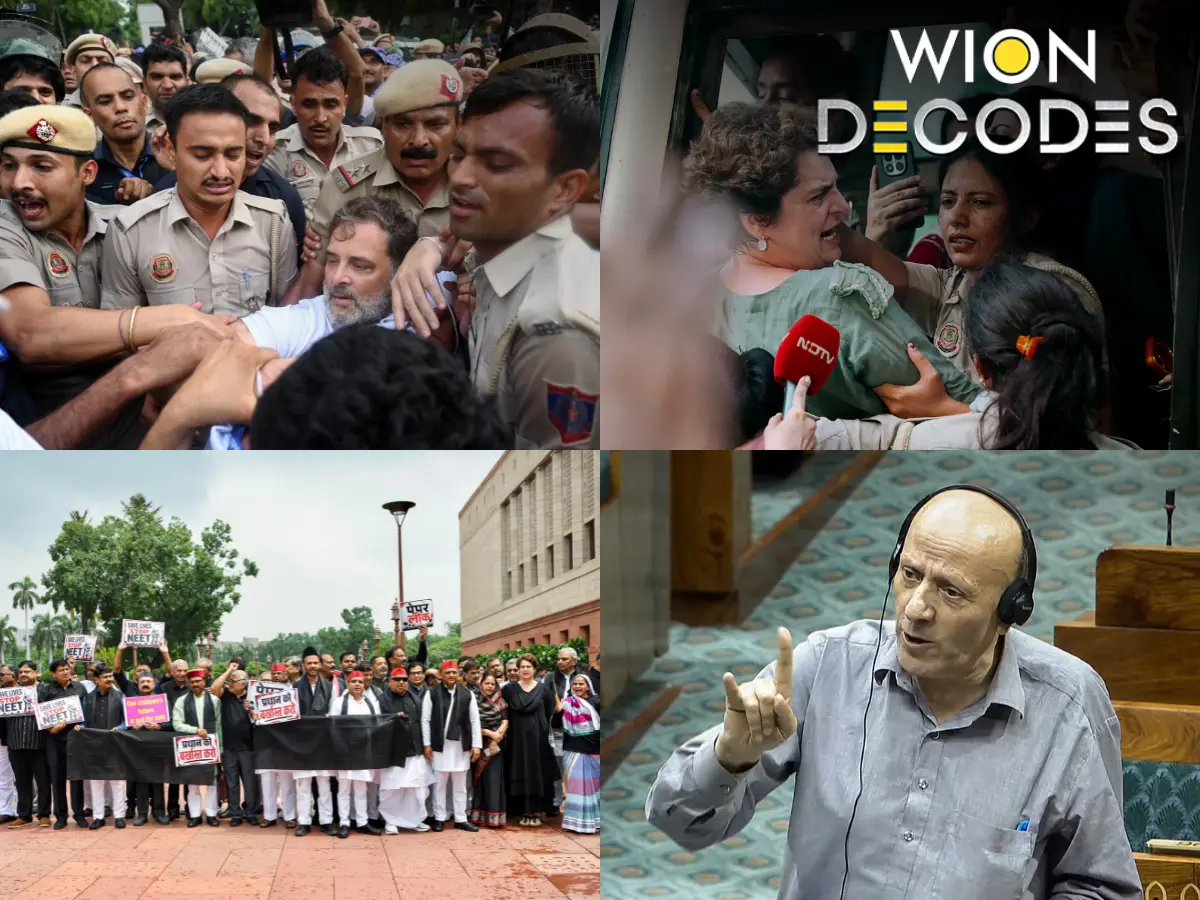
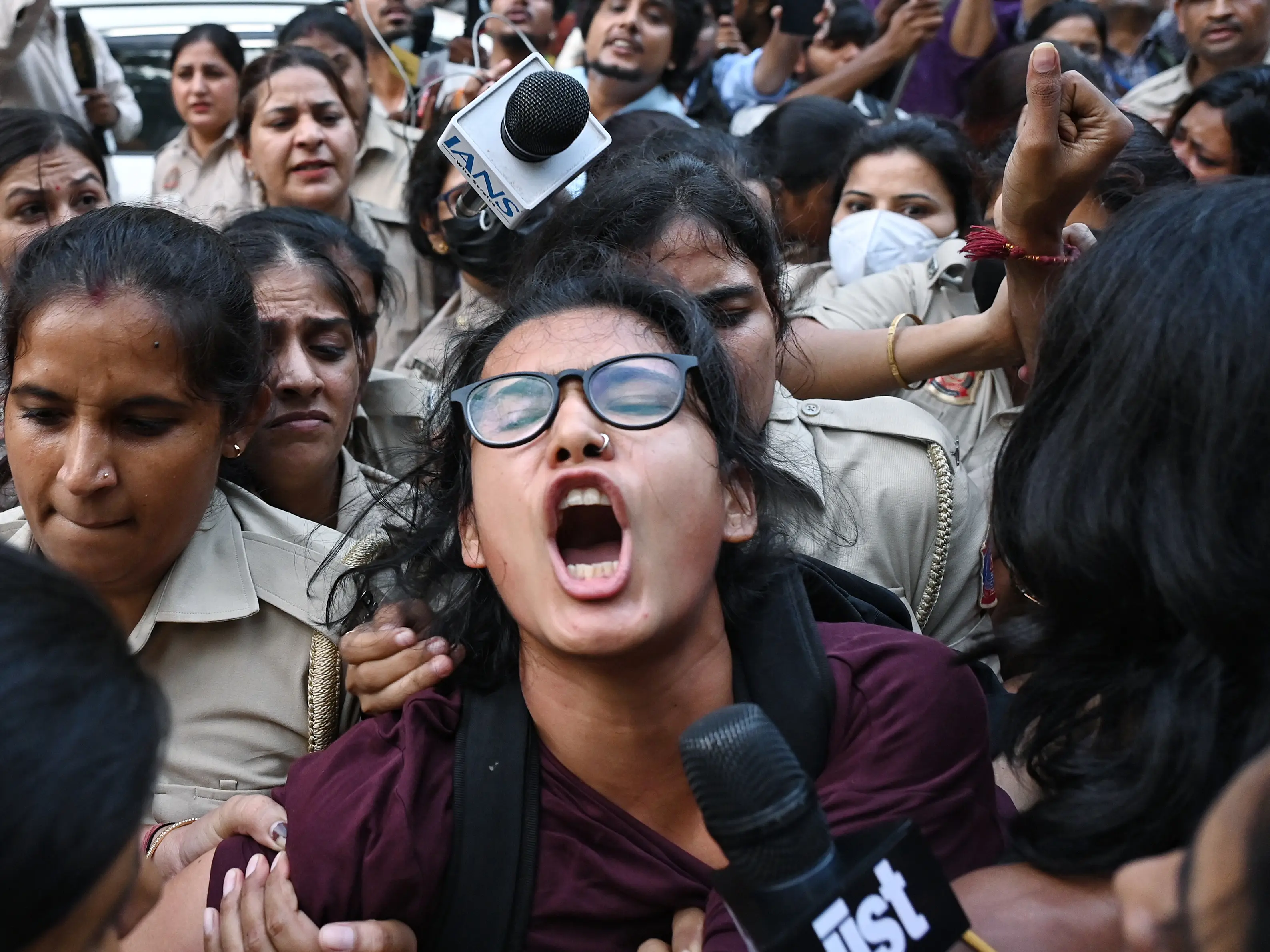
Congress leader Rahul Gandhi, Priyanka Gandhi Vadra and several Opposition MPs were detained by Delhi Police on Tuesday (Jul 21) while marching towards Prime Minister Narendra Modi's residence. Political reactions followed the detention of top Opposition leaders, with the Opposition accusing the government of throttling democracy. The BJP has defended the police action as a law-and-order measure, but beyond the politics, the incident has revived an old constitutional question.
Can the police detain a Member of Parliament while Parliament is in session? Does the Speaker's permission have to be taken first? And what exactly do parliamentary privileges protect?
WION Decodes what the rules actually say.
Can an MP be detained during a Parliament session?
Yes, contrary to a common misconception, an MP can be arrested or detained while Parliament is in session. There is no legal requirement for the police to seek prior permission from the Lok Sabha Speaker or the Rajya Sabha Chairman before detaining an MP outside Parliament premises.
Trending Stories
&imwidth=180&imheight=135&format=webp&quality=medium)
AI deepfakes are spreading online: Why is removing them so difficult?
&imwidth=180&imheight=135&format=webp&quality=medium)
US charges two former FBI officials with lying to Congress about Hunter Biden probes. 'Politically motivated' Trump grievance or something else?
&imwidth=180&imheight=135&format=webp&quality=medium)
China's dancing robot turns violent bodyguard, lifts cars and fights intruders - Watch
&imwidth=180&imheight=135&format=webp&quality=medium)
Scientists make digital nose that can sniff and send scents over the internet
&imwidth=180&imheight=135&format=webp&quality=medium)
Gravitas | US attack could trigger WW III: Russian planes in Tehran, Israeli jets, US warships in action
&imwidth=180&imheight=135&format=webp&quality=medium)
Microsoft AI diagnoses complex medical cases more than twice as accurately as doctors, study finds
&imwidth=180&imheight=135&format=webp&quality=medium)
Pakistan airline PIA unveils new crew uniforms, faces online criticism
&imwidth=180&imheight=135&format=webp&quality=medium)
'My name has always been Ilhan Omar': Congresswoman hits back at Trump, calls him a 'creep'
&imwidth=180&imheight=135&format=webp&quality=medium)
Viral video shows cross falling on Colombia priest, no official confirmation | WATCH
&imwidth=180&imheight=135&format=webp&quality=medium)
Chemical warehouse explosion in Mexico: Several injured in multiple blasts, 1,000 evacuated in León
&im=FitAndFill=(700,400)&imwidth=180&imheight=135&format=webp&quality=medium)
New Friday OTT releases (October 23, 2026): Gajab Raat, Dorothy, Chaar Yaar- Watch these 6 new movies and TV shows on Netflix, Prime Video and more
&imwidth=180&imheight=135&format=webp&quality=medium)
US midterms 2026: Trump revises Canada tariffs as Susan Collins faces tight re-election race in Maine
&imwidth=180&imheight=135&format=webp&quality=medium)
Emmanuel Macron calls Paris suburb shooting a 'racist terrorist attack' after one killed, several injured
&imwidth=180&imheight=135&format=webp&quality=medium)
Jenna Ortega plans TV break after Wednesday: ‘I want to leave time for new things’
&imwidth=180&imheight=135&format=webp&quality=medium)
Massive 7.2 magnitude quake off Vanuatu triggers tsunami warning for coasts within 300 km
&imwidth=180&imheight=135&format=webp&quality=medium)
Anthropic security chief issues grim cyberattack warning: ‘It’s going to get a lot worse’
&imwidth=180&imheight=135&format=webp&quality=medium)
India-China face-off continues near Arunachal’s Taksing, reveals ITBP chief in first official confirmation of tensions
&imwidth=180&imheight=135&format=webp&quality=medium)
IND vs NZ 2nd T20I: Shreyas Iyer on brink of breaking Rohit Sharma’s record
&imwidth=180&imheight=135&format=webp&quality=medium)
'You’re a horrible little reporter, aren’t you?': Trump snaps at NBC reporter questioning his support for Ramaswamy's campaign ad
&imwidth=180&imheight=135&format=webp&quality=medium)
'Black triangle' UFO flying at 1,800mph spotted over sensitive US site: Latest Trump admin UFO file dump
&imwidth=180&imheight=135&format=webp&quality=medium)
US midterms 2026: Viral video claims Lindsey Graham paid underage men for sex; clip released weeks before his sister's Senate race
&imwidth=180&imheight=135&format=webp&quality=medium)
Will the US attack Iran this weekend? Trump's envoy says, 'absolutely'
&imwidth=180&imheight=135&format=webp&quality=medium)
US Navy, Marine Corps boards defy Trump's transgender military ban, vote to retain troops
&imwidth=180&imheight=135&format=webp&quality=medium)
First Lady Melania Trump secures ceasefire between Russia, Ukraine in Oleshky: White House
&imwidth=180&imheight=135&format=webp&quality=medium)
Fauzi teaser out: Prabhas takes on the British Empire in patriotic avatar | Watch
&imwidth=180&imheight=135&format=webp&quality=medium)
IND-W vs ZIM-W, 1st ODI: Rawal, Charani star in India’s nine-wicket win over Zimbabwe
&imwidth=180&imheight=135&format=webp&quality=medium)
Nairobi building collapse: Several feared trapped after 16-storey structure crumbles; rescue operation underway
&imwidth=180&imheight=135&format=webp&quality=medium)
Global cybersecurity alert: PHP flaws trigger website shutdowns as hack attempts surge into millions
&imwidth=180&imheight=135&format=webp&quality=medium)
'Already tired of his 9-to-5': Baby born with a moustache becomes internet sensation, video goes viral | Watch
&imwidth=180&imheight=135&format=webp&quality=medium)
Horrific video shows the moment 18-year-old fell to her death from Mexico amusement park ride
&imwidth=180&imheight=135&format=webp&quality=medium)
Tu Hai Meri Kiran film review: Sonakshi Sinha and Zaheer Iqbal's thriller gets tangled in its own twists
&imwidth=180&imheight=135&format=webp&quality=medium)
Google Fitbit Air’s new health guardian feature tracks trends: How it works
&imwidth=180&imheight=135&format=webp&quality=medium)
Did Neha Bora call for Bangladesh-like GenZ protest, 'anarchy' in India? WION Fact-checks viral claim
However, that is only half the rule. Once an MP is arrested or detained, the concerned authority must immediately inform the Speaker or Chairman, giving details of the detention, the reasons and the place where the MP is being held.
The presiding officer then communicates the information to the House, usually through a parliamentary bulletin.
When is the Speaker's permission required?
This is where many people get confused. Permission from the Speaker is required only if an arrest or detention takes place within the Parliament precincts. Outside Parliament, police do not need prior approval to act if they are exercising powers available under law.
That distinction is central to the current debate because Rahul Gandhi and other Opposition leaders were detained during a protest near Lok Kalyan Marg, not inside Parliament.
What are parliamentary privileges?
Parliamentary privileges are often misunderstood as legal immunity. However, they are not. The privileges granted to MPs by the Indian Constitution are intended to ensure that MPs can perform their legislative functions independently without outside interference.
They primarily protect the freedom of speech inside Parliament, voting in the House, participation in parliamentary proceedings and committee work. Notably, they do not provide blanket immunity from criminal law or police action outside Parliament.
Does parliamentary privilege extend to protests?
Generally, no. Political rallies, marches and demonstrations outside Parliament are not covered by parliamentary privilege.
Like any other citizen, MPs participating in public protests may be detained if police believe they are acting under powers available in law. The constitutional protection is linked to parliamentary functions, not political activity outside the House.
So was LoP Rahul Gandhi's detention legal?
That depends on how the detention was carried out. The parliamentary rules make two things clear: Police can detain an MP outside Parliament without obtaining prior permission from the Speaker; They must inform the Speaker or Chairman immediately after the detention.
Whether Delhi Police complied with those procedural requirements, and whether the detention itself was justified on law-and-order grounds, are separate questions that could become matters for parliamentary scrutiny or judicial review.
The rules themselves do not automatically make the detention either legal or illegal.
The Engineer Rashid case: Can an MP serve while in custody?
The debate over Rahul Gandhi's detention is not the first time questions have been raised about an MP's legal status while Parliament is in session. One of the most prominent examples is Sheikh Abdul Rashid, popularly known as Engineer Rashid, the Lok Sabha MP from Jammu and Kashmir's Baramulla constituency.
Rashid has been lodged in Delhi's Tihar Jail since 2019 after being arrested by the National Investigation Agency (NIA) under the Unlawful Activities (Prevention) Act (UAPA) in connection with a 2017 terror-funding case. Notably, despite being in judicial custody, he contested and won the 2024 Lok Sabha election from Baramulla, becoming one of the few sitting MPs to serve while incarcerated.
Earlier this week, a Delhi court granted him custody parole to attend the Monsoon Session of Parliament under police escort. During the ongoing session (on 21 July 2026), Rashid staged a symbolic barefoot protest and observed a one-day hunger strike inside the Lok Sabha, demanding a time-bound dialogue on Jammu and Kashmir, restoration of statehood, restoration of Article 370 and the release of political prisoners.
Why does this matter?
The RaGa and Engineer Rashid episodes highlight the balance that India's constitutional framework tries to maintain. On one hand, Members of Parliament are elected representatives who enjoy certain privileges to ensure Parliament functions independently. On the other, those privileges are not meant to place MPs above ordinary law enforcement when they are outside Parliament.

