

&imwidth=800&imheight=600&format=webp&quality=medium "Bar Council has no power to discipline law students before enrollment: Supreme Court")
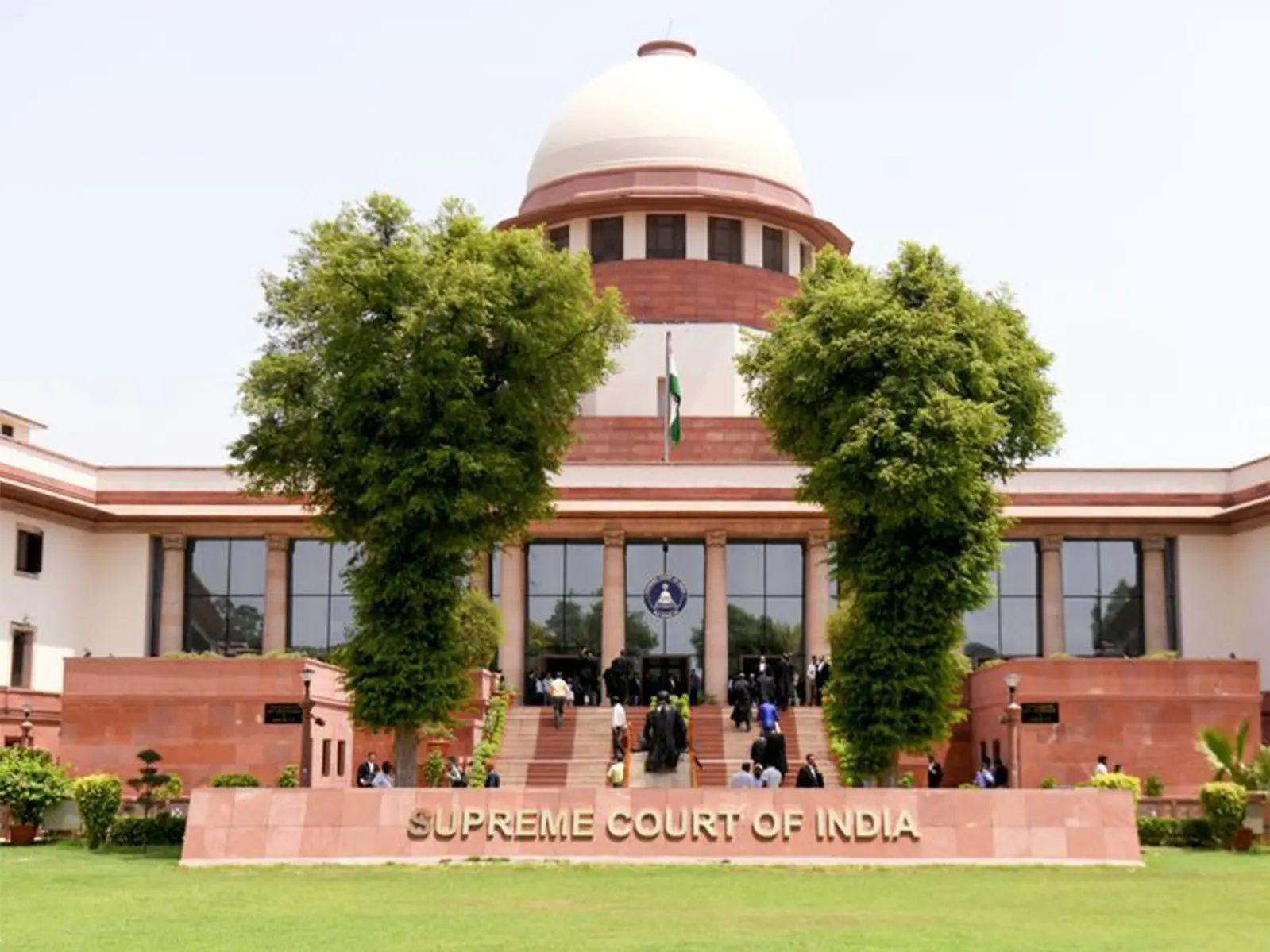
The Supreme Court on Thursday rapped the Bar Council of India (BCI), saying that the lawyers’ regulatory body has no statutory power or business to discipline law students, nor can it dictate law universities on how they should deal with the conduct of students. The ruling came on a petition filed by Mihira Sood challenging the BCI’s intervention following protests by NALSAR students over the invite to the CJI as chief guest at their convocation.
The Supreme Court held that the Bar Council of India (BCI) and State Bar Councils have no power to take disciplinary action against law students before they are enrolled as lawyers and stated that such matters fall exclusively within the domain of their educational institutions.
“We are of the opinion that the Advocates Act, 1961, where under BCI has been statutorily created, does not confer any express or implied power upon the BCI or any State Bar Council to take any disciplinary action against the students of law; such a power is preceded by registration of a law graduate as an advocate under the said Act,” said a three-judge bench presided by Chief Justice of India Surya Kant.
“So far as students are concerned, it is their parent institution or the authority prescribed under the regulations/bye laws of such institution who alone are competent to take disciplinary action,” said the bench, also comprising Justices Joymalya Bagchi and V Mohana.
The bench made the observation while declaring that all communications issued by the BCI on August 13 after some NALSAR University of Law students opposed the invitation of Chief Justice of India Surya Kant to the university’s annual convocation, stating they were “without any authority of law”.
Trending Stories
&imwidth=180&imheight=135&format=webp&quality=medium)
US midterms 2026: Trump’s 33% approval rating spells trouble for Republicans as Democrats pull ahead
&imwidth=180&imheight=135&format=webp&quality=medium)
'We are not sitting in ivory towers, we are aware': SC issues notice to Rahul Gandhi, Akhilesh Yadav
&imwidth=180&imheight=135&format=webp&quality=medium)
Lawrence Bishnoi gang claims responsibility for firing at Tiger Shroff over ties to Salman Khan
&imwidth=180&imheight=135&format=webp&quality=medium)
Elon Musk features on Lucknow's 'anti-India' Ravan poster alongside Rahul Gandhi, Akhilesh
&imwidth=180&imheight=135&format=webp&quality=medium)
Lizard people? Ex-US Army sniper claims soldier killed by 'reptilian beings' in battle near Area 51
&imwidth=180&imheight=135&format=webp&quality=medium)
Anthropic’s public benefit plan: What its 5% share commitment means for AI’s future
&imwidth=180&imheight=135&format=webp&quality=medium)
US to review Russia sanctions waiver within 60 days as Rubio cites India’s ‘substantial’ Russian energy imports
&imwidth=180&imheight=135&format=webp&quality=medium)
After Kennedy Center and reflecting pool disputes, Trump turns to Washington golf course plan amid legal battle
&imwidth=180&imheight=135&format=webp&quality=medium)
No Kings' Instagram suspended during early-voting campaign
&imwidth=180&imheight=135&format=webp&quality=medium)
Why France looks the most fragile in the G7 amid protests and budget deadlock
&imwidth=180&imheight=135&format=webp&quality=medium)
Tiger Shroff shows injuries after Juhu firing incident; Eknath Shinde says Mumbai won’t tolerate gang wars
&imwidth=180&imheight=135&format=webp&quality=medium)
UAE agrees with Saudi Arabia to rejoin Yemen fight as Houthi strikes rattle Riyadh
&imwidth=180&imheight=135&format=webp&quality=medium)
'It's a joy to see the makers bring it on such a grand scale': SS Rajamouli on Ramayana
&imwidth=180&imheight=135&format=webp&quality=medium)
Anirudh Ravichander-Kavya Maran wedding: Telangana CM reveals Chennai reception date
&imwidth=180&imheight=135&format=webp&quality=medium)
Nobel laureate Machado, who dedicated prize to Trump, confirmed as Venezuela opposition leader
&imwidth=180&imheight=135&format=webp&quality=medium)
'Those who have destroyed must pay': Macron says France feels 'anger and shame' over protest violence
&imwidth=180&imheight=135&format=webp&quality=medium)
JD Vance admits H-1B rhetoric was ‘imperfect’ after immigrant challenges him
&imwidth=180&imheight=135&format=webp&quality=medium)
China responds to Trump's Press Secretary Katie Zacharia after toilet remark: 'Visit China more often'
&imwidth=180&imheight=135&format=webp&quality=medium)
WATCH | iPhones, luxury perfumes floating in Hormuz? Iranian fishermen make bizarre discovery
&im=FitAndFill=(700,400)&imwidth=180&imheight=135&format=webp&quality=medium)
5 technologies that could make the Tesla Roadster one of the most unusual cars ever built
&imwidth=180&imheight=135&format=webp&quality=medium)
Bessent accuses Europe of refusing secondary tariffs on India, China
&imwidth=180&imheight=135&format=webp&quality=medium)
WATCH | Flames engulf St Petersburg oil sites as Ukraine launches 1,000 drones at Russia
&imwidth=180&imheight=135&format=webp&quality=medium)
'We feel like Mr India': Gujarat’s undercover SHE team guard garba nights at Navratri
&imwidth=180&imheight=135&format=webp&quality=medium)
Tiger Shroff attacked by three gunmen in Mumbai, actor safe, two injured
&imwidth=180&imheight=135&format=webp&quality=medium)
Iran says Hormuz reopening plan remains on table as Trump predicts quick war end
&imwidth=180&imheight=135&format=webp&quality=medium)
Brendan Taylor overtakes Andy Flower to become Zimbabwe’s leading ODI run-scorer
&imwidth=180&imheight=135&format=webp&quality=medium)
Cattle-feed bran in biscuits, detergent in milk: FSSAI acts against 3 companies
&im=FitAndFill=(700,400)&imwidth=180&imheight=135&format=webp&quality=medium)
Tesla Roadster engineering: The hidden hardware behind its flying demonstration
&im=FitAndFill=(700,400)&imwidth=180&imheight=135&format=webp&quality=medium)
5 reasons why the Tesla Roadster’s rocket thrusters are so difficult to engineer
&imwidth=180&imheight=135&format=webp&quality=medium)
Flying car race: Alef Aeronautics welcomes Tesla Roadster '11 years' later, but are the two models the same?
&imwidth=180&imheight=135&format=webp&quality=medium)
‘My president, I mean my husband’: Trump's new press secretary Katie Zacharia's first briefing goes off the rails in 14 minutes
&imwidth=180&imheight=135&format=webp&quality=medium)
Tel Aviv-Vienna flight makes emergency landing after bomb threat; Bulgarian Air Force scrambles MiG-29 fighter jet
&imwidth=180&imheight=135&format=webp&quality=medium)
Putin seeks Trump-Xi summit on Ukraine war, proposes talks alongside APEC: Report
&imwidth=180&imheight=135&format=webp&quality=medium)
India moves to buy 10,000 more AI chips for a national compute pool open to startups
&imwidth=180&imheight=135&format=webp&quality=medium)
MI5 is opening an AI threat centre, and OpenAI just told MPs the worst isn't over
NALSAR students had cited remarks made by the CJI during proceedings on a plea concerning alleged police excesses during Cockroach Janta Party-led student protests in Delhi.
BCI chairman Manan Kumar Mishra had issued the directive on August 13, asking state Bar councils not to enroll students of NALSAR’s 2026 batch who took the stand against the CJI attending the event. The directive was withdrawn within hours, with the BCI stating that it had closed the proceedings after concluding that the students had “no role in any disturbance or movement”.
Senior Advocate K Parameshwar, who appeared for the former NALSAR students on Thursday, said the matter involved a question of freedom of speech and expression in a university. “It is not about just one student. It is about banning freedom of speech and expression across an entire university,” he said.
“We want to know under what circumstances those orders were passed and whether meetings were held. After all, it’s a statutory authority responsible for legal education and for regulating the legal profession,” Parameshwar said.
“We would like to know under what provision of law this was done. After all, they must be held accountable in some fashion,” the senior counsel said.
One cannot expect everyone to act responsibly: CJI Surya Kant
CJI Kant said one cannot expect everyone to act responsibly. “We have no doubt about it that the very fact that it was withdrawn means that there must be some realisation that a mistake, if not a blunder, was committed that has been rectified.”
“As far as the conduct of the law students is concerned, BCI has no jurisdiction. That’s an exclusive domain of the educational institution. There cannot be any dispute on that,” the CJI said.
‘Matter should be given a quietus,’ says Mishra
BCI’s Mishra said, “everything has been closed," and asked, “should everything…be adjudicated?” He submitted that the “matter should be given a quietus.”
Justice Bagchi then said that the legal position needs to be clarified lest a similar situation arise in the future.
“Let us say a student indulges in an act of moral turpitude and is disqualified as per the Advocates Act, 1961, to enrol. But the university permits him to pursue his education. You can definitely, at the time of enrolment, examine the conditions precedent for enrolment, but to put an injunction that I will not enrol you…it is getting beyond.”
“That is why it was never implemented and was withdrawn the same night,” Mishra said.
Justice Bagchi said the question is “whether BCI can exercise control over student behaviour before the student actually attains the qualification to become an advocate”.
“You can always stop him when he makes an application. That’s a different thing,” Justice Bagchi said.

