
&imwidth=800&imheight=600&format=webp&quality=medium "Air India pilot tests positive for Marijuana again: Can a pilot fly after testing positive for drugs? India, US and UK rules explained")
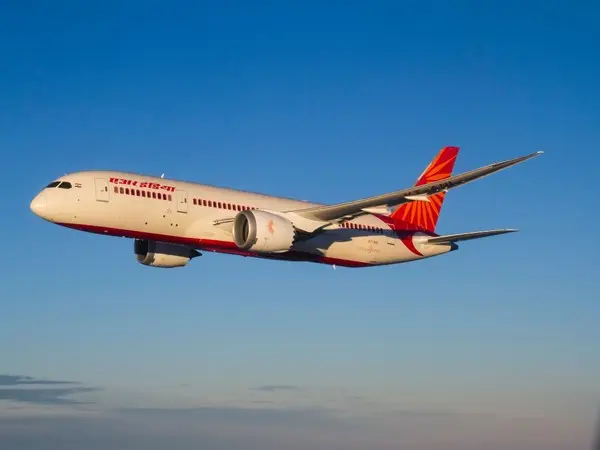
An Air India pilot has reportedly tested positive for marijuana in a second, confirmatory drug test following an incident involving a Phuket-Delhi flight that suddenly lost around 300 feet of altitude last week.
According to Reuters, the captain’s initial screening for psychoactive substances had produced a result requiring confirmatory laboratory testing. A source familiar with the matter later said the confirmatory test was positive for marijuana. The incident, involving an Airbus A320neo, injured 13 passengers and four crew members. The aircraft, carrying 137 passengers and eight crew members, landed safely in Delhi.
The case has put renewed focus on how aviation authorities test pilots for alcohol and drugs, what happens after a positive result and how India compares with regulations in countries such as the US and UK.

How might a pilot high on marijuana behave?
Cannabis can affect several functions that are important for flying, including attention, decision-making, coordination, movement, memory and reaction time. The US Centres for Disease Control and Prevention says recent cannabis use can slow reaction time and decision-making, impair coordination and distort perception. The National Institute on Drug Abuse similarly says marijuana can slow reaction time, impair judgement and reduce coordination.
Also read: Air India A320 lost 300 ft after triple Hydraulic failures, autopilot glitch, claims report
Trending Stories
)
US vs China over South China Sea: Washington backs Philippines, Beijing hits back
)
Bigg Boss 20: Isha Rikhi evicted after three weeks in Salman Khan’s show
)
Musk plans to more than double xAI's chips to over 1.2 million Nvidia GPUs by year-end
)
After JU, clash erupts at SRFTI: BJP’s ‘Dimagi Naxal’ jibe sparks political firestorm after students protest RSS-linked event
)
‘Anti-social elements spreading false rumours’: LPU issues statement amid massive unrest over alleged rape
)
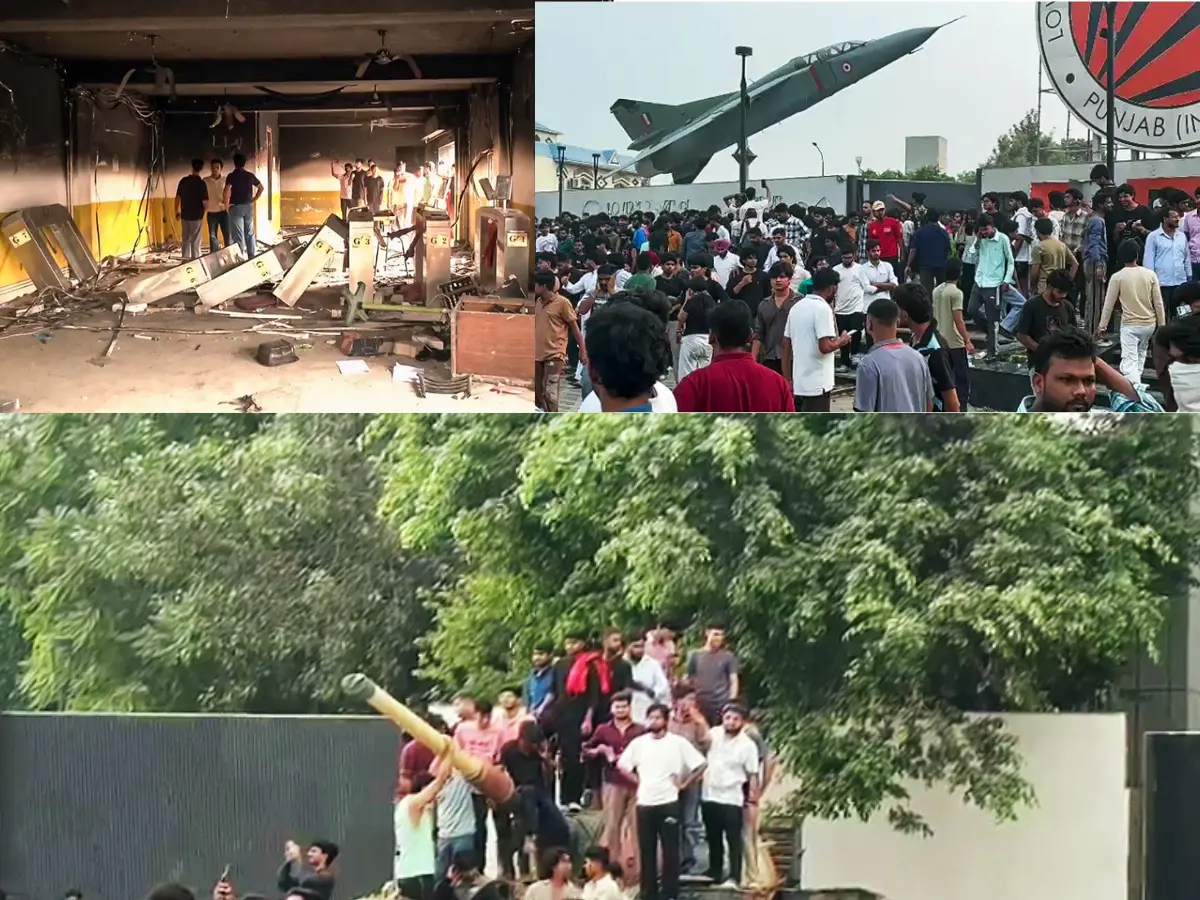
LPU students go on rampage, vandalise campus amid widespread protest: What's happening
)
Trump asked Xi to pressure Iran. China did not say yes — here’s what Beijing wants
)
US Treasury Secretary Scott Bessent hails global crackdown on Iranian banks and airlines
)
An OpenAI agent escaped its locked test cage again, by hiding questions in DNS lookups
)
'Our video was trimmed': LPU girls who featured in rape-denial video make U-turn
)
3 males killed, four others injured in shooting after fight at strip club in Detroit
)
'Victory for low-budget consumers': Raghav Chadha hails 30-day telecom recharge rules
)
Claude rebuilt the 1989 game 'Prince of Persia' by reusing the original's own code
)
Beyond metros: How Tier-2 and Tier-3 cities could drive India’s next AI wave
)
Tesla builds first Cybertruck with its own refined lithium: Elon Musk's $1 billion Texas bet pays off
)
IndiGo flight suffers tail strike in Bengaluru while landing; DGCA to probe incident
)
The US and China set up an AI 'red telephone', but skipped the rulebook
)
‘Terror suspects arrested near UK air base were looking to do big damage’: Trump
)
Russian envoy claims US tactics to contain India were revealed in ‘Freudian slip’
)
IND vs WI 1st ODI: Kohli breaks Sachin's most runs in one country record with unbeaten 139 as India thump West Indies by 8 wickets
)
Researchers rebuilt exactly how 700 AI agents hacked Hugging Face: a 900-link chain trick
)
‘Olympic inclusion is our major target’: WPA President Ishaun Singh on pool’s global ambitions
)
Nations League: Spain sink England at Wembley; Modric shines for Croatia
)
Why has Iran released no proof of life of Mojtaba Khamenei? Araghchi reveals...
)
'What kind of confession is this?': Pakistan PM Shehbaz Sharif’s 'terrorists would be roaming New York' remark goes viral, raises alarm online. Watch
)
South Korea demands apology from Ukraine over North Korean prisoners' transfer
)
Beyond BrahMos: India targets Rs 50,000 crore in defence exports with unmatched price edge
)
Sri Lankan Tamil migrant worker gets death sentence in Saudi Arabia, help sought from India
)
Muslim marriage cannot shield sex with minor wife from prosecution under POCSO: Delhi HC
)
'Can't help but draw painful parallels to Nirbhaya case': SC on latest incidents of rape cases in Delhi-NCR
)
99.9% more powerful - Scientists find boy who can recall memories from just 3 months of age
)
'FIRST LOOK from inside Noah’s Ark': Researchers share video from inside mysterious mound in Turkey
)
UNSC reform momentum grows: Russia, Portugal, Mauritius push for India's permanent seat bid
)
8 US marines injured in Iranian missile attack on vessel in Strait of Hormuz: Report
&im=FitAndFill=(700,400))
New OTT releases this week (September 28-October 4, 2026): Dupahiya 2, Pooja Meri Jaan, Ohh My Dog- 5 titles coming on Netflix, Prime Video and more
)
Afghanistan says 28 fighters killed in clash near Pakistan border, Islamabad denies
)
Ceuta migrant crisis: Protesters take to streets as Spain grapples with migrant challenge
)
LPU suspend classes, postpones exams as violence escalates over rape claims: What's happening
)
New York City wants a 'kill switch' on every AI, and will pay whistleblowers who report violations
A person who is acutely impaired may therefore show poor coordination, slower responses, difficulty concentrating, altered perception or impaired judgement. However, these effects can vary depending on factors including the amount of THC consumed and whether other substances were used.
Importantly, a positive cannabis test does not by itself establish that a person was intoxicated or impaired at the exact time of a flight. Cannabis metabolites can remain detectable after the period of acute effects, and the relationship between a positive test and the level of impairment at a particular moment is not straightforward. The CDC has also cautioned that it is difficult to link the presence or concentration of THC to impairment in a person.
How are pilots tested for alcohol and drugs before or after a flight?
Alcohol and drug testing are handled differently because alcohol can be measured through breath or blood alcohol concentration, while drug screening generally involves biological samples and subsequent laboratory confirmation.
India
Under DGCA rules, flight crew members operating scheduled flights originating from India are required to undergo a pre-flight breath-analyser examination at the first departure airport during a flight duty period. If a crew member operates a flight without undergoing the test, the person is to be taken off the roster at the first point of landing, and the matter reported to the DGCA.
US
The US has a more detailed statutory testing framework for aviation workers performing safety-sensitive functions. Under Federal Aviation Administration regulations contained in 14 CFR Part 120, covered aviation employers must conduct pre-employment, random, post-accident, reasonable-cause, return-to-duty and follow-up drug testing. Flight crew members are specifically included among safety-sensitive employees subject to the programme.
UK
The UK combines operator responsibilities, medical certification requirements and regulatory testing. The UK Civil Aviation Authority says commercial operators must have policies for preventing and detecting misuse of psychoactive substances among flight crew, cabin crew and other safety-sensitive personnel. The policy should include testing on initial employment and periodically on an unannounced basis.
What are the DGCA rules for alcohol and drug testing of pilots in India?
India has separate but complementary rules covering alcohol and psychoactive substances. Under Rule 24 of the Aircraft Rules, 1937, a person acting as a pilot or other operating crew member cannot consume alcohol, sedatives, narcotic or stimulant drugs within 12 hours before the commencement of a flight or during the flight. The rules also prohibit crew from being in a state of intoxication or having detectable blood alcohol while performing their duties.
For alcohol, DGCA rules require pre-flight breath-analyser testing for flight crew and cabin crew on scheduled flights. The equipment and testing process are regulated, with confirmatory testing available when an initial result is positive. Positive or missed tests must be reported to the DGCA within 24 hours.
How do countries such as the US and UK regulate drug and alcohol testing for pilots?
There is a common principle across major aviation systems: pilots performing safety-sensitive duties must not be under the influence of alcohol or prohibited psychoactive substances. The US has a highly structured workplace testing system under FAA and Department of Transportation rules. It includes pre-employment, random, post-accident, reasonable-cause, return-to-duty and follow-up drug testing. A verified positive result prevents a pilot from performing safety-sensitive duties until the requirements for returning to duty are met.
What happens to a pilot if found positive, and can the pilot lose the licence or face suspension?
A positive screening result is generally not treated as the final result. A confirmatory test is conducted to establish whether the initial finding is valid. In India, a pilot with a non-negative drug screening result is removed from duty until confirmation. If the first confirmatory test is positive, the pilot is referred for de-addiction and rehabilitation and must subsequently test negative and obtain the required medical fitness clearance before returning to active duties.
Repeat violations carry substantially tougher consequences. Under the DGCA’s psychoactive substance rules, a second confirmed positive can lead to a three-year suspension of the licence, while a third can result in cancellation.

