

&imwidth=800&imheight=600&format=webp&quality=medium "After NEET victory, what next for Cockroach Janta Party? Major questions ahead of key August 5 strategy meeting")
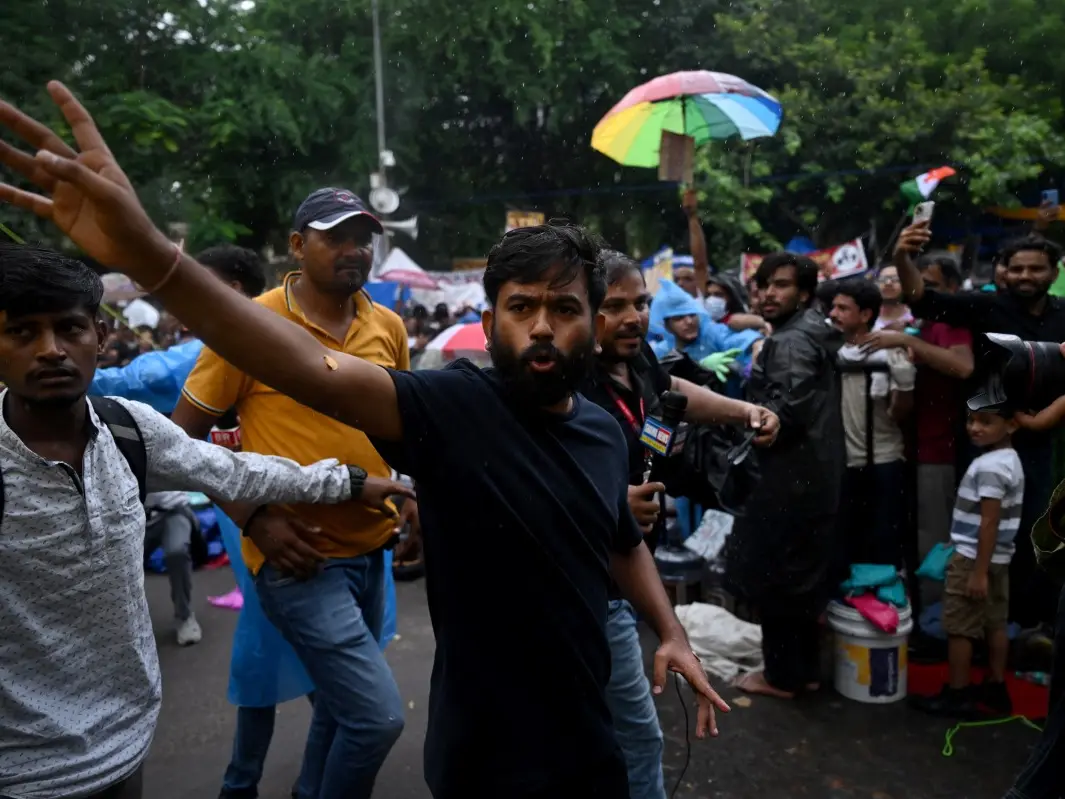
The Cockroach Janta Party (CJP), the student-led group that spearheaded nationwide protests over the alleged NEET paper leak, is preparing for its next phase after forcing one of the biggest policy responses to an education crisis in recent years. Following a month-long sit-in at Delhi’s Jantar Mantar, the group’s core members will meet in Maharashtra’s Chhatrapati Sambhajinagar on August 5 to decide their future campaign, strategy and organisational roadmap.
The meeting comes after the Centre announced sweeping examination reforms in response to the protests, while the education minister resigned amid mounting pressure. According to Reuters, the group has collected suggestions from students and supporters across India and is expected to decide whether it should remain focused on NEET or broaden its campaign to wider youth and education issues.
What issues could CJP take up next?
Having secured its first major demand of triggering examination reforms, CJP is widely expected to expand its agenda beyond NEET. Among the issues likely to feature prominently are reforms in recruitment examinations, including alleged paper leaks and delays in SSC, PSC, railway and other government recruitment tests. The group may also seek to monitor whether the Centre implements the reforms announced following the protests.
Student rights are also expected to remain central to its campaign, with demands likely to include age relaxation for affected candidates, additional examination attempts, fee refunds and faster grievance redressal.
Trending Stories
&imwidth=180&imheight=135&format=webp&quality=medium)
'I am not going to be watching it': JD Vance on livestream of Nidal Hasan's firing squad execution
&imwidth=180&imheight=135&format=webp&quality=medium)
UK navy hit by espionage scandal: Sailor accused of spying for Russia | Gravitas
&imwidth=180&imheight=135&format=webp&quality=medium)
Katie Zacharia likely to succeed Karoline Leavitt as Trump's White House press secretary
&imwidth=180&imheight=135&format=webp&quality=medium)
Delhi on high alert for CJP protest: Delhi police to use body cams to 'prove whether we did anything’; Pink Force, RAF, 35,000 personnel deployed
&imwidth=180&imheight=135&format=webp&quality=medium)
‘Never-ending flow of cheap labour’: JD Vance hits back at Indian-origin Congresswoman over US green card curbs for major tech companies
&imwidth=180&imheight=135&format=webp&quality=medium)
Trump's naked 23-karat gold statue unveiled near European Parliament
&imwidth=180&imheight=135&format=webp&quality=medium)
‘Ruh Roh’: Top US official mocks ‘Indian market collapse’ claim after Trump’s IT curbs. But did it? | FACT CHECK
&imwidth=180&imheight=135&format=webp&quality=medium)
Can you be mean to AI? Anthropic’s new rules explicitly ban cruelty to Claude
&im=FitAndFill=(700,400)&imwidth=180&imheight=135&format=webp&quality=medium)
Fastest-growing Asian economies in 2026: Who tops the chart? Where does India rank?
&imwidth=180&imheight=135&format=webp&quality=medium)
'I ended 8 wars': Trump slams Nobel Peace prize decision, claims award was his due
&imwidth=180&imheight=135&format=webp&quality=medium)
Houthis continue direct hits on Saudi targets, Türkiye and Pakistan missing in action | Gravitas
&imwidth=180&imheight=135&format=webp&quality=medium)
New York protests erupt as Trump administration defends ICE shooting
&imwidth=180&imheight=135&format=webp&quality=medium)
Delhi protest: Metro curbs, train cancellations, traffic diversions as protesters seek CEC Gyanesh Kumar’s resignation
&imwidth=180&imheight=135&format=webp&quality=medium)
Russia president Putin promises to 'do everything' to help settle Middle East conflict as US-Iran negotiations stall
&imwidth=180&imheight=135&format=webp&quality=medium)
Powerful 7.7 magnitude earthquake strikes Panama, tsunami warning issued
&imwidth=180&imheight=135&format=webp&quality=medium)
BTS agency HYBE announces first-ever Weverse Con Festival in India
&imwidth=180&imheight=135&format=webp&quality=medium)
Hurricane Isaias makes landfall in Florida as Category 2 storm with winds of 105mph, threatens Gulf Coast with life-threatening surge
&imwidth=180&imheight=135&format=webp&quality=medium)
Trump has a new 'enemy': Anyone who calls it 'artificial intelligence'. Here's what we wants instead
&im=FitAndFill=(700,400)&imwidth=180&imheight=135&format=webp&quality=medium)
New Friday OTT releases (October 9, 2026): Reporting Live, Animals, Take Charge of My Heart- 6 new titles coming on Netflix, JioHotstar and more
&imwidth=180&imheight=135&format=webp&quality=medium)
BTS' RM urges Peru fans not to gather outside hotel: 'We can't sleep', It's becoming a nuisance'
&imwidth=180&imheight=135&format=webp&quality=medium)
Trump announces Russian diesel deal as Zelensky criticises move
&imwidth=180&imheight=135&format=webp&quality=medium)
‘Right to protest must be protected, but...’: Delhi Police reveals why it denied CJP permission for October 10 Jantar Mantar protest
&imwidth=180&imheight=135&format=webp&quality=medium)
Pakistan denies reports of PAF jets being used in attacks against Iran-backed Houthis in Yemen
&imwidth=180&imheight=135&format=webp&quality=medium)
New York ICE shooting sparks protests as Mamdani to call on Trump to halt ICE operations
&imwidth=180&imheight=135&format=webp&quality=medium)
IND vs WI: West Indies set record for highest successful run chase in T20Is against India
&imwidth=180&imheight=135&format=webp&quality=medium)
Ryan Reynolds’ private messages reveal his blunt views on Justin Baldoni from Blake Lively’s legal case
&im=FitAndFill=(700,400)&imwidth=180&imheight=135&format=webp&quality=medium)
Rakul Preet Singh birthday special: 7 times the Ramayana actress served glamorous looks
&im=FitAndFill=(700,400)&imwidth=180&imheight=135&format=webp&quality=medium)
Food shortages, suicide attempts and more: USS Abraham Lincoln returns to US after 321 day deployment — What happened aboard the US carrier?
&imwidth=180&imheight=135&format=webp&quality=medium)
OpenAI shuts down Russian, Iranian influence operations using ChatGPT to spread propaganda
&imwidth=180&imheight=135&format=webp&quality=medium)
SC questions closure of 57 Delhi Metro stations, asks Centre to resume services in regulated manner
&imwidth=180&imheight=135&format=webp&quality=medium)
‘We will end ICC’: US sanctions International court, threatens to cripple hours after Navi Pillay wins Nobel Peace Prize
&imwidth=180&imheight=135&format=webp&quality=medium)
US midterm elections 2026: What a blue wave or blue tsunami could mean for Trump
&imwidth=180&imheight=135&format=webp&quality=medium)
Trump honours Microsoft CEO Satya Nadella with top technology honour amid immigration scrutiny
&imwidth=180&imheight=135&format=webp&quality=medium)
Sri Lankan Tamil worker gets death sentence in Saudi Arabia over blasphemy, calls for pardon intensify
&imwidth=180&imheight=135&format=webp&quality=medium)
‘Real boss of India’: Elon Musk escalates attack over Starlink’s India entry
Beyond examinations, unemployment and delayed government recruitment could become key campaign issues, alongside calls for greater transparency in examinations, secure testing systems and fair evaluation processes. Reuters reported that the organisation has sought suggestions from students nationwide, indicating its intention to launch a broader youth-focused campaign.
Can the movement sustain public support?
Analysts say maintaining momentum after achieving an initial objective is often the biggest challenge for issue-based movements. CJP’s ability to retain public support may depend on whether it continues addressing issues that directly affect students and job seekers while holding authorities accountable for implementing promised reforms.
Regular engagement with students, transparent communication and peaceful mobilisation are likely to remain critical in sustaining public trust. Expanding local volunteer networks and maintaining active state-level teams could also help keep the movement relevant beyond a single protest.
Observers also note that remaining independent and focused on policy issues, rather than partisan politics, may help preserve the credibility that fuelled the movement’s rapid growth. A clear long-term roadmap and visible progress could determine whether CJP evolves into a lasting youth platform or loses momentum after its initial success.
What challenges lie ahead?
Expanding from a single-issue campaign into a broader public movement will present fresh organisational and political challenges. Students from different states face different education and employment concerns, making it harder to build consensus on future priorities. A nationwide campaign will also require stronger leadership structures, larger volunteer networks and greater organisational capacity.
As the movement grows, it may attract increased political scrutiny and criticism, while public expectations for quick results are also likely to rise.
There is also a risk that taking up too many issues simultaneously could dilute the movement’s focus. Balancing digital campaigns with sustained grassroots engagement will be essential if CJP hopes to build a long-term organisation rather than remain a short-lived protest movement.
What impact could the August 5 meeting have?
The decisions announced after the Chhatrapati Sambhajinagar meeting could shape the future of student politics and youth activism in India. If CJP adopts a broader platform, it could encourage greater collaboration among student groups across states on common concerns such as examination reforms, recruitment transparency and unemployment.
The movement could also inspire more issue-based youth campaigns that rely on peaceful protests and digital mobilisation rather than traditional political structures.

