&imwidth=800&imheight=600&format=webp&quality=medium "Why is this bridge known as the world's most dangerous?")
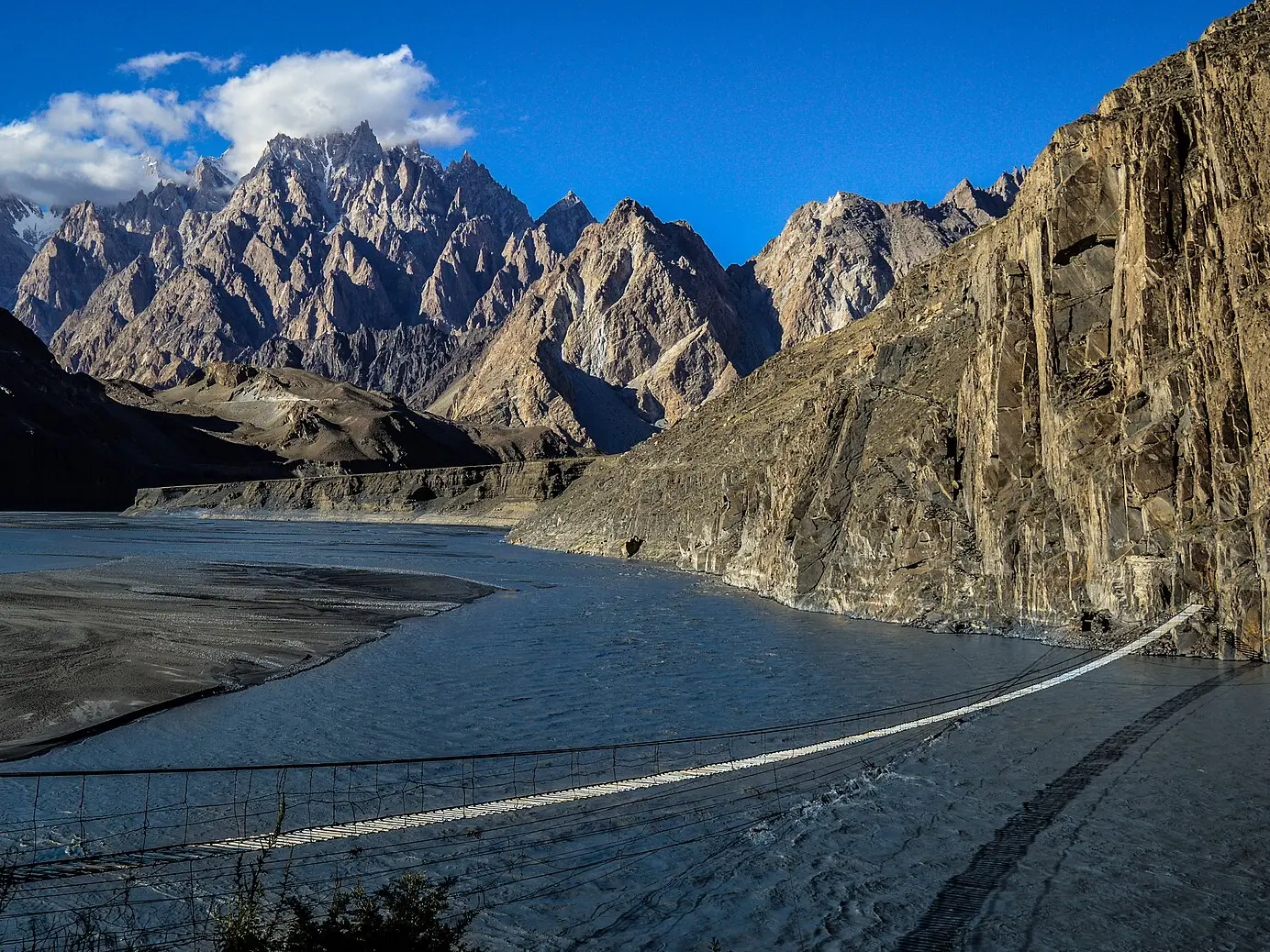
In the mountainous terrain of northern Pakistan, one crossing consistently terrifies visitors. Suspended over the fast-flowing Hunza River, the Hussaini Suspension Bridge is widely known as the most dangerous bridge in the world. Located in the Gilgit-Baltistan region, this precarious rope and timber structure sways wildly with every step. Far from a polished tourist attraction, it offers a raw and thrilling experience. Here is a factual look at why this bridge tests the nerves of every traveller.
A design built for extreme winds
The terrifying appearance of the bridge is actually a highly functional engineering choice. The crossing consists of steel cables and unevenly spaced wooden planks. Visitors immediately notice the massive gaps between these boards. These spaces are intentionally left open to allow the fierce winds of the Gojal Valley to pass straight through the structure. If the planks were placed close together, the high winds would act like a sail and quickly snap the bridge in half. Navigating these gaps requires intense concentration to avoid slipping into the icy waters below.

Rebuilt to survive harsh weather
The Hussaini Hanging Bridge has a long history of destruction and repair. The current structure is not the original. Previous versions of the bridge were washed away by severe weather, monsoon floods, and changing river flows in the region. Even today, the frayed, broken cables of an older bridge hang right next to the active crossing, serving as a stark reminder of the unforgiving natural environment. The local community must continuously monitor and replace broken planks to keep the passage operational.
A vital route for the local community
Trending Stories
)
The Royals enter the Doctor Who universe: King Charles and Queen Camilla beam into Commonwealth Games in TARDIS
)
India avoids higher US tariff, secures lower 10% rate. Here's how
)
He predicted COVID-19 and 2008 economic crisis, was labeled fearmonger. Now he has another dire warning
)
Sadie Sink's leaked Spider-Man: Brand New Day clip fuels fresh Jean Grey speculation
)
Trump's latest rant is about a 'massive television outage' that never happened
)
Putin rambles in TV speech after cancelling Navy Day parade fearing an attack by Ukraine
)
Furious Iran vows retaliation after 'Ukraine attacks' Iran vessel 'on Israel's behest'
)
'Nobody tells me what to sell': Trump rejects Netanyahu's objections to Turkey F-35 deal
)
India aims for 200-ship Navy by 2035 to counter China and Pakistan | Gravitas
)
ChatGPT invoked God, told pastor not to worry about his symptoms. Then pulmonary embolism hit
)
NEET Protests riddled with misinformation? Delhi Police blocks 480 Pakistan-based handles spreading 'fake news' since Operation Sindoor
&im=FitAndFill=(700,400))
Finished Kay Kay Menon's Adarsh Baal Vidyalaya? Here are 5 binge-worthy Hindi OTT series to stream next
)
Trump says Iranian school bombing photos could be AI-generated - 'I don’t think...'
)
China deploying advanced fighter jets closer to India's northern frontier
)
Giant iceberg flips violently near Greenland exposing its underside - 'I didn't know they could do that'
)
'We have far more than we need': Trump rejects US munitions shortage claims. But what do reports say?
)
Google ends Play Services Support, likely to stop these Android phones from downloading apps & games
&im=FitAndFill=(700,400))
New OTT releases this week (July 27-August 2, 2026): The Devil Wears Prada 2, Batman, Demon Slayer- 5 titles coming on Netflix, Prime Video and more
)
Asim Munir eyes defence deal with Qatar & Turkiye after Kuwait as Pakistan seeks investments | Gravitas
)
‘Kill Melania, Barron’: Why is IRGC-linked media outlet urging ‘freedom fighters’ to assassinate Trump’s family? WATCH
)
Ready for 'strong military action' against Iran if talks fail, warns Trump
)
BTS' Jungkook opens up about attending Stray Kids' concert, praises Bang Chan in live broadcast
)
'Broader struggle for democracy...': Greta Thunberg joins Indian students protest in London - What she said
)
Kate Bush fans celebrate 'The Most Wuthering Heights Day Ever 2026'
)
Russia-Ukraine War: Russia drops 3-tonne Glide bombs on Ukraine
)
'Won't go unanswered': Will the Ukrainian attacks on Caspian Sea vessels lead to the convergence of the Iran war and the Russia-Ukraine war?
)
NEET aspirant ends her life in Maharashtra after falling 11 marks short of cut-off
)
'Not in our DNA': Iran denies seeking US negotiations, rejects Trump's remarks
)
'We are observing complete breach of agreement': CJP threatens to resume agitation
)
3,000 years ago, humanity spoke thousands of languages — then fell silent. Where did they all go?
)
‘Don't cry after elections': Owaisi extends alliance offer to Akhilesh for UP polls
)
Jennifer Lopez's ex-husband Ojani Noa claims he confronted Sean 'Diddy' Combs over alleged affair
While international tourists visit purely for an adrenaline rush, the bridge remains an essential piece of daily infrastructure. It serves as a critical link connecting Hussaini village to the agricultural lands of Zarabad across the river. Locals, often carrying heavy loads of supplies, navigate the swinging planks with ease. Tourists are usually charged a small maintenance fee of around Rs 200. These funds go directly back to the community to help repair the ropes and buy new timber before the harsh winter sets in.
Crossing the Hussaini Suspension Bridge offers an unparalleled view of the jagged Passu Cones, provided you are brave enough to look up. It remains a deeply authentic travel experience that highlights the daily resilience of high-altitude mountain communities.