&imwidth=800&imheight=600&format=webp&quality=medium "Why is this city built on more than 100 islands?")
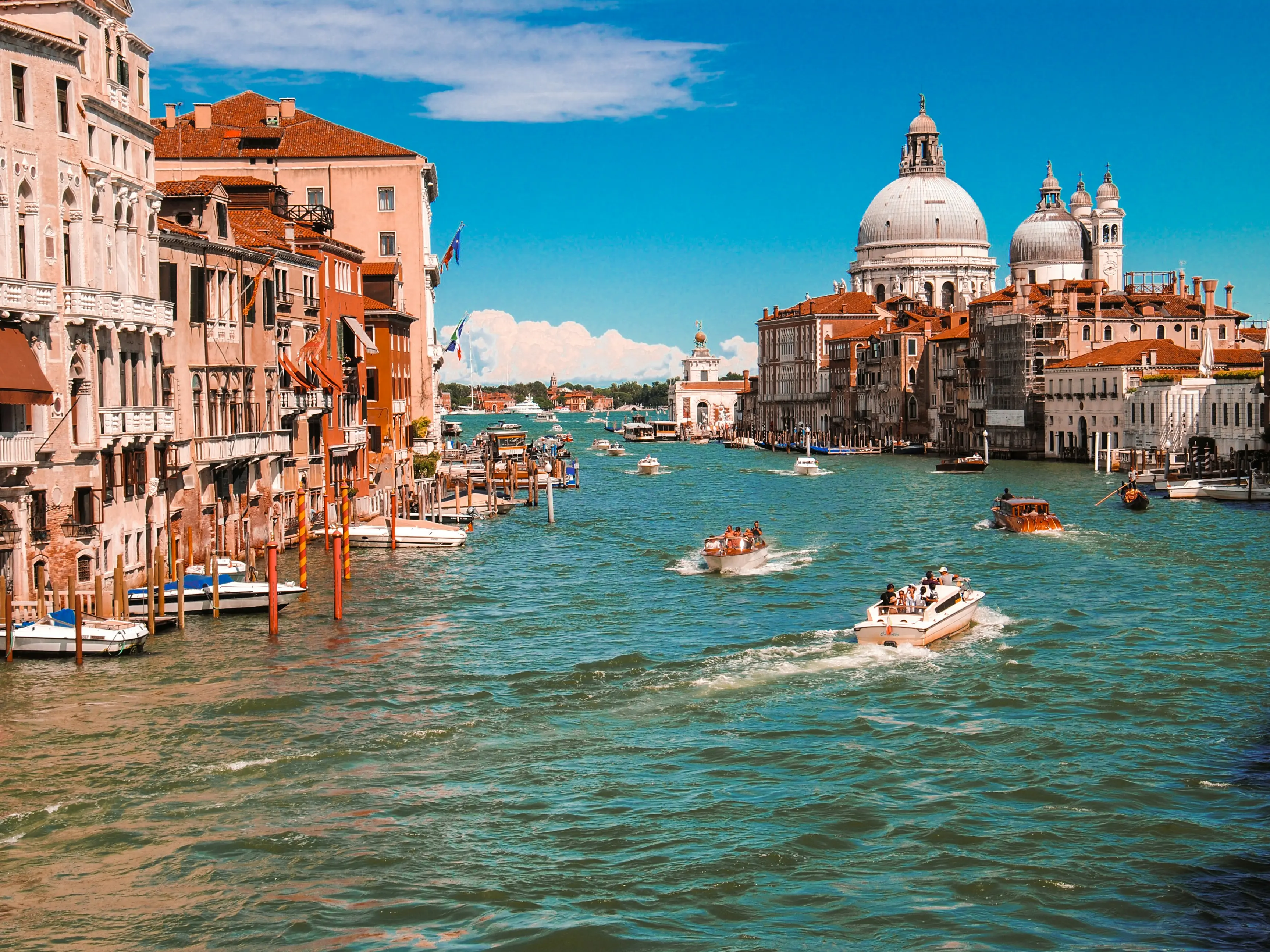
Venice is often romanticised for its winding canals and stunning architecture, but its origins are rooted in survival rather than aesthetics. Spanning 116 islands in a shallow lagoon, this Italian destination was constructed as a fortress against invaders. Understanding how this 'Floating City' was engineered shows a 1,500-year-old history of human resilience. Here is exactly why this iconic location was built entirely on water.
Fleeing mainland invasions
The story begins in the 5th century AD during the collapse of the Western Roman Empire. As Germanic tribes like the Huns and Lombards swept across Italy, mainland residents sought a safe haven. They fled to the marshy, inaccessible mudflats of the Adriatic Sea. The shallow waters and shifting sands formed a natural defence mechanism, making it nearly impossible for land-based armies to launch effective attacks. What started as temporary refugee camps eventually evolved into a permanent, thriving settlement.

An engineering marvel of wooden piles
Building a heavy stone city on soft mud required an unconventional approach. Early settlers drove millions of wooden piles, made from oak and larch, deep into the seabed until they reached a solid layer of compressed clay. Because the wood was submerged in saltwater and deprived of oxygen, it did not rot. Instead, the minerals petrified the timber, turning it into a stone-like foundation. Builders then laid non-porous Istrian stone on top to block corrosive saltwater from reaching the brickwork above.
The modern battle to stay afloat
Trending Stories
)
The Royals enter the Doctor Who universe: King Charles and Queen Camilla beam into Commonwealth Games in TARDIS
)
'Agitation cannot justify lathi-charge': CJI Surya Kant's BIG response to police brutality against protesting students
)
India avoids higher US tariff, secures lower 10% rate. Here's how
)
Hidden in British archives: Scientists decode 200-year-old Indian scroll that helped sailors cross one of the world's toughest seas
)
He predicted COVID-19 and 2008 economic crisis, was labeled fearmonger. Now he has another dire warning
)
'House raided, father picked up': UP man Mohd Junaid alleges crackdown after CJP protest; Police deny claims
)
Trump's latest rant is about a 'massive television outage' that never happened
)
Putin rambles in TV speech after cancelling Navy Day parade fearing an attack by Ukraine
)
RSS backed Jantar Mantar student protest? Mohan Bhagwat's 'question authority' remark resurfaces
)
Oil tanker explodes in the Strait of Hormuz after hitting a naval mine
)
ChatGPT invoked God, told pastor not to worry about his symptoms. Then pulmonary embolism hit
)
NEET Protests riddled with misinformation? Delhi Police blocks 480 Pakistan-based handles spreading 'fake news' since Operation Sindoor
)
Delhi Police issues BIG statement on viral 'don't leave national capital without permission' notice | FACT CHECK
)
'They’re afraid right now...': Netanyahu reacts for first time after Mamdani threatens arrest over ICC warrant
)
Trump says Iranian school bombing photos could be AI-generated - 'I don’t think...'
)
Google ends Play Services Support, likely to stop these Android phones from downloading apps & games
&im=FitAndFill=(700,400))
New OTT releases this week (July 27-August 2, 2026): The Devil Wears Prada 2, Batman, Demon Slayer- 5 titles coming on Netflix, Prime Video and more
)
Spain: Fresh wildfires break out in Valencia
)
US says Turkey still barred from F-35 program until it gives up Russian S-400 system: Report
)
Will Iran war last months or even years? Here's what new poll shows about what most Americans think
)
Bihar wants 'backless Saturday’ in govt schools as official notice misspells 'bagless'
)
'Broader struggle for democracy...': Greta Thunberg joins Indian students protest in London - What she said
)
'We didn't stop them...: Union Finance Minister Nirmala Sitharaman's first reaction on student protests
)
'Won't go unanswered': Will the Ukrainian attacks on Caspian Sea vessels lead to the convergence of the Iran war and the Russia-Ukraine war?
)
What does the Gen Z protest and Pradhan's resignation as education minister mean for India's ruling BJP, and four other questions, answered
)
What we know about Seattle mass shooting: 3 dead, suspect arrested and one at large
&im=FitAndFill=(700,400))
Why the specialized paint on an S-400 costs thousands of dollars per truck
)
India's foreign ministry debunks viral claim made during last week's protests
Despite its brilliant engineering, Venice now faces severe modern threats. Rising sea levels and natural ground subsidence have led to frequent flooding events known as 'Acqua Alta'. To protect the historic infrastructure, Italy developed the MOSE project, a system of 78 mobile gates that rise from the seabed to block high tides. This state-of-the-art flood defence system required a massive investment of roughly $7 billion (Rs 580 billion). While successful in stopping recent floods, the barrier alters lagoon sediment flows, presenting new ecological challenges.
Venice stands as a testament to historical engineering, but its fragile ecosystem requires constant protection. Travellers visiting the 116 islands should support sustainable tourism initiatives and travel during off-peak seasons to help reduce the daily physical strain on the sinking city.