

&imwidth=800&imheight=600&format=webp&quality=medium "Planning to chase the Northern Lights? Here's what causes them")
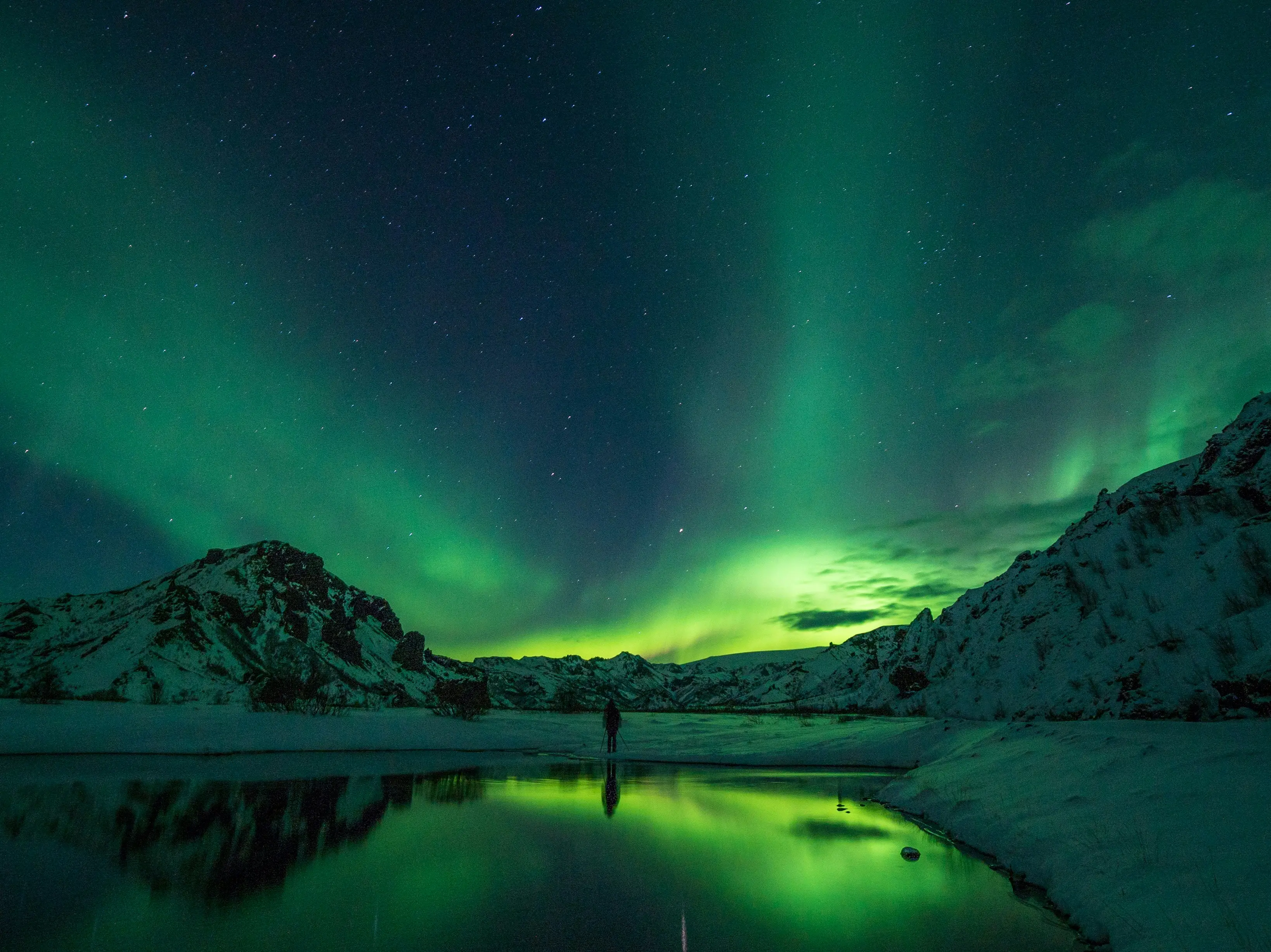
Many tourists plan winter trips to countries like Norway, Iceland, and Canada strictly to see the Northern Lights. Also known as the aurora borealis, this night sky display is a major reason people travel to the Arctic Circle. However, before booking a flight to the far north, it helps to understand the actual science behind this solar event and why it appears only under specific weather conditions.
The power of solar winds
The entire physical process begins roughly 150 million kilometres away. The sun constantly releases a stream of charged particles known as the solar wind. Under normal conditions, these particles travel at an average speed of 1.4 million kilometres per hour (roughly 400 kilometres per second).
When the sun experiences high magnetic activity, it can release large clouds of plasma called coronal mass ejections. These highly charged ejections travel much faster, reaching speeds of up to 10.8 million kilometres per hour (3,000 kilometres per second). They carry massive amounts of energy and usually reach our planet within 15 to 72 hours. This massive transfer of energy is exactly what makes the light displays so intense when they finally hit the atmosphere.
The magnetic shield of Earth
If our planet did not have a magnetic field, these solar winds would strip away our atmosphere over time. Instead, the magnetosphere acts as a giant protective shield. Space weather reports explain that when the charged particles hit this magnetic field, most are simply deflected into space.
Trending Stories
&imwidth=180&imheight=135&format=webp&quality=medium)
'Hell of a beautiful a**': Trump compliments Nicki Minaj as rapper joins him in Michigan rally
&imwidth=180&imheight=135&format=webp&quality=medium)
VIDEO: UP bride collapses while entering hotel room with husband, dies next day in Jhansi; father alleges murder
&imwidth=180&imheight=135&format=webp&quality=medium)
Student-led movement ousts Serbia's longtime leader as protests rage across Europe | GRAVITAS
&imwidth=180&imheight=135&format=webp&quality=medium)
Amber alert issued for 6-year-old boy abducted from US' California
&imwidth=180&imheight=135&format=webp&quality=medium)
Harry Kane favourite to win 2026 Ballon d’Or ahead of Lamine Yamal and Kylian Mbappé
&imwidth=180&imheight=135&format=webp&quality=medium)
'He is a red flag': Ex-India strength and conditioning coach on Rohit's fitness regime
&imwidth=180&imheight=135&format=webp&quality=medium)
Maurene Comey, daughter of ex-FBI director James Comey, was unlawfully fired as federal prosecutor, judge rules
&imwidth=180&imheight=135&format=webp&quality=medium)
Pakistan airline PIA unveils new crew uniforms, faces online criticism
&imwidth=180&imheight=135&format=webp&quality=medium)
'Skinwalker' sightings in Utah from 2010 detailed in new UFO Files
&imwidth=180&imheight=135&format=webp&quality=medium)
‘That is a miss’: Ravi Ashwin questions Sooryavanshi’s demotion to No. 3 in 2nd T20I vs NZ
&im=FitAndFill=(700,400)&imwidth=180&imheight=135&format=webp&quality=medium)
New OTT releases this week (October 26-November 1, 2026): Baththa, Akka, The One About Matthew Perry- 7 titles coming on Netflix, Prime Video and more
&imwidth=180&imheight=135&format=webp&quality=medium)
Elon Musk’s Grok releases first AI-generated Odyssey episode, months after promising ‘historically accurate’ full-length film
&imwidth=180&imheight=135&format=webp&quality=medium)
US Midterms 2026: Last leg polls and forecasts indicate Democratic momentum, but Senate control remains uncertain
&imwidth=180&imheight=135&format=webp&quality=medium)
'Already tired of his 9-to-5': Baby born with a moustache becomes internet sensation, video goes viral | Watch
&imwidth=180&imheight=135&format=webp&quality=medium)
Zimbabwe slips four places to 14th out of 29 in Africa’s Digital Rights and Inclusion ranking
&imwidth=180&imheight=135&format=webp&quality=medium)
Medvedev says Trump should have Zelensky 'assassinated' - 'Take care of this unfortunate little problem'
&imwidth=180&imheight=135&format=webp&quality=medium)
Maldives opposition leader demands transparency on Muizzu Govt's Pakistan defence, security deals
&im=FitAndFill=(700,400)&imwidth=180&imheight=135&format=webp&quality=medium)
Why do some fighter jets have two engines while others use one?
&imwidth=180&imheight=135&format=webp&quality=medium)
'I'll organise the Opposition': Bolsonaro vows to challenge Lula government after defeat, Trump calls vote 'rigged'
&imwidth=180&imheight=135&format=webp&quality=medium)
At least five shot dead in Guwahati hotel over suspected property dispute, police launch investigation
&imwidth=180&imheight=135&format=webp&quality=medium)
‘Sorry anti-Indian forces, but Modi won’t go’: BJP hits back at Kharge, demands apology for remark on PM
&imwidth=180&imheight=135&format=webp&quality=medium)
Uttarakhand innovator Ravi Tamta builds flying car without any formal engineering degree
&imwidth=180&imheight=135&format=webp&quality=medium)
Trump offers $1 million before US midterms. What is he asking Americans to report?
&imwidth=180&imheight=135&format=webp&quality=medium)
Clayface tops North American box office, Elizabeth Holmes documentary follows close behind
&imwidth=180&imheight=135&format=webp&quality=medium)
Boys, aged 10 and 12, rape 9-year-old in UP’s Hathras, lure her with berries
&imwidth=180&imheight=135&format=webp&quality=medium)
Houthi drones, missiles turn Saudi troop gathering into killing field | Gravitas
&imwidth=180&imheight=135&format=webp&quality=medium)
Equities or gold: How Kwala Intel approaches the investment dilemma
&imwidth=180&imheight=135&format=webp&quality=medium)
Israel elections 2026: How the country is gearing up for a crucial vote
&imwidth=180&imheight=135&format=webp&quality=medium)
Trump’s oil and gas holdings surge to $81.6 million amid Iran war as Americans face rising fuel costs
&imwidth=180&imheight=135&format=webp&quality=medium)
'I've done my work sincerely': AR Rahman on facing backlash over Ramayana soundtrack
However, the magnetic field is naturally weaker at the North Pole and the South Pole. This structural difference allows a small percentage of the solar particles to funnel down into the upper atmosphere. The geographical area where these particles enter is known as the auroral oval.
Why colours change with altitude
When the solar particles enter the upper atmosphere, they collide directly with atmospheric gases like oxygen and nitrogen. These physical collisions transfer energy, causing the gases to heat up and release visible light. The specific colours depend entirely on the gas and the exact altitude of the collision.
Recent atmospheric data shows that oxygen located between 120 and 180 kilometres high produces the most common yellowish-green colour. In contrast, nitrogen creates blue or pink lights at lower altitudes, usually below 100 kilometres. Sometimes, high-altitude oxygen located above 200 kilometres creates rare red auroras. These red displays are harder to spot and usually occur only during intense solar storms.
The 11-year solar cycle
The frequency of the auroras is tied directly to the solar cycle, which lasts approximately 11 years. During a period known as the solar maximum, the sun is highly active and produces more sunspots and solar flares.
Data from the Space Weather Prediction Center confirms that Solar Cycle 25 reached its peak in October 2024. However, the period of high solar activity traditionally extends for several years following the peak. This means 2026 remains an excellent time for travellers heading north, as they still have a mathematically high chance of witnessing frequent and intense displays compared to the quiet years of the cycle.
Techniques for the best viewing experience
Seeing the Northern Lights requires active planning. First, you need zero light pollution, which means driving away from city centres. Secondly, clear skies are mandatory; even the strongest solar storm will be invisible behind heavy clouds. Always monitor local aurora forecast applications and plan to stay for at least three to four nights to ensure the best chance of a successful sighting.
