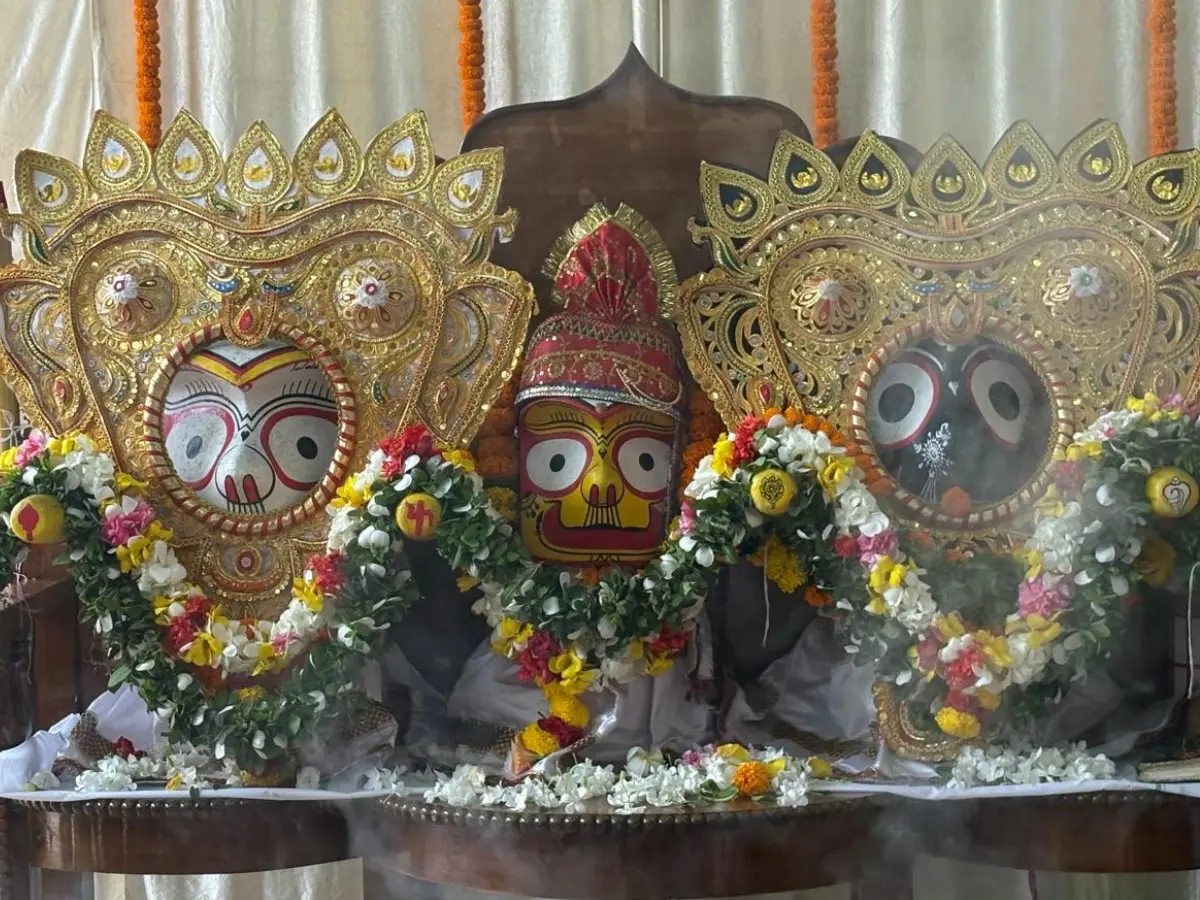
Rath Yatra 2026: King's vision to millions of devotees — The ancient story behind Lord Jagannath's annual chariot journey

&imwidth=600&imheight=450&format=webp&quality=medium "Rath Yatra 2026: King's vision to millions of devotees — The ancient story behind Lord Jagannath's annual chariot journey")
Rath Yatra 2026 Photograph: (WION)
Rath Yatra, unlike any other festival, spans nine days in total. It marks the annual journey of Lord Jagannath, a form of Lord Vishnu, from the Jagannath Temple to the Gundicha Temple, roughly three kilometres away in the coastal town of Puri, Odisha. Read to know more.
Rath Yatra, also known as the Chariot Festival, is one of India's oldest and most celebrated Hindu festivals. It marks the annual journey of Lord Jagannath, a form of Lord Vishnu from the Jagannath Temple to the Gundicha Temple, roughly three kilometres away in the coastal town of Puri, Odisha. This year, Rath Yatra will be celebrated on July 16, which spans nine days in total, concluding the return journey (known as Bahuda Yatra) on July 25.
How did a king's dream give birth to Lord Jagannath?
King Indradyumna of Malwa (ancient Avanti) is a legendary monarch featured in Hindu scriptures like the Skanda Purana and the Mahabharata. Renowned for his unwavering devotion to Lord Vishnu, he is most famously associated with the founding of the sacred Jagannath Temple, Puri.
As per the Hindu tradition, King Indradyumna of Malwa received a divine vision directing him to the coast of Puri, where a sacred log had washed ashore, which is meant to be carved into the form of the Lord. The divine craftsman Vishwakarma appeared in disguise and agreed to carve the deities, with one condition: complete privacy until the work was done. The impatient king opened the door before the work was finished, and Vishwakarma was nowhere to be seen. He had left behind three incomplete wooden forms, without fully shaped arms or features.
Later, a divine voice instructed the king to install and worship these unfinished forms as the living deities. These three forms became Lord Jagannath, Lord Balabhadra and Devi Subhadra. Since then the tradition of Rath Yatra began to honour and worship them.
Trending Stories
)
)
)
)
&im=FitAndFill=(700,400))
)
)
)
)
)
&im=FitAndFill=(700,400))
)
)
)
)
)
)
)
&im=FitAndFill=(700,400))
)
)
)
)
)
)
)
)
)
)
)
)
&im=FitAndFill=(700,400))
)
)
)
The historical journey of Rath Yatra beyond India
The 13th-century Venetian traveller Marco Polo wrote about witnessing a chariot possession in India, which was massive and widely considered by historians to be a reference to Rath Yatra in Puri. Later, in the 16th century, Sri Chaitanya Mahaprabhu made Puri his home and participated in Rath Yatra with such devotion.
What is the meaning behind Rath Yatra, and which deities travel in the chariot?
The word "Rath" means "chariot", and "Yatra" means "pilgrimage" or "journey". Together, they describe a living tradition that has continued, unbroken, for thousands of years. In Sanskrit, ‘Rath’ means 'chariot', and ‘Yatra’ means 'journey' or 'pilgrimage'. The festival is commonly known internationally as the Chariot Festival of Puri. All names point to the same ancient, living event.
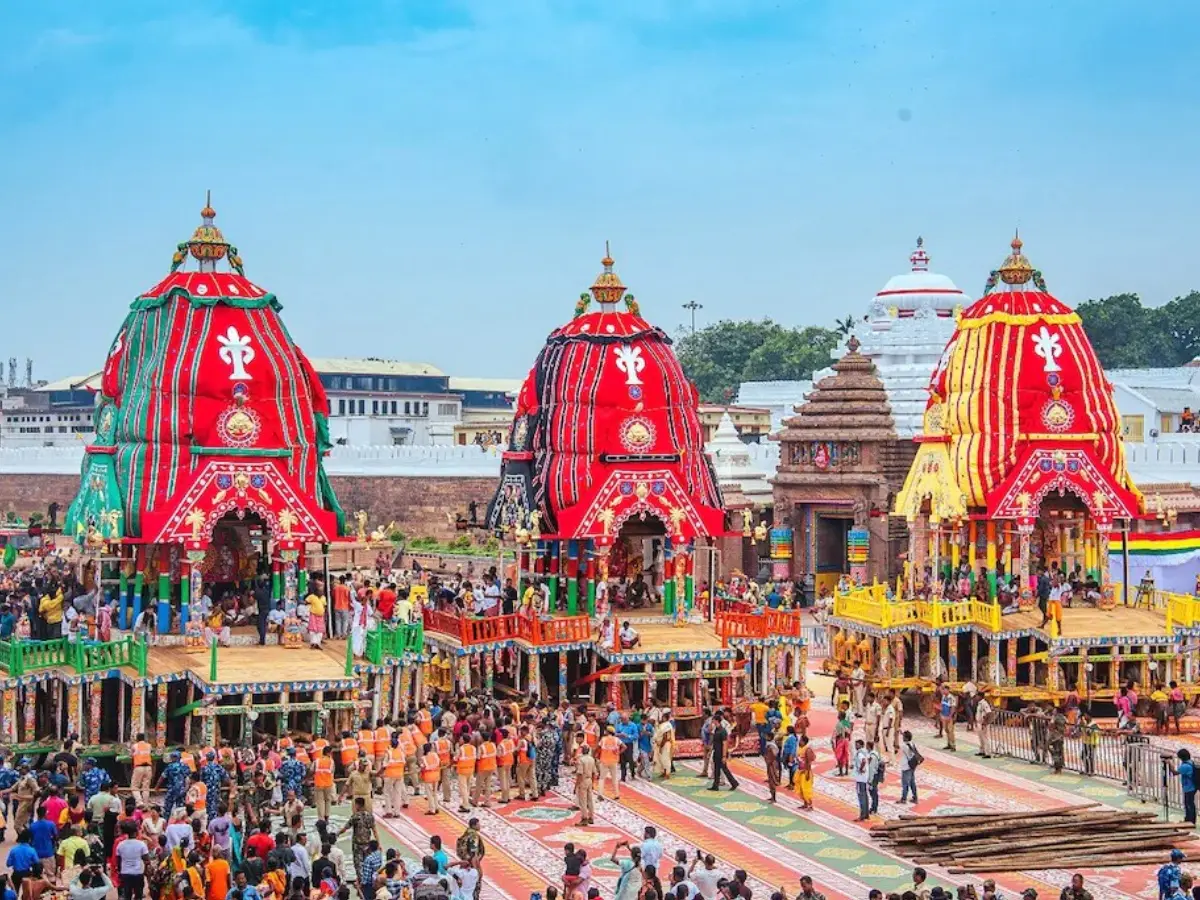
Three deities ride together: Lord Jagannath (Lord of the Universe), his elder brother Lord Balabhadra, and their sister Devi Subhadra. Each travels on a separate, freshly constructed chariot. Their journey together as siblings gives the festival a deeply human warmth alongside its divine grandeur.
What are the rituals of Rath Yatra?
The Rath Yatra festival involves a series of rituals, spanning from their ceremonial bathing, a period of seclusion, the procession of pulling the towering chariots and eventually returning to their home. The most significant rituals of the Rath Yatra occur in a specific sequence that begins weeks earlier.
Snana Purnima (Sacred Bath of deities)
About 15 days before Rath Yatra, on the full moon of the Hindu month Jyestha, the three deities are ceremonially bathed in 108 pots of sacred water. This ritual is called Snana Purnima. It is believed that the deities fall ill from the ceremonial bathing, mirroring the human experience of falling sick after heavy rain.
Also Read: Ahead of Japan PM Sanae Takaichi's India visit, here's how the Japanese writing system works
Anavasara (Deities' period of rest)
Following the first ritual, deities enter a 15-day rest period called Anavasara. During this time, there are kept in a special chamber and attended to only by the Daitas (a hereditary community of servitors) who are the only ones permitted to approach the deities in this period. The deities are treated with herbal remedies and special care. Regular devotees cannot take darshan during Anavasara. When the deities emerge, restored, their reappearance is celebrated as Navajauban, the return of youth.
Pahandi Vijay (Deities moving to their chariots)
Each of the deities is moved from inside the temple to their chariots in a ceremonial procession on the morning of Rath Yatra, called Pahandi Vijay. Temple servitors carry each deity in a rocking, dancing motion, accompanied by ritual music. Watching Pahandi is considered deeply auspicious and deeply moving.
Chhera Panhara (Sweeping of chariots)
The Gajapati Maharaja, the King of Puri, considered Lord Jagannath's chief devotee, descends from his palace, approaches the chariots, and sweeps their floors with a golden broom. A king sweeping for God. The message is unmistakable: before the Lord, all are equal.
Pulling of Rath (Pulling of chariot)
The procession of moving the Rath begins. Thousands of devotees take hold of the massive ropes; each chariot has several ropes, and they begin to pull. The chant of "Jai Jagannath!" rises across the crowd. According to the Skanda Purana, the spiritual merit of pulling the rope even once equals the merit earned from performing a hundred yajnas (fire sacrifices).
Gundicha Yatra (Chariot festival or car festival)
The deities travel to the Gundicha Temple, which tradition holds was the home of Queen Gundicha, wife of King Indradyumna, described in some traditions as Lord Jagannath's maternal aunt. The deities rest here for seven days, receiving worship in a more intimate setting. This period is called Gundicha Yatra.
Bahuda Yatra (The return of chariot and deities to home)
On the ninth and final day of Bahuda Yatr, the chariots travel back to the Jagannath Temple on the same Grand Road. On the way, they pause at the Mausi Maa Temple (the Temple of the Maternal Aunt), where the deities receive an offering of Poda Pitha(a burnt-based rice cake/traditional Odia sweet cake), a traditional baked rice and coconut cake. The return procession is just as sacred as the outward journey, though it receives far less attention in most written accounts of the festival.
What is the significance of celebrating Rath Yatra every year?
Rath Yatra, which originates from Odisha, as per the Hindu scriptures and Skanda Purana, states that seeing Lord Jagannath on his chariot, touching the rope or even walking alongside the procession liberates the soul across multiple lifetimes.
As per the Katha Upanishad, it uses the chariot as a metaphor for the human body. The chariot is the body, the passenger is the soul, the charioteer is the intellect, and the reins are the mind. Rath Yatra in this reading is not just a physical procession. It is a living meditation on the soul's journey through life.

