
&imwidth=800&imheight=600&format=webp&quality=medium "Are lab-grown diamonds the future of fine jewellery? Here's what experts say")
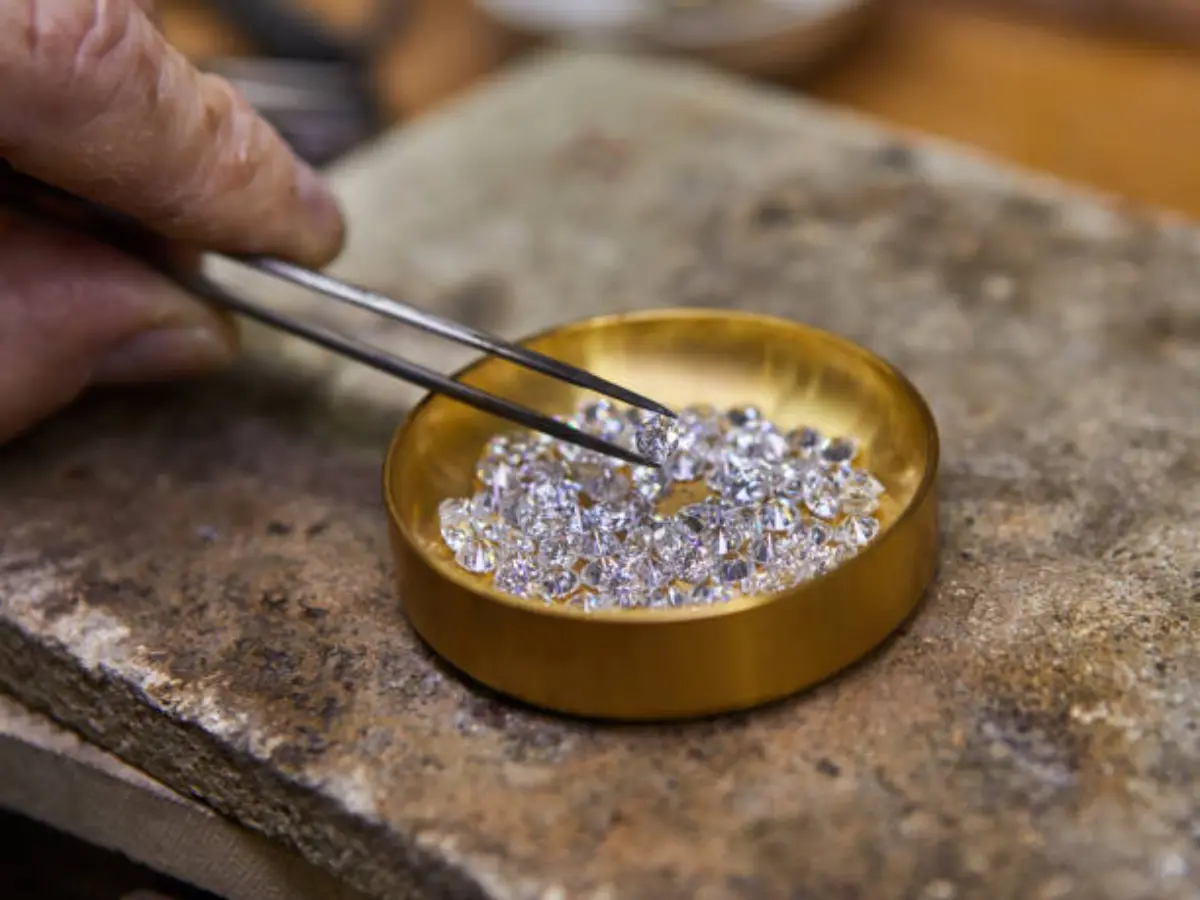
Diamonds are not just symbols of love; they are also seen as investments and heirlooms meant to be passed down through generations. For decades, the industry has run on a singular narrative-rarity equalled value. But the arrival of lab-grown diamonds is rewriting those rules.
Once viewed with scepticism and confusion, these man-made precious stones are rapidly finding a place in jewellery boxes across India. But is this shift only because of affordability? Let’s get the experts from the industry and find out.
Have lab-grown diamonds become mainstream?

"Consumer perception around lab-grown diamonds has evolved significantly over the last few years. Earlier, many buyers were hesitant because the category was new and not widely understood," says Nitesh Jain, Co-Founder, Ethera. "There was a belief that if a diamond wasn’t mined from the earth, it was somehow less valuable or less real. Today, consumers are far more informed and understand that lab-grown diamonds are real diamonds in every sense."
He credits this changing perception to multiple factors, saying, "the growing awareness and support around the category is from both the industry and the government."
Trending Stories
)
ENG vs PAK: Joe Root breaks Sachin Tendulkar’s record for most Test fifties
)
Bigg Boss 20: Uditi Singh reacts to ex Karan Wahi’s possible wildcard entry
)
Why does your skin need protection from UV rays?
)
BRICS Summit 2026: Iran's Pezeshkian praises PM Modi at BRICS
)
BRICS Summit 2026: PM Modi, Xi reach key consensus on ties, China to assume BRICS chairmanship in 2027
)
Trump says Canada eager to reach a deal, it could come ‘fairly soon’ if Ottawa treats US farmers better
)
Why does your body need time to adjust after a long journey?
)
IND vs AFG, 1st T20I: When and where to watch live streaming in India?
)
From India, Putin warns Europe against sending troops to Ukraine, Zelensky expresses willingness to meet him at G20 Summit
)
BRICS Summit 2026 full schedule: Day-wise agenda, timings and key issues - All you need to know
)
‘Partners, not rivals’: Xi outlines four point plan for stronger India-China ties
)
Israel spent nearly $470,000 on PM's hair, makeup since 2019, data shows
)
Anthropic is giving Claude to schools free, and the reason is not philanthropy
)
How does the loss of forests affect the way wildlife lives and moves?
)
Frustrated man demolishes his kitchen after thousands flock to see Mother Mary his wife spotted on the wall
)
800 million years old - Scientists discover 'fingerprints' of supercontinent Gondwana in ancient rocks
)
BRICS Summit day 1: New Delhi declaration adopted with full consensus, big diplomatic win for India
)
Why asking questions could be more important than memorising answers
)
Did Iran President Pezeshkian touch feet of Hindu spiritual leader at Delhi event as shown in viral video?
)
'Iran won't surrender': Pezeshkian sends blunt message to US while attending BRICS Summit in India
)
Humans may lose control of AI: Anthropic CEO calls for slowdown, Altman, Musk back him
)
'He is popular...': Malaysian PM Anwar Ibrahim's praise for PM Modi during bilateral meeting | WATCH
)
Why do wild animals need quiet places to survive?
)
Why going digital does not always mean becoming more efficient
)
9-year-old Chennai prodigy clears Cambridge IGCSE grade 10 exams
)
9/11 attack anniversary: The day that changed America forever
)
BRICS declaration calls for stronger people ties, women-led growth and greater youth cooperation
)
Top 5 places to visit in Goa beyond its famous beaches
)
Could staying indoors all day affect your health?
)
BRICS Summit 2026: 30+ countries seek BRICS membership
)
BRICS Summit: China resumes Guangzhou-New Delhi flight, issues 'good-neighbourliness' remark ahead of Xi-Modi meet
)
From drones to KAAN fighters: Turkey outlines 229% surge in defence spending amid regional shifts
)
Baba Vanga's first prophecy for 2027 is out, and straight out of science fiction
)
From severe mobility problems to recovery: Madhuri the elephant’s journey of wildlife care
)
Why dehydration is the hidden cause of travel fatigue on long flights
He observes that "Younger buyers today are approaching jewellery very differently. They are prioritising wearability, design, value and transparency over the traditional idea of jewellery being bought only as a long-term store of value or something kept away in lockers."
"We are also seeing customers become far more comfortable choosing bigger stones, customised designs and statement pieces through lab-grown diamonds because it gives them the freedom to buy what they genuinely love without the financial pressure traditionally associated with diamonds."
For Lisa Mukhedkar, Founder and CEO, Aukera, awareness is the biggest reason behind the category’s growing momentum. "The most important driver is consumer education. As buyers learn that a lab-grown diamond is chemically, physically, optically indistinguishable to a mined diamond and ensures a far better quality, design variety, and value," she said. "Compared to mined diamonds, lab-grown diamonds are now perceived more favourably across almost every meaningful purchase driver—quality, design, modernity, trust and value for money. More tellingly, the gap has widened dramatically in just the last year."
At the same time, brands across the category are witnessing a fundamental change in how consumers define luxury itself.
As per Pallavi Mohadikar, Founder, Palmonas, "Lab-grown diamonds will continue to grow in popularity, especially among younger consumers who value great design, affordability, and modern ways of shopping. That said, I don’t think it’s about one replacing the other. Just like different categories in fashion and luxury coexist, both lab-grown and natural diamonds will appeal to different consumers and occasions."
Nowadays, consumers are not asking whether one type of diamond is superior to the other. Instead, they are choosing what best fits their budget ,their values and their lifestyles.
Debunking the myths
Despite growing acceptance, misconceptions continue to surround lab-grown diamonds. Jain believes, "One of the biggest misconceptions consumers still have is around authenticity and long-term value. While awareness has improved, there is one misconception that still exists rooting from mined diamond and its pricing that consumers see it as an investment, which is far from true."
As per the Rapaport Research Report, natural (mined) diamond prices have dropped significantly over the past three years, with rough and polished diamond values reducing roughly 25% to 30% from early 2022 highs. Many buyers still assume lab-grown diamonds are inferior because of their affordable pricing. In reality, they offer the same brilliance, quality, and durability as mined diamonds."
"Another misconception is that some consumers assume lab-grown diamonds may lose their shine over time or are less long-lasting, which is not true," he adds. "Others continue to associate higher prices and mined diamonds with greater prestige or emotional value because that narrative has existed for decades."
Mukhedkar says the nature of consumer questions has evolved over the years. "A few years ago, consumers often had questions around authenticity, quality, and whether lab-grown diamonds were ‘real’ diamonds. Today, awareness has grown significantly."
She further adds, "The conversation is shifting away from myths and towards possibilities. Consumers are discovering that lab-grown diamonds enable far greater freedom in design, craftsmanship, and self-expression."
She also points to changing perceptions around buyback policies. "A perception of lab grown diamonds that floated around was that they do not hold a buyback or exchange value."
Evolving definitions of prestige
While lab-grown diamonds are increasingly embraced, natural diamonds continue to hold deep emotional and cultural significance for many buyers.
"The main difference is their origin. Natural diamonds are formed beneath the Earth over billions of years, while lab-grown diamonds are created using advanced technology that replicates the same process. we see lab-grown diamonds as a way to make fine jewellery more accessible, allowing consumers to choose larger or higher-quality diamonds without compromising on beauty or craftsmanship,” says Mohadikar.
She believes this distinction influences how consumers perceive the two categories. "We noticed, consumers perception comes from the significance of the diamonds. Natural diamonds have long been associated culture, prestige, milestones and heirlooms. Since natural diamonds are handpicked from nature they are considered to be rare which automatically increase’s their value. Where has lab-grown diamonds are carefully crafted using controlled technology. That said, consumer preferences are evolving."
Changing values
If diamonds have traditionally been associated with investment, lab-grown diamonds are prompting a different conversation. "The resale conversation around lab-grown diamonds needs to be looked at practically rather than emotionally. Yes, lab-grown diamonds do hold value, but consumers should not approach them in the same way they think about gold appreciation or traditional investment assets. In reality, natural diamonds cost 26% less in shops than two years ago," Jain explains.
He argues that, "Where lab-grown diamonds genuinely stand out is in the value consumers receive at the time of purchase itself. For the same budget that may get someone a smaller mined diamond, they can often buy a significantly larger lab-grown diamond of the same or even better quality, color and clarity as lab grown diamonds are made in controlled environments. At the same time, consumer behaviour around jewellery is also evolving."
Future of lab-grown diamonds
Industry stakeholders agree that the coming decade could be transformative for the category. "Over the next decade, we see lab-grown diamonds becoming a far more mainstream category in India rather than a niche alternative."
Mukhedkar echoes that sentiment, and says, "We expect consumer education and adoption of lab-grown diamonds to accelerate significantly over the next decade. As buyers become more informed and value-conscious, demand will increasingly shift toward diamonds that offer exceptional quality, design, and transparency."
Mohadikar, too, believes the future is one of coexistence rather than competition. "Lab-grown diamonds will continue to grow in popularity, especially among younger consumers who value great design, affordability, and modern ways of shopping. That said, I don’t think it’s about one replacing the other."
"The jewellery industry is navigating a period of global economic uncertainty, with consumers becoming more thoughtful about how they spend on luxury," says Mukhedkar.
As India’s consumers increasingly seek jewellery that reflects not just status but identity, lab-grown diamonds appear poised to carve out a permanent place in the market.
As India’s consumers increasingly seek jewellery that reflects not just status but identity, lab-grown diamonds appear poised to carve out a permanent place in the market.

