Beyond the AK-203, Vivek Krishnan on building the Indian soldier’s next weapon

&imwidth=600&imheight=450&format=webp&quality=medium "Beyond the AK-203, Vivek Krishnan on building the Indian soldier’s next weapon")
The proliferation of FPV drones has created new requirements at infantry level
For India, the next step is therefore bigger than producing more weapons domestically. It is about controlling the technology behind them. India’s next small-arms revolution may ultimately be defined by who owns the design and how quickly it can evolve for the next war.
India’s infantry arsenal is undergoing a transition that goes beyond replacing ageing rifles. The larger shift is from importing weapons and manufacturing foreign designs to creating small arms whose design and intellectual property are owned in India.
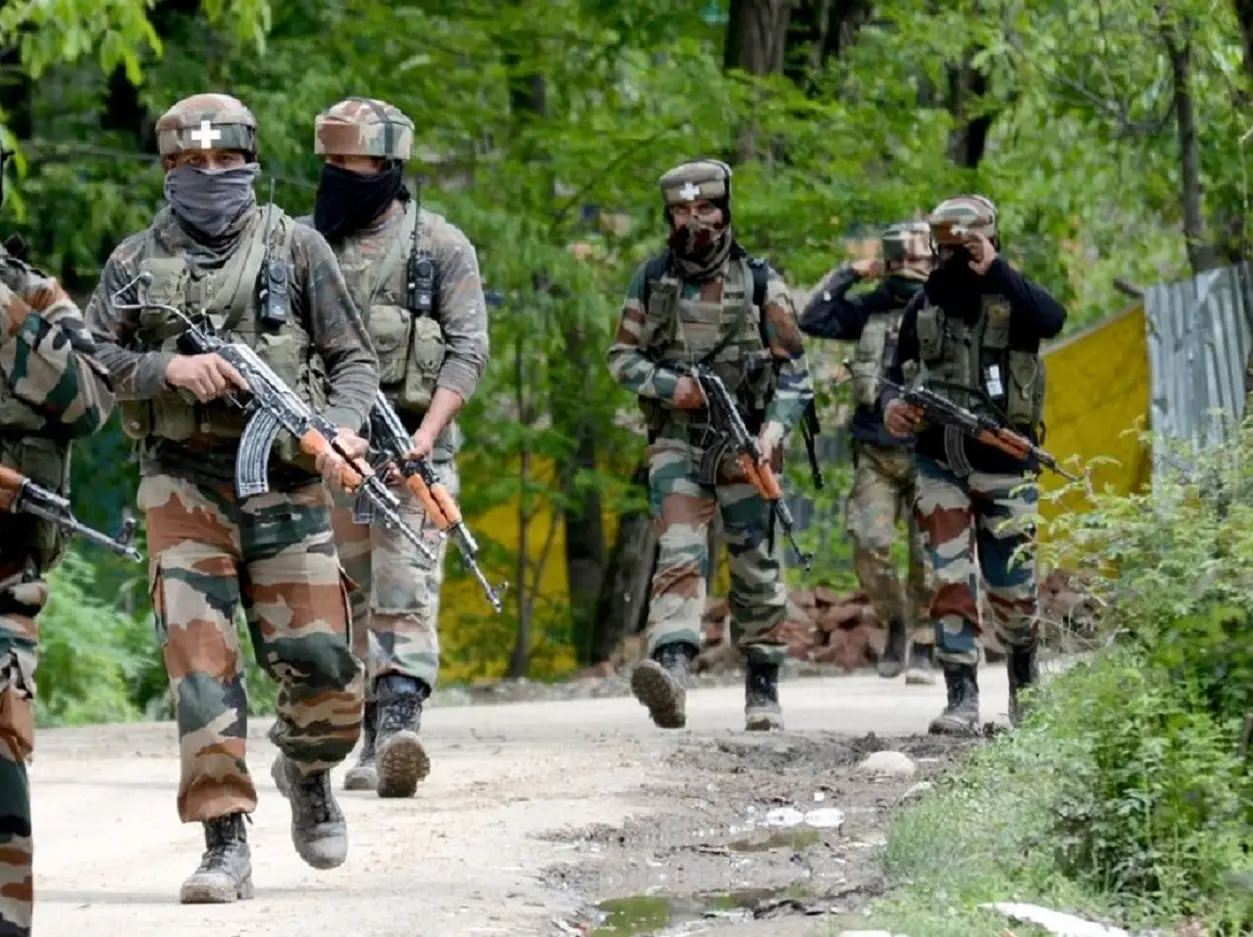
The Indian Army’s modernisation has included the American SIG716 and the AK-203, with 601,427 AK-203 assault rifles contracted for production at Korwa in Uttar Pradesh through the Indo-Russian Rifles joint venture.
But Vivek Krishnan, CEO of SSS Defence, argues that manufacturing sovereignty is not the same as design sovereignty. “Would the Americans or the Germans dictate the way that we fight our battles? I don't think the answer to that is yes,” Krishnan said.
His argument assumes greater significance as battlefield technology evolves at extraordinary speed. Krishnan says access to designs and intellectual property determines whether a weapon can be rapidly modified as per operational requirements.
“In Ukraine, hardware is pretty much changing every two months,” he said, adding that without access to the designs and intellectual property, “evolution is a non-existent thing.” That challenge extends beyond the rifle.
The proliferation of FPV drones has created new requirements at infantry level. SSS Defence has completed its first delivery of a counter-UAS shotgun to the Indian Army, developed for engaging fast-moving drones at close ranges.
While SSS Defence publicly describes its wider focus as indigenous small arms and counter-UAS technology. Yet Krishnan rejects the idea that drones are making the infantry soldier less relevant.
“The role of infantry, the role of foot soldiers, is not going to be changing,” he said. Territory still has to be captured and held. The difference is that tomorrow’s soldier could operate alongside drones, unmanned ground vehicles and increasingly sophisticated weapon systems.
For India, the next step is therefore bigger than producing more weapons domestically. It is about controlling the technology behind them. SSS Defence says its current small-arms portfolio is designed and developed in-house.
Krishnan believes sustained investment in research and development can dramatically shorten development cycles. After years of building indigenous design capability, he says new calibres or improved weapons could now be developed in three to six months rather than two or three years.
Trending Stories
)
)
)
)
)
)
)
)
)
)
)
)
)
)
)
)
)
)
)
)
)
)
)
)
)
)
)
)
)
)
)
)
)
)
&im=FitAndFill=(700,400))
)
)
)
)
India’s next small-arms revolution may ultimately be defined by who owns the design and how quickly it can evolve for the next war.

